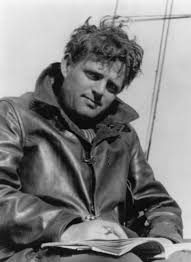
H.L. Mencken
The American Mercury/December, 1928
The Father of Them All
ZOLA AND HIS TIME, by Matthew Josephson. New York: The Macaulay Company.
THE eclipse of Zola is one of the strange phenomena of literary history. He is probably read less today than any other major novelist of his epoch, and in discussions of the current literary tides it is unusual to encounter any mention of his name. Yet it must be plain that, in certain important ways, he was the most influential novelist of the Nineteenth Century, not forgetting Scott, nor Balzac, nor Dickens, nor even Dostoievski, and that his mark is still distinctly visible upon all the considerable brethren of the craft. It was his function, deliberately assumed and triumphantly discharged, to relate his art to the new views of man and the world that came in with “The Origin of Species”—to pull it out of the cloister and bring it into the mainstream of human thinking. He was at once a daring revolutionist and a brilliant and imaginative builder. Sweeping away at one colossal stroke the old subjective psychology that had sufficed novelists since the days of Job, he sought for the key to the eternal tragedy of man in the new science of biology. There the search goes on to this day. The modern novelist is only half an artist; the other half of him is a scientist—an incompetent one perhaps, but still a scientist.
Zola’s own competence was surely not extraordinary: he was only too prone to accept the new scientific concepts of his time without critical examination, and even, indeed, without any examination whatever. Nevertheless, they took him in the right direction, for most of them, after all, were sound. Best of all, they implanted in him the habit of direct observation—they made him go for his material, not to his imagination, but to the facts. Such a novel as “La Terre” may have glaring defects as a work of art, but it is at least a tremendously accurate and moving human document. The people in it do not live as Hamlet and Ophelia live, in a pale mist of fancy; they live as a streptococcus lives, snared fast in a test-tube. It is no wonder that the book caused an uproar. We have, of late, heard the same uproar over “Elmer Gantry,” and for the same reason. What stood against Zola, in the days of his greatest achievement, was that readers compared his people, not to the real human beings he had studied, but to the imaginary human beings of other novelists. His enemy was Balzac, and he knew it. He was not simply another novelist; he was a novelist of quite a new kind.
His defect was that of all innovators and enthusiasts: he went so far with his formula that it became mechanical and inhuman. In his early works, even after he had taken the new line, there was sufficient concession to the conventions of Nineteenth Century novel-writing to make them endurable, even to the sentimental customers of Daudet and company. But with “L’Assommoir” he abandoned the decorums of the boudoir for the harsh realism of the clinic, and by the time he came to “Germinal” and “La Terre” he was in the dissecting room. “Germinal” will probably survive as one of the great novels of all time, but the contemporary reviews of it were almost uniformly unfavorable, and its huge contemporary sale was as pornography, not as work of art. People revolted from its appalling picture of human misery as they would from a meticulous report of a difficult labor or a true biography of Warren Gamaliel Harding, twenty-ninth President of the United States. But it was true. And if the business of a novelist is to penetrate and reveal the agony of man in this world, it was a novel, and a great one.
After “La Terre,” and especially after “La Debacle,” Zola began to weaken and wobble. Success enfeebled him, as it enfeebles all artists, not to say all scientists. He became a rich man, with a country house, servants, public engagements, investments, a conscience. He took a drastic cure to reduce his weight, and had his beard neatly clipped. Yearning for offspring and finding himself with a sterile wife who refused to be put away, he achieved a son and a daughter in collaboration with an amiable female neighbor. There was talk of putting him into the French Academy, an honor, like all French honors, comparable to being elected to the Elks. He was headed for the puerile melodrama of the Dreyfus affair, in which the role he played, observed calmly in retrospect, seems to have been little distinguishable from that of a movie star recommending Lucky Strikes. “Le Docteur Pascal” showed a new and “good” Zola—an optimist, a right-thinker. There followed the cities series, “Lourdes,” “Rome” and “Paris.” “Fécondité” found him at the bottom of the slide. Its last four or five chapters contain some of the most maudlin drivel ever penned by mortal man. They might have been written by Henry Sydnor Harrison or Harold Bell Wright.
Zola had many defects as a man. He was vain, arrogant and intolerant. An Italian by ancestry, he naturally loved money, and there were times when his passion for it made a fool of him. He was an eager seeker for public notice, and maneuvered for it in a shameless manner. Afraid of his virago of a wife on the one hand, he grossly deceived and humiliated her on the other. His courage in the Dreyfus business has been greatly exaggerated in the telling, chiefly by English reporters eager to make propaganda against the French. He ran away at a critical moment, and frequently forgot Dreyfus in thinking of Zola. But he had many compensating virtues. He had a fine intelligence: he was eager for knowledge and able to grasp elusive facts. He was immensely diligent and took his trade seriously. The old-time novelist needed only pen, paper and a quiet room; Zola studied life at first hand, laboriously, conscientiously, thoroughly. Nothing that was human was uninteresting to him, and nothing that was human surprised or shocked him. His eye was made for the microscope; his hands were not cut out for the lute. For metaphysics he had a healthy contempt: what interested him was physiology. He had, in his best days, the vast impassivity of a Darwin, the true detachment of a born scientist. What men thought engaged only his passing attention; he devoted himself to observing what they did. He was, in a very real sense, the first behaviorist.
The good novels of his prime are now neglected, I suspect, mainly because he wrote so many bad ones in the days of his decline. He passed out of life somewhat ridiculous: a scientist turned uplifter. The messianic delusion has ruined many men, but few better ones. By his own single effort he reoriented the novel, and made every successor his debtor. There are romancers left who show no trace of his influence, but surely not many novelists. His marks are all over such men as Wells, Bennett, Mann, Sudermann and Proust. He has been vastly more influential than either Flaubert or Turgenev. The novel that Dickens wrote survives today only as a conscious archaism; it seems idiotic after “Germinal” and “La Terre.” Some day, I believe, these astounding works will be read again. Perhaps the tide is turning toward them already. For years they were obtainable in English only in mutilated versions, poorly printed. The comstocks hunted them down relentlessly; in England their publisher, the elder Vizetelly, was thrown into jail, and died there. But now they begin to appear in better editions, with prefaces by various learned hands. Their day may be coming.
Mr. Josephson’s book is written somewhat feverishly, but it sets forth the facts very well. It goes further than E. A. Vizetelly’s Life, published twenty-five years ago; there is far greater detail in it, and a more illuminating discussion of controverted points. Mr. Josephson attempts relatively little criticism; he is mainly concerned with Zola the man. The story he has to tell is a good one, and he tells it competently.
Across the Border
MEXICO AND ITS HERITAGE, by Ernest Gruening. New York: The Century Company.
THIS is more than a book; it is a sort of one-volume encyclopedia. Mr. Gruening became interested in Mexico in 1922, and, unlike most Americans who write about that unhappy country, he decided to find out something about it. So he crossed the Rio Grande and remained six months. Two years later he went back, and again in 1925, 1926 and 1927. Meanwhile, he had acquired a sound knowledge of Spanish, and set himself to plowing through the vast literature dealing with Mexican affairs. He read not only the histories that are in every library; he went to the original sources. More, he read acres of government reports, pamphlets, magazines, newspapers. Yet more, he scraped acquaintance with Mexicans of all sorts, from the President of the Republic down to humble peons in the backwoods. His journeys took him into twenty-four of the twenty-eight Mexican states. He made contacts with the leaders of all the Mexican factions, political, religious, literary and economic. He carried a notebook and a camera, an alert eye and a hospitable ear. Then, having devoted five years to the amassing of his materials, he sat down to write his book. It is a truly huge piece of work, carefully planned, admirably written, and copiously documented. The whole record of Mexico’s dark and sanguinary troubles is in its text and footnotes. Nothing essential, past or present, seems to have been overlooked.
Mr. Gruening—he is a former managing editor of the Boston Traveler, the New York Tribune and the Nation (a curious combination, certainly!) and is now the editor of a paper in Portland, Maine—writes as an American, but he does not make the common mistake of estimating Mexican motives and acts in terms of American experience. The history of the Republic differs at almost every step from that of the United States, and its people are almost as unlike Americans as the Russians or the Turks. The first American settlers brought with them a tradition of independent thinking and a talent for self-government; the first comers in Mexico were simply unconscionable exploiters, with no interest in the country and no desire to make it fit to live in. Mr. Gruening makes much of this difference, and very wisely. It explains the enormous difficulties that confront the enlightened minority of Mexicans today. They dream of lifting their country out of its wallow, but they face the solid opposition of a populace that yet lingers in barbarism. That populace cannot think; it can scarcely formulate intelligible desires; oppressed for centuries, it has almost lost the elemental capacity to feel. The revolutions that afflict the land mean nothing to it save chances for loot; it has been ground down and exploited by the successive republics and oligarchies quite as much as it was by the old monarchy. The church, its ostensible friend, has only aided in its degradation. It seems hopeless.
Nevertheless, there may be a way out. It will be years and maybe centuries before the masses of the Mexican people can be brought up to the level of even the Mississippi Baptists, but in the upper class there is a salubrious stirring, and in the course of time it may lead to something. The successive governments, though they commonly come in on waves of blood, show a more or less steady improvement. Men of genuine public spirit emerge from the ruck of grafters and assassins. Beginnings have been made in ordering the national finances, in reforming the archaic land system, in curbing the ferocity of foreign exploiters, in setting up schools, even in maintaining public order. Reform is still largely in the hands of a lunatic fringe; there are attempts to leap to forms of democracy that still remain purely theoretical, even in the mob-ridden United States. But the old despairist acceptance of fraud and imbecility, disorder and rapine, as natural and inevitable seems to be going out. There are Mexicans who tire of the chaos and make rational plans to end it. With that vast, inert mass of barbarous Indians and even more barbarous half-breeds confronting them, they take on a truly staggering task. But if Oklahoma can be civilized, as seems likely, then perhaps there is a chance for Mexico.
Two powerful agencies work against every effort to put the country on its legs. One is the intransigent opposition of the church, which is still Spanish and monarchist in sympathy after a hundred years; the other is the chronic dishonesty and bullying of the United States. The history of our relations with Mexico is an almost unbroken record of infamy. We have been false to every trust, and brutally self-seeking whenever there was an opportunity to play the good neighbor. American support has always gone, not to the best Mexicans, but to the worst. No patriotic citizen of the country can lay his plans for sound reforms without taking into account the probability of Yankee opposition and interference. But both of these difficulties, in the course of time, may be resolved. The appointment of Dwight W. Morrow to the Mexican ambassadorship seems to indicate that Washington is preparing to play a more decent role hereafter, despite the fact that the preposterous Kellogg is still Secretary of State. And the church, facing a genuine rebellion against its obscurantism, in which Catholic Mexicans, stand side by side with freethinkers, shows signs of attempting a compromise. In this last struggle both sides have hit below the belt, and so there is extraordinary bitterness. But even bitterness yields to time. Let the United States keep out of the mess, and soon or late the fugitive bishops will go back—not, perhaps, as the medieval lords they used to be, but at all events with quite as much freedom to transact their legitimate business as their legitimate business needs.
Mr. Gruening goes into all of these matters frankly and at great length. His sympathies, obviously, are with the enlightened minority which seeks to cast off the remaining vestiges of the Spanish inheritance, and set Mexico on the way of progress as a modern state. He has little use for Diaz, he leans against the oil concessionists and other carpet-baggers, and he is tartly critical of the church. But he is by no means a special pleader. Both sides have hearings in his book, and he is at great pains to set forth the case of every man he opposes. He has done a good job. If what he has written is widely read a new understanding will get into the relations between Mexico and the United States, and with that better understanding, it is to be hoped, there will come a greater decency.
American Worthies
WHO’S WHO IN AMERICA, edited by Albert Nelson Marquis. Chicago: The A. N. Marquis Company.
“WHO’S Who in America” grows fatter with each new edition. The first, for 1899-1900, ran to 827 pages and contained biographies of 8601 men and women. The new one, for 1918-9, has 1488 pages and includes no less than 18,805 sketches, of which 3931 appear for the first time. As usual, the work is notable for both its extraordinary inclusions and its unaccountable omissions. All sorts of local worthies, especially if they be of theological or literary habit, seem to find it easy to get in. So do many obscure newspaper editors, ninth-rate bankers, puerile pedagogues and other such right-thinkers. But there appears to be relatively little hospitality to men and women of unusual attainments and odd minds. I look in vain, for example, for Dr. Paul De Kruif. And for Roland Hugins. And for Dr. Henry Wadsworth Longfellow Dana. And for Sadakichi Hartmann. And for Hippolyte Havel. And for William Z. Foster. And for Roger N. Baldwin. And for Alexander Berkmann. And for Emma Goldman. Lewis Mumford is in at last, and so is Dr. Isaac Goldberg, and so is Freda Kirchwey (I called for all of them two years ago), but there is nothing about Lewis Gannett, or Anita Loos, or Doris Stevens, or Elizabeth Gurley Flynn. The sole reference to Max Eastman is still a curt reference to the volume for 1916-17, though he has printed at least four books since.
In more decorous circles there are omissions equally curious. I find, among the movie magnates, Jesse L. Lasky and Samuel Goldwyn (geb. Goldfisch), but neither Louis B. Mayer nor Joseph Schenck. Dr. Arthur J. Cramp, of the American Medical Association, is admitted at last, but I look in vain for Dr. Walter E. Dandy, the Johns Hopkins brain surgeon. I can find Bernard Macfadden, editor of the New York Graphic, but not John W. Owens, editor of the Baltimore Sun. The celebrated Harry Micajah Daugherty, LL.B., still lingers, but there is not a line about Judge Webster Thayer. Frank Craven is still missing, though the Rev. Dr. James Braxton Craven, president of Davenport College at Lenoir, N.C., has thirteen lines. The editor of the Kansas Baptist has sixteen lines, but there is nothing about the editor of Photoplay. But maybe I ride the editor too hard. It is possible that there is actually more curiosity about Methodist presiding elders, the presidents of provincial fire insurance companies, the former attorneys general of Arkansas and Iowa, and he obscure professors in one-building universities than there is about Dr. De Kruif, Miss Loos, Mr. Baldwin and Judge Thayer. But a doubt of it abides with me.
In this vast mass of biographies one unearths some curious facts. One is that Dr. Will Durant’s actual given names are William James. It somehow seems unfitting. Another is that Gilbert Seldes’ middle name is Vivian. Yet another is that Ben Hecht was actually named Ben, and not Benjamin, just as Jim Tully was named Jim, and not James. Harry Kemp’s full name, it appears, is Harry Hibbard Kemp —certainly an extremely respectable label for a poet. Fanny Butcher, of the Chicago Tribune, is an officer d’academie of France. (I refuse to believe it.) Jackie Coogan is bespangled with the silver cross of the Order of George of Greece. Conrad Nagel, another movie star, is both a Shriner and a Christian Scientist. How many of the distinguished ladies of the “Who’s Who” family tell their ages? More than you probably expect. Edna Ferber does. So does Ethel Barrymore. So do Mary Austin, Fannie Hurst, Mrs. Willebrandt, Ma Ross of Wyoming, Ellen Glasgow, Eva Le Gallienne, Willa Cather, Lillian Gish, Mrs. Moskowitz, Dr. Florence Sabin, Kathleen Norris, Aimee Semple McPherson, Irita Van Doren, Geraldine Farrar, Mary Garden, Anne Parrish, Sara Teasdale and Edith Mason. But Gloria Swanson, Elinor Wylie and Mrs. Fiske remain old-fashioned. Lord Hoover continues as the champion LL.D. of “Who’s Who.” He has twenty-six degrees. His most formidable competitors are Dr. Charles Evans Hughes, and Dr. Nicholas Murray Butler, who have seventeen each.
 The Archive