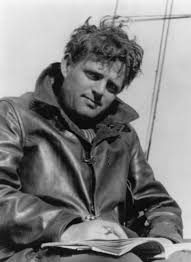
H.L. Mencken
Chicago Tribune/November 20, 1927
A Washington bootlegger who knows everything tells me that it is now a moral certainty that one of the national conventions of next summer will be held at San Francisco. The news is too pleasant to be doubted for an instant. I accept it at once, giving humble thanks to God, and prepare myself to view once more the only genuinely civilized city in the United States. It is such occasional escapes from Moronia that make journalism an agreeable profession. The same bootlegger—who knows more United States senators than Dr. Dawes himself, and is vastly more respected by them—tells me that the other convention is to go to Detroit. I rejoice again, and flap my wings.
I have been reporting national conventions for the great organs of patriotic opinion ever since the year 1900, but the only decent one that I have ever seen was the one held in San Francisco in 1920. I use the word decent in its narrowest sense. A national convention is usually not only grossly offensive to the higher cerebral centers; it is also immensely painful to the eye, the ear and the nose. Not to put too fine a point upon the matter, it stinks. But there was no stink in San Francisco. On the contrary, there were lovely zephyrs from the south seas, and on them came the scent of flowers. The eye was caressed by charming decorations. The ear was caressed by sound music. The esophagus was caressed by pre-war bourbon.
The effect upon the delegates was almost miraculous. Whole platoons of them were converted from politicians into gentlemen. They refrained from bawling, fighting, and rolling in the gutter. They changed their collars daily, and their shirts twice a week. They learned how to drink without coughing, batting their eyes, and slapping their tummies. They gave up spitting on the floor. They abandoned hot dogs in favor of ripe figs, pomegranates, and the steaks of the abalone. Having descended upon the town with the dreadful snorts and bellows of sailors home from the Horn, they departed two weeks later in the delicate, pizzicato manner of ambassadors.
I believe that that convention did more to foster true refinement in these states than anything since the launching of my friend Gerard Lambert’s historic war upon halitosis, the curse of great business executives. The thousand-odd delegates and the thousand-odd alternates [not to mention the five hundred newspaper correspondents] were exposed for two weeks to the mellowing influences of a really civilized town. They learned how to drink; they learned table manners; they learned how to love. Returning anon to such sinks as Boston, Cincinnati, Harrisburg, Pa.; Jackson, Miss., and La Crosse, Wis., they carried their new elegance with them, and spread it gently. All those places, save perhaps Boston, show the effects today.
It was simple cleanliness, I believe, that moved them most profoundly. Most of them had been to national conventions before and knew what to expect, to wit, a barnlike, hideous and filthy hall, double prices at all the hotels, the incessant blare of bands, liquor fit only for southern congressmen, and food fit only for hogs. Above all, they expected dirt—dirty places to eat, dirty washrooms, dirt and smells everywhere. In San Francisco, to their astonishment, they found none of these things. The hall was beautiful and spotlessly clean. The food everywhere was appetizing and cheap. The hotels did no profiteering. The decorations were in good taste. There was good music. The wines of the country were superb.
For a day or two the delegates and alternates staggered around like men emerging from anesthetics. It seemed somehow fabulous. Drinking, they expected to fall to the ground and pass into fits. Eating, they expected to be doubled up by ptomaines. Attending at the hall, they expected to be deafened by noises and asphyxiated by stenches. Returning to their hotels, they expected to be blackjacked. When none of these things happened, they were as men in a dream. Then suddenly they began to rejoice. And then they began to leap and shout hosannas.
I confess to a great weakness for San Francisco. It is my favorite American town, as it is of almost everyone else who has ever visited it. It looks out, not upon Europe, like New York, nor upon the Bible belt, like Chicago, but upon Asia, the ancient land, and the changeless. There is an Asiatic touch in its daily life, as there is a touch of Europe [and especially of the slums and bagnios of Europe] in the life of New York. No doubt, it has its go-getters; if so, they are humanely invisible. Its people take the time to live, and they are aided in that laudable enterprise by the best climate in the world.
The earthquake of April 18, 1906 [To San Francisco editors: All right, call it a fire if you want to], gave San Francisco a dreadful wallop, and for a decade or more thereafter it seemed in peril of succumbing to the standardization that prevails everywhere else in America. Many of its most picturesque quarters were wiped out, and in the rebuilding there was little effort to reproduce them. Worse, the work of reconstruction attracted a great many strangers, and some of them came from the evangelical wilds of the middle west.
The result was a long effort to convert San Francisco into a sort of Asbury Park. Wowsers arose with the demand that the town be made safe for Sunday school superintendents. Anon came prohibition, and a fresh effort to iron it out. But though its peril, for a while, was anything but inconsiderable, it managed to survive this onslaught, and today it seems to be out of danger. Most of the wowsers have moved to Los Angeles, where the populace welcomes and admires them. San Francisco has returned to its more spacious and urbane life. It is agreeably wet, sinful and happy. A civilized traveler may visit it today without running any risk of being thrown into jail or ducked in a baptismal tank.
The rise of Los Angeles, indeed, has been a godsend to the whole San Francisco region, though the San Franciscans once viewed it with alarm. It has drawn off the middle western morons who flock to the coast, and concentrated them in the south. The weather down there is warmer–an important consideration to farmers who have been chilblained and petrified by the long, harsh winters of Iowa. And more attention is paid to the perils of the soul—always an important matter to agronomists. In San Francisco there seems to be very little active fear of hell. The unpleasantness of roasting forever is sometimes politely discussed, but no one seems to get into a lather about it.
In Los Angeles the hell question is always to the fore, and so the yokels find the place more to their taste. There are more than 10,000 evangelists in the town, all of them in constant eruption. They preach every brand of theology ever heard of in the world, and many that are quite unknown elsewhere. When two eminent pastors engage in a slanging match, which is very frequently, the combat attracts as much attention as another set piece by Dempsey and Tunney. There are Iowans in Los Angeles who go to church three times a day, and to a different basilica every time. It is a paradise of Bible-searchers.
No such frenzy to unearth and embrace the truth is visible in San Francisco. As I have said, the influence of Asia is upon the town, and Asia got through all the theological riddles that now engage Los Angeles a thousand years ago. San Francisco takes such things lightly. It consecrates its chief energies to the far more pleasant and important business of living comfortably on this earth. It is one of the most agreeable great cities in the world—mild and balmy in its climate, beautiful in its situation, and tolerant and civilized in its point of view. I sincerely hope that the Washington bootlegger is right, and that one of the conventions will be held there next year. The Democrats had the last; let the Republicans now take their turn. Their 1924 convention was held in Cleveland, and their 1920 convention in a huge hot-frame at Chicago. They, too, are God’s creatures, and deserve a little decent comfort. And something better than needle beer to wet their whistles.
 The Archive