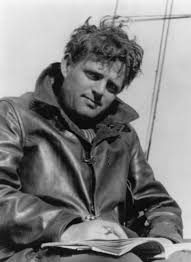
Mark Twain
Harper’s/December, 1958
Four pieces–never before published–from one of the world’s oddest, and most neglected, classics; with an introductory note by Charles Neider, editor of the forthcoming revised and enlarged Autobiography of Mark Twain
THE very reason that I speak from the grave is that I want the satisfaction of sometimes saying everything that is in me instead of bottling the pleasantest of it up for home consumption. I can speak more frankly from the grave than most historians would be able to do, for the reason that whereas they would not be able to feel dead, howsoever hard they might try, I myself am able to do that. They would be making believe to be dead. With me, it is not make believe. They would all the time be feeling, in a tolerably definite way, that that thing in the grave which represents them is a conscious entity; conscious of what it was saying about people; an entity capable of feeling shame; an entity capable of shrinking from full and frank expression, for they believe in immortality. They believe that death is only a sleep, followed by an immediate waking, and that their spirits are conscious of what is going on here below and take a deep and continuous interest in the joys and sorrows of the survivors whom they love and don’t.
But I have long ago lost my belief in immortality—also my interest in it. I can say now what I could not say while alive—things which it would shock people to hear; things which I could not say when alive because I should be aware of that shock and would certainly spare myself the personal pain of inflicting it.
When we believe in immortality we have a reason for it. Not a reason founded upon information, or even plausibilities, for we haven’t any. Our reason for choosing to believe in this dream is that we desire immortality, for some reason or other, I don’t know what. But I have no such desire. I have sampled this life and it is sufficient. It would proceed from the same source as this one. I should have no large expectations concerning it, and if I may be excused from assisting in the experiment I shall be properly grateful. Annihilation has no terrors for me, because I have already tried it before I was born a hundred million years—and I have suffered more in an hour, in this life, than I remember to have suffered in the whole hundred million years put together. There was a peace, a serenity, an absence of all sense of responsibility, an absence of worry, an absence of care, grief, perplexity; and the presence of a deep content and unbroken satisfaction in that hundred million years of holiday which I look back upon with a tender longing and with a grateful desire to resume, when the opportunity comes. It is understandable that when I speak from the grave it is not a spirit that is speaking; it is a nothing; it is an emptiness; it is a vacancy; it is a something that has neither feeling nor consciousness. It does not know what it is saying. It is not aware that it is saying anything at all, therefore it can speak frankly and freely, since it cannot know that it is inflicting pain, discomfort, or offense of any kind.
II. Honorary Degrees
A CABLEGRAM arrived from England three weeks ago inviting me to come to Oxford and receive an honorary degree on the 26th of next month [June 1907]. I accepted, and without any waste of time. During the past two years I have been saying with great decision that my traveling days were permanently over and that nothing would ever induce me to cross the ocean again, yet I was not surprised at the alacrity with which I put that resolution behind me when this flattering invitation came. I could have declined an invitation to come over and accept a London town lot and I could have done it without any difficulty, but a university degree is a quite different matter; that is a prize which I would go far to get at any time.
I take the same childlike delight in a new degree that an Indian takes in a fresh scalp and I take no more pains to conceal my joy than the Indian does. I remember the time that I found a battered old-time picayune in the road, when I was a boy, and realized that its value was vastly enhanced to me because I had not earned it. I remember the time, ten years later, in Keokuk, that I found a fifty-dollar bill in the street, and that the value of that bill also was vastly enhanced to me by the reflection that I had not earned it. I remember the time in San Francisco, after a further interval of eight years, when I had been out of work and out of money for three months, that I found a ten-cent piece in the crossing at the junction of Commercial and Montgomery Streets, and realized that that dime gave me more joy, because unearned, than a hundred earned dimes could have given me. In my time I have acquired several hundred thousand dollars, but inasmuch as I earned them they have possessed nothing more than their face value to me and so the details and dates of their capture are dim in my memory and in many cases have passed from my memory altogether. On the contrary, how eternally and blazingly vivid in my recollection are those three unearned finds!
Now then, to me university degrees are unearned finds, and they bring the joy that belongs with property acquired in that way; and the money-finds and the degree-finds are just the same in number up to date—three: two from Yale and one from Missouri University. It pleased me beyond measure when Yale made me a Master of Arts, because I didn’t know anything about art; I had another convulsion of pleasure when Yale made me a Doctor of Literature, because I was not competent to doctor anybody’s literature but my own, and couldn’t even keep my own in a healthy condition without my wife’s help. I rejoiced again when Missouri University made me a Doctor of Laws, because it was all clear profit, I not knowing anything about laws except how to evade them and not get caught. And now at Oxford I am to be made a Doctor of Letters—all clear profit, because what I don’t know about letters would make me a multi-millionaire if I could turn it into cash.
Oxford is healing a secret old sore of mine which has been causing me sharp anguish once a year for many, many years. Privately I am quite well aware that for a generation I have been as widely celebrated a literary person as America has ever produced, and I am also privately aware that in my own peculiar line I have stood at the head of my guild during all that time, with none to dispute the place with me; and so it has been an annual pain to me to see our universities confer an aggregate of two hundred and fifty honorary degrees upon persons of small and temporary consequence—persons of local and evanescent notoriety, persons who drift into obscurity and are forgotten inside of ten years—and never a degree offered to me! In these past thirty-five or forty years I have seen our universities distribute nine or ten thousand honorary degrees and overlook me every time. Of all those thousands, not fifty were known outside of America, and not a hundred are still famous in it. This neglect would have killed a less robust person than I am, but it has not killed me; it has only shortened my life and weakened my constitution; but I shall get my strength back now. Out of those decorated and forgotten thousands not more than ten have been decorated by Oxford, and I am quite well aware—and so is America, and so is the rest of Christendom—that an Oxford decoration is a loftier distinction than is conferrable by any other university on either side of the ocean, and is worth twenty-five of any other, whether foreign or domestic.
Now then, having purged myself of this thirty-five years’ accumulation of bile and injured pride, I will drop the matter and smooth my feathers down and talk about something else.
III. Amateur Writings
FROM old experience I know that amateur productions, offered ostensibly for one’s honest cold judgment, to be followed by an uncompromisingly sincere verdict, are not really offered in that spirit at all. The thing really wanted and expected is compliment and encouragement. Also, my experience has taught me that in almost all amateur cases compliment and encouragement are impossible—if they are to be backed by sincerity.
I have this moment finished reading this morning’s pair of offerings and am a little troubled. If they had come from strangers I should not have given myself the pain of reading them, but should have returned them unread, according to my custom, upon the plea that I lack an editor’s training and therefore am not qualified to sit in judgment upon anyone’s literature but my own. But this morning’s harvest came from friends and that alters the case. I have read them and the result is as usual: they are not literature. They do contain meat but the meat is only half cooked . . . . One of this morning’s samples does really come near to being literature, but the amateur hand is exposed with a fatal frequency and the exposure spoils it. The author’s idea is, in case I shall render a favorable verdict, to offer the manuscript to a magazine.
There is something about this naive intrepidity that compels admiration. It is a lofty and reckless daring which I suppose is exhibited in no field but one—the field of literature. We see something approaching it in war, but approaching it only distantly. The untrained common soldier has often offered himself as one of a forlorn hope and stood cheerfully ready to encounter all its perils—but we draw the line there. Not even the most confident untrained soldier offers himself as a candidate for a brigadier-generalship, yet this is what the amateur author does. With his untrained pen he puts together his crudities and offers them to all the magazines, one after the other—that is to say, he proposes them for posts restricted to literary generals who have earned their rank and place by years and even decades of hard and honest training in the lower grades of the service.
I am sure that this affront is offered to no trade but ours. A person untrained to shoemaking docs not offer his services as a shoemaker to the foreman of a shop—not even the crudest literary aspirant would be so unintelligent as to do that. He would see the humor of it; he would see the impertinence of it; he would recognize as the most commonplace of facts that an apprenticeship is necessary in order to qualify a person to be tinner, bricklayer, stone-mason, printer, horse-doctor, butcher, brakeman, car conductor, midwife—and any and every other occupation whereby a human being acquires bread and fame. But when it comes to doing literature, his wisdoms vanish all of a sudden and he thinks he finds himself now in the presence of a profession which requires no apprenticeship, no experience, no training—nothing whatever but conscious talent and a lion’s courage . . .
We must imagine a kindred case—the aspirant to operatic distinction and cash, for instance. The aspirant applies to the management for a billet as second tenor. The management accepts him, arranges the terms and puts him on the pay-roll.
After the first act the manager calls the second tenor to account and wants to know. He says:
“Have you ever studied music?”
“A little—yes, by myself, at odd times, for amusement.”
“You have never gone into regular and laborious training, then, for the opera, under the masters of the art?”
“No.”
“Then what made you think you could do second tenor in ‘Lohengrin’?”
“I thought I could. I wanted to try. I seemed to have a voice.”
“Yes, you have a voice, and with five years of diligent training under competent masters you could be successful, perhaps, but I assure you you are not ready for second tenor yet. You have a voice; you have presence; you have a noble and childlike confidence; you have a courage that is stupendous and even superhuman. These are all essentials and they are in your favor but there are other essentials in this great trade which you still lack. If you can’t afford the time and labor necessary to acquire them leave opera alone and try something which does not require training and experience. Go away now and try for a job in surgery.”
IV. Humor
REPETITION is a mighty power in the domain of humor. If frequently used, nearly any precisely worded and unchanging formula will eventually compel laughter if it be gravely and earnestly repeated, at intervals, five or six times.
I undertook to prove the truth of this forty years ago in San Francisco on the occasion of my second attempt at lecturing. My first lecture had succeeded to my satisfaction. Then I prepared another one but was afraid of it because the first fifteen minutes of it was not humorous. I felt the necessity of preceding it with something which would break up the house with a laugh and get me on pleasant and friendly terms with it at the start, instead of allowing it leisure to congeal into a critical mood, since that could be disastrous.
With this idea in mind I prepared a scheme of so daring a nature that I wonder now that I ever had the courage to carry it through. San Francisco had been persecuted for five or six years with a silly and pointless and unkillable anecdote which everybody had long ago grown weary of—weary unto death. It was as much as a man’s life was worth to tell that moldy anecdote to a citizen. I resolved to begin my lecture with it, and keep on repeating it until the mere repetition should conquer the house and make it laugh.
There were fifteen hundred people present, and as I had been a reporter on one of the papers for a good while I knew several hundred of them. They loved me, they couldn’t help it; they admired me; and I knew it would grieve them, disappoint them and make them sick at heart to hear me fetch out that odious anecdote with the air of a person who thought it new and good. I began with a description of my first day in the overland coach; then I said,
“At a little ‘dobie station out on the plains, next day, a man got in and after chatting along pleasantly for a while he said ‘I can tell you a most laughable thing indeed, if you would like to listen to it. Horace Greeley went over this road once. When he was leaving Carson City he told the driver, Hank Monk, that he had an engagement to lecture at Placerville and was very anxious to go through quick. Hank Monk cracked his whip and started off at an awful pace. The coach bounced up and down in such a terrific way that it jolted the buttons all off of Horace’s coat and finally shot his head clean through the roof of the stage, and then he yelled at Hank Monk and begged him to go easier—said he warn’t in as much of a hurry as he was a while ago. But Hank Monk said, “Keep your seat, Horace, I’ll get you there on time!”—and you bet he did, too, what was left of him!’ “
I told it in a level voice, in a colorless and monotonous way, without emphasizing any word in it, and succeeded in making it dreary and stupid to the limit. Then I paused and looked very much pleased with myself and as if I expected a burst of laughter. Of course there was no laughter, nor anything resembling it. There was a dead silence. As far as the eye could reach that sea of faces was a sorrow to look upon; some bore an insulted look; some exhibited resentment; my friends and acquaintances looked ashamed, and the house, as a body, looked as if it had taken an emetic.
I tried to look embarrassed and did it very well. For a while I said nothing, but stood fumbling with my hands in a sort of mute appeal to the audience for compassion. Many did pity me—I could see it. But I could also see that the rest were thirsting for blood. I presently began again and stammered awkwardly along with some more details of the overland trip. Then I began to work up toward my anecdote again with the air of a person who thinks he did not tell it well the lint time and who feels that the house will like it the next time, if told with a better art. The house perceived that I was working up toward the anecdote again and its indignation was very apparent. Then I said,
“Just after we left Julesburg, on the Platte, I was sitting with the driver and he said, ‘I can tell you a most laughable thing indeed if you would like to listen to it. Horace Greeley went over this road once. When he was leaving Carson City he told the driver, Hank Monk, that he had an engagement to lecture at Placerville and was very anxious to go through quick. Hank Monk cracked his whip and started off at an awful pace. The coach bounced up and down in such a terrific way that it jolted the buttons all off of Horace’s coat and finally shot his head clean through the roof of the stage, and then he yelled at Hank Monk and begged him to go easier said he warn’t in as much of a hurry as he was a while ago. But Hank Monk said “Keep your seat, Horace, I’ll get you there on time!”—and you bet he did, too, what was left of him!'”
I STOPPED again and looked gratified and expectant, but there wasn’t a sound. The house was as still as the tomb. I looked embarrassed again. I fumbled again. I tried to seem ready to cry, and once more, after a considerable silence, I took up the overland trip again, and once more I stumbled and hesitated along—then presently began again to work up toward the anecdote. The house exhibited distinct impatience, but I worked along up, trying all the while to look like a person who was sure that there was some mysterious reason why these people didn’t see how funny the anecdote was, and that they must see it if I could ever manage to tell it right, therefore I must make another effort. I said,
“A day or two after that we picked up a Denver man at the cross-roads and he chatted along very pleasantly for a while . . . . [And then I told the whole story once more, winding up with . . . ‘Keep your seat, Horace, I’ll get you there on time!’-and you bet he did, too, what was left of him!”
All of a sudden the front ranks recognized the sell and broke into a laugh. It spread back, and back, and back, to the furthest verge of the place; then swept forward again, and then back again, and at the end of a minute the laughter was as universal and as thunderously noisy as a tempest.
It was a heavenly sound to me, for I was nearly exhausted with weakness and apprehension, and was becoming almost convinced that I should have to stand there and keep on telling that anecdote all night, before I could make those people understand that I was working a delicate piece of satire. I am sure I should have stood my ground and gone on favoring them with that tale until I broke them down, under the unconquerable conviction that the monotonous repetition of it would infallibly fetch them some time or other.
A GOOD many years afterward there was to be an Authors’ Reading at Chickering Hall, in New York, and I thought I would try that anecdote again and see if the repetition would be effective with an audience wholly unacquainted with it and who would be obliged to find the fun solely in the repetition, if they found it at all, since there would be not a shred of anything in the tale itself that could stir anybody’s sense of humor but an idiot’s. I sat by James Russell Lowell on the platform and he asked me what I was going to read. I. said I was going to tell a brief and wholly pointless anecdote in a dreary and monotonous voice and that therein would consist my whole performance. He said,
“That is a strange idea. What do you expect to accomplish by it?”
I said,
“Only a laugh. I want the audience to laugh.”
He said,
“Of course you do—that is your trade. They will require it of you. But do you think they are going to laugh at a silly and pointless anecdote drearily and monotonously told?”
“Yes,” I said, “they’ll laugh.”
Lowell said, “I think you are dangerous company. I am going to move to the other end of this platform and get out of the way of the bricks.”
When my turn came I got up and exactly repeated—and most gravely and drearily—that San Francisco performance of so many years before. It was as deadly an ordeal as ever I have been through in the course of my checkered life. I never got a response of any kind until I had told that juiceless anecdote in the same unvarying words five times; then the house saw the point and annihilated the heart-breaking silence with a most welcome crash. It revived me, and I needed it, for if I had to tell it four more times I should have died—but I would have done it, if I had had to get somebody to hold me up. The house kept up that crash for a minute or two, and it was a soothing and blessed thing to hear.
Mr. Lowell shook me cordially by the hand and said,
“Mark, it was a triumph of art! It was a triumph of grit, too. I would rather lead a forlorn hope and take my chances of a soldier’s bloody death than try to duplicate that performance.” He said that during the first four repetitions, with that mute and solemn and wondering house before him, he thought he was going to perish with anxiety for me. He said he had never been so sorry for a human being before and that he was cold all down his spine until the fifth repetition broke up the house and brought the blessed relief.
 The Archive