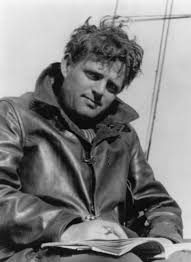
H.L. Mencken
Baltimore Evening Sun/January 13, 1911
I am one of those who regard it as amongst the caprices, and the follies, and the absurdities of this age, that we are accustomed to suppose our fathers were wiser than we are, or more virtuous than we are.—William H. Seward, speech in United States Senate, February, 1856.
Pessimism Is Fashionable
Mr. Seward’s attack, unluckily enough, did not inflict death wounds upon that venerable caprice, that folly, that absurdity, for it still shows signs of a considerable vigor. We are daily bombarded, indeed, with arguments designed to convince us that human life, at least in the civilized countries, is growing more and more unpleasant, as year chases year. A sickly pessimism is the popular philosophy of the hour. On the one hand, the Socialists and their followers try to prove to us that we have no liberty; on the other hand, the neurasthenophobes try to make us believe that we are all dying; and on the third hand, as it were, the Christian Scientists and their fellows preach eloquently against the validity of all that we presume to regard, with honest pride, as Knowledge. Sad the world and black the future! Adam was a wise, a virtuous and a happy man—at least until the age of 250 or so. But who is wise or virtuous or happy today?
The whole case for doom is set forth with great ingenuity in a new book by Mrs. John Martin, entitled “Is Mankind Advancing?” Mrs. Martin is firmly convinced that it is not. Going further, she holds that we have been going backward for more than 2,000 years—that the Greeks of Aristotle’s day were far wiser and healthier and happier than we are today; that they knew more that was worth knowing and got more out of life: that they produced more great men then any other race or even the whole of mankind has produced since; that they solved, once and for all time, the majority of the larger problems of existence, leaving nothing but the sub-problems to rack our puny brains.
Great Men of Old Greece
In support of all this Mrs. Martin ranges the great men of Greece beside the great men of later times, and very quickly convinces herself that the former were giants unmatchable. What city, save Athens, has ever produced an Aristotle? Where are we to look for the counterpart of that truly stupendous intelligence? He created the science of logic. He revolutionized the sciences of ethics, politics and rhetoric. He laid the foundations of what we call the exact sciences. His speculations were boundless in their range. On the one hand he worked out and defined the laws of tragedy and on the other hand he “clearly stated (and then rejected!) the theory of the survival of the fittest.”
A great man, it must be admitted—perhaps the greatest that ever lived—but let us be careful to make a distinction between his actual contributions to knowledge and his mere efforts to contribute to knowledge.
There is, for example, the matter of his approach to the law of natural selection. He made a shrewd guess—but of what value was that guess to the world? Even Aristotle himself was not much impressed by it. As for the world, it went on believing in the theory of special creation for 2,200 years. But when Charles Darwin came to the problem he actually solved it. In other words, Aristotle guessed and Darwin—well, Darwin didn’t guess. That is the measure of the difference between the two men as scientists, and that is the measure of the difference between Greek learning and modern learning and between Greek progress and modern progress.
Three Stages of Speculation
Who was it—Descartes or Comte?—who divided all human speculation into three stages—the theological, the metaphysical and the scientific? At the start men seek an explanation for every phenomenon in the fiat of some god. Then they proceed to explain it in empty words. Finally, they examine the facts. The ancient Jews were theological speculators: they explained everything in terms of the divine will. The ancient Greeks were metaphysicians; they invented a beautiful theory to account for every marvel of the universe. We moderns are scientific; we go straight to the causes of things, and when we can’t find those causes we admit it frankly and wait in patience for an improvement in our eyesight.
It is true enough that Aristotle’s rules of logic have never been improved and that his laws of tragedy are still in force. It is also true that Columbus’ discovery of America has never been improved—and for the same reason. The Greeks solved a number of great problems, they half- solved many others and they made more or less silly guesses at the answers to still others. For whatever they accomplished we give them full credit—and make no effort to go over the same ground again. But the things they actually accomplished were pitifully small in number compared to the things they failed to accomplish—and it is among these failures that we labor today.
If it was an evidence of human progress for Aristotle to discover the laws underlying the process of ratiocination, then it was also an evidence of progress for Harvey to discover the circulation of the blood, and for Bell to invent the telephone. If we compare Aristotle with any given man of today, we must admit that he was the greater, for his work covered a wider range than the work of any man of today, and he probably made a larger number of contributions to knowledge; but if we pass from Aristotle to the whole Greek people we must quickly find that the sum of their contributions to knowledge was infinitely less than the sum of the contributions made by, say, the German, French or the American people during the last few centuries.
Unmatched Moderns
Here is where Mrs. Martin loses herself. She argues that the Greeks were progressive on the ground that they were eager seekers of knowledge, and then she argues that our own vastly greater thirst and capacity for knowledge are not to be accounted as proof that we are making progress. As for her comparisons of individual Greeks with individual moderns, they need not detain us. It is easy enough for her to show that the world has never produced a second Homer or a second Aristotle, but it will be difficult for her to show, among the Greeks, a man who gave so much of true value to his fellows as Gutenberg gave, or Lister, or Pasteur, or Watt.
 The Archive