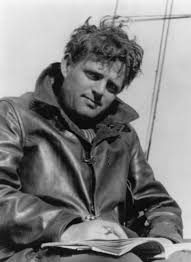
H.L. Mencken
Baltimore Evening Son/February 13, 1911
George Whitefield Chadwick, whose music to the modern morality play of “Everywoman” is to be heard in Baltimore this week, is the dean of native-born American composers, and since the death of Edward MacDowell has probably been the most important figure among them. We have plenty of excellent song-writers in this country and plenty of men who have ventured timidly, now and then, into the larger forms, but Chadwick is the only one who has aimed high at all times and brought down genuinely symphonic ducks. Of his four symphonies, at least one—the third in E major—has received a very respectful hearing in Germany, and of his five string quartets, four are in the repertoire of the Kneisels.
Mr. Chadwick was born in Lowell, Mass., in 1854, and comes of a family long settled in those parts. His great grandfather, a patriot of Revolutionary times, fought in the battle of Bunker Hill. In 1860 the Chadwicks moved to Lawrence, Mass., and there young George acquired the rudiments of his musical education, an elder brother being his chief teacher. At the age of 16 he became the organist of a local church. But a year or so later the pressure of economic necessity forced him into an insurance offive, and there he slaved away for four years, with his thoughts a million miles from his desk.
He wanted to be a musician, to devote his whole live to music, but the best he could do was to give a few hours a week to lessons at the New England Conservatory of Music, in Boston. There his subjects were the piano, the organ and harmony, and he was fortunate enough to receive encouragement from Dudley Buck and Stephen Emery. By the time he was 22, despite the scantiness of his leisure, he had learned enough to set up shop as a teacher, and for a year or so thereafter he occupied the chair of music in a fresh-water college in Michigan. Then he threw up his post, sailed for Europe and burned his bridges behind him.
The city he headed for was Leipzig, where he quickly enrolled himself at the conservatory and began sitting under Richter, Reinecke and Jadassohn, those celebrated whales of musical pedagogy. Of the three, Jadassohn was most impressed by the young American. He invited Chadwick to his home, gave him many private lessons and helped him to the writing of a couple of string quartets and a full-length overture, “Rip Van Winkle.” This “Rip Van Winkle” had a lot of merit in it and soon made its way. Played publicly in Leipzig in 1879, it was voted the best student composition of the year. A year later it was played in Boston by the Harvard Musical Association, and made such a success that it was repeated at the association’s next concert. Then the Handel and Haydn Society tackled it, and the news began to get about that a very promising young American composer was on his way.
Before coming home, in 1880, Chadwick spent a year at Dresden and Munich. In the latter city he received instruction, chiefly in counterpoint, from Rheinberger. The value of this instruction has been demonstrated over and over again by the fluency of Chadwick’s contrapuntal writing, but on the whole he found Rheinberger a dry and uninspiring teacher, and so said good-by to him. At Dresden he worked in his own fashion and without any regular teacher. Most of his time, no doubt, was given to composition, for some of his best work seems to belong to that year.
Once back in Boston, Chadwick became a teacher at the New England Conservatory and then he taught classes for 17 years. A large number of promising pupils came to him, and he turned some of them into very good musicians, indeed—for example, Horatio W. Parker, Arthur Whiting, Wallace Goodrich, Frederic S. Converrse and Henry Hadley. In 1897 he was chosen director of the conservatory, and in this post he still remains. Yale has given him the honorary degree of master of arts, and Tuft’s College, for some inscrutable reason, has made him a doctor of laws—perhaps the laws of acoustics.
Mr. Chadwick’s principal works are his four symphonies, the first of which, in C major, was completed in 1881 and performed by the Harvard Musical Association. No. 2, in B flat major, came four years afterward, and was played by the Boston Symphony Orchestra in 1885; No. 3, in F major, the best of them all, was composed in 1894 and won the first prize of the National Conservatory of Music, in New York. The Boston Symphony, Seidl and Thomas orchestra played it during 1895, and it has since had many other performances, here and abroad. No. 4, in E flat, is still in manuscript.
In addition, Mr. Chadwick has written a serenade for string orchestra, a series of symphonic sketches, a sinfonietta in D major, a number of symphonic poens and half a dozen overtures. Of the last-named, the most important are “Rip Van Winkle,” “Melpomene” and “Adonais.” The “Melpomene” was completed in 1886 and played during that year by the Boston Symphony Orchestra. Since then it has been heard in Leipzig, Paris and at one of the Worcester (England) musical festivals. The “Adonais” was done by the Boston Symphony in 1900. This same great orchestra has also presented the other Chadwick overtures—sometimes under the composer’s direction.
A number of large choral works, with orchestra, also stand to Mr. Chadwick’s credit. Most of them have been heard in Boston or thereabout, and at least one has invaded Germany. His chamber music comprises the five string quartets before mentioned and a piano quintet. The latter was written in 1887, and the Kneisel Quartet has played it. Finally, Mr. Chadwick has written a two-act operetta, a comic opera and a serious music drama, about 60 songs, in all moods, from silly to solemn, and a lot of piano pieces, duets, anthems and compositions for organ.
Mr. Chadwick is a classicist rather than a romanticist. He subscribes, in brief, to the Old Testament of music, and his work is free from those extravagances which many of the run-down younger composers of America, following the wilder Frenchmen and Germans, seem to think so necessary to beauty. He was influenced to some extent by the preachments of Dr. Dvorak, and in some of his compositions there is an obvious effort to write as a native son, but in the main he has not forgotten that reverence for safe and sane music instilled into him at Leipzig.
 The Archive