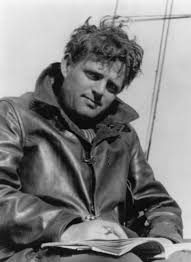
H.L. Mencken
Baltimore Evening Sun/February 29, 1916
§1.
Discoursing in this place the other day, I called attention pleasantly (and I hope inoffensively) to the curious poltroonishness of the Puritan, who has always shirked martyrdom for his opinions. He is, indeed, not a fighter at all, but a lawyer, and his grandest battles have always been fought by more pugnacious allies—e. g., by Germans and Belgians at Waterloo, by Frenchmen at the Marne, and by policemen upon many a foughten field in these fair United States. The fact suggests a way of deliverance from his growing tyranny among us. Let those of us who dissent from his theology and chafe under his rule prepare ourselves to meet him in the way that all such inspired despots have been met and disposed of since the world began. That is to say, let us prepare to arm, drill and show him the ends of our guns. . . . He will withdraw precipitately, as he has always withdrawn. The day on which the first thousand Puritan clergymen are hanged will be the last day of prehensile Puritanism in the United States. . . .
§2.
I seem to spoof and am yet quite serious. The proceedings of the past few years show how completely the Puritan has mastered the business of inflaming and stampeding the mob, and how far he will go when the chance offers. The solemn warnings of such men as Chief Judge Cullen, Brand Whitlock and Mr. Taft deter him no more than so much music on penny whistles; he has his hand on the lawmaking machinery of the republic; he has succeeded in intimidating both Congress and White House, and he will surely not stop with what he has already done. Nay; we must look for an extension and multiplication of sumptuary and oppressive laws far vaster and more despotic than anything we have yet seen. The Puritan’s frank purpose is to reduce the whole American people to shuddering compliance with his own astounding views, to force his brummagem piety down their gullets, to either save them or ruin them. And he will not stop while the going is safe, you may be sure. He will never let up so long as feeble protests are the harshest weapons brought against him. . . .
But ordnance? I opine that ordnance will bring him up, and what is more, I opine that he will be facing it a good deal sooner than he or anyone else seems to anticipate. One American city, Savannah, has already formally repudiated prohibition, threatened to resist it by force—and gained immunity. When the sanctified brethren, having gobbled Baltimore, proceed against Chicago and New York, they will probably be unpleasantly surprised. . . . At all events, I hope so. . . .
§3.
And offer my sword to the cause.
§4.
The Hyphen Again.—Another striking difference between German kultur and American culture is the difference between Beethoven and the phonograph.
§5. Criticism.—One of the principal counts in the native critics’ indictment of Theodore Dreiser has to do with his liking for what he calls a “chemic theory” of human conduct—in philosophical language, for determinism. His flirtations with this theory have brought him many wallops from the literary ladies, male and female, and some time ago a college professor whose name I forget filled two whole pages of the New York Nation (that favorite zeitschrift of the intellectual numskull) with a violent attack upon it. This learned moralist first showed that Dreiser assumed a likeness between animal behavior and human behavior, and then proceeded to argue that such an assumption was naughty. Other critics have done the thing a bit more intelligently, for besides arguing against it on the ground that it is naughty, they have also argued against it on the ground that it is unsupported by the known facts. . . .
Nevertheless, if Dreiser sins, he sins in excellent company, and I have a suspicion that some of his most cocksure antagonists, if they had the rudiments of biology, would feel their cocksureness oozing from them. The truth is that Dreiser’s so-called chemic theory is subscribed to by some of the leading biologists now living, and that its chief American protagonist, Dr. Jacques Loeb, was honored not long ago with an appointment to the Rockefeller Institute staff. Loeb’s whole life work, indeed, is directed toward establishing the truth of this “chemic” theory, and anyone familiar with his later books—for example, “The Mechanistic Conception of Life” or “Artificial Parthogenesis and Fertilization”—must know that he has made much progress toward that end.
Another apostle of the Dreiserian theory is Dr. George W. Crile, who states it clearly (though with some changes) in his latest book, “A Mechanistic View of War and Peace.” (This Crile is the first native American, I believe, to be awarded a Nobel prize in science.) Yet another, if I do not err, is Sir E. Ray Lankester, an ex-president of the British Association and one of the leading comparative anatomists of the world. Yet another is Sir Almroth Wright, the dean of British pathologists. And you will find scores of others in the principal chairs of the scientific faculties of Germany, France, Scandinavia and Italy. . . . Surely a novelist who gets his philosophy from such sources can well afford to shock the pious sensibilities of the half-baked college professors and naif literary ladies who adorn the art of literary criticism in our fair republic. . . .
§6.
The Super-Drama.—Dreiser has just published, by the way, a book of plays, and it constitutes a double novelty, for on the one hand it marks his debut as a dramatist, and on the other hand four of the seven one-actors in it are in a new and fantastic form, and quite unactable. The title of the volume is “Plays of the Natural and Supernatural,” and, aside from the novelty of its contents, it is an excellent specimen of American book-making, and suggests some of the best work of Muller, of Munich, and Fischer, of Berlin. The supernatural character of the four unactable plays arise out of an effort to depict, not only the visible actions of the human characters, but also the irresistible cosmic forces that urge them on. Here, of course, is more determinism; the whole idea of such a piece as “The Blue Sphere” is that human beings are hopeless pieces of flotsam in a swift and turbulent river. That idea runs through all of Dreiser’s work, whatever its form. Even more than Joseph Conrad, he stands fascinated before the relentless and inscrutable operation of the universe, the meaninglessness of human life. That explains, I dare say (as in Conrad’s case), his lack of what commonly passes for humor. Life seems to him to be too mysterious and cruel a thing, even in its lightest phases, for its victims to be laughed at. Superficial criticism often praises him for making Carrie Meeson so clear, for understanding her so well, but the truth is that his achievement in her creation consisted precisely in making visible the impenetrable mystery of her. It is in this sense that “Sister Carrie” is profound. It is not a book of facile explanations, of quasi-scientific cocksureness; it is, beyond all things else, a book of wonder.
No doubt Dreiser’s apparent progress from what they call realism to what they call romanticism (i. e., mysticism) will give the corn-fed critics something to gabble over, and I suppose that not a few of them will hail the change as a sign of repentance and salvation. It is, of course, no change or progress at all. The Dreiser of “The Blue Sphere” and “In the Dark” is exactly the Dreiser of “Jennie Gerhardt” and “The Titan.” It is merely his technique that has changed, and in his next novel, “The Bulwark,” he will show that he can go back without difficulty. . . . In this very play-book, indeed, he prints a piece of realism almost Zolaesque in its manner—a play in which, during the whole action, a coffin with a corpse in it stands on the stage. And in “Old Ragpicker,” in the colloquy between two policemen, he shows how alert he is to the minutest colors and shadings of the commonplace. . . .
§7.
I have preached Dreiser for many years, and shall preach him until I die. He is a clumsy, an ignorant, and sometimes a downright stupid artisan—but a great artist, my dears, a great artist! No other American novelist writing today, not even Mrs. Wharton, is worth mentioning in the same breath with him. He is not only better than all the rest; he is better in senses in which they are not good at all. His only genuine rival was Frank Norris, now fourteen years dead and already half forgotten. (Norris’ complete works have never been published; he sells on the bargain counter.) In England, where even the second-rate novelists are better than our best, Dreiser is better understood, and even in wartime and, despite his German name, he is usually discussed with the greatest respect. But here in the United States the majority of newspaper reviewers read him with salacious eye, as Sunday-school boys read the Old Testament, and then denounce him pontifically as a naughty fellow. I wonder what they will find to shock them in his plays! . . .
§8.
Much is heard in these days of war about the spiritual accord between France and the United States, and various eloquent patriots, with the légion d’honneur in their mind’s eye, fill the newspapers with arguments to the effect that the French set Americans an object lesson in all that makes for civilization and noble living. This is quite true, but it is surely not the reason why Americans in general view the French with sentiments of favor. The fact is that the French characteristic which most attracts and charms the loud, flamboyant Americans of the sort that used to swarm in Paris is not French patriotism, nor French thrift, nor the French love of art, nor the French respect for literature, but what they conceive to be French looseness. The American, in brief, is not bagged by Corneille, Pasteur, Cezanne and Jean d’Arc, but by Montmartre and the Café de la Paix.
The ignorance of French literature in the United States is almost unbelievable. Even Balzac, surely the greatest novelist of all time, is in no sense familiar to American readers—as, for example, Tolstoi and Gorki are familiar—and his chief circulation has always been in the form of gaudily bound “sets” that chiefly appeal to the pornographic. The other arts fare even worse by the sea change. The French painters that have made headway here are Millet, Meissonier, Bouguereau and Rosa Bonheur, a sequence that would make a Frenchman laugh. The only French drama that we have set before us with any degree of frequency is, on the one hand, the drama of cheap thrills (e. g., Sardou, Bernstein) and, on the other hand, the drama of indecency (e. g., the Eternal Triangle garbage of the 70’s and 80’s and the pseudo-medical bosh of Brieux). And of French philosophy, the average American knows only the woman’s club quackery of Bergson, who is no more a Frenchman than Offenbach was, but, like him, a German Jew, and, like him again, a showman first and everything else afterward.
The essential Frenchman, the Frenchman who really stands for something in civilization, the Frenchman who has got definitely beyond the barbarism of Paris, the Frenchman whom the German admires and perhaps sneakingly envies—this authentic Frenchman is quite incomprehensible to the American, as he is to the Englishman. And the reason is not far to seek. His outlook upon life, his fundamental stock of ideas, differs in almost every imaginable way from the stock of the Anglo-Saxon. The Irishman can understand him, and so can the South German, but he must ever remain a mystery to the Anglo-Saxon. What the latter, going to Paris, brings home with him is not any genuine comprehension of the French character, and surely not any admiration for it, but a gloating feeling that he has had a high old time, and that the accommodating Frenchman has allowed him to have it. He is in favor of the Frenchman for that reason, but he would be against him at once if it were proposed to transfer what he understands by French art, and French kultur, and the French knowledge “how to live” to our own fair shores. . . .
§9.
Satis verborum!
 The Archive