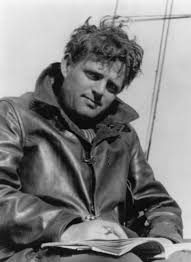
H.L. Mencken
Baltimore Evening Sun/February 22, 1916
§1.
Franz Peter Schubert, whose incomparable Unfinished Symphony in B minor will be the piece of resistance at Mr. Strube’s second concert, stands out in the history of music as one of its most colossal figures, and at the same time as one of its most tragic. When he died at Vienna on November 19, 1828, the bacillus typhosus made the greatest of all its killings, for he was but 31 years old, and the work he had done, amazing as it was, was no more than a preparation for the still nobler work he was so plainly making ready to do. We think of Mozart as dying very young, but Schubert died four years younger. Had he lived out those four years we should have had two or three more symphonies from him, and all of them undoubtedly of the first rank. Had he lived as long as Beethoven it is not at all improbable that he would have equaled old Ludwig on his own ground, and perhaps even surpassed him. No art has ever been served by a man of more luxuriant and powerful genius. He did almost by instinct what most other men, even the greatest, can do only by dint of enormous labor; some of his most complex and beautiful works were done impromptu; he actually wrote “Hark, Hark, the Lark” at the beer table on improvised music paper!
Few men, indeed, have ever showed more clearly that “obscure inner necessity” to create of which Joseph Conrad tells us. From his fifteenth year onward Schubert worked in what amounted to a blind frenzy. He threw off song after song, sonata after sonata, symphony after symphony—threw them off and then straightway forgot them. He sold his immortal works for ridiculous prices, and, failing purchasers, gave them away. His trio in E flat, which is comparable to the very best of Beethoven’s, brought him less than $5. He sold six of his Winterreise songs to Hastinger, the Vienna publisher, for 5 guilden—say $1.25. And when he died (leaving a property inventoried at $12.50) the manuscripts in his room were put at a value of 10 florins—say $2. Among these manuscripts was that of his C major symphony, one of the greatest works of art of all time!
§2.
The symphony that Mr. Strube is to present fared no better than his other works, and he died, in fact, without ever hearing it performed. It was written in 1822, when he was 25 years old, and was designed as a thank-offering to the Gesellschaft der Musikfreunde (Association of Music Lovers) of Grätz, in Styria, which had elected him an honorary member. But after completing its two lovely movements, he apparently turned aside to devote himself to a trivial opera for some Hammerstein of the day, and the rest of it was never written. The incomplete manuscript, it would appear, was sent to Grätz, but it was returned unperformed, and on Schubert’s death, six years later, it passed to his friend Joseph Huttenbrenner, whose son Anselm presented it to the Vienna Gesellschaft der Musikfreunde in 1865. In this year, 43 years after it left the composer’s hands, it had its first performance. It has held a secure place among orchestral masterpieces ever since and is probably played oftener than any other symphony save Beethoven’s C minor.
The reason therefor is not far to seek. It is an exquisite song from end to end, and so its appeal to the auditor who listens with his ears alone is quite as powerful as its appeal to the musician. No man with the slightest capacity for differentiating one tune from another can fail to be delighted by its endless melody, its artless (and yet so superbly artful!) simplicity, its ingratiating tenderness. In it, in truth, there is almost everything that music can ever hope to offer, from mere voluptuousness to the most delicate and elusive poetry. It reaches down, as it were, from the very pinnacles of beauty, charming the most naif and disarming the most sophisticated. Not even Beethoven ever wrote anything that stands so secure against criticism. It is quite as impossible to analyze its charm, particularly in the second movement, as it would be to analyze the enchantment of sunrise. When one has said of it simply that it is pure and perfect beauty one has said nearly all that it is possible to say.
§3.
Schubert, curiously enough, was a bad musician from the standpoint of the musical pedagogues of his time, and particularly as a contrapuntist he had much to learn, and was well aware of it. One of the last acts of his life (he was already in the so-called walking stage of the disease that carried him off) was to call upon Simon Sechtet, a famous theorist of the time, and arrange for some lessons in counterpoint. In his song-writing, of course, counterpoint was not of prime importance, and he had enough of it in his stock to get along, but when he essayed the larger forms he must have been acutely conscious of his limitations. They are visible, indeed, even in the Unfinished, which has passages that are little more than accompanied melodies. Such complex webs as Bach and Beethoven, and even Mozart, wove were quite beyond him, though in mere harmonic ingenuity and daring he was the inferior of no man. There is, I believe, no fugue in any of his orchestral works, and such a grand one as that in the last movement of Mozart’s Jupiter would have brought him quickly into difficulties. Nor did he run to motets and canons in his student days; his genius, from the start, was purely lyrical, and in the lists of his boyhood compositions given by Salieri and his brother Ferdinand there is no mention of any attempts at polyphony.
He was commonly regarded by his contemporaries, even those who recognized his genius, as rather a rough diamond, and most of them were full of advice as to how he should improve himself. At his first meeting with Beethoven, as we know, the great man pointed out certain harmonic errors in the set of variations which the young composer ventured to offer him, and Schubert was overcome with humiliation. Johann Michael Vogl, the celebrated tenor, who introduced his songs to the Vienna public, was not slow to suggest changes in them, and some of these changes Schubert made. Finally, it is known that his old teacher, Antonio Salieri, secretly recommended another pupil when Schubert sought a musical appointment, on the ground, it would appear, that the latter, while undoubtedly talented, was yet somewhat shaky in his theory and thus unsafe. . . . Beethoven, had he lived a few years longer, would have put an end to all this gabble. Until his last illness, he actually knew but five of Schubert’s songs. On his death-bed, he read a set of 60, lent to him by Anton Schindler, and his enthusiasm belongs to musical history. . . . It was, however, too late. Beethoven lived but a few days longer and Schubert himself went to the grave within two years.
§4.
But despite the tendency in the oversophisticated Vienna of the day (remember, it knew Haydn, Mozart and Beethoven intimately!) to pooh-pooh Schubert’s learning, he had many warm admirers and a number of devoted and very valuable friends. The latter, in the main, were not professional musicians, but musical amateurs, and among the best of them were Franz von Schober, the poet, and Baron Josef von Spaun, an old schoolmate at the Convikt School and an eminent judge. Spaun it was who “discovered” him, if such a genius may be said to need discovery, and it was Spaun who fed him and housed him during his hardest days of struggle, and who introduced him to Schober, the good angel of the latter part of his life. Spaun was nine years older than Schubert, and his influence must have been enormous during the latter’s nonage. It was he who walked in one day to find the young composer (then but 18 years old) in the throes of setting “The Erl-King,” and was thus the first to hear that famous song. That evening Schubert took the manuscript to his old school, the Convikt, and it was sung before the boys by a youngster named Benedict Randhartinger, with the composer himself at the piano. It should comfort amateur accompanists to hear that the diabolical triplets of the accompaniment were too much for him, and that, at the second singing, he substituted simple eighth notes. The boys shouted “Alle gute Dinge sind drei!”—and the eighth notes did duty again.
Vogl, the opera singer, heard the song soon afterward, and added it to his repertoire. What is more, he sought out Schubert and gave him a good deal of encouragement and they remained fast friends until the composer’s death. This Vogl, it would appear, had a tenor voice of unusual range, and was characteristically proud of its empyrean flights. His promptings are visible in the extreme range of some of Schubert’s songs, a characteristic which makes them difficult for less agile singers. He sang “The Erl-King” at the Vienna Opera House in 1821, and made a huge success with it. But Schubert had long since despaired of finding a publisher for it, and it was issued privately in that year at the expense of group of friends. During the same year 19 other Schubert songs were published by the same admirers. It is curious to note that at least 12 of them are now among the acknowledged masterpieces of song, and known to all music lovers from end to end of the world.
§5.
One laments the necessity, in dealing with the life and works of so industrious and gifted a man, of having to confess that in many details of his private conduct he fell short of the high standards now set by the right-thinking. I doubt that Schubert, even with the Unfinished Symphony under his arm, would have been welcome at the Vienna Y. M. C. A. (supposing a Vienna Y. M. C. A. to have existed then), for he was of somewhat careless habits, and not infrequently irrigated his inner mechanism with alcoholic beverages. There are legends, indeed, that he sometimes got an overdose, and that he was given to the naif pastime (still pursued by Pittsburgh millionaires in New York and by American Sunday-school superintendents in Paris) of knocking the dishes off the table, breaking the glassware and throwing the forks at the waiter. His common nickname among his friends was Schwammerl, which may be translated roughly as Spongelet. According to his biographer, Edmondstoune Duncan, even the ladies used it in addressing him. Duncan is not speaking sarcastically, for Schubert, despite his personal lack of elegance, was not unknown in good society, and at one time (like Beethoven) he even ventured to fall in love with a baroness. From this unfortunate affair, however, his unmitigated bankruptcy rescued him, and he died a bachelor (again like Beethoven).
Of Schubert’s person and habits we have many descriptions, for he was so pleasant and honest a fellow that he made many friends, and his early death affected them deeply and made them desire to leave some record of him. His general aspect, according to Franz Lachner, the constant companion of his later years, was like that of a hack-driver. His first biographer, Heinrich Kreissle von Hellborn, even says that he looked like a negro. His face (to follow Kreissle further) was “round and puffy,” and he had a low forehead, bushy eyebrows, a stumpy nose, and short, kinky hair. In stature he was very short and in movement very clumsy, and according to another biographer, Wilhelm Chezy, his complexion suggested a tallow candle. His only touch of physical beauty was in his eyes, which were clear, bright and flashing, but even his eyes failed to charm, for they were hidden behind thick spectacles. Baron von Spaun, who ate and slept with him for months running, says that he kept these spectacles on when he went to bed. His reason for doing so was that he was quite blind without them, and that he wanted to be ready for action if a good idea occurred to him during the night. This happened very often, particularly in the early morning hours. Schubert would leap out of bed, light a candle and sit down to his desk in his nightshirt, or even quite naked. Some of his most beautiful songs were thus written.
§6.
As I have said before, Schubert spent the whole of his short life after his sixteenth year in a veritable frenzy of composition, and the enormous mass of music now credited to him is probably only a part of what he actually wrote. After breakfast every morning, no matter where he was or how he felt, he would go to his desk and begin writing, and there he would remain steadily until about 2 o’clock in the afternoon. “When one piece is finished,” he once explained, “I begin another.” This was literally true. Ideas bubbled from him like water from a spring: he had so many that he could not hope to utilize more than a small fraction of them, despite the fact that he worked with almost incredible quickness. He would turn without any sense of difficulty or incongruity from the orchestration of a symphony to the composition of a little song of 30 or 40 measures, and from that to a grand piece for four-handed piano, or a male chorus or a mass. He attempted all forms of composition and succeeded in all of them save the opera.
The laborious striving of Beethoven, whose notebooks show how slowly and gingerly he worked, was not only not necessary to Schubert, but quite impossible. What he had once written he never spent any time rewriting. For better or for worse it had to stand as it first came to him: he was always too horribly beset by new ideas to give any attention to old ones. A few of his early songs were revised later and there is a record of his struggles with one of his operas, but these were isolated violations of his usual practice. Judging from what we know of his habits of work, the Unfinished symphony was probably written at white heat and perhaps within two weeks and then laid aside and forgotten.
As a man Schubert was chiefly notable for two characteristics—his unfailing good humor and his utter indifference to praise. He wrote his immortal works, not to please the critics of his time, but to please himself, and it was all one to him whether they were lauded or damned. This vast indifference to contemporary fame probably explains his generosity, so rare in musicians, to his professional rivals. He knew very well that he was a better man than most of them—for example, than Rossini—but he was apparently glad too see them get along, and there is no record that he talked against them. The worst we hear of him is that he once told some friends that it was easy to write an overture as good as Rossini’s. Some one offered him a glass of wine if he would prove it and he sat down at once and wrote his overture in C. . . . Schubert was wrong. The overture in C was not as good as Rossini’s; it was very much better. . . .
 The Archive