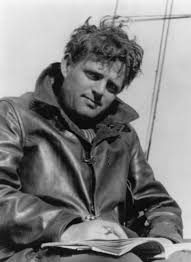
H.L. Mencken
Baltimore Evening Sun/March 31, 1916
§1.
The Cry of Wolf.—Assuming it to be true that every human being, whatever his politics, has an immortal soul, and that this soul, for certain flagrant acts of the individual on earth, may be doomed to torture through all eternity, it yet remains highly doubtful that such a staggering penalty will be inflicted for the acts described by evangelical divines as mortal sins, and so their theatrical “saving” of a given soul may be no more than a feeble mockery. Their performance, in brief, is probably identical to that of the quack who gives a patient some inert “remedy,” and then hogs all the credit when the patient, by operation of well known natural processes, gets well anyhow. This, I venture, is the case with the great majority of rescues effected by Dr. Sunday and the other whoopers of his kidney. It is possible, of course, to believe that the poor half-wits that such fellows “save” have immortal souls, but it is quite impossible to believe that their puerile deviltries merit eternal damnation, or that the infliction of such a punishment upon them, even supposing them to be extraordinarily sinful, is consistent with the concept of a humane, or even an intelligent, Supreme Being. The religion of hell fire and popping eyes here runs aground on the probabilities. The human mind cannot conceive a Supreme Being who is both a fool and a brute. He must be, at worst, as reasonable and merciful as the average police magistrate or Mexican general. Thus the whole glory of the evangelical soul-snatcher melts away. His magic, on inspection, turns out to be nothing but hocus-pocus. He fights and conquers what ain’t.
§2.
Recruiting for the Cloth.—None of Dr. Sunday’s fortissimo dicta has stuck harder in the craws of connoisseurs of piety than his allegation that a good many of the rev. gentlemen of God who sit under him nightly are anything but religious men, and that not a few of them have never enjoyed a genuine religious experience. The theory seems to go counter to the known and obvious facts. Why, indeed, should any man follow preaching as a trade save he be authentically one who knows and loves the Lord, and is irresistibly impelled to spread His Word? The business, despite a superficial air of ease, is laborious and wearying; its rewards are notoriously meagre; its practice is full of hardship, outrage and disappointment. Why continue at it if one is not inflamed by an unquenchable frenzy to save the erring? Why enter it in the first place if one is not moved by a call as plain and as urgent as Paul’s? The answer rescues Dr. Sunday from an apparent dilemma, but is impolite to the rev. clergy. It is this: that a large proportion of the young men who take holy orders annually, and perhaps even a majority of them, are not so much moved by pious enthusiasm as by a quite lowly (and highly human) desire to enter upon a career of admitted honor, and to enjoy the deference, importance, and above all, the power, that go therewith. The clergyman, alone among professional men, does not have to fight for recognition and dignity. He is set upon a pedestal of adulation the moment he reverses his collar, and in so far as the fair ones of his flock are concerned, he is actually held in greater veneration when he is yet young and tender—or, at least, anointed with more eager attention—than when he is old, ripe, and far gone in service to the Lord. In brief, an ambitious (and perhaps a somewhat bumptious) young man can snatch the usufructs of eminence more quickly by going into the church than he can by going into anything else, not even excepting the moving pictures. And more than one young man a year, sensing this accurately, if not consciously working it out, finds himself suddenly heated up by a yearning for Service. Here we meet our old Nietzschean friend, der Wille zur Macht, sneaking in through the back door. Even beneath the white choker, alas, there is the old human desire to dazzle, to be influential and important, to stand above the common run, to be Somebody!
§3.
I do not urge this fact against the rev. clergy in anything approaching an invidious spirit. Nay, I am glad to think that they are not actually as pious as they look—and besides, as old Friedrich used to say, moral indignation is foreign to my nature. Menschliches, yes; but not allzu-Menschiches. No human being can be too human. I like those dominies best who are of this (for want of a better word) bogus order—who frankly enjoy the high privileges and prerogatives of their calling and are not above wishing that they were bishops. They are a good deal better company than the Iokanaans and Savonarolas, and probably do just as much for the Lord. I often suspect, indeed, that some of the pulpiteers who are more lavishly lit up are not as favorably regarded in Heaven as they think they are. Their occasional extravagances must cause a certain distress of there; the kind of wanderer they habitually save surely cannot cause much enthusiasm. Turn to Islam and you will find support for my theory: it is unanimously held by all sound Moslem theologians that the whirling dervishes are frowned upon by Allah, and that Mohammed will exterminate them if he ever comes back to earth.
Moreover, there is nothing incompatible with a reasonable piety in the desire to stand forth shiningly and be of good repute in the world. All of us are moved by that yearning; it is, in fact, at the bottom of all our sweating and striving, despite our efforts to discover more flattering motives. If you find a man who says that he labors solely to serve and honor his wife and children. tell him, with my blessing, that he lies; you will be quite safe. He actually labors to gain the name of one who labors as he says he labors. He is a self-deluded hypocrite, and hence a normal man, and to be loved. We are all climbers, and the only difference between man and man is that one pursues a real advantage and another merely illusory one. I can see nothing illusory in the advantage of being a clergyman and respected by all right-thinking men and sentimental women. Above all, I can see nothing illusory in the advantage of being a bishop. A bishop is one who is indubitably eminent and powerful; he has the power to bind and loose; he is deferred to and heard with respect; wherever he sits is the head of the table. A bishop is Somebody.
§4.
But if it be true, as I have said, that the calling of the clergymen is full of snares and disappointments, then why do the gentlemen who have entered it by the route I have describe remain in it so steadfastly? The answer is simple, and in two sections. In the first place, the honors of the office remain, even in the face of its worst penalties, and the man who has once tasted those honors, knowing how sweet they are, is usually content to let them outweigh his poor pay, his endless immersion in petty spats and squabbles, and his occasional realization of his own essential feebleness and futility. In the second place, it is a disgraceful thing, by Christian convention, for a clergyman to be unfrocked, even by his own voluntary act, and that sense of disgrace makes it inordinately difficult for him to get a decent living in any other profession.
This last conviction is too patent to need evidential support, and too transparent to need explanation. The very fact that a clergyman, by virtue of his office, is accorded almost universal respect is enough to account for the bitterness with which he is punished when he abandons his high prerogative. The world always demands its pound of flesh in such bargains. Once it grants an assumption it resents furiously any flouting of it. This explains, on the one hand, its relentless attitude toward the so-called fallen woman and on the other hand its singular ferocity to recreant Sunday-school superintendents, none of whom ever gets less than three years at hard labor. It is so cruelly impatient of recreant Sunday-school superintendents, indeed, that it begins to show signs of rejecting its old assumption of their virtue and adopting instead an assumption of their guilt. Against this I protest in the name of equity. The Sunday-school superintendent is by no means the fiend in human form that many transvaluers of values think him to be. I have known members of the fraternity who were quite as decent as any other men.
§5.
The Sunday-school.—To the Sunday-school itself, I regret to report, I can give no such certificate of character. On the contrary, it seems to me to be a highly dubious institution, and probably chiefly responsible for the pecksniffian hypocrisy which now distinguishes the American people. No healthy boy between the ages of 4 and 15 actually likes to go to Sunday-school; he is sent there against his will, and against what he honestly regards as his best interest, and he makes a show of acquiescence only to avoid trouble. Moreover, he is commonly sent there by his parents, not primarily because they want him instructed in religion, but because they want to get rid of him for a couple of hours on Sunday, and so be free to enjoy the day—e. g., by reading the Sunday newspapers or by sleeping. In every Sunday-school in Baltimore there are scores of boys whose parents seldom, if ever, frequent the adjacent church. It is quite usual, indeed, for a Sunday-school to be twice or three times as large as its church.
The average boy of 9 or 10 is not so stupid that he does not observe this fact. And when he becomes a few years older he observes the further fact that the religious instruction he gets in Sunday-school is not, as a matter of truth, of any genuine intelligibility or significance—that the persons who impart it to him, in the main, know little more about the theological ideas they presume to expound than a hog knows of international law. The result is that he begins to view the whole instruction cynically, and after awhile the religious impulse behind it. But inasmuch as rebellion against it would be punished, and he knows it, he acquires a facility for pretending to an interest that he does not actually feel—and it is by this process that hypocrites are made, and the Anti-Saloon League gets the votes of thousands of gentlemen with jugs in their cupboards.
If I were a very religious man and had $100,000,000 to spend on spiritual sports, I’d hire a battalion of loose livers to burn down all the Sunday-schools between here and the Mississippi river. It would make the new generation vastly more honest, and probably a good deal more religious.
§6.
The Puritan Principle.—The Puritans arose in the world at a time when the old business of burning men for errors in doctrine was going out of fashion, and their great contribution to criminal theology consisted in a deft substitution of ethics for doctrine. That is to say, they invented the vice crusade in its various forms and showed that it could afford just as much ‘entertainment as the old crusade against heretics. The invention pleased almost everybody, setting aside, of course, its victims or goats. On the one hand, it avoided colliding, as heretic-burning had done, with the rising tide of skepticism, for all good men, whatever their theological politics, agreed that sin was bad and ought to be punished. And on the other hand, it saved the plain people their ancient diversion of seeing some one put to the torture, and so preserved the jollity of Christendom. The Puritans have prospered ever since, particularly in the more savage and bloodthirsty countries—e. g., England and the United States. (In Russia their work of entertainment is done by corpsbrüder in the political department.) They have gone to pot in the countries that run to toleration and sentiment—e. g., France, where capital punishment is very rarely inflicted, and Italy, where it has been long abolished. The capital of Puritanism used to be New England, where barbarities upon the unarmed Indians were first practiced and laboriously improved. Its present capital is to be found south of the Potomac, among the lynchers.
The thing that will scotch Puritanism in the end is ethical skepticism—i. e., the doctrine that “good” and “bad,” “right” and “wrong” are loose and unreliable terms, and often subject to changes in meaning. This doctrine seems almost a platitude; it is difficult to imagine a man studying the history of the world without accepting it. But it is still openly accepted by only a small minority of men, and to the confusion and routing of these rebels the Puritans bring the full force of their theological artillery. That is to say, in order to support their ethical heretic hunting they seek to revive the doctrinal heretic hunting that it displaced. The stars, of course, are against them. In the least civilized countries they will continue to pursue the chase for yet a little while, but in the long run human progress will overtake and destroy them. In two centuries, I venture, Comstock and Parkhurst will seem almost as mythical as Torquemada. We of today can scarcely formulate a clear concept of the Inquisition; it appears altogether fabulous and incredible. The day will come when Prohibition will be as incomprehensible.
§7.
Who Will Step Up?—What a chance for some sardonic millionaire to import 100 Moslem missionaries and turn them loose among the niggeroes of the South!
 The Archive