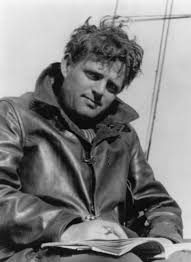
H.L. Mencken
Baltimore Evening Sun/December 30, 1915
That part of the Vice Commission’s report which presents its reasons for recommending “that all houses of prostitution be abolished”—to wit, pages 430–35 of Volume I—consists almost wholly of a réchauffé of the arguments advanced by the saintly Sumner in the Chicago report, and since rolled upon the tongue ad nauseam by all the self-consecrated archangels, lay and clerical, who have contributed to the discussion of the subject. Here Dr. Walker the scientist frankly yields the stage to Dr. Walker the moralist and right-thinker, and the performance of the latter is of a character to delight the most biliously anthropophagous of old maids. The very title of his discourse, indeed, is a confession of its essential emptiness, for his pious resolve that “all houses of prostitution be abolished” comes at the end of 400 pages of overwhelming proofs that the thing cannot be done. All his 14 reasons actually show is that it would be soothing if it were possible, a conclusion with which no one, not even the most reactionary, will make much of a quarrel.
§2.
From end to end of the vice report, in truth, there is not the slightest evidence, direct or indirect, that the closing of the bordellos in the old segregated areas, so eloquently hymned when it was done, has diminished the number of prostitutes in Baltimore by so much as a single girl, or decreased sexual irregularity by so much as a single act per annum, or exerted the slightest restraint upon the free and unlimited dissemination of venereal disease. On the contrary, the evidential drag of the whole gigantic investigation is in precisely the opposite direction. It shows that the great majority of the old-time prostitutes, save when retired by factors immemorially operating—e. g., age, incapacitating disease or marriage with optimists—are still practicing their trade; it shows that recruiting for the profession is still going on with the utmost vigor, and that volunteers to an almost incredible number are constantly offering; it shows that, however imperfect the measures against disease in vogue in the late bordellos, they were f almost surgical perfection when compared to the total absence of such precautions among the women now loose; and it shows, finally, that the prostitute shades by infinitely subtle gradations into the quite respectable and even highly sniffish and conventional (though technically “immoral”) woman, and that it is quite easy for a woman of the franker grades to seek the protective coloration of the more furtive grades, and that any attempt, by police action or otherwise, to track down and dispose of the latter would end swiftly in scandal and absurdity. In brief, the report shows, so plainly that even the Commissioners themselves seem to have been impressed, that prostitution can no more be abolished than ignorance and cupidity can be abolished, and that every attack upon this or that phase of it is bound to prosper some other phase of it, and that the most that may be reasonably done about it is to stand against “the third party . . . who is stimulating the traffic beyond the bounds to which it would be carried by the natural sex instinct.”
§3.
Here, despite Dr. Walker’s lip service to the orthodox platitudes, the report departs sharply from all other vice reports, and takes on an unmistakably immoral and revolutionary character. It throws an old bone to the professional smut-snufflers and sexomaniacs by chanting the rubber-stamp hymn of hate against the brothel and its warning red light (I here mix the metaphors fearfully), but it deals them a foul and unexpected blow by specifically refusing to approve that vast anti-sex, and particularly anti-man, campaign of which they so sweetly dream. Your snouter, remember, is a bald liar when he pretends that he is merely opposed to what he calls “commercialized vice.” What he is actually opposed to is any communication between the sexes of an easy and happy character, and to the end that it may be put down he is always eager to make it bear the worst aspect possible. Hence his moral enjoyment of raids, dark lanterns and traps for the unwary, his ardent support of policewomen and other such inciters to misdemeanor, and his loud demand for laws designed to make such sport more safe. His hope is always for good hunting. He wants to catch as many sinners as possible, to count in as many as possible, to make the number as large as possible. He gets his pleasure, not by protecting women, but by pursuing, detecting and exposing women.
To this hound of virtue, in the past so busy in our midst, the Vice Commission gives but cold comfort. Unlike all previous commissions, it offers no prescription for making Baltimore a chemically pure town. It does not pretend to know how to stamp out sexual irregularity, nor even now to subject it to any appreciable reduction. It is ominously silent about the perunas lately invented in the West—perunas designed frankly to make snoutery safer for the snouter. It is without a single word of praise for the laborious virtuosi who have so long consecrated themselves to spying upon their fellow men—and women. It stops short with a fait accompli, and limns no new Utopia. . . . No wonder the man-eating suffragettes, in the Maryland Suffrage News, call the report “disappointing” and say that it is “to be deplored that the commission did not see fit to put forward specific recommendations with regard to immediate legislative and educational action.” All other commissions have made such recommendations ad infinitum—and turned loose a horde of spies and blackmailers with new laws in their hands. But this one is silent. . . . Surely it would be too much to ask more of a commission headed by a professed Methodist and made up in the main of undisguised moralists.
§4.
As for the actual evidence set forth in the report, it may be said with assurance that, despite all the virtuous protests now going up, it is exceptionally accurate. Here and there, true enough, one beholds the handiwork of the professional “investigator”—to wit, romantic and impossible bosh. But that, it must be said, is not often. The description of the underworld, at least in its main outlines, would be unhesitatingly ratified by any experienced newspaper reporter or police captain. It not only depicts the lives of the chief varieties of prostitute with reasonable fidelity; it also discusses the origin and ultimate fate of these women intelligently, and tells the plain truth about their attitude toward their profession. Bubble after bubble of sentimentality is here blown up. The “seduced” girl well nigh disappears. The “white slave” becomes a joke. There is a plain statement of the inconvenient fact that the average prostitute lost very little and gained a lot when she entered her trade—that it gives her better food and greater ease than she could get in any other way; and anything but worse company—that its much-talked-of horrors, while real enough for the old maid who hears about them from some salacious clergyman, are not noticed by the girl herself.
Nor do I find any exaggeration in Dr. Walker’s estimates of the number of prostitutes and semi-prostitutes at large in our fair city, nor in what he says about the many young girls, say from 14 to 18 years, who are promiscuously immoral and yet not at public vendue. Surely no man who knows anything about the life of the town will be surprised by the news that such girls are numerous. As for his alleged attack upon the police, he says quite specifically—and very truthfully—that very little graft reached the coppers from the old bordellos. There was, in point of fact, no reason why the proprietors thereof should have paid any; so long as they kept orderly places they were, in a sense, protected by the great power of the Supreme Bench. It is during times of suppression and scattering that the police are corrupted. The one infallible way to debauch a policeman is to give him a job that is impossible of performance, and to confront him with persons whose desire to prevent his performance of it has his honest sympathy.
§5.
The one error made by Dr. Walker in his 400 pages of meticulous description of prostitution as he found it in Baltimore lies in his frequent mingling of moralizing and platitudinizing with his statements of fact. But even here he offends much less than any of his predecessors. Whole chapters of his report, indeed, are quite free from that taint; it is only now and then that ethical and theological predispositions pollute the limpid flow of his scientific ratiocination. But let us not view him too harshly here. To say that he has mingled opinions with his evidence is merely to state the obvious; the thing he is discussing is, in large measure, a thing insusceptible of exact study; the best we can do with it is to reach rough opinions about it, and in reaching them a man’s predilections must plainly sway him. I myself, writing this report upon the same evidence, would have left out a good many passages that apparently cost Dr. Walker much thought and effort, but that is merely saying that Dr. Walker and I are different men, though both, I hope, pure in heart and destined for Heaven. Compare his report to any other vice report, and at once you will see its incomparable superiority.
§6. As for Dr. Walker himself, he will need all his philosophy, and perhaps the consolations of some holy friar of his church, to withstand undaunted the simoons and siroccos of abuse which now whirl around him. He has committed the one unforgivable crime in this charming but hypocritical old town: he has ventured to tell the truth, and he cannot hope to escape the punishment that goes with it. I am fully convinced that in his efforts to state that truth he has more than once fallen into gross error and that now and then he has allowed his prejudices to carry him into doctrines almost ludicrous, but on the whole he has certainly given a good account of himself. What reward is he to have for his long and abominably arduous labor? What greater reward could any man desire than the serene inner consciousness of an effort honestly directed, of a job carried through at the top of his capacity?
§7.
Which exhausts my space—and the report itself is scarcely touched! More anon!
 The Archive