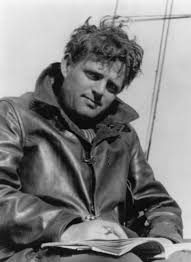
H.L. Mencken
Baltimore Evening Sun/December 28, 1915
Prof. Dr. George Walker, chairman of the Vice Commission, has got himself into the difficulty which inevitably overtakes the man who tries to tell the truth in Baltimore. That is to say, he has brought down upon his head the ire and enmity of all parties to the vice controversy, and there is even some whispered talk (in which I now join very cheerfully) of jailing him as a common rogue, and perhaps even as a German spy. It is sincerely to be hoped that he will not permit this pious gabble to destroy his repose a cappella. The report that he has brought in is not always accurate in its facts, and, as I shall show in due season, more than one of its conclusions is utterly absurd; but all the same it represents the most diligent, honest and unemotional effort to get at the truth about prostitution that the United States has yet seen, and if the minority report of the Hon. Frederick H. Gottlieb be counted as part of it, it stands quite alone in its courage. Compare it to the celebrated Chicago report, or to the imbecile Hartford report, if you want to see just what progress it marks. The Chicago report suited the moralists exactly; its conclusions were precisely those that might have been reached by a committee of shyster preachers or homiphobic old maids. The Walker report, despite a multitude of inevitable concessions to the prevailing sentimentality, represents an unmistakable advance toward the still distant truth. It goes, I should say, at least one-tenth of the way. It is the first vice report, at least in America, that shows the slightest effort or intent to be honest. It is the first vice report that is worth the paper it is written on.
§2.
I have spoken of its inevitable concessions to the prevailing sentimentality. What I mean is that no one in the least acquainted with the personnel of the commission expected it to shake itself free of what is sonorously denominated “moral” influence—that is to say, of the influence of those booming and impudent charlatans, clerical and lay, who are forever posturing before the mob as specialists in virtue, and as constantly losing corpsbrüder after dirty scandals. Several of the commissioners were professional uplifters and dependent for their very livelihood upon their reputation for “moral” orthodoxy; one was the author of a paralogical pseudo-scientific pamphlet, vastly in esteem among bogus archangels; two were women doctors; several were suffragetists and believers in Dr. Donald R. Hooker’s buncombe; yet others were intellectual blank cartridges, and sure to follow the gospel-wagon. This threw all the actual inquiry upon Dr. Walker and one or two others. And who was (and still is) Dr. Walker? A glance at “Who’s Who in America” tells us all we need to know about him, and in his own words. He is a surgeon of sound education and dignified associations—a student at Breslau, Leipzig and Berlin, a member of the Johns Hopkins faculty and staff, and of many learned societies; a man, in brief, of scientific training and presumably of scientific habits of mind. . . . But a Methodist! . . .
I do not state the fact in derision, but merely to offer an important piece of information. Dr. Walker himself, it would appear, regards it as important. It is very unusual for a medical man to mention his religion in “Who’s Who in America.” With one exception, no other member of the Johns Hopkins staff does it. Even Dr. Howard A. Kelly, surely a man of the most intense religious convictions and preoccupations, neglects to say that he belongs to this sect or that. But Dr. Walker mentions his sectarian affiliation specifically and deliberately, and so we may take it that he wishes the fact to be remembered when his name comes up.
§3.
Well, then, what does it mean to be a Methodist? It means to be a subscriber to a certain very definite philosophy, to think of certain things in a very definite way, to have a weltanschauung that is precise and highly characteristic. A Methodist, to begin with, is a Puritan, perhaps almost a super-Puritan; he advocates (and sometimes actually practices) a personal morality that strikes the vast majority of educated men as inordinately rigorous and cruel; he even denounces such universal amusements as theatre-going and card-playing as sinful and of the devil; the few diversions that he approves (e. g., cornet-playing, oyster supping and the public confession of carnality) are regarded as in bad taste by those without the fold. To a Methodist all human acts are either right or wrong, and 99.999+ per cent. of them are wrong. Such a thing as an act that is morally inert is inconceivable to him; even so banal a business as kissing a widow or going to a moving-picture show is full of moral ptomaines and concealed stings. He cannot imagine anything being defended on æsthetic grounds alone, or on logical grounds alone. Thus you make no impression upon him if you argue that it is an intensely beautiful and agreeable experience to have a fling at the vin rouge or to chuck a pretty girl under the chin (or, going further, to give her an honest hug); he sees only the potential immorality of it, the incitement to debauchery, the vast danger of monkeying with alcohol and women. And by the same token it is useless to try to prove to him that this or that new idea or doctrine—e. g., the hypothesis of natural selection—is supported by a host of demonstrable facts; the one thing he wants to know is whether it is supported by what he calls “the truth”—i. e., by the gratuitous and ever-changing doctrines of the Methodist Church—and if it isn’t he will have nothing to do with it, nor with anyone who subscribes to it. In other words, the Methodist is obsessed (almost, indeed, one might say haunted) by ideas of rightness and wrongness; his own life is one long self-examination and his conscience is never easy, and he views everyone about him with incurable suspicion, particularly those who show signs of being happy. Naturally enough, this moral attitude of mind almost completely purges him of what is called (somewhat humorously) Christian charity. He is seldom, if ever, in favor of forgiving a sin and laughing it off; his vote is almost always for the prompt, public and ferocious punishment of the sinner. No one ever heard of a Methodist advocating the repeal of harsh laws on humanitarian and amicable grounds; he is always demanding that the laws be made harsher still; that more and yet more fresh breeds and classes of sinners be put to the torture. And anyone who presumes to protest against this demand, anyone who ventures to argue that, after all, a certain amount of deviltry is inevitable in the world, and probably salubrious—such a heretic is sure to feel his wallop. A Methodist always believes in laws, judges and jails. He is always sure that the rest of humanity could be made as virtuous as he is himself if there were policemen enough, and jailers enough, and hangmen enough, and hells enough.
§4.
This brief sketch of a somewhat tediously familiar philosophy will be accepted, I trust, as reasonably accurate, and pardoned for its inevitable appearance of hostility. Nothing could be more offensive to me than the Methodist-Puritan ethic, save it be the Methodist-Puritan eschatology, but I surely hope that I do not carry my private prejudices into my study of the sacred sciences. Nor am I trying here to deride Dr. Walker’s tremendously diligent and valuable work by making him out a brother to Dr. Billy Sunday and the ox. All I seek to do is to establish and make plain the point of view from which he approached his job, and to show the powerful influences, both subjective and objective, that must be accepted as conditioning every word of his report, just as my own racial antipathy to Puritans and Pecksniffs would have conditioned it had I been the author of it. On the one side, he was pulled powerfully toward a facilely moral and hence indignant view of sexual frivolity by his confessed (and even boasted) allegiance to the Methodist-Puritan ethic, and on the other side he was pushed toward it almost as powerfully by the psychic radiations of his fellow-Commissioners, most of whom were hollowheads of a sweetly smug orthodoxy and firmly committed to a pious verdict before they had heard a word of evidence.
In opposition one finds, likewise, two factors. First, the stubborn anti-Puritanism of the Hon. Mr. Gottlieb, a man obviously poisoned by Teutonic ideas, and secondly, the anti-Puritanical drag of Dr. Walker’s own interest in scientific questions and habit of dealing with exact facts. There must have been a fine battle in his ego between science and Methodist tradition; a bout to delight a new Huxley! Page after page of his report reveals his fearful adventures in the No Man’s Land between virtue and the truth. Over and over again one can see him struggling at the difficult task of linking the two together. . . . It astonishes me that he has not aged since he undertook the business. Imagine Huxley and Gladstone drawing up a criticism of Genesis to satisfy both! . . .
§5.
And what is the net product of these antagonistic forces? The net product, as I said at the start, is the only honest vice report so far published in the United States. In it the Methodist and the scientist fight it out—and at the end the scientist holds the field. Here and there, true enough, the Methodist hangs to a trench, though very insecurely—for example, the old segregation trench, so long fought over. Here and there one sees areas so badly torn up and so vastly soaked with crocodile tears that it is impossible to determine which side has them. Here and there one notes a Golden Text hanging from a tree and hears a Sunday-school hymn coming from subterranean depths. But on the whole there is very little comfort in the scene for the smut-snufflers. On the whole, there is no encouragement to snoutery. On the whole, the professional women-hunters are left disgruntled and wailing.
This last fact is the best of all testimonials to the fundamental honesty of the report. It ratifies the dispersal of the once segregated women, a fact accomplished, but it specifically does not approve the plans long cherished by the pornophobes for fresh and even sweeter enterprises. It is no secret that they confidently expected an indorsement of the abominable Kenyon law, and various other such dishonest sure-cures. It is well known that the wilder man-hating suffragettes among them looked for a recommendation designed to obliterate all sexuality from the world at one fell swoop. It is common knowledge that there were fond hopes, in certain quarters, of an adoption of the notorious Chicago report in toto. These hopes and expectations are all disappointed. The report holds out no hand to the gentlemen who make their living pursuing miserable prostitutes, nor to the moral sportsmen who finance the hunt, nor to the clerical mountebanks who seek a filthy eminence by publicly whooping it up. It is nine-tenths gas and mush, true enough, but in the last analysis there is something solid under it. It reeks with pecksniffery, but it lets loose a naked truth or two at the end.
§6.
So much for the conclusions of a scientific Methodist, or Methodist scientist, as you choose. The bird seems almost fabulous, but lays an eminently edible egg. I shall discuss the report in detail in a serious of chaste essays in this place, praising it affably wherein it is scientific and rocking with mirth over it wherein it is Methodistic. In passing I can only record my amazement, as a veteran of the pornographic shambles, at the amount of labor and ingenuity put into the investigation by Dr. Walker, and my admiration for his diligent effort to be open-minded and truthful. It is a highly creditable thing for a man of his professional principles to go even a tenth of the way toward the sour and godless truth about the social evil; it is, moreover, a comforting presage of what will be found out and told about it when the job is undertaken by a man to whom theology is a mere sound of empty words, and what might be or ought to be is as nothing compared to what actually is. We have proceeded, in this inquiry into sexual heterodoxy, from such poseurs as Dean Sumner and such ludicrous perunists as Dr. Hooker and the angelic Leverings to so intelligent and praiseworthy a man as Dr. Walker; before long we may go the whole hog. That is to say, we may go from scientists who are also this or that to scientists who are merely scientists. Which progress, I opine, will leave the Hon. C. J. Bonaparte and the boy snouts on the burning deck. . . .
 The Archive