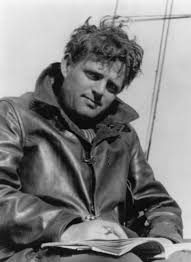
Mark Twain
Daily Alta California/September 5, 1869
Niagara Falls is one of the finest structures in the known world. I have been visiting this favorite watering place recently, for the first time, and was well pleased. A gentleman who was with me said it was customary to be disappointed in the Falls, but that subsequent visits were sure to set that all right. He said it was so with him. He said that the first time he went the hack fares were so much higher than the Falls that the Falls appeared insignificant. But that is all regulated now. The hackmen have been tamed, and numbered, and placarded, and blackguarded, and brought into subjection to the law, and dosed with Moral Principle till they are as meek as missionaries. They are divided into two clans, now, the Regulars and the Privateers, and they employ their idle time in warning the public against each other. The Regulars are under the hotel banners, and do the legitimate at two dollars an hour, and the Privateers prowl darkly on neutral ground and pick off stragglers at half price. But there are no more outrages and extortions. That sort of thing cured itself. It made the Falls unpopular by getting into the newspapers, and whenever a public evil achieves that sort of a success for itself, its days are numbered. It became apparent that either the Falls had to be discontinued or the hackmen had to subside. They could not dam the Falls, and so they dammed the hackmen. One can be comfortable and happy there now.
Signs and Symbols
I drank up most of the American Fall before I learned that the waters were not considered medicinal. Why are people left in ignorance in that way? I might have gone on and ruined a fine property merely for the want of a little trifling information. And yet the sources of information at Niagara Falls are not meagre. You are sometimes in doubt there about what you ought to do, but you are seldom in doubt about what you must not do. No—the signs keep you posted. If an infant can read, that infant is measurably safe at Niagara Falls. In your room at the hotel you will find your course marked out for you in the most convenient way by means of placards on the wall, like these:
“Pull the bell-rope gently, but don’t jerk.”
“Bolt your door.”
“Don’t scrape matches on the wall.”
“Turn off your gas when you retire.”
“Tie up your dog.”
“If you place your boots outside the door they will be blacked—but the house will not be responsible for their return.” [This is a confusing and tanglesome proposition—because it moves you to deliberate long and painfully as to whether it will really be an object to you to have your boots blacked unless they are returned.]
“Give your key to the omnibus driver if you forget and carry it off with you.”
Outside the hotel, wherever you wander, you are intelligently assisted by the signs. You cannot come to grief as long as you are in your right mind. But the difficulty is to stay in your right mind with so much instruction to keep track of. For instance:
“Keep off the grass.”
“Don’t climb the trees.”
“Hands off the vegetables.”
“Do not hitch your horse to the shrubbery.”
“Visit the Cave of the Winds.”
“Have your portrait taken in your carriage.”
“Forty percent in gold levied on all peanuts or other Indian Curiosities purchased in Canada.”
“Photographs of the Falls taken here.”
“Visitors will please notify the Superintendent of any neglect on the part of employees to charge for commodities or services.” [No inattention of this kind observed.]
“Don’t throw stones down—they may hit people below.”
“The proprietors will not be responsible for people who jump over the Falls.” [More shirking of responsibility—it appears to be the prevailing thing here.]
I always had a high regard for the signers of the Declaration of Independence, but now they do not really seem to amount to much alongside the signers of Niagara Falls. To tell the truth, the multitude of signs annoyed me. It was because I noticed at last that they always happened to prohibit exactly the very thing I was just wanting to do. I desired to roll on the grass; the signs prohibited it. I wished to climb a tree; the sign prohibited it. I longed to smoke; a sign forbade it. And I was just in the act of throwing a stone over to astonish and pulverize such parties as might be picknicking below, when a sign I have just mentioned forbade that. Even that poor satisfaction was denied me (and I a friendless orphan).—There was no recourse now, but to seek consolation in the flowing bowl. I drew my flask from my pocket, but it was all in vain. A sign confronted me which said:
“No drinking allowed on these premises.”
On that spot I might have perished of thirst, but for the saving words of an honored maxim that flitted through my memory at the critical moment—“All signs fail in a dry time.” Common law takes precedence of the statutes. I was saved.
The Noble Red Man
The noble Red Man has always been a darling of mine. I love to read about him in tales and legends and romances. I love to read of his inspired sagacity; and his love of the wild free life of mountain and forest; and his grand truthfulness, his hatred of treachery, and his general nobility of character; and his stately metaphorical manner of speech; and his chivalrous love for his dusky maiden; and the picturesque pomp of his dress and accoutrement. Especially the picturesque pomp of his dress and accoutrement. When I found the shops at Niagara Falls full of dainty Indian beadwork, and stunning moccasins, and equally stunning toy figures representing human beings who carried their weapons in holes bored through their arms and bodies, and had feet shaped like a pie, I was filled with emotion. I knew that now, at last, I was going to come face to face with the Noble Red Man. A lady clerk in a shop told me, indeed, that all her grand array of curiosities were made by the Indians, and that there were plenty about the Falls, and that they were friendly and it would not be dangerous to speak to them. And sure enough, as I approached the bridge leading over to Luna Island, I came upon a noble Son of the Forest sitting under a tree, diligently working on a bead reticule. He wore a slouch hat and brogans, and had a short black pipe in his mouth. Thus does the baneful contact with our effeminate civilization dilute the picturesque pomp which is so natural to the Indian when far removed from us in his native haunts. I addressed the relic as follows:
“Is the Wawhoo-Wang-Wang of the Wack-a-Whack happy? Does the great Speckled Thunder sigh for the war=path, or is his heart contented with dreaming of his dusky maiden, the Pride of the Forest? Does the mighty sachem yearn to drink the blood of his enemies, or is he satisfied to make bead reticules for the papooses of the pale face? Speak, sublime relic of by-gone grandeur—venerable ruin, speak!”
The relic said:
“An is it mesilf, Dinnis Hooligan, that ye’d be takin for a bloody Injin, ye drawlin’ lantern-jawed, spider-legged divil! By the piper that played before Moses, I’ll ate ye!”
I went away from there.
Bye and bye, in the neighborhood of the Terrapin Tower, I came upon a gentle daughter of the aborigines, in fringed and beaded buckskin moccasins and leggings, seated on a bench with her pretty wares about her. She had just carved out a wooden chief that had a strong family resemblance to a clothes pin, and was now boring a hole through its abdomen to put his bow through. I hesitated a moment and then addressed her:
“Is the heart of the forest maiden heavy? Is the Laughing-Tadpole lonely? Does she ourn over the extinguished council-fires of her race and the vanished glory of her ancestors? Or does her sad spirit wander afar toward the hunting grounds whither her brave Gobbler-of-the-Lightnings is gone? Why is my daughter silent? Has she aught against the pale-face stranger?”
The maiden said:
“Faix, an is it Biddy Malone ye dare to be callin’ names! Leave this or I’ll shy your lean carcass over the cataract, ye sniveling blagyard!”
I adjourned from there, also. “Confound these Indians,” I said, “they told me they were tame—but, if appearances should go for anything, I should say they were all on the war-path.”
I made one more attempt to fraternize with them, and only one. I came upon a camp of them gathered in the shade of a great tree, making wampum and moccasins, and addressed them in the language of friendship:
“Noble Red Men, Braves, Grand Sachems, War-Chiefs, Squaws and High-You-Muck-a-Mucks, the pale face from the land of the setting sun greets you! You, Beneficent Polecat—you, Devourer-of-Mountains—you, Roaring Thundergust—you, Bullyboy-with-a-Glass Eye—the pale face from beyond the great waters greets you all! War and pestilence have thinned your ranks and destroyed your once proud nation. Poker, and seven-up, and a vain modern expense for soap, unknown to your glorious ancestors, have depleted your purses. Appropriating in your simplicity the property of others has gotten you into trouble. Misrepresenting facts, in your sinless innocence, has damaged your reputation with the soulless usurper. Trading for forty-rod whiskey to enable you to get drunk and happy and tomahawk your families has played the everlasting mischief with the picturesque pomp of your dress, and here you are, in the broad light of the nineteenth century, gotten up like the ragtag and bobtail of the purlieus of New York! For shame! Remember your ancestors ! Recall their mighty deeds! Remember Uncas!—and Red Jacket!—and Hole-in-the-Day!—and Horace Greeley! Emulate their achievements! Unfurl yourselves under my banner, noble savages, illustrious guttersnipes—”
“Down wid him!”
“Scoop the blagyard!”
Hang him!”
“Burn him!”
“Drownd him!”
It was the quickest operation that ever was. I simply saw a sudden flash in the air of clubs, brickbats, fists, bead baskets, and moccasins—a single flash, and they all appeared to hit me at once, and no two of them in the same place. In the next instant the entire tribe was upon me. They tore all the clothes off me, they broke my arms and legs, they gave me a thump that dented the top of my head till it would hold coffee like a saucer; and to crown their disgraceful proceedings and add insult to injury, they threw me over the Horseshoe Fall and I got wet.
About ninety or a hundred feet from the top, the remains of my vest caught on a projecting rock and I was almost drowned before I could get loose. I finally fell, and brought up in a world of white foam at the foot of the Fall, whose celled and bubbly masses towered up several inches above my head. Of course I got into the eddy. I sailed round and round in it forty-four times—chasing a chip and gaining on it—each round trip a half a mile—reaching for the same bush on the bank forty-four times, and just exactly missing it by a hair’s breadth every time. At last a man walked down and sat down close to that bush, and put a pipe in his mouth, and lit a match, and followed me with one eye and kept the other on the match while he sheltered it in his hands from the wind. Presently a puff of wind blew it out. The next time I swept around he said:
“Got a match?”
“Yes—in my other vest. Help me out, please.”
“Not for Joe.”
When I came around I said:
“Excuse the seemingly impertinent curiosity of a drowning man, but will you explain this singular conduct of yours?”
“With pleasure. I am the coroner. Don’t hurry on my account. I ca wait for you. But I wish I had a match.”
I said: “Take my place and I’ll go and get you one.”
He declined. This lack of confidence on his part created a coolness between us, and from that time forward I avoided him. It was my idea, in case anything happened to me, to so time the occurrence as to throw my custom into the hands of the opposition coroner over on the American side. At last a policeman came along and arrested me for disturbing the peace by yelling at people on shore for help. The Judge fined me, but I had the advantage of him. My money was with my pantaloons, and my pantaloons were with the Indians.
Thus I escaped. I am now lying in a very critical condition. At least I am lying, anyway—critical or not critical.
I am hurt all over, but I cannot tell the full extent yet, because the doctor is not done taking the inventory. He will make out my manifest this evening. However, thus far he thinks only six of my wounds are fatal. I don’t mind the others.
Upon regaining my right mind, I said:
It is an awfully savage tribe of Indians that do the bead work and moccasins for Niagara Falls, doctor. Where are they from?”
“Limerick, my son.”
I shall not be able to finish my remarks about Niagara Falls until I get better.
 The Archive