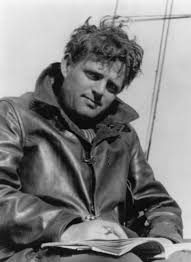
Ambrose Bierce
Cosopolitan/January, 1909
MARIE CORELLI’S latest is described as “a story that throbs with emotion.” Lance it.
“THE MAN WITHOUT A HEAD” appears to have been written by him.
“LOOK AT RUSSIA’S LITERATURE!” says Maxim Gorky in a fine burst of enthusiasm. “Just think of the names!” With pleasure, monsieur, if you will not ask us to speak them.
THERE IS NEVER any real progress. China, which has nearly subdued the Yellow River and the bubonic plague and is overcoming the opium habit, has taken to newspapers.
MADAME NAZIMOVA is of the conviction that Ibsen was an incomparably better dramatist than Shakespeare. So be it—I shall not dispute with you, madam: you are an incomparably better actress than I am.
“THE MAN WHO ENDED WAR,” by Hillis Godfrey, is largely devoted to tracing the fellow’s identity. He turns out to be neither the old Emperor of Austria nor the new King of Bulgaria. Let that suffice.
IN “UNCLE SAM’S BUSINESS,” Mr. Crittenden Marriott tells young folk all about the many activities of that busiest of busybodies, the United States Government, which in these days undertakes almost every task but that of governing.
ANDREW CARNEGIE’S new book, “Problems of Today,” will be “accepted” by a good many public libraries. Lack of forethought is not one of Mr. Carnegie’s characteristic delinquencies: any bairn of his brain is assured of a considerable number of roofs over its head.
ONE OF MY FRIENDS met Mr. F. Marion Crawford and Mrs. Crawford at a railway station in Italy, as all three were about to board a train. Pretty soon Mr. Crawford was missing, and his wife inquired about him rather anxiously. ‘‘Calm yourself, madam,” said my friend; “I think he stepped back into the waiting-room to write a novel.”
Mr. JAMES HOPPER is so good a writer that one is sorry to see him “wasting himself” in novels of reform—of which we have a sickening abundance. We are told that “9009,” written in collaboration with Mr. F. R. Bechdolt, “should bring about some very radical changes in our prison system.” What most needs doing to our prisons is to put more rascals into them and keep them there.
UNTIL THE NEWLY KINDLED “burning” question, ‘‘Was Stevenson a realist?” shall have burned itself out and its ashes undergone “the last analysis,” prudent readers will suspend judgment as to the charm of his work. This is pretty hard on impetuous souls who have too precipitately enjoyed “Treasure Island,” or thought themselves content with “The Master of Ballantrae.”
NEWSPAPERS AND MAGAZINES that have been congesting themselves with character sketches of the rich, and narratives of what they eat, how they lie down and get up, and so forth, should not be censorious when Mr. Rockefeller takes himself so solemnly as to put out an autobiography. They should have known that if constantly written about he would one day write about himself. The fellow probably knows that he cannot write, but how can he know that he is not an interesting subject? He is not the first millionaire who has felicitated himself on living in a country where wealth is respected for its own sake.
THE HON. EDWARD BARBER of Michigan, who recently burst into bloom as a poet, has fruited as a plagiarist. This venerable gentleman celebrated his eightieth birthday by publishing a fine poem composed, as he explains, when he was “half asleep.” The half of him that was asleep is his conscience, for the poem was “conveyed” entire from Prof. E. D. Morris, and is thirteen years old. If the Honorable Edward were himself only thirteen he might be wise enough to steal a poem of eighty. Most poems of that age have been sixty-seven years longer forgotten than most poems of thirteen.
“THEIR DAY IN COURT,” Mr. Percival Pollard’s book to be, is largely a spirited arraignment of today’s American literature and the female element thereof—at which he mocks. So I am told by one who has seen the manuscript; Mr. Pollard, I think, is in Europe. The book is to have enough of reminiscence to personalify it and procure for its author the disesteem of the solemn egophobes to whom “the first person singular” means the adversary of souls. It is to be published in London, where, it is to be hoped, our “ladies intellectual” may be spared the pain of seeing it.
THE NOVEL THAT IS “appealing,” “convincing,” “vital,,” “significant” and “compelling” seems to be about the same kind of novel as the one that formerly was none of these things. The slang of the critics has altered a bit, that is all. In a few years it will have altered again: we shall hear no more of these qualities, and the fiction of that day—exactly like the fiction of this—will perhaps be just as accurately described as “squealy,” “piping,” “consequent,” “fological” and “abracadabric.” Meantime, our sharpest need is a reviewer of reviewers—who should have had experience in the gentle art of poking a stick into a hornet’s nest.
WE HAVE ALL HEARD of the “canny Scot,” but “canned Scott” is something new, offered by Mr. S. R. Crockett. It consists of abbreviated stories from the novels of Sir Walter, and might appropriately be labeled “Predigested Waverley.” Mr. Crockett explains that the stuff was originally put up for home consumption. As his own children appeared to thrive on it he decided, kind man, to put it on the market. The incident goes to show that authors might advantageously be exempt from the President’s fulminations against “race suicide.” Here’s a health to the childless father if he writes!
WITH THE PUBLICATION OF “The Gorgeous Isle” I hope Mrs. Atherton has done with the English “hupper suckles” and will henceforth give us something less unhuman than these fish-blooded folk, their manners and emotionettes. Great as is her genius, it cannot quite breathe into them the breath of life, even when, as in “Ancestors” and the present book, she removes them from their native whited sepulchers to a more electrical environment. One Californian señorita of the days before the Gringo came is worth a thousand of Mrs. Atherton’s high-bred heroines “from the overseas.” Why should she mix with her sacred flame a flame profane by telling the lives and loves of these spirits of inferior fire? Yet “The Gorgeous Isle” is well worth reading—all Mrs. Atherton’s work is that.
Mr. W. C. MORROW, author of “Lentala,” is a tremendous fellow in his way, but will not always allow himself his way. Twenty or thirty years ago he wrote some of the most striking and “haunting” short stories in the language, some of which are in “The Ape, the Idiot, and Other People.” Then in conducting a school of writing he inevitably learned what he felt compelled to teach and acquired the “happy ending” habit. He never fell into “mental analysis”—that is something that cannot be taught to pupils— and can still tell a story without stopping to open the bosoms of his characters and dissect their motives and emotions; so there is justification for a hope of his reversion to the true faith. I am as yet unable to say what he has done in “Lentala.”
 The Archive