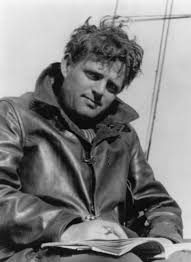
H.L. Mencken
The Smart Set/November, 1913
PLOWING through a London autograph catalogue the other day, I came upon this item:
GISSING (Geo.) A. L.s., 21/2 pp. £1.15s.
I have been reading Hall Caine’s new book, which has had such prodigious success. Either I am bemused with envy, or the clamorous praise of the reviewers is utterly preposterous. I am unable to find a single point in the book which merits high laudation; it seems to me always commonplace and often vapid.
Half sound criticism—but the other half the sneaking envy which Gissing himself suspected. The fact is that the reviews of Hall’s triennial volumes of passion, poison and petrifaction seldom do him complete justice. The hand of every cornfed critic is against him. It is the fashion to make fun of him, to scoff at his carefully manufactured thrills, to wax satirical over his prodigies of press-agenting, to appraise his art in terms of his whiskers, to dismiss him as a mountebank, a Barnum, a literary Roosevelt. Even the new Everyman’s Encyclopedia, otherwise an admirably judicious work, speaks of him contemptuously as the sparring partner of Marie Corelli.
Does he deserve all these superior sneers? A few of them, no doubt, but not all! Say that he is tawdry, that he wallows in the obvious, that he is apparently incapable of clear thinking, and you tell only the simple truth about him. But say that he is a bad writer, that he doesn’t know his trade, that he gets the public’s money by tricks requiring no honest skill, and you are wholly unfair to him. In sober truth, he is a highly accomplished and long-headed artisan, a virtuoso of the tried and true, a master of the stock situation, the orthodox sentiment, the popular style. He knows exactly what the public wants, and what is more important, he knows exactly what it doesn’t want. And to possess that knowledge, and to be able to turn it into dollars and cents, year in and year out, regardless of competition and criticism, is to be a man of very respectable talents indeed.
His current book, ‘‘The Woman Thou Gavest Me” (Lippincott), is in his best and most characteristic manner. That is to say, it is a sort of compendium or boiling down of all the sloppy novels of the last hundred years—plus the suave, ingratiating personality of Hall himself. It is a circus in which all the lions are aged and toothless, and all the acrobats are helped out with wires, and all the spangles are full of verdigris, and all the clowns tell jokes out of Joe Miller—but with a brisk and elegantly barbered ringmaster cracking the whip. Massage your scalp until it bleeds, and you will not recall a single standard character or situation that is missing. See them troop into the ring: Bluebeard, Cinderella, Don Juan, Prince Charming, Hedda Gabler, Abelard and Heloise, Tom Jones, Col. Newcombe, King Lear, Jacob and Rachel, the Tombs Angel, the wicked earl, the cruel father, the honest Jack tar, the wife in name only, the osseocaputal family solicitor, the faithful old priest, the innocent divorcée, the worldly bishop, the love child, the adventuress, the huzzahing villagers. Hall takes no chances: he wrings the vulgar with the problems and the pathos that have made them sweat and weep before; he takes them over all the old ground. Here are dear and ancient friends: the intercepted letter, the loveless marriage, the midnight flight, the innocent adultery. Here is the tested stuff, the immemorial stuff, the sure stuff. And here it is with new frills, new magnetos, new sauces. A dash of mental telepathy, a pinch of white slavery, a drop or two of frenzied finance, a garnish of polar exploration—and behold, the Duchess and Augusta Evans have become Hall Caine! Is the Montessori method missing? Is there no mention of eugenics? Does one seek in vain for the initiative and referendum? Have patience, beloved! Hall is still in the prime of life. He will write other books. Besides, he has a certain conservatism, a fastidious disinclination for the too new. A novelty must prove its worth before he embalms it in his amber. He will reach the Montessori method along toward 1915, the recall of judicial decisions the year after, sex hygiene in 1917.
But what is “The Woman Thou Gavest Me” about? About everything under the sun! But more specifically, about the virtues and sufferings of Mary O’Neill, daughter to Daniel O’Neill, the harsh and beetle-browed old millionaire. Daniel makes his millions in America but comes back to the Isle of Ellan to spend them. First he buys a castle; then he buys a titled son-in-law—to wit, the libidinous Lord Raa. Mary protests against marrying this singularly immoral young man, but her Gothic father forces her into it. Her objections, however, continue unabated after the ceremony, and she succeeds in resisting her husband’s disgusting advances. He consoles himself with Alma Lier, an American divorcée, and presently Mary herself falls in love with Martin Conrad, an Antarctic explorer. The night before Martin sails for the Far South she visits his apartment. A row of stars. A year later we find her in London, hiding from her husband and father. Her money has run out and she is trying to support herself and her child by slaving in a sweatshop. A cruel employer discharges her. What to do? Another row of stars. It is night in Piccadilly. A pale, sad woman joins the parade of Marguerite Gautiers. Discerning a tall, well dressed man approaching, she selects him for her début. As she halts him, a street lamp suddenly illuminates his face. He is Martin Conrad, home from the South Pole! ‘‘Mary! Mary! … Don’t be afraid! It’s I!”
Decent English, you will observe, even in a moment of supreme passion: not “It’s me,” but “It’s I.”
And so from end to end of the book, for all its nearly six hundred pages. That is precisely the secret of Hall Caine: he dishes up the old flubdub in a sanitary and professional manner. He knows what the people want; he knows what they have always wanted. He doesn’t waste his time devising new and preposterous situations, in the fashion of our native McGraths and Chamberses. He doesn’t try to invent new characters. Instead, he devotes all his energies to describing the old situations and the old characters in a new and superior way. In brief, he depends upon technique rather than upon inspiration. And he gets away with it, to borrow a phrase from vaudeville, because he actually has that technique, because he is a first rate journeyman fictioneer, because he really knows how to write. I defy any other popular novelist to tell the story of “The Woman Thou Gavest Me” without making it ridiculous. It runs close to burlesque in a score of places; it is full of dynamite. But Hall manages it without faltering; he squeezes every imaginable tear out of it; he lifts it over the bad places with admirable skill. . . . Let us laugh at the dear fellow less and praise him more. Say what you will against his taste, he at least accomplishes the thing that he sets out to do—he at least reaches the public diaphragm with unerring stroke. The result is not art, perhaps, but you will go wrong if you deny it all merit… A very clever worker in paste and celluloid. The novelist foreordained for a people clad in near-silks and “mixed” woolens, and fed upon potted chicken made of bleached veal, and led by statesmen who steal one another’s platforms. The Munyon of prose fiction.
Another gifted manufacturer of popular confectionery is Mrs. Gene Stratton-Porter, of Indiana, whose latest volume, “Laddie”’ (Doubleday-Page), is crossing the 200,000 mark as I write. (But think of Caine’s sales, as given in a sort of appendix to ‘‘The Woman Thou Gavest Me”: 397,966 for “The Manxman,” 458,427 for “The Bondman,” 643,228 for “‘The Christian,” 702,212 for ‘‘The Eternal City”!) The foundation of “Laddie” (what a ghastly name for a hero!) is the ancient tale of Romeo Montague and Julia Capulet, but Mrs. Porhas has given it a happy ending and added a number of well esteemed characters, including the Infant Terrible, the Innocent Condemned and Old Mother Hubbard. This, however, is not her only, nor even her chief addition to the literary pot-au-feu: what she principally contributes is a deft and delectable compound of homely humor and sweet, sweet sentiment—in brief, the sort of stuff that makes an honest American smile through his tears. This is what Americans most esteem in a humorist: the gift of pathos, the talent for concealing a sob in a snicker. That explains, I dare say, the success of such things as “Mrs. Wiggs of the Cabbage Patch” and the national veneration for Dickens, despite his uncomfortable plain speaking in his serious moods; and it explains, too, the national distrust of satirists. The Puritanical feeling that mirth is somehow discreditable still lingers in the subcellars of the national consciousness. But if it can be given a moral, a sentimental, a lachrymal quality, then it escapes excommunication. Mrs. Porter, like the estimable Caine, is a highly dexterous performer. She writes so well, indeed, that large sections of ae book have genuine merit as prose fiction. It is only when she sets the old machinery in motion and exposes the fundamental banality of her “‘story” that she becomes commonplace and tedious.
The Capulets and the Montagues appear again in “Otherwise Phyllis,” by Meredith Nicholson (Houghton-Mifflin) and again the scene is Indiana. This time, however, we are not among country folk, but among the proud aristocrats of a town of fifteen thousand souls. Phyllis Kirkwood, the heroine, is a very charming young lady, indeed, and the scenes she adorns are unmistakably midwestern. If you liked Mr. Nicholson’s “A Hoosier Chronicle,” you will like this second serving from the same kettle.
The somewhat rare quality of gusto, so visible in all of Meredith and most of Henry James, gives distinction to “The Dust of the Road,” by Marjorie Patterson (Holt), as it did to her first novel, the bouncing and prestissimo “Fortunata,” that bolt from the blue of yesteryear. I say “rare’’—and weep for the fact. Most of our current Zolas and Jane Austens have the manner of surgeons cutting off ears, even when engaged upon ostensibly humorous fabling. One somehow gets the impression that literary composition is painful to them, whatever its rewards and usufructs—that they get little genuine pleasure out of the society of their characters. A department store best seller, otherwise fairly done, is often tedious and depressing for that reason alone. Go to Thackeray or Dickens and you will find a different air. Thackeray glows and bubbles from end to end of “Vanity Fair,” even in the midst of scandals and tragedies, and Dickens is plainly tickled immensely with “Nicholas Nickleby.” So, too, with Meredith, James, Hewlett, Anatole France, H. G. Wells and even the bilious George Moore, not to mention many lesser fellows. The chief charm of such a thing as Josef Viktor von Schefiel’s ‘‘Ekkehard”’ lies in the beaming enjoyment of the author, his evident delight in his people and their doings, his sly way of cocking his eye at them. I needn’t point to “Diana of the Crossways” and ‘“‘What Maisie Knew,” nor “Tono-Bungay” and “Ann Veronica.” But have you ever noticed how much the merit of Arnold Bennett depends upon the gusto of Bennett? Whenever he is having a high old time himself, as in “‘Clayhanger,” for example (or, better still, in “Whom God Hath Joined,” perhaps the best of all his books), the tale he tells is full of attraction, but when his delight seems to flag, as in “Hilda Lessways,” his chronicle grows heavy for the rest of us. The same thing holds true in music. Johann Sebastian Bach was one of the few human beings who ever enjoyed writing fugues, and so his—
But to return to “‘The Dust of the Road.” Its background is English theatrical life, and its central personage, Antoinette Meredith, is an American girl who escapes from a highly respectable home to tempt fortune on the boards. This Antoinette is no beauty, but her head is full of wit and her heart is full of hope, and the two in combination make her get on. First a year of hard (and largely useless) labor at the Paris Conservatoire, learning how to kiss, to fall in a faint, to hear bad news, to view a corpse, to sneeze, to accept the proposal of an elderly marquis with stiff knees—and then a glorious and happy year in an English touring company, beginning as a Roman apple woman in “Julius Caesar” and ending with one thrilling performance in a leading part. Ambition rises in Antoinette. She sees herself a London star, her name upon all the hoardings. She resolves to sacrifice every other end and aim of life to that one alone. In particular, she resolves to sacrifice the high privilege of virtuous love. She will remain a vestal in the temple of art, a celibate sworn and sealed, a foe forever to disturbers of the peace in pantaloons.
Enter David Hearn, a successful sculptor turned second rate actor. Like Antoinette, David has a poor opinion of amour. What is worse, he has a poor opinion of Antoinette, and she of him. They clash on tour, each offering free and unflattering judgments upon the other, and when they return to London they keep it up. David wants it to be distinctly understood that neither Antoinette nor any other Lorelei is ever going to lure him to monogamous destruction, and Antoinette is full of certainty that art is incompatible with matrimony. One day they meet to talk it over, to exchange defiances, to explain why it is that they dislike each other, with the utmost frankness and particularity. Bit by bit they come closer, denouncing, snarling, protesting. Accidentally the curls of Antoinette blow free and sweep David along the collarbone. On the instant, an electric current of 200,000 volts passes from one to the other. David’s arm shoots out and encircles Antoinette’s neck. Antoinette falls toward David with the slow, graceful motion of an oak struck by lightning. A labial coalescence, prolonged, suffocating, astounding. Anon they step back, outraged and out of breath. “Your fault!” exclaims David. “I despise you!” says Antoinette.
Benedick and Beatrice! The oldest story in the world! So it is—but Miss Patterson gives it a new setting, new people, new humors. The story itself, indeed, is unimportant to her book: its charm lies in its vivacious pictures of English stage life. You must go back to Tom Dibdin’s reminiscences to find a more delightful company of mummers—Gregers Webster, the actor-manager, with his dogged fidelity to the classical repertoire; The Mondragonie, born Potts, with her romantic tales of past debaucheries, her grotesque yearning to shine as a polyandrist; Esmé Eglantine, the whining and womanish leading man; old Granny Firkin, the ancient of the company, a helpless cripple on the street but a grand dame on the stage; Ham and Ham, Jr., the infant Rosciuses; Ruth Latimar, the leading lady, voluptuous, Oriental, intriguing; Mrs. Jinks, the boozy wardrobe woman; Patsy Groggarty, manipulator of the wind machine, and all the rest of them. Miss Patterson takes an obvious delight in these strange creatures, and that delight is contagious. They are by no means mere burlesques; their feet are on the ground; they are always assertively real. And real, too, are the situations in which they are depicted—comic tragedians in the countless melodramas which forever go on behind the scenes. The first half of the book is given over to the tour, and it is the better half, and by long odds. A sharp and amusing study of the actor’s life, the actor’s hopes and griefs, the actor’s point of view.
Miss Patterson’s outstanding defect is a weakness for physical catastrophe. In “‘Fortunata,” if I remember rightly, the heroine went to pieces; in the present story the hero loses an arm. What is worse, there is no excuse whatever for this banal device: its sole effect, indeed, is to drop a brisk and delightful comedy to the level of obvious sentimentality. Once they have performed that first, unwilling kiss, Antoinette and David are bound together with hoops of steel. True enough, they still protest, struggle and flee in alarm. But why sacrifice poor David’s arm to bring them together again? Why not depend upon our old friend, the Life Force? It is working day and night, you may be sure. It is not daunted by distance, resistance, logic, high resolves. It doesn’t care a darn for Antoinette and David, as sentient individuals: it is thinking of the mute, undifferentiated little Tonys and Davys of the infinite future. Miss Patterson does serious damage to her story by burdening it with bloodshed and fustian at the close. She hurts it, too, by her inept handling of several minor personages—particularly Antoinette’s father, the genealogical Virginian. But allowing for all this, it remains a very lively entertaining tale. Not many of its quality have come to me this unlucky year.
Comes now Prof. Henry Albert Phillips, whose ‘‘The Plot of the Short Story” I reviewed a year or so ago, with a new volume on “Art in Short Story Narration” (Stanhope-Dodge). The “art” which Prof. Phillips speaks is indistinguishable from those of the upholsterer, cornetist and embalmer: more accurate persons would call it a craft, or trade, perhaps even a vice. Its aim seems to be, not to find a path to self-expression, but merely to manufacture a marketable commodity. And in laying down its lofty principles the Professor makes liberal use of such platitudes as are adapted to the tastes and comprehension of the bucolic aspirant. For example, “Imagination is truly the heart of thought life.” For example, “The artist becomes, in a large sense, a creator.” For example, ‘‘True art is always useful.” Also, he finds it agreeable to adorn his treatise with the preposterous maxims of Sunday school morality. I quote but one: “‘Sexual desire and love should remain a proscribed theme in fiction just so long as it [sic] continues to be a proscribed practice [sic] in society.” Just where the society is that proscribes this ‘‘sexual desire and love” the learned pundit does not tell us, nor does he tell us what would become of prose fiction if “it” were barred out. My own impression, gained by a somewhat assiduous reading of current fables, is that “it” is their sole excuse and basis. I do not recall a popular novel for five years past in which the whole action did not revolve frankly around the pursuit of a coquettish virgin by a determined fellow with fire in his eyes, nor do I recall one in which he failed, in the last chapter, to break down her defenses. Art moves onward and upward, true enough—even the art of the department store fictioneer. It is no longer considered necessary to append a chapter (separated by a row of stars) in which the fair young bride whispers a thrilling secret (why a secret?) into the bridegroom’s ear, or in which the latter shamelessly bounces a son and heir upon his knee. That fashion was Victorian; it disappeared a decade ago. But the fact still remains by implication. It is still assumed that such things happen. And my free advice to Prof. Phillips’s pupils is that they remember it when they seize their pens in hand.
Edwin Bjorkman’s “Voices of Tomorrow” (Kennerley) is given value by a somewhat elaborate biographical account of August Strindberg, perhaps the best yet printed in English, but when it comes to criticism Mr. Bjorkman often lays down doctrines that are far more creditable to his heart than to his head. For example, when he says of Strindberg’s “‘Inferno”’ that “in all the world’s literature there is not another book quite its equal,” and that “it is a document that must enter as one of the foundation stones of our coming understanding of the human mind.” The truth is, of course, that “Inferno” is merely the record of a harmless lunatic’s maunderings and delusions, and that the intellectual qualities it exhibits are midway between those of a Christian Science First Reader and those of a prominent Odd Fellow. “Some day,” says Mr. Bjorkman, “the world will know what a treasure trove of suggestive ideas lies hidden among Strindberg’s scientific and philosophical speculations, even when they appear most fantastic.” I doubt it seriously—save, perhaps, in the sense that the Medical Freedomists of today have found portentous truths in the balderdash of Paracelsus and the other alchemists. Strindberg’s knowledge of chemistry was like an osteopath’s knowledge of pathology: a compound of nine parts of guessing to one of fact. And his so-called philosophy made a Swedenborgian of him in the end—a significant indication of its acuteness. Some of the other authors that Mr. Bjorkman deals with are Bjérnson, Joseph Conrad, Bergson, Maeterlinck and Francis Grierson. Of Conrad he says: ‘More serious is his disregard of the modern demand that the course of events involved in the tale shall be seen through the eyes of a single personality, and that nothing shall be told but what could naturally be known to that one observer. He has frankly assumed the position and knowledge of an omniscient creator, to whom not only the actions but even the thoughts of every actor in the drama lie wholly open.” Well, why not? What competent authority has ever formulated the absurd “demand” that Mr. Bjorkman mentions? Supposing it to have force, what would become of “Ethan Frome,” “McTeague,” “Jennie Gerhardt,” “‘Evelyn Innes,” “The Lake’’? What of “Germinal,” “The Golden Bowl,” “The Brothers Karamazov”? Certainly, it would be difficult to raise a more absurd objection to the greatest novelist now writing in English.
That argument for the reading of plays which I lately made in this place finds eloquent support in “The Foundations of a National Drama,” by Henry Arthur Jones (Doran). Mr. Jones has been voicing it, indeed, for many a long year, and he has proved his sincerity by printing practically all of his own plays. If you have never read his “Joseph Entangled,”’ which is to be had in good cloth at seventy-five cents, you have missed one of the most delightful comedies of the modern English repertoire. And in the same edition you can get many other excellent plays of his— “Mrs. Dane’s Defense,” “‘The Liars” and “The Hypocrites” among them. On the badness of actors Mr. Jones is an expert witness: it has cost him many a fat royalty cheque. At a recent theatrical gathering in London, he says, “‘Sarah Bernhardt was the only speaker in English who could be distinctly heard at the back of a small hall.” The rest, I dare say, chewed and gargled their words, as they do on the stage, and most of them probably added to the crime by posturing like young preachers. Mr. Jones has a long chapter on the reading of plays, and constantly recurs to the subject elsewhere in his book. Another propaganda which he carries on is that for state aid to the drama. This is an accomplished commonplace on the Continent, but politicians have always fought shy of it in Great Britain and the United States, and perhaps with sound instinct. Our theaters are bad enough as it is: they would no doubt be ten times worse if a Tammany leader sat in the manager’s office and the comedians were selected at primary elections. We are not yet civilized enough to touch the fine arts without polluting them: even our hospitals and public libraries still feel the blight of politics. But our millionaires, who serve us in place of a cultured ruling caste, may yet come to the rescue. True enough, they made a mess of the New Theater, but that was merely a try-out. In the allied art of music, they have accomplished something worthwhile—if not at the Metropolitan Opera House, then at least at Symphony Hall in Boston.
Of printed plays themselves a few keep trickling in, the most striking of them being “The Quandary,” by J. Rosett (Phoenix Press), an author who made a creditable début a year or so ago with ‘‘The Middle Class.” Dr. Rosett commits the unpardonable indiscretion of putting ideas into his dramas, and so the ex-haberdashers and candy butchers who run our theaters fight shy of him, but if he keeps on he will make a reading public for himself, and along toward 1920 some daring revolutionists will begin to produce him. One of the ideas he gets into his present play is this: that virtue is an expensive luxury for a man as well as fora woman. Nothing could be more horrifying to the Sunday school moralists. They are willing enough to grant that the girl who goes wrong is forced into it by the low wages of Messrs. Zangwill & Wogglebaum, and some of them even insist that this is the sole imaginable motive power, but any argument that economic necessity drives the male the same way gives a swift upward to their eyes. Yet this is what the tumacious Rosett preaches: (a) that full monogamy is often made difficult by financial considerations, and (b) that strict celibacy is made difficult by biological considerations. This and other notions are in his play. I do not undertake to go into them more specifically. sets them forth very frankly, but without the slightest hint of nastiness. Here, indeed, he does better than Brieux, and he is less platitudinous. His work is still full of clumsiness, but he is going the right way.
“Tiger,” by Witter Bynner (Kennerly), is vice crusade flubdub. A young girl, kidnapped by white slavers of the standard model, is held for a favored client. When he bobs up, it turns out that he is her father! The thing is written in bad blank verse. No doubt it will delight the pious almost as much as “My Little Sister,” or the shockers of Reginald Wright Kauffman. Already, in fact, the story of “Tiger”’ is being ladled out as authentic, and even typical, by various pornographers of the pulpit, and multitudes of old maids of both sexes are shuddering and slobbering over it. The Vice Crusade, among the other effects, has had this one: that it has made churchgoing as thrilling as the slumming of yesteryear. There are certain evangelical chapels in this fair land, indeed, in which the principal discourse is of bawds and brothels. Such is the New Thought!
“The Crown,” by Gerald Stanley (Doubleday-Page), is a fat volume of five hundred pages, filled to the brim with vague, windy mush. The rev. gent.—he is, I believe, in holy orders—performs in the best sacerdotal manner. That is to say, he clothes commonplace—and often downright thoughts in ornate and stuffy garments, and so gives them a false air of importance. He is always announcing the obvious in terms of the revolutionary, and with all the typographical trappings of a blood-tub dime novel. The astounding discovery that every man has a Theory of the World—why did he overlook weltanschauung, that juicy term?—is set off in a separate paragraph. We are knocked in the head with the news that “the main fact of biology as regards man is that he can be born.” Such words as business, government, money, world, trust and hope, and even news, tree and store, are set in capitals, apparently to make them blast and penetrate the cranial ivory. We are told that “a Tree is a flowing diagram,” that ‘‘unimaginative and inartistic people do not know what they want,” that “the only way fine things can be tried long enough is with sufficient capital,” that “only religion works.” We hear about the Economic Machine, Whirling Unbelief, the Sidewalk of Truth, the Golden Rule, Before and After Taking, the Meat Trust, the Blackness, the Lonely Hunger and all the other familiar scarecrows and hobgoblins of the Uplift. The author describes for us, with great particularity, just where and when this or that Great Thought was hatched in him—how he sat on a bench in the zoo at Regent’s Park on a day in 1911 and achieved the staggering idea that “possibly people are as different from one another inside, in their souls at least, as different as these animals are’’; how he once walked down Fleet Street to Ludgate Hill and was flabbergasted by the sudden riddle, “Where are we going?” And toward the end, he announces the greatest discovery of all, to wit: “America is not a formula. America is not statistics, even graphic statistics. A great nation cannot be made, cannot be discovered, and then be laid coldly together like a census. America is a Tune.”
Well, well, don’t laugh too soon! The odds are that “Crowds” will have a large sale in our fair republic, and that the virgin reviewers will hail the author as a profound and penetrating thinker. The New Thought is now triumphant among us: the way to get a reputation for sagacity is to translate platitudes into mystical rumblebumble. That exhorter whose meaning is plain at first hearing, that propagandist who thinks his thoughts out clearly and puts them into sound and simple English, has a hard time catching the crowd. The taste of the moment is for more subtle and puzzling stuff—for nonsensical gabble about Avatars, Oversouls and Zeitgeists, for copybook maxims with their eyebrows penciled and feathers stuck in their hats, for long rows of meaningless italics and capitals, for mellow, Maeterlinckian cadenzas on penny whistles. The platitudinous flapdoodle of the Rev. Dr. Orison Swett Marden sells better than Huxley’s Essays; I could name a dozen New Thought books that have outsold even the worst of our popular novels. Americans show a childish weakness for sonorous and empty words, for the shallow tricks of typography. Reprint the editorials of Herbert Kaufman in ordinary type, and even a Knight of Pythias would sense their vacuity. The people, set in lower case, are no more than a rabble of beery ignobile, smelling of sweat and boiled potatoes; but put them into caps and make them The People (as the Rev. Dr. Lee does), and at once they become a flock of archangels, crammed to the gills with virtue and sapience. And so with the Interests, the Money Power, the Invisible Government, the Subconscious, the Demon Rum and all the other vermillion bulls in the New Thought pasture. Such creatures are merely hound dogs in red shirts. But they scare and enchant the vulgar, and so it is a profitable business to exhibit them and make them jump.
“John Barleycorn,” by Jack London (Century Co.), is marked by the two qualities which give Mr. London a peculiar distinction: extraordinarily brilliant writing and extraordinarily jejune and fallacious thinking. The book is a frank confession of personal combats with old John (not uncontaminated by justifiable boasting!), and its gradual crescendo leads to a prohibition stump speech at the end. The prime cause of the liquor evil, says London, is the deadly saloon, that private office of the devil, with its alluring warmth, its inviting red lights, its large, shiny spittoons, its promise of good company and gemütlichkeit. Not one man in a hundred thousand is born with a thirst for alcohol. To the great majority it is distasteful at the start, even more so than tobacco. The neophyte swallows it merely because he wants to be sociable, because all the men he knows and likes are swallowers, because their swallowing is done amid scenes of ease and glitter, and to the tune of automatic pianos and persiflage. Ergo, the way to stop the swallowing is to shut up the saloon. Abolish the seductive gemütlichkeit and you have abolished the one genuine temptation to wrestle with John. . . . A fine theory, to be sure, and one voiced full oft by loud wizards of the Chautauquas, but alas, what holes are in it! Imprimis, how are you going to abolish the saloon? The majority of sinners want it; the majority of sinners get what they want. The pious have been abolishing the saloon in Maine for sixty years, but it still flourishes amazingly as the blind pig. And elsewhere, too, it has resisted all the celestial artillery, from simple anathemas to federal injunctions. As Mr. London himself admits, it serves a human need, it satisfies a human appetite. And before it may go, “‘some other institution will have to obtain, some other congregating place of men where strange men and stranger men may get in touch, and meet and know.” Well, what is that “other institution” to be? Who has invented it? Where is it being tried? . . . To these questions, the author of “ John Barleycorn” has no answers, and so his fine structure of argument has sandy soil beneath it. But how beautifully he writes! How his sentences hiss and sing! What an ear he has for nervous, vibrant, bouncing English!
 The Archive