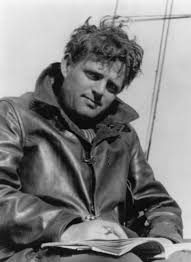
H.L. Mencken
Baltimore Evening Sun/February 7, 1921
I.
Just who Zechariah Chaffee, Jr., may be I don’t know in any detail. He is, I am informed, a professor in the Harvard Law School, but beyond that information about him is very scant. “Who’s Who in America” doesn’t mention him, nor does any other current reference work. His name has an incredible smack; it somehow suggests the names borne by American millionaires in English musical comedies. Nevertheless, this Chaffee begins to emerge as the owner and operator of one of the sharpest and freest intelligences now in function in These States. At a time when the whole American people wallowed in a muck of fears and imbecilities he kept his head. In a day when it was the worst of felonies for an American to show the slightest sign of independence of judgment or common self-respect, he maintained the detachment of a true scholar. And now, the rowdy-dow being over, he begins to publish his observations and conclusions.
In sum, as they appear in his “Free Speech in America” and in various articles in the so-called Liberal weeklies and legal reviews, they constitute a sad, sweet picture of the practical workings of democracy. Here is a republic ostensibly pledged to the attainment and safeguarding of the liberty of the citizen, and yet, as Chaffee shows, it mounted to such heights of savage and unintelligent oppression during the war that one must go to the Middle Ages to match them in any other country. Not only was the citizen systematically robbed under cover of the law, and deprived of his commonest rights to privacy and free movement, he was even deprived of his fundamental right to protect against the tyranny that beleaguered him. And this wanton, idiotic (and often highly dishonest) destruction of his rights was given a desperate and relentless force by the deliberate act of the executive authority, and connived at by the courts!
II.
Here in Maryland, on account of a fortunate accident, a sort of sanctuary was established for the violated Constitution and Bill of Rights, and so we saw little of the war upon them, and have no such record of shame as that which now lies upon some of the other States, particularly in the Middle West. That fortunate accident was the circumstance that the Federal judge in this district, the Hon. John C. Rose, was and is not a man to be run amuck by newspaper clamor and popular hysteria. In the early days of the war, the then District Attorney, whose name I forget, gave signs of being willing to join his brethren elsewhere in patriotic exploits of an extra-constitutional character, but when the first case against a so-called soap-boxer came up Judge Rose laid down the rights of the citizen in a very clear and concise manner, and thereafter there were no more monkey-shines in his court.
Under the surface, of course, there was a good deal of petty oppression, but it was chiefly directed against enemy aliens, who stood outside the right to habeas corpus, and were thus beyond the jurisdiction of the court. The business here was carried on by agents of the Department of Justice—men perhaps a good deal more stupid than vicious. So far as I know, they made few attempts upon the peace and security of American citizens, and then only half-heartedly. The Liberty Loan campaigns, being managed chiefly by reputable men, were carried on in a seemly manner. The Socialists and other pacifists, after a few harmless outbreaks, were protected by the police. Even the American Protective League, that curious organization of home-loving amateur spies and poltroons, was relatively innocuous in Maryland.
All this moderation came from above. Any attempt to carry on the proceedings undertaken in the Middle West and South would have encountered an obstacle on the Federal bench. That obstacle being promptly notified and well understood, there was little that the more violent sorts of patrioteers could do, and so they worked off their steam by going to the war movies, writing anonymous letters, and lending their stenographers money at 6 per cent. to buy bonds at 4¼ per cent.
III.
Let us now turn westward, pausing, say, in Minnesota. Chaffee tells us plainly what went on there. It was a stupendous chance for usurers, and they put it to use very brilliantly. On the one hand it gave them an open season against all their traditional enemies—Socialists, agrarians, laborites, the whole pack of political and economical heretics. On the other hand it laid bare the pocketbooks of the plain people to their soft attentions. For the first business they organized as National Defense Councils, American Protective Leagues, National Security Leagues and other such dubious sodalities; for the second they organized as Liberty Loan committees.
These Liberty Loan committees operated daringly and with huge effect. They were made up, in the average county, of all the “leading citizens” in the county-town—that is, of the town bankers, elevator-owners, mortgage-sharks, and railroad lawyers. Once in function, each county committee ascertained the county assessment for each successive loan, and then proceeded to apportion it among all the citizens of the county. What a lovely chance, indeed! Imagine the case of John Johnson, a farmer with eight children. He is assessed $1,000. He reports that he can’t make it; that he has but $500 in bank. Very well; then let him borrow the rest from the banker at the county-seat, i. e., from the chairman of the loan committee! The bond forced on him will pay him 4% or 4½%. For the money he borrows from the patriotic chairman he must pay 7%.
But John is no fool: he refuses to be blackmailed. Does he, then? Well, there is a law for such scoundrels. It has been passed by the State Legislature (violently prodded by the great patriotic organizations aforesaid) to meet just such cases. John’s objections to the swindle, as they say in Congress, are “taken down.” A committee visits his farm and paints his gate-posts yellow. The county school-teacher is ordered to “reason” with his children. There are dark hints of tar and feathers. And then, being still recalcitrant, John is arrested by the sheriff, put on trial at the county seat, and sent to jail for “obstructing” the loan!
IV.
It sounds idiotic, but it actually happened time and again out in the hog and alfalfa States. What is more, the whole gallant business was highly commended by the newspapers—and upheld by the courts. What is to be thought of such courts? What is to be thought, indeed, of the whole record of the American courts, State and Federal, during the war? Here and there they showed a sober and courageous judge like Judge Rose—but elsewhere what a shameful record of stupidity, of childish playing to the galleries, of buffoonish ranting and slobbering, of downright shysterism and dishonor! The epidemic raged high and low. There were proceedings in many of the lower courts that would have disgraced the divan of an Arab sheik; there were decisions by the highest court in the land that destroyed and made a mock of the most elemental rights of the free citizen.
I know nothing about legal technicalities. All I know is that the people of the United States look to the courts to protect their liberties, and that the courts have ignominiously failed them. All I know is that the Supreme Court of the land has formally decided that a man who objects to being blackmailed by rogues may be legally jailed for objecting. This is the main thing. This, and not the imbecilities of law, will be remembered when the day of judgment comes.
 The Archive