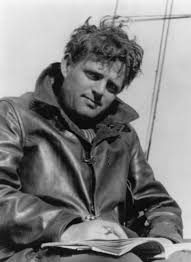
Richard Harding Davis
Kansas City Star/May 26, 1896
Richard Harding Davis’s First Letter From the Scene
The Barbaric Beauty of the city Vividly Pictured—The Nations of the Earth in the Czar’s Pageant—Lessons to Americans
Richard Harding Davis in the New York Journal
Moscow, May 22.—The scene set for the coronation of the czar is an Oriental city of great barbaric beauty and magnificent distances.
It is made up of stucco houses painted yellow, white and dark red, with sloping green roofs over all. Above the roof-line rise gilded domes and minarets of burnished brass that resemble great copper kettles and which flash from one to another when the sun shines like signals of a heliograph.
The city runs over innumerable hills, and Is divided by narrow streets paved with rough cobbles, and the river with stone embankments cuts it into uneven halves.
A part of Moscow Is shut off from the rest of the city by a great, jagged wall stretching over a circuit of two miles, and rising as high as the wall of the reservoir on Fifth Avenue. Inside this wall are churches, convents, arsenals, forts and cathedrals, showing in their close juxtaposition how temporal and spiritual power in Russia move shoulder to shoulder. This fortified portion of the city, which dates back for hundreds of years, is called the Kremlin, and within its walls is the little Church of the Assumption, in which the emperor will be crowned.
Outside these walls Moscow is not an unusual sight—the houses are low and the shops are European—but the great buildings inside the ramparts of the Kremlin are of barbaric splendor and color and of different architectures, stolen from temples of India, mosques of Byzantium, and German castles of the Middle Ages. There are great, round watch towers and lofty octagonal spires, with scales of green tiles; delicate tapering minarets of polished brass, bearing golden crosses above them that flash like mirrors, and there are domes of rich Prussian blue and frescoes of every color, and grim arsenals guarded by great green cannon, and magnificent palaces.
The Decorations
Within the last week these buildings have been hung with hundreds of thousands of lanterns and wired for electric lighting. Ropes of colored glass globes have been stretched for miles over the ramparts and swung hundreds of feet high from minaret to minaret.
False facades of scaffolding stand before the fronts of palaces, and thousands of colored electric light bulbs have been formed in the shape of stars, of giant crowns and initials, in double eagles, crosses and mottoes.
Those who know how one advertisement in colored electric lights can illuminate half a block on Broadway will appreciate what this illumination means when they understand that every house for a mile on either bank of the river is hidden by these electric bulbs, backed by great reflectors of gilt and silver, and that bridges and embankments and roofs and towers and ramparts are outlined by them, so that half of Moscow is encased in glass and bound in an interminable network of cables and wires.
This is for night; for the day there are at every street comer tall masts hung with great banners of gold cloth, embroidered in silk, with the double eagles of Russia. From these masts ropes of flags stretch on to the next street and across from house top to house top, clouding the sky above and buildings on each side so wherever one turns he looks down a waving tunnel of yellow and red and blue and white.
When the young czar and czarina entered their carriage at the railroad station on their arrival from St Petersburg last Monday, four rough looking men in sheepskin jackets stood unmolested within thirty feet of Their Imperial Majesties, and a scattered line of fifty troopers guarded them from the mob of 10,000 people. Some one shut the door of their carriage, the solitary footman leaped up behind and the horses galloped off to Petroffsky palace, with no guard In front of them, and fifty feet In advance of the mounted escort.
That was the most unexpected sight of many unexpected sights that strangers wlthin the gates of Moscow have witnessed since the beginning of the coronation festivities.
If there is any dread in anybody’s mind at the present coronation, it was not apparent when the czar arrived Monday, or when he made his entry Thursday.
The City of Prayers
To the American at home the czar is the head of the Russian government. To the American at Moscow the czar is the head of the Russian church When you accept that point of view all dread and misgivings as to his safety have passed away. You see him with the eyes of the most religious people—religious outwardly, at least—of Europe, and you must feel that his safety is as vital to each believer as to the life of the pope to each good Catholic, and here in the holy city of Moscow, where every block of houses contains a church and every room a shrine, he seems safer than anywhere else in the world.
Every room does not mean one room in each house, but every room in every house, whether that house is a theater, restaurant or hotel, or whether the room is a ballroom, cafe chantant or barber shop.
In the streets of Moscow a troop of cavalry does not pass a church without each officer and man lifting his hat and crossing himself.
Waiters in restaurants repeat their prayers while they are serving you, and porters lower their burdens to the sidewalk and kneel or bow to the shrine at every crossing in their way.
You can’t walk a block from your hotel without meeting a dozen men at prayer and seeing groups of people of all classes kneeling before a shrine.
To all of these the emperor is the living representative of God, and to fear the violence of the disaffected in the face of this reverence to the millions seems less sensible here than it does at home in New York.
This to not written to conciliate the censor’s feelings, but because it seems from here to be the obvious and true view to take of the attitude of the people toward the czar. Of course, everyone was told of the rules made by the police to guard the line of march, but the people invented most of them, and certainly none were observed.
Windows were wide open, and people hung out of them with opera glasses in hand, and in the streets those who got there first, with the strongest shoulders, obtained the best places, as elsewhere.
It is true, the streets were roped off and the number of spectators was limited and did not overflow on the lampposts and housetops, but that was as much for the sake of everyone’s comfort as anything, and certainly no line of soldiers turned their backs to their emperor and threatened his people with their muskets.
There has probably been no such spectacle anywhere in the world as beautiful as that of the emperor’s entry into Moscow—not at least since his father entered it before him. It is impossible to describe it because there is no pageant like it in America or Europe with which to make comparisons.
It may seem a petty point of view to take, but perhaps the most unexpected thing about it was its dignity and its wonderful good taste, if you can apply such a term to a spectacle that unrolled like a strange and beautiful dream, but so much had been written of the barbaric splendor of this half Oriental court, of gold harness made in Paris that cost 1 million dollars, and of hand painted carriages covered with precious stones, that one expected splendor run to riot and good taste to be subject to display, but the reality was graceful and impressive beyond imagination.
Under Sunny Skies
In the first place, it seemed as though the rest of the world had been robbed of its sunshine, so that all might be centered over Moscow. Every colored flag, each gilded minaret, golden eagle, jeweled orders, or burnished breastplate flashed and glittered under the brightest of blue skies in a sun as brilliant as that of the tropics.
Below this thousands of cart loads of red sand had made a soft and dustless path for the procession, and double lines of soldiers in black and red, with glittering bayonets, framed in the route on either side for four long miles.
Between this setting and in sight of hundreds of thousands of people moved an historical pageant, in which representatives of what had once been eighteen separate governments, kingdoms and principalities marched proudly as subjects of the empire of the czar.
There were soldiers in furs from Finland, little and broad like Esquimaux, and Afghans from Pamirs, the tableland of the world, erect and lithe like their own lances; Tartars In silken robes from North China, the Ameer of Bokhara in a suit of gold cloth: Cossacks from the Don Basin, their breasts crossed with cartridges and their spear points glittering thirteen feet from the ground; Mohammedans from Turkestan, Magyars from the borders of Hungary in belts of cloisonne and silver, and young Russian nobles of the Chevalier guard, and Guards de Cheval in cream white coats, and helmets and of silver and gold that hid the street as you looked at them from above, as though it were paved with scales upon scales of burnished metal.
Three Miles of Cavalry
The procession changed in one moment from a picture of fairylike beauty, when Cinderella-like carriages were passing, to an object lesson in power of the great White Czar when for half an hour three miles of cavalry followed on without break in their line, each horse stepping out as proudly as a hackney stallion, and each trooper sitting like a prince.
Servants of the emperor came on foot. Masters of horse, in long, gold coats, rode after them. Royal huntsmen in green, the men who rush in and knife a bear or wolf while the dogs hold it down were followed by negro footmen, gigantic in stature, and then came carriages of gold, with painted panels and red velvet sides and plate glass windows, in which ministers of court sat alone and tried not to look foolish and out of place in what were intended to hold only beautiful princesses or fairy queens.
Tall footmen in white silk stockings and cocked hats led each of six horses by a red ribbon. Each horse tossed its white and orange and black ostrich plumes on its head and carried $10,000 worth of gold and scarlet Russian leather on its back. Each bit was as large as a Mexican bit and as carefully engraved as a seal ring.
Then a great roar arose along the line, not of cheering as we cheer, but an uninterrupted acclamation, like a mob In a theater, and hundreds of bells clashed all over the city, cannon marked off the time, and houses and sidewalks rocked and swayed with waving hats and hands, and the czar of all the Russias rode forward, a slight, well-built young man, dressed more simply than almost anyone in the procession, in a black uniform and black cap, to which he raised his white gloved hand and smiled slightly and without obvious emotion of any sort.
Back of him, riding en masse, came a hundred princes and heirs apparent from every court of the world. They formed the most remarkable group of royalties that has been seen in one place for years.
There were royal princes, archdukes and grand dukes, English dukes in bearskins, the heir to the throne of Italy in a helmet, the heir to the throne of Greece—he who saved the czar’s life in Japan—in an admiral’s uniform, and back of them their generals and marshals and younger brothers, a mob of first gentlemen of Europe in silken sashes and diamond stars, and rows of decorations and waving plumes.
Back of these, and as though they were acting as her escort, came the dowager empress, for whom the cheering grew louder than it had been before, and through the glass sides of her gold carriage people could see her bowing and smiling. Her bare shoulders bent with rows upon rows of pearls that hung below her waist and touched her robe of silver, and back of her came eight snow white horses, led by twenty men in plumed hats, dragging a chariot of old gold mountings and scarlet velvets, and inside, with her ermine cloak fallen back from her shoulders and three collars of diamonds around her neck, was the young empress, smiling shyly and bowing to her adopted people with a look of sweet confidence and content.
It was an hour after that before the line of red and gold carriages and cavalry had passed and the crowd swept into the street. There was no music until the very last, and perhaps it was better that there was not, for the movement of that grand pageant of beauty, history and honor passed like a dream, and was more impressive for the silence that it was proper to break only by cannon and cathedral bells and the cheers of a great people.
 The Archive