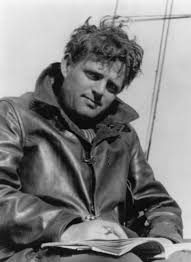
Richard Harding Davis
New York Tribune/April 7, 1912
I know just how the reader rebelled when he saw the title. I agree with him entirely; for so long he has been told to remember the Maine that he wished only to forge it. For fourteen years, if he be that sort of man, the Maine has plucked at his sympathies, has called forth all the fine emotions—those of hot, just resentment, of pity, of patriotism. Also, it may be he has felt shame that for so long the bodies of American bluejackets should be imprisoned in an American battleship in the mud of a foreign harbor, a reproach to our people, a menace to the traffic of all nations, a thing to be kodaked by tourists, to be featured on picture postcards. It has been so manhandled, so degraded, by self-advertising congressmen and Coney Island showmen, that at the mere mention of the Maine an American shies, as when he sees a Broadway comedian with a row of showgirls behind him dance to the footlights and pat the American flag on the back.
This is not an attempt to prod anybody’s patriotism. It is only an effort to tell how the Maine looked after her resurrection and before her final disappearance, and, without the slightest knowledge of engineering, to describe one of the most interesting triumphs of engineering of our times.
For years I had seen the fighting top of the Maine hung with wreaths rising out of the water of Havana Harbor. Not long ago, when we came to anchor hardly one hundred yards away, the masthead had disappeared, and in its place was an island. The island rose twenty feet above the water. It was about a hundred yards in length and half as broad. Lighters were made fast to it, launches nestled on its lee shore, rude huts and shelters for machinery were built upon it, from every side stretched electric wires. Upon its banks, should they wish to do so, men could fish, could pitch tents, build fires, and cook food. It was a perfectly good, habitable island which in one year had risen out of Havana Harbor. And, buried in the heart of the island, as the treasures of Peru are buried in the island of Cocos, was the wreck of the Maine.
To determine the best way to lift the Maine out of the water, the brains of engineers of this and other countries were picked dry; and in the end the plan adopted which succeeded where, as is now known, the others would have filed, was not to lift the Maine out of the water, but to build an island around it and then it out of the island. An engineer will tell you that technically that is a perfectly incorrect and absurd statement; but in words of one syllable that is what was done.
When you reached the island you found that its banks were made of iron. This iron was cut in strips or planks a half-inch thick, seventy-five feet long, and about a foot and a half broad. One edge of each plank along its entire length was bent like a hook in a hook and eye. A year ago, at some thirty or forty feet distant from the Maine, a pile driver hammered one of these planks into the mud, and another iron plank was driven next to it, the bend edge of each clasping the other, as children bend their finger to form a circle in “ring around a rosy.” Better to meet the pressure of the water, these planks were clamped in circles so that they formed great hogsheads, with the eighteen-inch iron planks for staves; and for still greater safety these hogsheads were ballasted with earth and limestone and rocks. When there were enough of them to surround the wreck completely, the work of digging it out began.
The water inside the walls of iron was pumped into the harbor, from around the wreck, by machinery, and later by hand labor; was lifted above the layers of mid that smothered it; and then, after thirteen years of darkness, the battleship, twisted and distorted, her bow plates driven in, her back broken, and, with the scattered bodies of seventh skeletons between her decks, was exposed to the sunshine and the sight of man. To look seemed impertinent; not alone because the skeletons of the seamen made you feel you were intruding upon a burial place, but because in the distorted, mangled skeleton of the ship herself there was such tremendous dignity and pathos. Fifteen years before, in Key West Harbor, I had seen her as white as a wedding cake, her bright work flashing, her awnings lifting lazily, and sticking out in superb insolence her great black guns, capable of hurling a thunderbolt nine miles, of laying waste the entire city of Havana. And now, stabbed in the darkness, she lay helpless and shapeless, a ghastly, dismembered corpse.
In the thirteen years since she plunged into the mud of Havana Harbor, carrying with her three hundred and fifth sailors, the Maine had become one of the great mysteries of the world. And so no doubt will she always be. That part of the mystery that concealed the nature of her destruction she has set at rest. To do so she rose from the grave to show her wounds; but who it was that struck the blow may never be determined. In spite of the largest rewards ever offered to discover a criminal, in spite of the most earnest efforts of one Government to fix the blame, and of another to clear herself of suspicion, the guilty man has never been found; and that now he ever will be is improbable. It is of little consequence. At sight of the great ruin he caused, the personality of the one who laid the mine became of little consequence. Instead, one turned in admiration to the young man who had carried out the plan of the engineers, and had accomplished what for years had been declared an impossibility,–with one hand to lift a battleship out of twenty feet of mud, and with the other to hold back the waters of the harbor. It was pleasant to find that Major H.B. Ferguson, of the Engineer Corps of the United States army, was in character with the big work he had accomplished. It was pleasant to find that he was young, modest, with his thoughts all on the work, and not on the man who had carried it to success. And in Havana, where an honest American official has yet to escape without some charge against him of graft or self advertisement, it was pleasant to find that in the case of Major Ferguson, Cubans, Americans, and Spaniards combined in speaking his praises.
It will be a poor return for the work he has accomplished if the War Department does not recognize it by quick promotion, and if the same congressmen who at the expense of the Maine so widely advertised themselves do not now honor the man who relieved us of reproach, and gave peace and decent burial to the bones of American fighting men and an American warship.
 The Archive