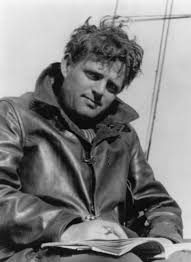
Richard Harding Davis
New York Tribune/September 4, 1914
London, Sept. 3—A interesting story, in which the Grand Duke Alexander Michaelovitch, brother in law of the Czar, charges the German emperor with duplicity and trickery of the most surprising nature, has come to me from Barclay H. Warburton, of Philadelphia, who arrived here on Monday from the newly christened city of Petrograd.
Mr. Warburton is extremely well known at home, as for years he was the proprietor of “The Philadelphia Evening Telegraph,” which newspaper he lately sold to his brother-in-law, Rodman Wanamaker, who, until the war came, was financing the transatlantic flight of Lieutenant Porte. Of late years Mr. Warburton has interested himself in the sale of the Lewis automatic gun, the invention of an American officer. This gun and other war material he has sold to the Russian government. He is well known in Russia, and is the personal friend of Grand Duke Alexander, who, on his visit to America last summer, was Mr. Warburton’s guest.
The story in Mr. Warburton’s own words is as follows: “A few days before I left St. Petersburg the Grand Duke Alexander, who, by his marriage to the Grand Duchess Xenia, is a brother-in-law of the Czar, came to that city to take command of his regiment. At his palace on the Moika he told me that shortly before war broke out, when both the Russian and German armies were mobilizing, the German Emperor telegraphed the Czar a personal message, in which he offered, if Russia would cease her mobilization of the army, to stop mobilizing his own.
Pledged Word as “Soldier”
“ ‘I promise,’ the message ran, ‘on the word of a soldier.’ “On the strength of this the Czar instructed Soukhomlinoff, his minister of war, that he wished all movements of troops at once to cease. The minister of war expressed his doubts regarding the honesty of the German emperor, but the Czar pointed out that the Kaiser’s message was a personal assurance, and insisted that mobilization cease. Eight hours later, after the Russian mobilization had been entirely halted, the Czar learned from his embassy in Berlin that, according to orders issued by the German emperor himself, efforts to quickly mobilize the German army had been redoubled.
“ ‘This,’ the Grand Duke said, ‘was told me this morning by the Czar. It is only too evident that my brother-in-law was tricked by the German emperor.’
“ ‘It is bad enough,’ the Grand Duke said, ‘to break the word of an emperor, but William broke the word of a soldier.’
“August 2 Soukhomlinoff himself, not knowing that I had heard this story from the Grand Duke Alexander, told me exactly the same story, only adding that from the first he believed that the German emperor, by a dishonest trick, was trying to gain time.”
Mr. Warburton says that the Russians charge German with fomenting and financing the labor riots that occurred in St. Petersburg the week before the war. They claim to have evidence showing that two million marks were furnished to the revolutionists by Germany and that all the ringleaders of the riots were found to be Germans.
Relied on Ulster Difficulty
They believe that Germany thought that with the Ulster difficulty England would be at a great handicap and that Russia, also occupied with labor troubles at home and fearing a revolution, would not dare to enter the field. This would leave France without allies. But as soon as war was declared all internal dissensions in St. Petersburg ended. Men who had hooted at officers now knelt to kiss their hands, and all classes showed the most splendid spirit. The civic demonstrations were remarkable, thousands of persons marching through the streets bare-headed carrying portraits of the Czar and at each second street kneeling to pray.
The government has purchased all autocars and commandeered all cab and bus horses. The most absolute conspiracy of silence conceals all military movements. Telegrams from officers in the field are limited to three words: “Am well; love.” Each of these is first sent to a clearing house, and from there relayed, so that no wife in Russia may know where is her husband or his regiment.
Mr. Warburton is very happy over some successful gun running. Word that war was inevitable reached him in Paris on July 25 from the Russians, who ordered him to rush all the stock he had on hand. His guns, light mitrailleuses, weighing twenty-five pounds and used in aeroplanes, were in Birmingham. He brought them to London by motor truck and placed them in steamer trunks on which were painted different initials, coronets and names of cities. His mechanicians claimed these trunks, and in bond had them conveyed safely across German into Russia on the last Nord express.
A day later the railroad tracks leading into Germany were deserted, but the guns were safely in Russia. That was the last lot of Lewis guns to leave England, where the factory is now supplying them only to the British War Office. When I asked Mr. Warburton where the Russian armies are now he said: “I do not know where they are today, but in three weeks they will be marching down Unter den Linden.”
Mr. Warburton is extremely well known at home, as for years he was the proprietor of “The Philadelphia Evening Telegraph,” which newspaper he lately sold to his brother-in-law, Rodman Wanamaker, who, until the war came, was financing the transatlantic flight of Lieutenant Porte. Of late years Mr. Warburton has interested himself
 The Archive