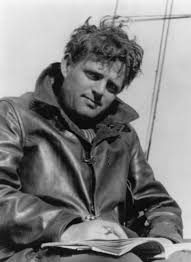
Richard Harding Davis
Burlington Free Press/November 23, 1896
Richard Harding Davis Writes In Their Behalf
The Impotency of the Ambassadors Held up to Ridicule—Harper’s Weekly, England and France Condemned—American Should Interfere
To the Editor of the Free Press:
Two women have just returned from the port of Marseilles where they have been engaged in helping Armenian refugees. They established a temporary home for them there, where they are made welcome on landing and from whence they were sent on to join other Armenians who were so fortunate as to live under the protection of the United States or Great Britain. It was a very good work that these two women were doing, even though the little they did was not final, and though it leaves the Armenian question still unsettled. Theirs was the sort of work the Sisters of Mercy perform for wounded soldiers at the rear of a great battlefield, while the men are fighting at the front; with this difference, that in this instance there were no men fighting at the front.
So the real importance of their work lies in the fact that the little they did shames those who did nothing, that it sets an example to those in high places, who might do so much, and that it leaves no one an excuse to sit idle with folded hands while the crime of this century is being perpetrated.
For the last two years the churches of the world, especially those of this country and Great Britain, have had accredited agents in Armenia to whom thousands of dollars have been sent and who have sheltered and fed thousands of Armenians, and societies and missionaries, emperors and ambassadors have been appealing and threatening, and have shown ceaseless activity, and they have accomplished nothing.
Miss Clara Barton has gone and returned and been interviewed and the money that eager people poured into her hands and into the hands of other professional philanthropists has been distributed; she herself has scattered plows, painted red and marked “Clara Barton Relief Fund” all over Upper Asia wherever they would do the most good. But in spite of these, for some reason, the massacres have continued, and though ambassadors have met in council and issued protests and edicts—almost everything in fact but ultimatums, until they are as common as the editions of an evening paper, the massacres have not ceased. In fact, in spite of the money offerings and the indignation meetings of societies at home and of the earnest efforts of their agents in Asia, everything is exactly as it was two years ago with the slight difference that some 20,000 men and women who were alive then, are not alive now, and that while the money poured in, and the ambassadors fretted and fumed, men were clubbed to death and dragged through the streets of Constantinople by the heels, and women had their brains dashed out with musket butts, and children were spitted on lances and bayonets; and our Secretary Olney wrote to humbly thank the Sultan for allowing the wives of those Armenians who have escaped him to join them in this country. Week after week and month after month for two long years the murders have continued, and we still wait, properly horrified, for someone to do something. And in the meanwhile, Miss Frances Willard and Lady Henry Somerest, who had grown tired for waiting, went down to Marseilles to do the little they could.
A Question Of Humanity
The question is not whether the Armenians are Christians or Mohammedans or Mormons, or whether there are bad men among them or worse men representing them at a safe distance in foreign cities. The question is one of humanity, “Old Gods give way to new Gods; here is your brother.”
This is a small world in which we live, and we live in it for a very short time, and what we can do to help those who are with us is infinitesimal. But that is only the greater reason for doing that little and showing that this is a better world to-day than it was when the publicans passed by on the other side while robbers were beating the traveler to death, and when Cain asked, “Am I my brother’s keeper?”
We are all familiar with the different arguments which explain why no one is called upon to interfere with the Sultan of Turkey in his butcheries. The great European powers say they cannot do so, because such interference would bring on a great continental war, which seems an excellent argument, even if it be a selfish one. Great Britain has been warned that if she meddles with the Moslem all of her Mohammedan subjects in the Indias and in Afghanistan might rise against her; and, moreover, as one of the powers that signed the treaty of Berlin, she must not act without the consent of the other powers. Signing that treaty, however, did not stop her from shelling the Mohammedans at Dongola a month ago, nor from destroying the Matabelea with Maxims in the Matoppo Hills last July, nor has it prevented the French from killing the Hovas in Madagascar. But it absolutely prevents these two powers, not from taking, but from saving the lives of some thousands of human beings in a territory which each has bound herself to protect.
They are helpless because they signed the treaty of Berlin, and oddly enough, the United States government cannot interfere because she did not sign it. It would not do for her to become entangled in a foreign alliance, nor to drag this country into war over a question which in no way concerns her. This has been explained fully in a late number of Harper’s weekly, “a journal of civilization,” in an editorial which fairly shrieks with terror, and which repudiates the suggestion made by an English newspaper that the people of the United States have any responsibility towards any country save their own. I should like to read the editorial which George William Curtis would have written on that same subject on the same page of Harper’s weekly; on the same pages from which he preached abolition of slavery and begged for the recognition of the black man’s rights. It seems only yesterday that we were going to war with Great Britain over some gold reefs in South America, on account of a people as foreign to us in every way as are the Armenian Christians. But then we were upholding the Monroe doctrine. We were looking after our own interests ’cause we have no interests at stake, not even a few miles of swamp land and ridges of gold quartz.
Our Government’s Duty
It seems contradictory that a government cannot act as unselfishly as the individuals who compose it; that it is not capable of making sacrifices, as they are, and of moving from a high motive. The very fact that ours, of all nations has no interest whatever in Armenia is, it seems to me, the very reason why it should be the one to step in and put an end to these outrages upon humanity. For if the Armenians are ever to be helped, it is surely better that they should be given help from the highest motives, and that it should come from a disinterested power, because they are weak and she is strong, and not because there is more territory or a free port of entry to be gained by it, or because once long ago in the past, we signed a paper promising them our aid.
It is no credit to a man if he fights to protect his own property, if he struggles with a thief who snatches at his watch or strikes out to defend himself from an attack upon his life. But it is to his credit if he goes to the aid of another man; and the less he has to expect for himself in doing it, the greater is the sacrifice, the greater his reward, and the nearer is his approach to the standard of the one who gave his life for men. It is much wiser in the end for a nation to make a move in the name of humanity or for a motive of truth and justice, than because mills will close down if he does not act and the values of real estate will fall. And to go out of our way to interfere on behalf of a helpless stranger in a distant land, just because he is helpless, is, it seems to me, better than if we interfered because a missionary’s house had been burned down, or a consul’s tin sign dented with stones.
A Heroic Example
There was a captain of an English-man-of-war, who once sailed into the harbor of Santiago at a moment when Spanish soldiers were engaged in shooting American sailors against the wall of the slaughter house, because they had caught them on board the filibuster, the Virginius. The English consul, who is still in Cuba, showed me the slaughter yard a few years ago, and told he how he had been out in a rowboat at the time of the massacres and explained what was going on to the captain of the man-of-war. The English captain drew his ship in between the three Spanish boats in the harbor and the shore and sent word to the Spanish governor that this murdering of sailors without trial of any sort must stop. The Spanish governor made reply that they were American sailors, not Englishmen, and asked by what authority the captain interfered, and added that he wanted an answer and wanted it at once. And the English captain sent the following messsage: “If you fire another shot in that slaughter yard. I will open on your men-of-war with my port guns, and on the city of Santiago and the governor’s paIace with my starboard guns. And I shall do this, not in the name of the Queen of Great Britain, nor of the president of the United States, but in the name of common humanity. And that is my answer.”
No government is better than those who compose it, but its standard should be that of the best men in it, not of the lowest. When there was a Washington or a Lincoln alive in this country, our government performed deeds as great as were the men who represented it. Are we to understand now that it is the Altgelds and Tillmans who are to set up a standard of conduct for us in the future? Only a year ago half of the country and all of the politicians were clamoring for war with the greatest power that they could have possibly selected for that purpose. Men who were not able to pronounce the name of Venezuela correctly and who could not have pointed it out on a map were shrieking for someone to go to battle on her behalf: and this, not because Venezuela was a weaker power set upon by a greater, but because of the Monroe doctrine, which is a selfish doctrine, so far as all rules must be selfish that are created for self-protection. Now these Jingoes have another chance, and one which would bring them everlasting credit, should they take it, and which would be an absolutely safe one at the same time. For there is no lion in the path now. Not only a sick man, a crafty, cruel coward, who is self-imprisoned in his own palace, who knows he would be safer in any other country than his own: the last of a corrupt and debauched power, with whom civilization has nothing in common, who has stood still while all the rest of the world around him has been advancing and growing stronger and more enlightened, until to-day it is only a question as to which of the powers shall sweep him away, and wipe out his evil memory by a signal act of generous self-sacrifice.
What United States Has Done
The war ships of the United States went into the Mediterranean once before, and they should go once again. They went uninvited, then to drive the Barbary pirates off the high seas, when all of Europe was paying blackmail to these black-legged buccanneers to be allowed to sail their merchant-men around the Cape of Tarifa. They stood watching each other then as they stand to-day, knowing it is against history for any European power to give something for nothing, to right a wrong without gathering in a few islands at the same time, or establishing a protectorate, as part payment for their good offices. And while they paid tolls and hesitated, Decatur with a fleet of old-fashioned wooden ships, but flying the American flag, sailed past the Tarifa Straights, and drove the scourge of the middle sea back into their sand hills, and asked no man’s permission, nor stooped for a reward.
Are we grown so selfish and sordid since then that with our white squadron we cannot set a like example to the powers of Europe?
“We are none of us,” says Mr. Kipling, “infallible,” not even the “youngest.”
And no one must gather that I am urging any one to a bloody war. For there would be no war. The battleships of the United States could run the Dardanelles—or what would be left of their fortresses after the first ship passed through—with infinite ease, and could line up opposite the Yildiz Kiosk and demand that the massacre should cease with perfect safety to themselves and to the Sultan, too. The Sultan’s ships of war cannot move from their moorings from which they have been rotting for the last 11 years and his army, magnificent as it is, could not swim the Bosphorous. Of course Russia would storm and the sight of the white hulls in the Black Sea would destroy the peace of the ambassadors when these old women met that week to compose protests. But surely no one seriously supposed that Russian would go to war with the United States. A man counts the cost of going to war to-day just as he did long ago, and he probably considers it much more deeply, too, for it is a much more expensive undertaking now than it was then. Neither Russia nor any other power is going to come to blows with the United States without some very good cause, and the fact that we object to people of her own Greek church being massacred in a corner of Asia Minor is not a good cause. That is obvious to anyone. And rather than go to war she would much prefer sending a Christian governor there to restore order, and with him a few thousand Russian troops, who could set matters right in a month. She would at first undoubtedly be exceedingly indignant, and demand in a most emphatic manner that we take our battleships out of the Sea of Marmora, and that not until their departure would anything be done for the Armenians. But then something would be done for the Armenians.
Cleveland’s Opportunity
As no chain is stronger than its weakest link, so every government, I repeat, should be as strong as the strongest man in it, and if that man happens to be the chief executive what an opportunity it offers him to let his setting sun sink in a blaze of glory, to bring down upon his head before he leaves office the blessings of thousands of homeless, hounded Christians, and the approving cheers of the American people. It would be a pleasant thing for him to remember in later years, when the curtains are drawn and the candles lit, and he has leisure to look back at the things he has done and left undone. Someone has written. “It is given to very few men to carry a line to a sinking ship or to place a flag upon the walls of Lucknow.” It is given even less frequently to one man to stop by a word the butchery of innocent men at the mercy of an insane and royal assassin. He should consider long before he lets that chance go by.
And should any power, temporal or divine, question his right to do this thing, either now or at the judgment day, he can remember for his better comfort the English captain who protected the American filibusters and say, “I do this not in the name of the president of the United States, but in the name of common humanity—and that is my answer.”
 The Archive