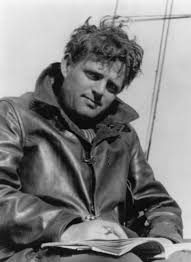
Richard Harding Davis
St. Louis Globe-Democrat/July 25, 1915
Richard Harding Davis’ story of the Rosenthal murder again is recounted when it is timely. He graphically reviews the case of Rosenthal, who paid the death penalty for resisting the brotherhood and “squealing,” in which New York’s underworld was defeated.
This is the story of the house that Jack built. Of the gambler who spun the wheel and lived in the house that Jack built. Of the lieutenant in gold and blue who murdered the gambler that spun the wheel and raided the gambler who threatened to squeal and who lived in the house that Jack built. And of the attorney and jury and judge who sent the lieutenant in gold and blue, who murdered the gambler who threatened to squeal, to die in the chair at Sing Sing.
The house that Jack built stands in Forty-fifth street, in the lungs of the new Tenderloin, in a block so short that it can breathe the air both of Sixth avenue and Broadway.
The house is of brown sandstone. It is a relic of the early ’80s. Then it stood shoulder to shoulder with other “fronts” of brown sandstone, each an ugly counterpart of its brother, each giving to the neighborhood visible proof of respectability. Now, New York, sweeping north, has engulfed it in a rising tide of chop suey restaurants, theatrical costumers, delicatessen shops, and the parlors of the beauty doctor.
But still, until August of 1912, the house of smug sandstone maintained its outward appearance of inward rectitude, and with closed window blinds shut its eyes to the doings of its disreputable neighbors.
Then, one warm day in that August, a lieutenant of police and his men leaped up its high, old-fashioned stoop and battered down its doors and showed it to New York for what it was—a gambling hell. In the hall of her home Mrs. Herman Rosenthal, the wife of the man who ran the gambling hell, came face to face with the law.
“Why, Charley,” cried the wife of the gambler, “What are you doing here?”
“Hush!” begged the preserver of public morals; “tell Herman it had to be him or me.”
As it turned out, it had to be both. They put a policeman inside the house and one in uniform outside on the old-fashioned stoop to warn citizens that the place was gambling house, and at the open window, for it was summertime, Mrs. Rosenthal in a lace wrapper used to sit scowling at the man on post.
Rosenthal Indignant
It was the silly season for the newspapers, and of the policemen and Mrs. Rosenthal’s refusals to admit them, when one came to relieve another, the papers printed amusing stories. Meanwhile Herman, her husband, wandered from Forty-second street to Forty-fifth street, which was the limit of his world, complaining bitterly.
“This was no ordinary raid,” he explained. Charley Becker, “the magnificent,” the commander of the strong-arm squad, whose special duty it was to suppress gambling, who, out of a salary of $188 a month had managed to save $70,000, who was his friend, and who had promised him protection, had given him the double-cross. It was not the raid that hurt, Herman protested. To satisfy the commissioner, older gamblers than himself had had to pay the price for protection and had had to “stand for” a raid. He knew that. He admitted that even the most well-meaning police official, in order to hold his job, must occasionally do his duty. But, as Rosenthal announced to all men, his case was a “raw deal,” his case was different. In his gambling house Becker, the man assigned to suppress gambling, was a silent partner. Toward his bank roll Becker has subscribed $1,500, and to see that he got his rake-off of 25 per cent had installed in the house his Jackal, lobbygow, and collector—Jack Rose.
Tries to “Break” Becker.
Was it right, Herman demanded, that your own partner should be the one to put you out of business? His friends heard him uneasily, with averted eyes.
With the philosophy of their world, they advised him to “forget it.” But Herman could not forget. His grievance grew, his wrongs obsessed him, and soon his complainings and whinings turned to snarls and threats. He would, he declared, defy the rules of the brotherhood, with the police who ruled and fattened on the underworld he would get even—he would turn informer. He would “break” the magnificent Becker. The one and only commandment of the underworld is: “Thou shalt not squeal.” And in alarm and disgust his friends deserted him. Those who still cared to save him from self-destruction warned him of the fate of all who had defied the police, who had dared to tell the truth concerning them. They reminded him of MacCauley bounded into exile, of McAuliffe trapped in a police station and beaten to death with night sticks. But Herman’s wrongs cried for revenge, and to lay his evidence against Becker he called upon the commissioner of police. That gentleman was busy. The mayor, in whom the pushcart peddler and the Long Island truck gardener can always find a sympathetic listener, turned him out of the City Hall. Two city magistrates refused to hear him. So he took his story to the newspapers and to the district attorney.
Rosenthal a Menace
Until then, to the magnificent police lieutenant, Rosenthal and his whinings had been only a nuisance. He was a “sore head.” He was a joke. But when he reached the ear of the district attorney, and that official stopped to listen, Rosenthal became a menace and a destroying angel.
Repeatedly the effort has been made to show that what followed was due to the fear in which Rosenthal was held by his own fraternity. That was never the case. Of the gamblers, Rosenthal could tell nothing that the people of Now York City did not know. His “disclosures” might for a month cause the houses to close. But only for month. As a matter of history, through all of his “disclosures” and through all that followed, the houses kept open. The danger was not to the gamblers. The only danger the gambler fears is the ill-will of the police.
For without the aid of the police no gambling house in New York City could for one day remain open. And so when Becker, he only who was in danger, sought for help, he turned to the men who dared not refuse him anything, who lived only by his sufferance—to the man who, if he were not corrupt, if he were not false to his duty and his uniform, would be driven from their beloved Broadway, would be robbing each other at pinochle in a Catskill roadhouse. The one he selected to murder for him was the man who collected money for him—Jack Rose.
Becker Meets Rose
In the witness chair Rose told how Becker met him at the Union Square Hotel. It was their most frequent place of meeting. In a back room at a table behind the cigar stand, Rose used to turn over to Becker money he had collected from gambling houses. But on this day Becker asked for more than money.
“This fellow Rosenthal,” protested the commander of the strong-arm squad, “means to do all he said he would do—all he set out to do about exposing me, and that I was his partner, and that I am a grafter, and going to show me up, and break me. He started by trying to see Commissioner Waldo. He’s been trying to give out statements to the press. He tried to see Magistrate Corrigan and McAdoo, and he tried to see Mayor Gaynor. Here am I in charge of the strong-arm squad, and instead of getting money from that fellow I gave him money—gave him $1,500 to start his place with, put him in the way of making money, protected the place and looked after him—and there is the gratitude. When I was compelled to make a raid to save myself and my position, a raid for which I paid $1,500 to make, he is looking to get my scalp.”
Rose suggested that those higher up among the gamblers might read the laws of the brotherhood to Rosenthal. This hurt the pride of Becker.
“Do you think,” he demanded, “I’d let anybody go to anybody and ask Rosenthal to let up on me? You don’t know me.”
Then Rose offered to have Rosenthal “beaten up” and to have those who did the beating explain why they beat him.
“I don’t want him beat up,” said Becker. “I could do that myself. I could get a warrant for any gambling house he frequents and raid it, and beat him up for resisting arrest or anything else.”
Then the magnificent one came to the business for which the meeting had been called. “No beating up will fix that fellow,” he explained. “Nothing for that man but taken off the earth—have him murdered; cut his throat, dynamited, or anything. It will only take twenty-four hours.” It took longer than twenty-four hours.
Assures Rose of Safety
Either Becker was overpowerful, or else Rose, “the best poker player in New York,” was, in the affairs of murder, less skillful. Becker did not propose that Rose himself should commit the murder.
“I wouldn’t ask you to get into anything that meant taking a chance, or meant danger to you or yours no more,” he assured the jackal, “than I would take myself.” The assurance was not necessary. Becker took no chances. To commit murder in order that he might save his gold shield he lashed others forward, drove them with promises of protection, with gifts of money, with threats of “frame-ups” that would land them for fourteen years in Sing Sing, but he himself took no chances. His own magnificent person was never once within zone of fire. Nor did he ask the gamblers to enter it. For “rough work” of the sort Becker wanted there are in New York gangs of young men especially organized, and for the actual “croaking” he instructed Rose to turn to them.
At that time the leader of one of these gangs, gunmen Jack Zelig, was in the Tombs. Since then he has been murdered as he rode in an open car on the Bowery, for the life of the gunman is but as grass. But at that time, about June 22, he was in the Tombs on a charge of carrying concealed weapons. There, with Harry Vallon, another gambler, Rose called on him and asked his aid. Zelig refused it. Becker must first get him out on bail. Two of Becker’s strong-arm squad had arrested him in a saloon, and, declaring the arrest an attempt to “frame” him, Zelig had stood up and begged over forty people in the saloon to note that he was not armed. On his arrival, at the station house, by some miraculous procedure, a gun was found on him, proving that Zelig’s estimate of police evidence was based on experience. Holding Becker to blame for this “frame-up,” Zelig refused to aid him. Rose reported back to Becker. According to Rose, Becker said: “Well, then, let him rot in the Tombs. That ends all the gang from now on. With every one of them will I settle.”
Gunmen Sought
Rose suggested that, even without direct orders from Zelig, some of the gunmen might be willing to lend first aid to would-be murderer. Becker sent him to question them.
“Tell them,” he said, “just what I have told you. Nothing can happen, to anyone who croaks Rosenthal.” Becker believed this. His confidence in his power to control the police and the courts was his only weakness. It was a form of vanity so insolent that eventually it led directly to his fall. And his experience in degree justified him. For years, as it pleased him, he had “framed up” evidence, or for $600 destroyed his own evidence and set men at liberty to again spin their wheels and pay him tribute.
He believed both at Headquarters and in the lower court that he was omnipotent. And the underworld also believed it. Was he not Becker, the magnificent? Did they not see him daily in compare with political leaders dining in lobster palaces, using as his own the automobile of Col. Sternberger of the New York National Guard?
Rose sought out two of Zelig’s gunmen, “Whitey” Lewis and “Lefty Louie.”
“I told them,” Rose testified. “I came to warn them of the danger they were in, of the fate similar to what Zelig has met by being arrested for carrying concealed weapons, and they said: ‘We don’t carry them no more since this trouble of Zelig’s.’
“ ‘Well,’ I said, it don’t make no difference; Zelig didn’t have one, either.’
“ ‘What is the cause of this?’ they asked me.
“ ‘Why, Herman Rosenthal,’”
“ ‘Who is Herman Rosenthal and what had he to do with it?’” they asked.
Rose told them: “He has been squealing against Lieut. Becker, and he is trying to see District Attorney Whitman, and Becker feels you fellows. Who on his account he has been taking care of, own it to him to see that Rosenthal does not make that squeal.”
“They Said: ‘You mean by croaking him?’
“I said ‘Yes.’
“ ‘Have you seen Zelig?’ they asked.
“I said. ‘Zelig will agree to it.’
“ ‘Well,’ they said, ‘all right, we are willing. We will go tonight.’”
Murder Made a Sport
In the old-fashioned days, when I was police reporter, murder was an adventure that was not entered into without precaution and hesitancy. Then the man who contemplated murder, and the hanging to which in those days it frequently led, went about it only after some thought and preparation.
If he proposed to shoot a man in New York, he first journeyed to Boston to purchase a revolver and he let his beard grow. To secure the cartridges he traveled to Baltimore, and he went there smooth shaven. Before the act he arranged an elaborate alibi and he removed evidence that would suggest a motive by methods that would not be traced back to himself; he lured his victim to a vacant lot or an empty flat. Or, after many months, he destroyed him with ground glass in his coffee or from the safe distance of San Francisco sent him poisoned marshmallows. Those were the days that made Sherlock Holmes necessary. Murder then was a fine art, a mystery; over which hovered the shadow of the gallows.
The “gunmen” have changed all that. Of murder they have made a sport like the potting of rabbits, a profession, which partakes of danger to make it exciting, like the profession of the steeple jack or the parachute jumper. Their view of murder is joyous, inconsequent, they take life with the same boyish abandon as that with which you throw a boot at a cat on the back fence. You do not ask the name of the cat. “Whitey” Lewis and “Lefty Louie” did not know the man they were invited to kill. “Who,” they asked. “Is Herman Rosenthal? All right,” they exclaimed, “we’ll go tonight.” It was although Rose had invited them to take a taxicab along Riverside Drive to see the warships.
And as the gunmen robbed murder of its grimness, they made of the murdered a thing of beauty. He is no Whitechapel bully, or rat of an Apache, collarless, unshaven, unclean, crouching in a dark alley to leap upon his victim. The New York gunman is a dandy, an exquisite scented, wearing silk socks, silk ties to his tan shoes, with rings on his well-kept fingers and a gold watch in his well-pressed clothes. Jack Zelig was a daily patron of a manicure parlor: “Gyp the Blood,” “Lefty Louie”—all of the gangsters—were regular members of the Order of the Turkish Bath. If the murder of Herman Rosenthal brought about no other good, it served to force into the limelight these Morlocks of the lower world. It convinced an incredulous public of the real existence of these armed degenerates. It established the fact that in New York City the price of the life of any man, at union rates, is $200.
“Job” Is Delayed
After he left the gunmen, Rose saw Becker that same night, and assured him the friends of Zelig were on the job.
“Any day now,” he said, “you may expect to read about it in the papers.”
Failing to read about it over his coffee and grapefruit, Becker became impatient. Either Jack Rose was “stalling” or the gunmen doubted that Rose possessed authority. Becker called on “Bridgey” Webber, who ran a poker game at the corner of Forty-second street and Sixth avenue, and who was known to have money and to enjoy the confidence of the police lieutenant.
Becker told Webber he wanted Rosentral croaked.
“I said to him: ‘Charley,’” Webber testified, ‘that is a serious thing.’”
But in spite of the fact that it was a serious thing. Webber saw the gunmen and gave them assurances for which they apparently had not asked, that Becker would protect them. But still the murder hung fire. It was not through any holding back on the part of the gunmen.
One night the gamblers, Rose, Webber, Vallon and gunmen “Gyp the Blood,” “Lefty Louie” and “Dago Frank,” met at the Lafayette Baths.
Webber suggested that he go out and look for Rosenthal while the others make themselves comfortable in a chop suey restaurant. He returned to say he had found Rosenthal and his wife at supper in the Garden Restaurant.
With the alacrity of children on their way to a matinee of Peter Pan, the gunmen piled into a taxicab, and raced to the garden. They took up their positions in the different doorways facing it. But Rose, believing he saw a Burns detective guarding Rosenthal, called the murder off.
“The next day,” Rose testified. “I met Lieut. Baker, and he asked me. ‘What is the matter with that job? Rosenthal is still around—I see him every night as big as life anywhere between Forty-second and Forty-fifth street.’
“ ‘Why,’ I said to him, ‘he had a very narrow escape last night,’ and I described how it was frustrated by a detective.
“ ‘A detective!’ said Becker. I told you there is nothing to fear. Walk up and shoot him in front of the policeman if you want to. Don’t let that happen again!’
“ ‘So I told him the next opportunity there would be no slip up.’”
And when next the opportunity came there was no slip up. Becker could not afford a slip up. For once again in the lives of Rosenthal and himself it was either “him or me.”
It was the 15th of July, and Rosenthal had “squealed.” He had made an affidavit to District Attorney Charles S. Whitman, accusing Becker and Whitman, who had issued subpoenas to be served before the grand jury and substantiate the charges.
The parties to the murder now were divided into three groups: Becker, who desired it, and who by threats of Sing Sing forced it through; the gamblers, who were his lieutenants and messengers, and the gunmen, who were to do the dirty work. The necessity for action on the part of these conspirators had become imperative. The next morning Rosenthal was to appear in person before the grand jury. Delay was no longer tolerable. Rosenthal must be silenced at once and forever.
Becker Takes No Chances
Becker said to Rose. “Tonight will just fit. It will look like the gamblers did it on account of his threatened squeal.”
Again, Becker was taking no chances.
The known conspirators numbered a. dozen. Those who that night knew Rosenthal was to “get his,” numbered many hundreds. How they knew, it is not advisable to explain. But the fact remains. Never has there been a murder plot to which so many were accessories. The police knew, the Tenderloin knew, the lower East Side, the home of the gunmen from where, in preparation for the night’s work, they had moved uptown, knew that Herman Rosenthal, a squealer, a man who had defied the “system,” was to die.
Of the many features of this remarkable crime, this is one of the most curious, that the underworld of a great city, knowing that one of their number had broken the law of the brotherhood, should by their silence sentence him to death; should by their silence assist at his murder.
It was 2 o’clock of a hot July morning. Rosenthal was at the Metropole, an all-night restaurant on Forty-third street, a step from Broadway. It was crowded by its usual patrons, politicians, actors, gamblers. Rosenthal sat at a table near the open windows drinking, and in the first editions of that morning’s papers reading what was said of him and of his affidavit. He was still complaining, still asking those about him querulously if they did not think he had done right.
For Rosenthal the Metropole was a sort of a club, and those about him were all known to him, and he to them. He felt at home there. It was for him the Hungarian band was playing turkey trots, for him the electric lights within and without were making the place blaze like the stage of a theater, for him the electric fans were stirring the lace curtains and causing the potted palms to bow and curtsy.
And, outside in the hot sultry darkness, as they used to watch the bulletin boards for the races to come in, men stood in silent groups, and waited for his murder, and downtown in bar rooms and all-night drug stores men gathered near the telephone booths and waited for his murder, and from the Battery to the Polo Grounds, the police, New York’s finest stealthily paced their fixed posts, and waited—for his murder.
Outside the Metropole the taxicabs (*) the rank were dispatched upon mysterious errands, belated citizens who paused in the lights of the restaurant to look in at the red candle shades were ordered in gruff whispers to “move on.”
They were clearing the stage.
Raising of Finger Signal.
“Bridgey” Webber with a smile for everybody, entered the restaurant and passed from table to table. He stopped beside Rosenthal, and laid his hand affectionately upon his shoulder. “Hello, Herman.” he said, and still smiling, withdrew into the night it was the kiss with which he had betrayed his master.
Five minutes later, a gray touring car stopped opposite the Metropole and from it young men leaped to the street. One of them entered the restaurant, and returned with Herman Rosenthal. The young men raised his finger to his hat brim. For the gunmen, who had had to ask, “Who is this Herman Rosenthal,” The signal was needed. But that all they needed.
Above them on the steps, between two bay trees, with all the lights of Broadway in his eyes, was a man unknown to them but a man they had been ordered to kill
And obediently, joyously, they closed in. shoved their guns his face, and fired.
As he lay on the sidewalk with one eye staring up glassily at the sputtering electric light globes, the night birds of the pavement, the patrons of the restaurant, all the unnamed accomplices in that great conspiracy, stood in a ring around the body, and no one moved to cover it.
Instead, one man laughed mockingly.
“He Got His”
“Well, he got his!” he said. It was the voice and verdict of the Tenderloin.
And, in chorus, the unclean crew laughed with him.
In the twisted shape at their feet they saw only the dead body of Herman Rosenthal, a gambler who had squealed on the police, and from whom the police had demanded the price.
They did not see that Rosenthal himself was nothing. They did not see that the blow aimed at him struck at the grand jury, at the great office of the district attorney, at the very foundation of law and order. They could not see that the same telephones that were greeting Becker with congratulations had stopped the presses of the newspapers, which in their turn would rouse a city of 5,000,000 people, and had dragged from his bed a young district attorney, who, not for the murder of Rosenthal, but for the attack of the Underworld upon the Law, would also demand the price.
When this story of the House that Jack Built was told in court by Jack Rose himself, court attendants said in twenty years they never had listened to a tale of murder so outrageous, told in a manner so convincing, or in a manner so inhuman.
In seven hours of cross-examination the lawyers for the defense could not shake his story; could not draw from “the best poker player in New York” one flicker of embarrassment, one glance of annoyance, one sign of shame.
And when “Bridgey” Webber, the man of means, the treasurer and backer of the murderers, took up the tale, it was difficult to believe you were not listening to some weird and abnormal fiction.
“When you went to the Metropole,” the attorney for Becker demanded, “for what purpose did you look for him?”
And Webber, without raising his voice, without shifting his eyes, politely and straightforwardly answered, “For the purpose of having him murdered.”
At times, as you listened, the courtroom became as unreal as the courtroom scene in The Bells and Madame X. It did not seem possible that the calm young man you heard politely addressed as “Mr. Webber” would confess to such a crime to a real jury and a real judge. Still less did it seem possible he would so coldly tell of the taking of human life to 300 of his fellow-human beings. It was their presence in the courtroom that made the confession abnormal, unreal, indecent.
Webber was asked in cross-examination: “When you found Rosenthal in the Metropole, just before he was killed, did you speak to him?”
“I said. ‘Hello, Herman.’”
“In a friendly way?”
“Yes sir.”
“Did you know then that Rosenthal was to be murdered?”
“I knew that such was the plan.”
“Were you glad to have him killed?”
“No. sir.”
“Were you willing?”
“Yes, sir.”
And, again, Webber was asked if when the gunmen left his poker rooms, “did you know they were going to murder Rosenthal by shooting him in cold blood?”
“Yes, sir.”
“Did you do anything to stop it?”
“No, sir.”
“What did you do?”
“I sat there.”
It was this apathy, this total lack of shame, this absolute calm on the part of Webber in speaking of his own share in the murder that made him, when he spoke of Becker, equally convincing.
He told how immediately after the murder Becker joined him and Rose outside the Murray Hill Baths, and said:
“Well, I congratulate you, Jack. It was a good job.”
Webber Sends Widow $50
Then Webber testified: “ ‘This is terrible,’ I said. ‘Whitman is over at the Station House. They have the number of the automobile.’
“ ‘They haven’t got the right number,’ said Becker. ‘I was at the Station House and saw Rosenthal lying there. I felt like taking my knife and reaching down and cutting his tongue out, and hanging it up as a warning to squealers.’ ”
Webber told this with the same lack of emotion as he had spoken of his own part in the murder, without resentment, concern, or interest.
And when the attorney for Becker tried to shame him by asking if it were not true that after the murder he had sent $50 to Mrs. Rosenthal to help pay for the funeral, he nodded gravely. In this particular act of charity he saw nothing inconsistent.
“I did, sir,” he said.
Throughout it all Becker the magnificent justified his title. Outwardly, he was the man in the courtroom least concerned. He listened smiling, not offensively, as though to throw doubt on the evidence, or as though disbelieving it, but with the interest of a distinguished visitor in a strange city, who, in the celebrated “Bridgey” Webber and Jack Rose beheld beings of a foreign world, a world of which up to that moment he had doubted the existence. One had only to look at Becker to understand that when he told the terrified gamblers there was no cause to worry, when he ordered them to shoot Rosenthal “in front of a policeman if you want to,’ when, after the murder, he assured them of his protection, and that, if he were on their side, no harm could come, he himself believed that he could perform what he promised. It was this fatuous belief in himself, in his “pull,” that proved his undoing.
On the day of the murder he had said to Jack Rose: “This is the night for it. On account of the affidavit, the people will think it was the gamblers.”
And that night, had Becker kept out of sight, the people might so have thought. But, with the most supreme assurance, with the most magnificent arrogance, while Rosenthal still by bleeding, he talked over the telephone to Rose, showed himself at the Forty-seventh Street Police Station, where he fell under the observing eye of the district attorney: stood talking with his accomplices at sunrise on a bright July morning at the corner of Forty-second street and Sixth avenue.
Had he hired a window on Broadway and a moving picture machine, he could not have made himself more conspicuous. In another man it would have been stupid.
In Booker it was the overconfidence of an insolent, unscrupulous crook, who, as he boasted had “yet to get the worst of it.”
For the fact that at last, he got the worst, he can thank his vanity, his greed for “easy” money, his supreme selfishness.
“The people,” he said, “will think the gamblers did it.”
Betrayed by Gamblers
But the gamblers saw the selfish purpose, and, to save themselves, betrayed him.
In this remarkable murder trial there are two unusual features; one is that in it, in no place, from first to last, does a woman appear. There is no single hint of love or passion. None of the twelve conspirators could plead “the woman tempted me!” and the other feature is that in the murder trial one man should have appeared as detective, witness and public prosecutor.
On the night of the murder, had Charles S. Whitman not gone to the Forty-seventh Street Police Station, no one can doubt that Becker would today be a free man. From the moment the district attorney took over the command of that police station and released from a cell, into which the police had thrown him, the only man who knew, or who would tell, the number of the “murder car,” the case of the people was in safe hands. With the Police Department against him, with the mayor against him, the district attorney has fought the underworld, fought the “system,” and won a magnificent victory. Mr. Whitman proved himself the right man in the right place.
As this is written Becker has received the only sentence possible. In losing his life he may console himself with the thought at it is not wasted. Every hour a man much more valuable than Becker gives up his life for a cause, to spread civilization, to stamp out disease, to teach a great truth. Becker dies to teach great truth.
“Tell those fellows,” he said, “that nothing can happen to anybody who croaks Rosenthal.”
In other words, that in the streets of New York men may commit murder, may insult the law and still walk those streets free men.
Becker dies to teach a great truth. He dies to prove that that is not so.
 The Archive