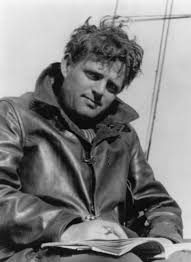
Richard Harding Davis
Scribner’s/March, 1914
IN my sophomore year my first sea voyage, by rare good fortune, led me to Santiago de Cuba, of all the cities of the Pearl of the Antilles the oldest, and to me the most beautiful. During the war with Spain, owing to San Juan Hill, to Colonel Roosevelt’s Rough Riders, and to the fact that at her harbor mouth our admirals sank the Spanish ships, Santiago became famous. But when I first visited that city her history was only of buccaneers and pirates, and except in the secret hopes of the Cuban patriots she was in everything—in tradition, customs, costumes, architecture—wholly Spanish. Within her walls the few Americans were Reimer, the American consul, and the mining-engineers of the Juragua Iron Company, and it was on one of the ore boats of that company I took my first voyage south. The late William Wharton Thurston was then president of the company. It was he who in Madrid had obtained from the Queen the concession to carry north the mountain of ore that ten miles from Santiago rose from the sea at Siboney. It was his bribes of diamond rings, his banquets—for one of which, in a steamer especially chartered, he imported a cargo of flowers—his tact, and his manner of the great gentleman that won for the company the good will of the Spanish officials. It was he who obtained the loan of regiments of Spanish soldiers to work the ore.
For the American company those were the unhappy days. It was the pioneer period. Not only had the engineers to make the dirt fly and clear the jungle, to build bridges, barracks, hospitals, a railroad, and an ore pier, but with diplomacy to overcome the prejudices and indolence of a people who, since Velazquez led them to Santiago, had never changed. At the mines, from these same engineers, young and eager, and at La Cruz in the Casa el Presidente, perched among royal palms above the harbor of Santiago, from Thurston, I heard hourly the story of the American company, of its fight against the mountains, against the indifferent and hostile Spaniard. Ten years later, to that story I added a love story, placed the mines in an imaginary republic in South America, and succeeded in getting the story, which was called “Soldiers of Fortune,” published in this magazine. Later it appeared in book form. Still later the dean of the American dramatists, Augustus Thomas, turned the novel into a four-act melodrama which ran successfully for two years and in stock is still running.
And ten years after that, hand in hand, Mr. Thomas and I sailed to Santiago, again to tell the same story; this time in a succession of moving pictures.
I am assured by the All-Star Feature Corporation, who organized this expedition, that it was one of the most ambitious and best-equipped that as yet, for the single purpose of telling a story on a film, have sailed from the United States. Already the rights to the reels we shipped north have been sold to moving-picture palaces from St. Petersburg to Rio Janeiro and to all of our United States, where each day three million people patronize the movies. Some of these three million may find in the way the pictures are produced some of the same interest they take in the pictures. It is in that hope that this is written.
A month before our expedition set sail Mr. John H. Pratt had preceded us to make the ways straight. It was his duty to secure for our enterprise the good will of the people of Santiago, to obtain the co-operation of the military, the civil authorities, the Juragua Iron Company, the Spanish-American Iron Company, the police, the customs officials; to reserve board and lodging for the twenty members of our company; to engage interpreters, carriages, ponies, launches, and special trains; and in order to pick out “locations,” as are called the scenes and backgrounds of a moving-picture play, to visit all haciendas, trails, forts, mines, jungles, palm groves, water-fronts, and harbors within a ten-mile radius of the city. The rest of Mr. Pratt’s time was his own.
When one cold morning late last fall our company sailed out of New York harbor, it consisted of three actresses, sixteen actors, two camera men, a business manager, a stage director, our star, Mr. Dustin Farnum, and Mr. Augustus Thomas (who, besides being the director-general of the All-Star Corporation, was also the author of the scenario), and two miles of film. In my ignorance, for such an undertaking our expedition seemed inadequate. I did not then know that to the moving-picture people all the world’s a stage, and men and women merely actors. I did not then know that through the energy of Mr. Pratt, and the subtle and diplomatic urgings of the director-general, volunteer actors by the hundreds would flock to our standard, that to assist us recruits would enlist from the sidewalks, from mountain passes, from the decks of ships, from the most conservative of clubs and drawing-rooms. I did not then know that to many people, of all conditions, to appear upon a film, to see themselves as they are seen by others, and to have their friends see them, is a temptation and an adventure. I had not calculated on a human weakness, on the vanity that even in the heart of the Congo leads a naked “wood boy” to push in front of your camera. That he will never see the photograph into which he has projected himself does not deter him. He desires only that his features, which he admires, may be perpetuated, that they may attain immortality, even the brief immortality of a strip of celluloid. But, whatever the motive, the fact remains that before we left Cuba, by the addition of “extra people,” a few working for pay, the great majority out of courtesy, our cast of characters had grown from twenty to two thousand. Of these were the soldiers of the garrison at Santiago, troops of the Guardia Rurales, or mounted constabulary, members of the most distinguished of the Cuban families, all the Spanish workmen on the pay-roll of the Juragua Iron Company, with its rolling-stock and goodwill thrown in, the Santiago police, the American navy, and hundreds of kindly strangers who for one brief moment passed before our camera and out of our lives.
The scenario prepared by Mr. Thomas consisted of two hundred and thirty-three scenes and “inserts.” In pantomime these scenes tell the plot of the play. Later, when they are thrown upon the screen, they will cover ten thousand feet of film, and in passing a given point consume two hours. Where pantomime fails to make clear the plot an “insert” is used. An insert may be the facsimile of a letter, telegram, or any written order; or it may be a line of explanation, such as: “The President grants the American engineer a concession to work the iron ore.” Or, it may be a bit of dialogue, or an exclamation which will make clear to the audience what the actor is saying or thinking, as, “I wonder if I would like to be dictator of Olancho?”
As Mr. Thomas arranged his scenario, the business of each scene and the wording of each insert were typewritten on a separate page of cardboard. There were duplicate sets of these cardboards bound in flexible-leather covers by adjustable steel springs, one set belonging to Mr. Thomas, and the other to his assistant and stage-director, Mr. William Haddock. Each page was as neatly ruled and as methodically planned as ship’s log. Each gave the number of the scene and act, and the “business” of that scene; and blank spaces were left for recording the time of day and the kind of sunlight by which that scene was photographed. In double columns were the names of the characters to appear in the scene and the costumes each was to wear. The costumes were described by numerals. The garments a man wore in the mines would be numbered “1,” his evening clothes “2,” and if to his evening clothes a belt and revolver were added, that was counted as a new costume and described by a new number. At first it was confusing.
“Clay in number four,” Mr. Thomas would read; “President Alvarez in number six, his wife in number five.” It sounded as though he were condemning them to separate cells. But by his system Thomas saved endless confusion. As soon as he had decided what “location” he would use, it was necessary only to turn to the page that called for that location and at a glance he knew what actors were needed, in what clothes they were to appear, and what part of the story they must carry forward.
In preparing a film play the scenes are not produced in the order in which later they appear upon the screen. Which scene will be photographed depends upon the location most available. For example, we were at sea and the scenario called for scenes on shipboard. Accordingly, for his stage-setting Thomas borrowed the decks of the Royal Mail boat on which we happened to be passengers, and for his backdrop the Atlantic Ocean. One scene was on board a tramp steamer, the other on a passenger ship. So, for our tramp we showed only the bow of the steamship Danube, reserving her boat-deck for the liner; and as in each scene we needed a ship’s captain, and the same captain could not appear on both vessels, to the command of the tramp we promoted the ship’s doctor.
Captain Barrett, much to the horror of his junior officers, all of whom hold master’s tickets and write after their names R.N.R., appeared as himself. He made a perfectly good captain, but his actions on the film are most misleading. In real life he does not beam upon passengers who try to run his ship. In real life to mount to his bridge, as did Mr. Farnum, and demand instantly to be placed ashore would lead only to one’s being placed in irons. But before the camera Captain Barrett could not resist the impetuous gestures of our star, and for him manned a lifeboat and set him ashore. At least, the chief officer lowered him as near to the water as was necessary to escape the eye of the camera. There was a heavy sea running, and Farnum, clinging to the life-line, and trying to look as though he liked it, twice was swung, bumping and pitching, over the side, with a fifty-foot drop between him and the hungry waves. On his safe return to the ship he said he now understood why, when in times of disaster boats are lowered, the men hold back and cry: “Women and children first!”
We left the Danube at Antilla and the same afternoon arrived in Santiago, where, at the Hotel Venus, on the Plaza de Cespedes, Pratt had established our headquarters. That evening, as on every succeeding evening, in the Cafe de Venus, within a few yards of the military band and the pleasure-seekers circling in the plaza to inspire or distract us, we mapped out the work for the day to come. Pratt had selected many locations, and as Santiago is one of my “home” towns, I was able to suggest others; so before he turned in that first evening the director-general had arranged his programme, and hung up a “call” for 6.30. For the legitimate actors making their first appearance in the “movies,” and who regard an 11- o’clock call as an insult, it was in every sense a terrible awakening.
“It can’t be done!” protested Mr. Conkling, our villain. “You can’t take photographs without the sun, and the sun doesn’t get up that early.”
We began work at the wharves. Farnum was shown mounting the gangway of one ship, and “Ted” Langham descending another. To my surprise I found that neither then nor at any other time did anyone object to our making use of his ship, his house, or himself. Instead, everyone stopped work, or, if for local color we asked it, continued about his business. Thomas even pressed into our service a boat-load of Hamburg-American tourists.
“When you return to Boston,” the director-general insidiously suggested, “would you not like your friends to see you walking about in Cuba?” They decided they would, and devoted their shore leave in Santiago to acting as supers.
From the wharves the scene shifted in the afternoon to the shack of the American engineers, known in the play as Clay, McWilliams, and Ted. At this location nearly all the characters appeared, and on our departure from the Venus we moved in a long line of open carriages, surrounded by a clattering escort of ponies and a rearguard of commissariat wagons filled with interpreters and lunch-baskets.
The shack chosen for the engineers stands in the grounds of El Guao, formerly the country place of the British consul Mr. Ramsden, and later during the American occupation the official residence of Major-General Leonard Wood. For three days we worked there, and the contrast between our rehearsals and those of a play in a Broadway theatre were extreme. El Guao was no gloomy stage with a single gas-jet by which a hungry, sleepy, and thoroughly bored company pretended to read their parts, or with avidity study the Morning Telegraph. Instead we rehearsed among the rustling fronds of cocoanut-palms, under the bluest of skies, and in the most brilliant sunshine. Those who were not in the scene sat in the high grass where the shade fell, or lay in wait for the small boys who had climbed aloft after cocoanuts, and of the fruits of their efforts robbed them. Nor, if one wanted to smoke, was there a house-manager or a fire commissioner’s placard to prevent, and the Cuban cigars were real Cuban cigars, less sixty per cent duty. And when the noon hour came we did not race to a quick lunch counter, but fared luxuriously on oranges, mangoes, alligator pears, and on pineapples that, at a touch of the fork, melted into delicious morsels. It was the difference between a meal at a railroad counter and a picnic in the Bois.
One must not suggest that in any other sense it was a picnic. Work began at 6.30, continued even though the thermometer was at 110°, and ended only when the light failed. No one ever was idle, nor, again in contrast to the theatre, did anyone suggest he was not a stage-hand but an artist. The director-general himself destroyed that illusion. He set the example of ubiquitous energy. Although in supreme authority, he was not one to say go and come. He went and came himself. He built scenery, assembled machine guns, nailed rifles in piano-cases, held an umbrella over the camera man, policed the side lines, found a place of honor for the alcalde, and in his idle moments drilled, coached, and rehearsed everything from a troop of cavalry or a string of flat cars to the lady who had to say, “Stuart, more than life I love you!” before an admiring and envious audience of six hundred Cubans.
Our location on the second day was at the mines of the Juragua Iron Company. Here the American engineers were supposed to show the millionaire owner of the mines and his daughters the result of their labors. The iron company carried us to the mines over their own railroad in a special train that had the right of way over all the ore trains, and throughout our visit the company held up everything else that in any way threatened to interfere with the pictures.
On our arrival at the mines the day was declared a national holiday, and everybody quit work.
Of the actor engineers the real engineers were somewhat critical. They suggested they would like to see the actors do something more strenuous than escort the ladies over the landslides. They made it evident that that part of the work might safely be intrusted to them. So Farnum, stripped to the belt and carrying a transit, laid out a new road-bed, and later drove a steam-drill, and Mr. Stark, who appeared as McWilliams, ran a locomotive. One of the best pictures we secured was that of Hope Langham and McWilliams in the cab of a locomotive. It pulled a flat car from which the other members of their party were supposed to be inspecting the mines. To that flat car was coupled another on which was the camera. It caught all that went forward in the locomotive and on the first car, as they moved, sometimes through tropical jungle, sometimes between walls of ore as high as a skyscraper, sometimes balanced on the dizzy edge of a precipice. It made a splendid panorama. Against the changing backgrounds it showed Hope and McWilliams laughing gayly, it showed on the flat car the others pointing out the wonders of the mines; but it does not show the rest of us on the car that held the camera, imploring McWilliams to keep on the rails, and prepared at an instant’s warning to leap into space.
Kirkpatrick, the engineer who was the original of the character of McWilliams, died at the mines and was buried there. And when the actor who represented him stopped at the grave, dressed as I always had seen Kirkpatrick, in mining-boots, blue shirt, and sombrero, it gave one a curious thrill. It was more curious on the days following, when our location was at La Cruz, which overlooks the harbor of Santiago. This is the house that was built for the president of the company and which, from the reign of Thurston to that of Charles M. Schwab, has been his official residence. In the novel I call this place the Palms, and it is there that much of the action of the story takes place. Sometimes Thomas followed the scenes in his play, sometimes those in the novel. But whenever it was possible he preferred for his backgrounds the exact places the novel described. So I had the curious sensation of seeing characters that had existed only in fiction, but which had been placed in a real setting, now appearing in flesh and blood in that real setting, wearing the uniforms or ball dresses I had described and which Charles Dana Gibson had drawn, walking in the same avenue of palms, making love in the same corner of the veranda, fortifying the same iron gates with real machine guns, issuing the same commands to real American bluejackets. It was as puzzling as one of those moments when you come upon some spot you know you never have visited before but which, you feel, in some other existence, or in a dream, you already have seen.
The manager of the iron company, Mr. D. B. Whitaker, made us welcome at La Cruz, and few rehearsals even were carried forward under such conditions. We were surrounded by flowering plants and whispering palms; below us stretched the harbor three miles across and the red roofs of Santiago, and beyond them a great circle of mountains, with shadows in the valleys and white clouds resting on the peaks. And for our immediate needs there were dressing-rooms, shower-baths, wicker chairs, a library of novels, and at disturbingly frequent intervals trays loaded with the insidious Daiquiri cocktail. This latter is the creation of the late Jennings S. Cox, for some time manager of the iron mines, and it is as genial and as brimful of brotherly love as was the man who invented it. It consists of Bacardi rum, limes, sugar, and cracked ice; and, so long as it obtained, rehearsals never dragged and conversation never flagged.
Again I fear it reads like a picnic; but the actors did not find it a picnic. For in the “out-of-doors” drama one man in his time plays many parts. In the legitimate drama the hero has only to read lines, and other lines inform the audience that he is brave, that he is daring, that in every out-of-door exercise he excels. For the spectators of the silent film such hearsay evidence is not possible, may not explain in can climb a tree. He must climb the tree. They demand to be “shown.” Farnum, who was making his debut in the film drama, illustrated this. When he played Lieutenant Denton in Mr. Thomas’s “Arizona,” everyone in the cast except the villain told the audience that in all the cavalry Denton was the finest officer and most daring rider. All Denton actually did in front of the audience was to comb his hair. But in the “out-of-doors” drama, with all out-of-doors to work in, Thomas did not give Farnum leisure to comb his hair. This time Thomas could not tell the spectators his hero was a rough rider; but on horseback sent him to jump precipices and scale ravines, and so proved it. It was fortunate for our star that he enjoyed the strenuous life. We gave him his share. And when we did not invent work he improvised. In one scene he escorted the wife of President Alvarez to the coast, where, under a heavy fire from revolutionists, a shore boat was to row her to a warship. When the picture was being taken, forty feet from shore, the boat, loaded with bluejackets, stuck on a sand-bar. The boat could not come to the lady, the lady could not go to the boat, and imaginary bullets were splashing around her. What was more important, yards of real film were being wasted. Farnum acted as the hero of a film drama must act. He lifted the lady to his shoulders, and, with the water up to his arm-pits, plunged into the surf and carried her to the boat. It made a far better scene than the one we had rehearsed. But, if our hero had been a small man–?
After each scene in which he appeared Leighton Stark, who is a very large man, and who on and off is possessed with humor, used to mutter grimly: “It’s a small part, but a good one!”
One day I asked him the meaning of this cryptic utterance.
“In New York, when Thomas engaged me,” he explained, “he said, ‘I want you to play McWilliams. It’s a small part, but a good one.’ From that I got the idea I would spend most of my time in Cuba sitting around the plaza, instead of which I’m on in every scene of the play. It doesn’t matter whether it’s a mining-camp, or a ballroom, or a mountain trail, I’m in it. I have to drive engines, couple freight-cars, ride bucking ponies, and wear a dress-suit at six in the morning. Yesterday, with the sun at 105,1 had to climb a telegraph pole and cut the wires—and I weigh two hundred and fifty pounds! And tomorrow I’ve got to wade into the ocean and shove a boat through the surf, and if I don’t drown the sharks will get me. So that’s what I mean when I say: ‘It’s a small part, but a good one.’ ”
On the other hand, Miss Winifred Kingston, who was Madame Alvarez, the part played in the stage version by Miss Dorothy Donnelly, complained that all she had to do was to escape in a carriage and “register” fear.
In the moving-picture language to “register” anything means to put it on record on the film. If in one scene an actor wears a certain costume, that costume is registered, and, once registered, in not the slightest detail may it be altered. If a character walks from a garden into a street, even though the two scenes are photographed on days a month apart, in both his clothes obviously must be the same. It is not to be supposed that in passing through a garden gate his tan shoes changed to patent leathers. And in the same vernacular, when a director wants an actor to express an emotion, he tells him to “register” indignation, laughter, remorse.
Miss Kingston really had much more to do than to register fear, and did it well, but it seemed as though, as she said, she always was escaping. One would come across her in lonely mountain trails, in the crowded streets of Santiago, in avenues of arching palms, with the driver of her state carriage always lashing his horses, while she looked back at imaginary pursuers and registered fear. For some time no one but Thomas really knew from just what she was escaping; we were certain only that she was a long time about it. Thomas finally explained she was the wife of the President, and was escaping from the palace, where, had she remained, the disloyal troops would have shot her. A few days later I found her and her state carriage in a dripping jungle, entirely surrounded by mosquitoes and an atmosphere comparable only to that of a steam laundry. She was in a ball dress, with arms and shoulders bare, and against several thousand mosquitoes was making a hopeless fight.
“If I had known,” she cried, punctuating each word with a vicious slap, “that escaping was like this, I’d have stayed in that palace and got shot!”
But the part had its compensations. In her ball gown of blue satin and pearls, with a black-lace mantilla and a towering crown of tortoise-shell, the Cubans and Spaniards easily found her the most interesting member of our company. That, except on match-boxes and bull-fight fans, no such Spanish woman had ever existed, did not lessen their loyalty. One day she was escaping at one location when she was needed at another, and I rode after her carriage to bring it back. At a cross-road I asked a man if he had seen an American woman pass that way. As though still questioning his eyesight he shook his head.
“No,” he said doubtfully; “but the Queen of Spain just went by.”
When in New York I learned that Farnum was to be our star I was naturally delighted. As the cowboy in the “Virginian,” the Union officer in the “Little Rebel,” as the hero of “Arizona,” his manliness, his force, his charming good humor and the naturalness of his acting had impressed me as they have thousands of others; and it was because he possessed these sterling qualities that I supposed he had been engaged. I was wrong. I found that in choosing his star Mr. Thomas had considered only whether he could or could not wear my clothes. Every other leading actor in America had been measured and found wanting. Farnum had survived every test. It was proved that he alone was the man whose head my hat would fit, whose legs were at ease in my riding-breeches, whose hands were not lost in my gloves. So, at enormous expense, they engaged him. The plot against my property developed at the first location. The director-general said critically: “That coat is the sort of coat a man would wear in a mining-camp. Lend it to Farnum—just for this picture.” The next day they borrowed a sombrero; on succeeding days riding-boots, leather gaiters, gauntlets, coats of khaki, coats of pongee, gray flannel shirts, white flannel trousers, tan shoes, tennis-shoes, my riding-whip, my raincoat, my revolver. And when, to cover my nakedness, I begged that any part of my clothing be returned, I was greeted with exclamations of amazement and reproach.
“Impossible!” they cried. “Everything you own is ‘registered’!”
By that time I had learned that to get back anything that has once been registered is as easy as to take the crown jewels from the Tower of London. There was one saving clause. Having been told he was to play a mining-engineer, who spent his time either on a horse or in the mines, Farnum had brought with him perfectly good evening clothes and a high silk hat. So I was still able to go about at night.
Before we arrived in Cuba there was a rumor we were coming to reproduce the battle of San Juan Hill, and that we wished to use the soldiers of the garrison to represent American and Spanish troops. It took some time to make it clear that the soldiers were to represent an army which existed only in a novel, and on the stage. When, thanks to the diplomacy of Mr. Thomas and of our consul, Mr. R. E. Holladay, this was understood, nothing could have been more courteous and friendly than the attitude of the Cuban Government, as represented by the minister of foreign affairs in Havana, and of Colonel W. I. Consuegra, commanding the garrison of Santiago Province, and of his chief-of-staff Major Cuero. At the disposition of our director-general they placed as many of two thousand infantrymen and of the mounted Guardia Rurales as we needed. They stipulated only that the soldiers should not appear under any other flag than that of Cuba. To meet this very proper condition, Thomas invented a flag of his own, submitted it to Colonel Consuegra, and on its receiving that officer’s approval issued it to the troops. And if the Cuban troops fight under their own flag as they fought for us under the green-and-white banner of Olancho, their enemies had best keep away from Cuba. They fought so well that, at what we called the battle of Obras Publica, two were wounded, and at the battle of El Guao three more were sent to the hospital. That the list of casualties was no larger was not due to any caution on the part of the fighting men. They were told to charge the gates of the Public Works, which for the time being represented the gates of the President’s palace. We meant they were to charge the “palace guard” who were holding the gates; to drive them back and then to open up so that the cavalry could pursue. But in an excess of realism the palace guard, before they fled, bolted the gates. We feared our picture was ruined. We did not know the discipline of the Cuban soldiers. They had been told to take those gates—so they took them. Mounting on the shoulders of their comrades, they flung themselves across the sharp iron spikes, and, while some were impaled, others with the butts of their rifles drove the gates open. At that moment the troopers, eager to get into action, charged at a gallop, and rode them down. I thought at least a dozen men had been injured, and the only moving picture I foresaw was an exceedingly moving one of Thomas and myself in the dungeons of Morro Castle. But the more our sham battles approached the real thing the more the soldiers enjoyed them, and, whether led by their own officers or by the actors in our play, they fought, marched, and drilled like veterans. They themselves were excellent actors. They quickly understood, and moved with spirit, and with never a glance at the camera. Only once were they embarrassed. That was when a firing squad that had been told off to shoot John Santoplis as President Alvarez, thought they had killed him. Alvarez was placed with his back to a cemetery wall and, by dropping the handkerchief with which they had tried to bind his eyes, gave the signal for his own execution. As the rifles cracked he crumpled up, pitched forward, and fell face downward. He supposed the camera would show the firing squad reform and march away. So he remained motionless. The firing squad did not march away, but with increasing concern waited for Alvarez to come to life. The prostrate figure did not move, minutes seemed to pass, and to everyone came the terrible thought that the men had been served with ball cartridges. And then, to the delight of the firing squad, and in answer to the excited appeals of the Americans, Santoplis rose leisurely and brushed the dust from his trousers.
On another morning a soldier played with such realism that he nearly lost us a valuable actor. The soldier had been rehearsed to shoot George Stilwell, who played Captain Stuart. He stood within three yards of Stilwell, and Thomas warned him not to aim at the actor but at a pencil-mark which Thomas scratched on the wall. When the moment came the soldier could see in Stuart only the enemy and banged at him point-blank; and all that saved Stilwell was Thomas’s flag, which was floating at his side, and which received the wadding and powder. As it was, for some time after he came to life Stilwell insisted that the top of his head was missing. Sometimes an accident gave Thomas a scene he preferred to the one he rehearsed. Sam Coit, as the American consul, had to ride a donkey into the presence of an officer commanding a United States warship and demand protection. Frantically working spurs and whip, Sam approached at a gallop. But just as he reached the officer, the donkey in disgust threw out his front legs and sent the American consul hurtling through space. It was a better entrance than the one prepared, and, appreciating this, Coit, while still on his knees, began to beg for a warship.
The Hon. Josephus Daniels believes, by methods that are legitimate, in adding, if that be possible, to the popularity of the navy. And it was owing to him and to his generous point of view, and to the fact that with the present administration Mr. Thomas is persona grata, that we were permitted to show in our pictures American warships and bluejackets. Indeed, the use we might make of them seemed so unlimited that I wanted to take a moving picture of our sailors marching into the city of Mexico. But on looking through his scenario Thomas said he could find no such incident. Instead, I had the privilege of watching Cuban soldiers and our own bluejackets marching in the same column. They were under the green-and-white flag of Olancho. When last I had seen them together they were allies, and fighting under flags of a very different color.
Should a company of actors of any foreign country come to New York and propose to use Central Park as a battleground, and fire volleys across Madison Square, you can imagine the permits the mayor, the police, the bureau of combustibles, the park commissioner, and the fire department would require of them. It also followed that when we invaded Santiago we were not at once given a free hand. Our purpose at first was misunderstood, and often in our ignorance we neglected to apply for permits to the proper authorities. Difficulties arose that as strangers we could not foresee, and the first week of our visit was spent in cabling and telegraphing, in visiting high officials, and in obtaining credentials. If during that same week our legation in Havana handled as many international questions as diplomatically as did Augustus Thomas at our end of the island, it should be elevated to an embassy. I admit Mr. Thomas is our leading dramatist, I grant he honors the gold medal of the Institute of Arts and Letters, but I feel that as a playwright his genius is wasted. Any man who, in a foreign country, can command the loyal services of the army of that country, of his own navy, of the department of state as represented by our legation, Consul Holladay and Vice Consul Morgan, of the street-car lines, the electric-lighting company, the police, and the Roman Catholic Church, should be a general or an ambassador. If anyone questions this conclusion, I refer him to the battle of the Plaza Aquilera. On that occasion, under the orders of Mr. Thomas, two thousand soldiers and civilians acted before his camera. The tactics and strategy of the battle itself were worked out by Thomas and the Cuban officers on many maps, and as methodically as for a real attack: street-car lines were tied up, all traffic was halted, and among those present were the highest officials of the church, army, and state and the first families of Santiago, who for days before had reserved windows and balconies; and when the battle finally came off they greeted it as they always did our out-of-door performances, with the most courteous applause.
As a matter of fact, all of our performances were out of doors. This was possible only because the action of the play was laid in Spanish America, where the indoor life of the people is largely spent in the patio, or the court around which the house is built, and which lies open to the sky and sun. Not once were we forced to “build” a scene, or use “studio” locations. Our interiors were just as solid and real as our palm groves and mountains, and just as beautiful. For when the good people of Santiago understood that we wished to photograph their houses and gardens because we so greatly admired them, with the most charming courtesy they invited us to photograph what we pleased. In twenty years of visits to Santiago it has been my privilege to know some of the Cuban families, and these made us known to others. From one we borrowed a background or a fountain; from another a pair of marble stairs; from the roof of another a view of the harbor. In this way our President’s palace spread over half the city. Senor Batelle graciously gave us the use of his patio; Senora Schumann the ornamental entrance gates; Herman Michaelsen, the German consul, the garden; the San Carlos Club loaned us one of the most beautiful ballrooms on this continent—it is entirely of marble; and our rear entrance we stole from the Public Works. The black stallion with his saddle of silver, ridden by our star, was loaned us by Senor Prudencio Bravo, and that was the least of his many courtesies.
When we made use of a private house our host and hostess, as a rule, telephoned their friends, and as a result we rehearsed before a large and interested gallery. One gentleman, who had loaned us his garden, had built a chapel in memory of his father which, on the morning we visited his house, was consecrated with high mass. His return from that ceremony was so abrupt that one of his friends commented upon the fact. Our host shrugged his shoulders.
“Any time I can say my prayers,” he explained; “but I seldom can see a man murdered in my own patio.”
Under these unusual but charming conditions rehearsals took on a social aspect which was demoralizing; our paid assistants and interpreters were ousted from their jobs by the gilded youth of Santiago’s four hundred, and when the young ladies of the company were called to rehearse a ride for life, they were found at afternoon tea.
After one has watched rehearsals under these conditions, the traditions and mysteries that surround those held in the theatre seem rather silly. Have you ever tried to get word to a man who is directing a rehearsal, or, when you were directing a rehearsal, have you had the members of your family, your best friend, a man who is trying to pay you money, hurled from the stage-door, or permitted to approach you only on his tiptoes?
When the lady who is sweeping out the auditorium lets fall her mop, have not you heard the star and the author and the stage-manager all shriek: “My God! how can we work in all this tumult?” I recalled the holy calm, the awful secrecy, of those rehearsals behind closed doors when I saw Thomas and the company bowing and picking their way among the first families and murmuring, “No se mueva usted,” or in the street, dodging trolleycars, automobiles, and sun-stroke, while our fifteen policemen struggled with a mob of five or six hundred people.
Amidst all this riot there was one figure that remained calm. Even the imperturbability of our director-general could not surpass his poise. He was the man behind the camera; while actors, interpreters, policemen fretted and perspired, he coldly waited. For, no matter what the others may plot, the only thing that counts is what he registers. And the last word always is his. He is all-powerful. He can “cut out” the love scene of the hero to “cut in” a messenger approaching on horseback, or follow him as he climbs the mountain, or, as he gallops at right angles to the camera, “pan” him. To “pan” is to make of the picture a panorama. Some think nothing is required of the camera man but to turn the handle. Were that so, the ideal camera man would graduate from a street-organ. He must be much more than a motive power. He should have three hands: to keep the film evenly unrolling, to swing the eye of the camera left or right, to elevate or depress it; he must possess a mind that acts faster than can any number of humans and animals, an eye to follow every object in the radius of his finder, the patience of Job, and the nerve of a chilled-steel safe. We had such a one in young Irvin Willat. He better understood the intricate insides of his mysterious box than most men understand the mechanism of a wheelbarrow; he knew which variety of sunlight called for which number of grease paint; he knew which colors registered white and which black; he knew that the necktie worn by the villain was not the same necktie he had registered three weeks previous, and that the leading lady, since she had last worn them in front of his camera, had dared send her gloves to the cleaner’s. Undisturbed he would grind his handle from a moving train, the deck of a pitching ship, while hanging from a tree.
Horses rearing and plunging bore down upon him; men fired point-blank at him; as he stood between the rails a locomotive charged him, but he only smiled happily and continued to grind. From an airship he had photographed Morro Castle and the Caribbean Sea. He saw the world only as food for his camera. Had his brother Edgar raced in front of it, pursued by a grizzly bear, “brother Irvin,” with a steady hand, would have “panned” him.
One day in a cocoanut grove, when we were standing about at lunch-time, brother Irvin turned the camera on us to get a “souvenir” picture. As he did so, a man on horseback suddenly galloped out of the trail and shouted: “You are all under arrest!”
We did not know what new permit we had failed to obtain, and there was an unhappy silence.
It was broken by the voice of Irvin raised in excitement.
“Move in closer, sheriff,” he shouted; “I haven’t got you!”
 The Archive