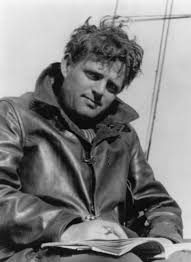
H.L. Mencken
Baltimore Evening Sun/September 29, 1924
I.
Misericordia superexaltatur judicio, which is to say, mercy is superior to justice. The saying is credited by the learned to Pope Innocent III, one of the truly great occupants of Peter’s chair—in fact, a veritable Harding or even Coolidge among popes. He said it in the first days of the thirteenth century. Since then there have been great improvements in Christian doctrine. In Chicago, the other day, a Catholic parish priest rose in his pulpit, bawled for the blood of the Judean youths, Leopold and Loeb, and delivered a dreadful denunciation of Judge Caverly for sparing their necks.
This Latin brother was singular, considering his rite, but in plenty of company, considering merely his sacred office. On the same day a multitude of Protestant clergymen in Chicago relieved themselves of sentiments to the same general effect. Judging by the press dispatches, indeed, the whole service of God in the town on that day consisted of barbaric yells for the Lord High Executioner. No other subject seems to have been mentioned in the churches. One and all, the anointed of God served Him by heating up the faithful to hatred and revenge, and by reviling a judge who had been guilty of mercy. One and all, they screamed for the lives of two fellow-creatures.
Alas, not a rare spectacle, in this great moral age! A day or two earlier—or was it later?—a gang of clerics from Annapolis, accompanied by pious laymen, appeared before the Hon. Edward M. Parrish, parole commissioner, and protested bitterly against the parole of a man lying in Annapolis jail. Their argument, as reported in the Sunpaper, seems to have been very simple. This gentleman, it appears, had deliberately violated the law. Ergo, it was the first duty of the State to keep him in jail—not to dissuade him from his evil ways, but to get revenge upon him!
II.
As I say, such episodes are not rare. I could fill columns with them. The sacred office, of late, becomes indistinguishable from that of the policeman and hangman. The Beatitudes are repealed, and reenacted with jokers. Divine worship becomes a sort of pursuit of villains, with rope and tar-pot. It is the prime duty of the clerk in holy orders, not to combat sin, but to chase, nab and butcher the concrete sinner. The congregation in which the True Faith runs highest is that one in which there is the steadiest and most raucous demand for blood.
Four or five years ago, when the Ku Klux Klan first got on its legs, I made certain inquiries into its origin and nature, and came to the conclusion that it was no more than the Anti-Saloon League in a fresh bib and tucker, and that, in consequence, its head men were mainly Baptist and Methodist clergymen. That conclusion, printed to this place, caused protests, and one amiable Baptist clergyman had at me to the extent of two columns. But who denies the fact today? Surely no one of any intelligence. The Klan, studied at length, turns out to be exactly what the Anti-Saloon League is: a device for organizing the hatreds of evangelical Christians. The Anti-Saloon League is devoted to pursuing those they hate on ethical grounds and the Klan to pursuing those they hate for reasons of dogma. Neither has any other purpose.
Both are run by Baptist and Methodist clergymen, some retired from the sacerdotal office but all full of evangelical zeal and all extraordinarily savage and bloodthirsty. One hears nothing from these holy men save endless demands that this man be deported, that one tarred and feathered, and the other one jailed. The Methodists, a year or so ago, were actually advocating murder. East, West, North and South, the malevolent carnival goes on. Everywhere the faithful are urged to animosity, brutality, hatred, revenge. Everywhere neighbor is aroused against neighbor, and every sign of Christian charity is denounced as criminal. And everywhere this devil’s brew is stirred vigorously by men sworn to preach the gospel of Christ.
III.
In view of such phenomena, it surely becomes ridiculous to ask, as certain Christians of an elder school do, what is the matter with the churches? What would be the matter with this theaters, if they took off all their plays and put on funerals and surgical operations? What would be the matter with the bootleggers if they swindled their clients with ginger-pop and coca-cola? What ails the churches is that large numbers of them have abandoned Christianity, lock, stock and barrel. What ails them in that some of them, and by no means the least in wealth and influence, are now among the bitterest and most diligent enemies of Christianity ever heard of in this Republic.
Personally, I have little need for the basic consolations of the Christian faith. I am not naturally religious, and seldom seek peace beyond the realm of demonstrable facts. Even my virtues, such as they are, are not properly describable as Christian. If I let an enemy go, it is because I disdain him, not because I pity him. If I do not steal, it is not because I fear hell but because I am too vain. But I am not blind, nevertheless, to the comfort that Christianity gives to other men. It is, for them, an escape from realities too harsh to be borne. It is a way of life that offers them sanctuary from the pains of everyday living, and gives them rest when they are weary and heavy-laden. When they are errant, it offers them mercy. When they faint, it speaks to them of love.
True or not, this faith is beautiful. More, it is useful—more useful, perhaps, than any imaginable truth. Its effect is to slow down and ameliorate the struggle for existence. It urges men to forget themselves now and then, and to think of others. It succors the weak and protects the friendless. It preaches charity, pity, mercy. Let philosophers dispute its premises if they will, but let no fool sneer at its magnificent conclusions. As a body of scientific fact it may be dubious, but it remains the most beautiful poetry that man has yet produced on this earth.
IV.
Well, try to imagine a man full of a yearning for the consolations of that poetry. He is tired of the cannibalistic combat that life is; he longs for peace, comfort, consolation. He goes to church. A few hymns are sung, and there arises in the pulpit a gentleman told off to preach. This gentleman, it quickly appears, is not currently merchanting peace. The Beatitudes are not his text. He turns to the Old Testament. There he finds a text to his taste. And, leaping from it as from a springboard, he gives over an hour to damning his fellow-men. He wants them to be sent to jail, to be deported, to be hanged. He demands that the business be dispatched forthwith. He denounces mercy as a weakness and forgiveness as base.
Our Christian friend, with a yell of despair, rushes from the basilica and seeks another. There he hears the pastor call upon the agents of Prohibition to shoot bootleggers. He seeks a third. The pastor denounces girls who kiss their beaux as harlots, and demands that they be taken by the Polizei and cast into jail. He seeks a fourth. The pastor praises a Federal Judge for refusing a jury trial to a victim of the Anti-Saloon League. He turns to a fifth. The rev. rector calls upon God to singe and palsy the pope. A sixth. The shepherd urges his sheep to watch their neighbors, and report every suspicious whiff. A seventh. The Bolsheviki are on the grill. An eighth. Demands that more prisoners be hanged. A ninth. . . .
But by this time another atheist in on his way to the public library, at 18 knots an hour, to read Darwin, Huxley, Spencer and Nietzsche . . . or maybe Tolstoi. The Christians are being driven out of the churches; their places are being filled by hunters and trappers, i.e., by brutes. A few old-fashioned pastors survive, but they diminish. As they pass, their flocks will have to resort once more to catacombs. There will be, eventually. a Twentieth Amendment. It will proscribe the Beatitudes, as the Eighteenth already proscribes the Eucharist.
 The Archive