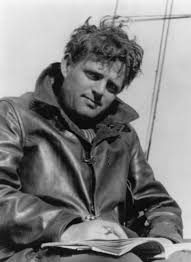
H.L. Mencken
Baltimore Evening Sun/September 22, 1924
I.
The Hon. George Heller, M. D., who announces that he will run for Congress in the Third District against the Hon. John Philip Hill, LL.B., is evidently one of the romantic optimists who make existence in this vale so nonsensical and so charming. Over the corpse of the Hon. Tony Dimarco, LL.B., the wettest of the wets, he flings himself upon the barbed wire. I only hope that the Polish precinct bosses who back him will stick on election day, and so ease the contusions along his gluteus maximus. Is there any sign that the Third District tires of the Hon. Mr. Hill? I can detect none. A district made up of enlightened freemen never tires of a congressman so long as he gives it a good show. At the art of providing this good show the hon. gentleman is a virtuoso—perhaps the greatest seen in these latitudes since the Hon. Frank C. Wachter was translated to a higher sphere. He understands his constituents thoroughly, and he is an extremely resourceful and amusing fellow. His onslaughts upon the Volstead Act have been far more exhilarating than those of any other congressman, and also, I believe, far more effective. He has had the wit to see that it is useless to rant and howl against the act in the traditional congressional manner—that the Anti-Saloon League and its serfs are no more open to argument than a whirling dervish is open to argument. Instead, he has had at them, and at the law itself, with the artful and devastating devices of ridicule, he has carried the whole imposture to a reductio ad absurdum. Very few men in this world have the skill to meet ridicule without damage, and certainly the humorless Methodist who passes as District Attorney in these parts is not one of them. The Hon. Mr. Hill has got him on the floor, and is having a great deal of fun with him. And he has also pulled the legs from under that other dull Wesleyan, the Hon. Roy Ass Haynes.
II.
The dilemma confronting the Hon. Mr. Haynes is very serious. If he tries to shove the Hon. Mr. Hill into jail he will only make a martyr of him, and so double the effectiveness of his opposition; moreover, railroading a congressmen may turn out to be far more difficult than disposing of a poor Italian woman with no money and no friends. And if he lets him run on he will only confess, publicly and shamelessly, that the Volstead Act is a snare and a delusion—that there are holes in it big enough to admit a five-ton truck, and that Prohibition is not actually enforced upon all citizens alike. No matter which path he takes, the going will cause him to sweat, and every drop of sweat he sheds will mean a vote for the Hon. Mr. Hill. For the constituents of the hon. gentleman seem to be convinced, as he is, that the Volstead Act is not only intolerably oppressive but also grossly unfair and dishonest—that its actual purpose is not to put down the use of alcoholic beverages absolutely, but simply to harass and damage the sort of folks who are hated by country Methodists. This, I believe, is a fair statement of the motives behind it. The farmer can still make cider and wine, and the Prohibition Commissioner refuses flatly to put a limit on its content of alcohol, but the city man is liable to raid, assault and even murder the moment he sets a batch of mash to fermenting. Who gets any benefit out of this law? Obviously, only the yokel. He has his cider, and he sees a horde of blacklegs turned loose to annoy his economic and theological enemy. The Hon. Mr. Hill has thrown up this fact very brilliantly, not by the usual method of moral denunciation, but by the far more agreeable and forcible method of burlesque. He has made the Prohibitionists look silly, and thereby he has done them grave damage. I believe that, as a result of his clowning, the effectiveness of Prohibition propaganda has been diminished in Baltimore by at least a half. The holy cause, indeed, is sick unto death, and shaking money out of the Sunday-schools grows harder and harder. If it were not for the fact that scores of job-holders live by nursing it, it would turn up its heels and die. The old class of philosophical Prohibitionists is now almost extinct. The cause is carried on wholly by gentlemen who get their living out of it.
III.
Meanwhile, the Hon. Mr. Hill adroitly butters his own parsnips. Certainly no other Maryland congressman since the Civil War has made a more vivid impression on his colleagues in two terms, or got more attention from the country in general. The rest of the State delegation in the lower House consists of vacuums. The only one of its members who has ever been heard of beyond the borders of the State is a bogus dry who was lately investigated by the House. It turned out that he was innocent. In other words, Maryland’s representatives even fail to get any share of the Washington swag. They are simply nonentities. If all of them save the Hon. Mr. Hill were murdered by Prohibition enforcement agents tomorrow, the news would be sent out without any mention of their names. But Hill has been heard of, and his forays against the Anti-Saloon League and its lackeys get attention all over the country. They make first-page news; they get big headlines. These headlines, it seems to me, do an excellent service to the Maryland Free State. They inform the nation that there is at least one State remaining in which the imbecilities of Prohibition are regarded with disdain—that there is one State in which the majority of the people yet cherish and believe in liberty, and can afford to laugh at its enemies. The fact is made plain that Maryland suffers Prohibition unwillingly—that it to imposed upon the people by the new Federal despotism, and that they will throw it off as soon as they can. Surely this is not a bad impression to get about. Soon or late there is bound to be a revulsion against all the current snouting and oppression in America, and the State that leads it will not go unhonored. The local Babbitts posture obscenely in the complaisant Sunpaper every time they lure another soap-factory to Baltimore. But try to imagine a civilized man looking for a comfortable place to live. Would he choose a city full of soap-factories, or a city with just laws and a respect for liberty? What Baltimore needs, obviously, is more civilized inhabitants. We have enough Babbitts now, and they have brought in enough serfs and morons.
IV.
But even the Babbitts, living in Maryland, are measurably better than the Babbitts elsewhere. This is one of the few American States in which, in the State courts, the constitutional guarantees of the citizen are jealously guarded. Unlike New York, Pennsylvania and most of the Western States, we have no laws limiting the free play of opinion; any Marylander is at liberty to set forth his honest sentiments, in private or in public, without interference by the Polizei. No so-called soap-boxer, however extravagant and idiotic, has ever been sent to prison in Maryland. The American Legion, which devotes itself in the West to slugging alleged Reds, i. e., all persons who do not believe that the government is perfect, would not dare to attempt it here. Our Chambers of Commerce have no committees to regulate what wage-slaves shall think. We have produced no Mitchell Palmers, Lusks or Archibald Stevensons. This freedom from tyranny is due to purely State action, and springs out of a purely State tradition. As one of the United States, Maryland is subject, like all the rest, to the oppressions of Federal law, and the judicial revision of the Bill of Rights by the Federal courts. But surely not willingly. Our State courts engage in no such rewriting of the Constitution. They respect it today as they respected it yesterday, and under its protection the citizen enjoys all his rights, unmolested by raids upon them under cover of so-called law. This freedom, it seems to me, is something very valuable. It is, perhaps, more valuable than anything else that the citizen of a modern state can hope for. It is the basis of all security, and of all happiness. Its overt benefits are everywhere present. I point to one example: the experience of Maryland with the Ku Klux Klan. To the north and to the south the Klan has caused great turmoils; in Maryland it has been as harmless as the Knights of Pythias. And why? Simply because the tradition of the State is against government by Klan methods—because the Klan found it impossible to get any official support, the foundation of its strength elsewhere. There are States in which governors and judges have cringed to it—but Maryland is not one of them. Well, the same rustic Methodists and Baptists who launched the Anti-Saloon League also launched the Klan, led by the same pastors. They were able, with the Anti-Saloon League, to overthrow the Constitution of the United States, and to destroy its principal guarantees. But they were not able, with the Klan, to destroy liberty in Maryland.
 The Archive