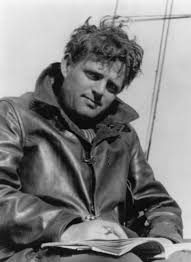
Richard Harding Davis
Scribner’s/May, 1891
BROADWAY means so many different things to so many different people.
The business man has his own idea of it, and it suggests something quite the contrary to his wife, and still another point of view to his son; in this it differs from almost every other great thoroughfare of the world. When one reads of the Appian Way, one thinks only of magnificent distances and marble. The Rue St. Antoine brings up a picture of barricades and gutters splashed with blood; and the Boulevards are reminiscent of kiosks and round marble-top tables under striped awnings. But all Broadway is divided into three parts, and which is the greatest of these, it would be difficult to say. There is the business portion of Broadway, and the shopping district, and still farther uptown the Broadway where New Yorkers and their country cousins once used to walk to look at the passers-by, and where now only those walk who wish to be looked at. And yet Broadway has, from the Battery to 159th Street, where the cobble-stones break up into a dusty country road, its own dear individuality. It may take on the color of its surroundings from point to point, just as the same column of mercury passes through zero and freezing-point to fever heat; the clerks who board the surface cars at the Equitable Building make room for the shoppers at Union Square, and they, in turn, empty the car to give place to those who live still farther uptown; but it is the same familiar yellow car which carries each of them, and which runs on all the way.
The business man knows Broadway as a street blocked with moving drays and wagons, with pavements which move with unbroken lines of men, and that are shut in on either side by the tallest of tall buildings. It is a place where no one strolls, and where a man can as easily swing his cane as a woman could wear a train. Pedestrians do not walk steadily forward here, or in a straight line, but dodge in and out like runners on a football field. They all seem to be trying to reach the bank to have a check cashed before three o’clock. The man who stops to speak to a friend, or to gaze into a shop window, is jostled and pushed and shouldered to one side; everyone seems to be trying to catch up to the man just in front of him; and everyone has something to do and something on his mind to think of, too, if his face tells anything. So intent are they on their errands that they would not recognize their own wives if they passed them by. This is the spot on Broadway where the thermometer marks fever heat. It is the great fighting ground of the city, where the battle of business goes on from eight o’clock in the morning until three in the afternoon, at which time the work flags a little and grows less and less hurried until five, when the armies declare an armistice for the day and march off uptown to plan a fresh campaign for the morrow. The armies begin to arrive before eight, and gather from every point of the compass. The ferry-boats land them by thousands, and hurry back across the river for thousands more, the elevated roads marshal them from far uptown, gathering them by companies at each station, where they are unloaded and scattered over the business districts in regiments. They come over the Brooklyn Bridge by tens of thousands, in one long, endless procession, and cross the City Hall Park at a quick step. It is one of the most impressive sights the city has to offer. The gathering of the clans was less impressive and less momentous. They do not all meet on Broadway at once, but before the business day is over they will have passed up or down it, and will have contributed at one time to the hurrying crowds on its two pavements. Where they all find work is a wonder to the dilettante from upper Broadway, where money is spent, not made. But he will understand when he notices that every building along the street is divided and subdivided like a beehive, and every room holds its own president and board of trustees. It would take an idle man half an hour to read the signs on the front of one block of lower Broadway, and the face of each building is a small directory.
There was a great trade parade in the city two years ago, and it gave New Yorkers a pleasing idea of their prosperity; but its theatrical display and bands of music were but a pageant to the grim reality of the great trade parade which forces its way up and down Broadway every morning in the year. There is a narrow turn in Cheapside, of which Londoners boast that the traffic is so great as to block the street for half an hour at a time; but on Broadway, for a mile, there are over four long lines of drays and wagons, with the tongue of the one behind touching the back-board of the one in front. That is the trade parade with which New Yorkers are too familiar to fully appreciate. It represents, in its loads and burdens, every industry and product of the world. Carts loaded with boxes of unmade clothing lock wheels with drays carrying unmade food, and the express wagons, with their precious loads of silver bullion, are crowded by drays carrying great haunches of raw meat to the transatlantic steamers lying off the Battery. These are the ammunition trains of the great army of workers.
The businessmen of lower Broadway go downtown every morning, and walk back every afternoon in good weather and in bad weather, in sickness and in health, until they grow rich. Then they employ other men to work for them, but they still go downtown, through force of habit, perhaps, or because they have accumulated everything except the knowledge of how to rest, and how to spend a holiday. For eight hours of every day they are imprisoned in the business district, chained before roller-top desks, or bound down in the arms of swivel-chairs, or over ledgers which are always marked “to be continued,” and which have no finis. At six o’clock, after they have given the best part of their day’s strength and brain and energy to business, they are set at liberty and are allowed to run up town overnight, on their promise to return again, and are given three hours in which to become acquainted with their children. And some of them keep this up until they are gray-haired, feeble old men. They begin when they are quite young; when they are of the age to think that it is something important and desirable to work downtown, and as office boys earning three dollars a week in their father’s office, look down upon their elder brother at college, and patronize the family at dinner, and talk of “our firm,” and what “we” intend to do if wheat should drop much further. As clerks, their horizon is bounded by a future raise in salary, and their life is filled with hopes that the man just above them will die, and allow them to step into his place; as partners in the firm they speak, after hours, of every other subject but that of business, and declare bitterly that, whatever pursuit their sons may enter into, it shall not be the same as theirs, of that they are quite certain. And at last, when they grow rich enough to retire, they do nothing of the sort, but still haunt their place of business, and delight in telling struggling young men how they once used to sweep out the office of which they are now the owners. That is the atmosphere of lower Broadway. A place where half the men do what they are told to do, like accomplished machines, for so much a week, and ever with the conviction that so much is not enough; and where the other half are for so many hours a day heads with superfluous bodies, with brains working one against the other, and with the same effect in the end as when cog-wheels of a watch work one against the other, they make the watch go.
Broadway proper begins at Bowling Green. This is the open breathing place where the street rests before it narrows down and meets the fierce turmoil of the business portion just above. It is a very cosmopolitan Broadway at this point, and every house facing it seems to welcome and bid for the arriving immigrants. The offices of the foreign consuls are here, and the immigrants’ boarding-houses, with their signs in almost every strange language, and the shops where shillings and francs and gulders can be changed into dollars. Men in sabots and spangled with silver buttons, and women with Neapolitan head-dresses, are too common about Bowling Green for anyone to look twice at them, and sailors, and ship-stewards on shore for fresh provisions, and petty officers with a few hours’ leave in which to get rid of their money, give this end of Broadway a distinctly salty and foreign air. This is where you are stopped at every second step by too familiar young men of Hebraic features, who act as runners for the great transatlantic lines, who aggrieve your amour propre by offering you a steerage passage to the old country for twenty dollars, and who are as persistent as those who have rendered the ready-made clothing stores of Baxter Street notorious.
The lodging-house “shark” and the bunco steerer lie in wait about here for the immigrant, and the more daring rogue who, dressed like an immigrant, tells you how he has been robbed on his arrival, and who wishes to sell you his watch, an old family heirloom made in Munich; and who is not the least abashed when you pry open the case and read “Toledo, O.” on the back.
These are the weeds and parasites that grow in Castle Garden.
It is only a few steps farther up town from this, and you are in the rush of the business district, and are dodging past men who are talking per cents and discounts on their way to luncheon. The cross-streets are traps and pitfalls here, and you have to watch your chances to cross, and to measure your distances as carefully and as quickly as a rider does a water-jump. This part of Broadway is a valley of great buildings, and from a boat on the North River one can trace the march of the street by these mountains of brick and iron and plate glass. They rise up above the rest of the city like shot-towers, and you see nothing up town to equal them, save the white points of the Cathedral, and the slim, graceful spire of Grace Church half-way between.
The rush is greatest about the base of one of the tallest of these—the Equitable Building, that great gray pile which every good stranger must visit on his first day in New York, and from the dome of which the signal flags flutter out their proclamation of cold, clear weather, in haughty defiance of the fact that the bunting itself is heavy with moist, unending rain.
Just below this, only a block to the south, is one of those strange contrasts which seem as if they could not have been accidental. This is where old Trinity Church, with its graveyard, blocks the way of Wall Street. There is no stronger contrast than this in the whole city of New York. Whether you look up Wall Street’s short length to the church, or from the church steps down Wall Street to where the pillars of the Custom-House seem to shut off its other end, the effect is the same. There is something so solemnly incongruous in the mournful peace of the graveyard, with the roar of the street in front of it, in the cherubs’ heads and the gaunt skull and cross-bones of the monuments, in the implements of war and of naval battles that date from the seventeen hundreds up to the days of Captain Paul Jones. The tower of the church throws its shadow directly into Wall Street, the street that seems to run with gold, and every hour its chimes ring out above the noise of the tickers, and every minute of the day its doors are open, as if to leave no excuse for those who do not snatch a moment to step beyond them.
“Every square foot of that graveyard,” philosophized a young broker, so tradition says, “could be sold for more than half the men on the Street are worth, and yet the tenants are not getting any use of their money. It doesn’t seem right, does it?” But it does seem right to the old-fashioned nobody who sees something more than accident in this waste of valuable building ground; who fancies that this quiet acre of land is meant to teach a lesson which those who run after the great dollar might read, if they only have the time; but they haven’t the time—banking hours are so few. I never pass Wall Street but I am filled with wonder that it should be such a narrow, insignificant street. One would think it would need more room for all that goes on there, and it is almost a surprise that there is no visible sign of the fortunes rising and falling, and of the great manoeuvres and attacks which emanate in that two hundred yards, and which are felt from Turkey to Oregon. But it seems just like any other street, except for the wires which almost roof it over, and that the men one meets in it are different in mien and manner from those one meets in upper Broadway; they wear a sharp, nervous look, and they stoop, as if they had grown so from bending so often and so intently over the momentous strips of paper tape. It is rather interesting to think that the man who brushed past you may have been but a few years back one of the uniformed boys who run with cable dispatches to the floor of the Exchange, and that he may in a few weeks time be looking for a clerkship in one of the banks which he did not succeed in breaking. The broad statue of Washington, with its shining knees and dusty coat, always seems to be in the most incongruous position here. Unless it is that he is guarding the Sub-Treasury behind him, and that his uplifted hand is meant to say to the bulls and bears: so far can you go, and no farther. It is a most suggestive place, is Wall Street, and one feels more easy when one gets out of it into Broadway again, where mobs of men have not swept up and down howling and with white faces, and where Black Fridays make no visible sign. And after you get out of Wall Street, it is worthwhile to step across into Trinity Church and note how far away the street seems, and how calmly grand the church is, with its high pillars meeting the great arches, and with the sun stealing through the gorgeous window at the west. It is almost like the cathedral of some sunny, sleepy, English town, and you are not brought home again until another sight-seer like yourself opens the screen doors, and you can hear the shrill whistle of the car-driver just outside, and his ejaculations on the head of the gentleman on the box-seat of the ice-cart, who will not give him the track. The businessman comes in here occasionally to show the interior to his customer from out of town. He wears the preoccupied and slightly bored air of the amateur guide who has seen it before, and as he is going out again immediately, he does not throw away his cigar, but keeps it decorously hidden inside his hat. From Trinity Church he will go to the Equitable Building, to show off the marbles and elevators, and from there to all the other showplaces in the city, from Cleopatra’s Needle in the afternoon, to the Spanish dancer at night. Trinity Church has a mob of its own about it once a year, but it is a somewhat different mob from the feverish gatherings of Wall Street. This is on the last night of the old year, when the citizens gather, as they have gathered since the days of Aaron Burr, to hear the chimes welcome the coming, and toll for the king who is dead, and sound a “Long live the king!” to his successor.
Broadway widens in front of the Astor House, and gives the cars from all over the city a little room in which to turn before they start off uptown again. The Post-Office shuts it off at one side, and receives half the pedestrians from the street through its swinging doors, to shoot them out once more after it has swallowed up the contributions they have made to one of its hungry maws. It is not an impressive-looking building, in spite of its great, clumsy, bam-like bulk, and it looks still more utilitarian from the other side, where the City Hall faces it over the trees of the Park. The City Hall is perhaps as correct, or one of the most correct, pieces of architecture in the city of New York; it is simple, direct, and graceful, with the quiet dignity, in the balance of its two wings, of a Colonial mansion. Every known, and hitherto unknown, order of architecture surrounds it on the border of the Park, and not one of these many specimens robs it of its place in the centre of the stage, which it has held since those days when its southern extension was backed with brownstone because no one, so it was expected, would ever live south of it, and it would never be seen.
The City Hall Park makes a pleasant break in Broadway. It opens it up on one side and lets in a breath of fresh air where it breaks one of the long, high barriers of business houses. The people who haunt and who inhabit the Park have nothing in common with the wage-earners and money-makers who rush through it and about its four sides. They are the real leisure class of New York, and their only duty and pastime is to sit under the trees on the circle of benches and read three days’ old newspapers, which were once wrapped round the luncheons of the despised wage earner. You will see the same men on the same benches day after day, and month after month. Their garments grow more dirty and their chins more dark, until one day they disappear altogether—the police court and the coroner only can tell where. They are tramps, with the mud of country roads still heavy on their boots; strangers stranded in the streets, without money and without hope, and young toughs from the cheap lodging-houses on the Bowery, waiting to pick up a new tool in some recent arrival from the farms of New Jersey and Connecticut. They will find him a trifle dazed by the rush and noise, resting here because there are trees about, before he starts in on that disheartening occupation known as “looking for work.” He sits with his valise tightly squeezed between his knees, and with one hand touching the small roll of money sewed up in the pocket of his waistcoat. In a few days he will make his first entrance into a pawnshop on the Bowery, and the homemade clothes will go, and his silver watch, and finally the empty valise itself, and he will leave the shop for the last time with a hopelessly lost feeling, and no impediments but the clothes he stands in. Then, when he returns to the City Hall Park, he is ripe to listen to the hints of the hard-looking young man on the bench next him, and before evening he will be one of a crowd which “hold up” a drunken sailor for his money, and an officer will have his hand on his shoulder, while his friends of the morning scamper off, dodging the light of the lamp-posts, until they disappear finally in the darkness of the side-streets.
The Park is the rendezvous for many of the “Andies” and “Barneys” of local politics, with the inevitable cigar and the habit of emphasizing their remarks with the end of the right finger, and the interrogative “see.” They are waiting to buttonhole this or that employee in one of the city departments who has a “pull;” and there are numerous Italian wedding parties who find it more distinguished and much more cheap to be married by the Mayor, and who are gay in purple and green ribbons, and are happily unconscious of how evident is the purpose of their visit.
But it is at night that the Park is at its best. When the windows of the Post Office are blazing with light, and the mail wagons rattle up over the empty streets with a great to do and unload their freight of trouble and good news where it may be scattered broadcast over the world. On warm nights the marble steps of the City Hall are black with people from the slums, and every bench holds four drowsy figures; there is hardly room for the compositors and pressmen who have run across from Newspaper Row for a breath of air between shifts, and the Park policeman is kept constantly busy rapping the feet of the sleepers in the city’s free lodging place.
Newspaper Row bounds the eastern side of the square with the workshops of the great dailies. They rise, one above the other, in the humorous hope that the public will believe the length of their subscription-lists is in proportion to the height of their towers. They are aggressively active and wide-awake in the silence of the night about them. The lights from the hundreds of windows glow like furnaces, and the quick and impatient beating of the groaning presses sounds like the roar of the sea. “There she is—the great engine—she never sleeps. She has her ambassadors in every quarter of the world, her couriers on every road. Her officers march along with armies, and her envoys enter into the statesmen’s cabinet.” But the ambassadors she sends to the courts today are a very different sort of ambassador from those of whom Mr. Warrington spoke, and they are probably not quite so useful.
From the City Hall on up Broadway to Tenth Street the complexion of the street is utterly changed, and there is nothing but wholesale business houses, almost all with strange foreign names. This is where Broadway nods a little. There is none of the rush of lower Broadway, and none of its earnestness. The big houses deal only with firms, and not with individuals. Their windows show straw bonnets when the retail stores up town are filled with Christmas presents, and in summer their stock in trade points out what the fall overcoat will be like, and how furs will be fashioned. The proprietors stand in the doorways, or gaze out of the windows, with their customers from the country at their elbows, watching the passing crowd. Three sales a day is good business in one of these houses, and means thousands of dollars. Broadway takes a dip, geographically, from the City Hall to Canal Street, where those tiresome individuals who knew New York when Union Square was a forest, fished in the stream that gave the street its name, or say they did. It rises again until it reaches Tenth Street, where it turns sharply west. From the City Hall one can see the tops of all the horse-cars as they go down and rise again, and the street itself looks as though it stopped altogether at Tenth Street, blocked by Grace Church. There were, no doubt, excellent reasons for placing Grace Church just where it is; but if it had been placed at the joint of Broadway for no other than the architectural effect, there would have been reason enough. There is no place where it could have been seen so well. It seems to join the two angles of the street and put a punctuation mark to the business quarter. From its corner in the angle of the L it is conspicuous from either approach, and it silently educates and teaches everyone who passes, something of what is best in architecture.
The shopping district begins about Tenth Street, and is bounded on the north by the latitude of Twenty-third, where the promenade begins and continues on up indefinitely to Forty-second Street. One is as likely to see a man here as at an afternoon tea, and if one should dare to venture in, it is only for one of two reasons: either he is the husband or brother of some wife or sister in the suburbs, who has asked him to run uptown at luncheon-time and match something for her, or he is there because the women are there, and he has come to look at them. In the first place he is entitled to your pity, and in the second place as well, for his occupation, though individually satisfactory, is not profitable. The business district is very grim and very real, the shopping district is all color, and movement, and variety. It is not the individual woman one sees here, but woman in the plural. You may have a glance of a beautiful face, or of a brilliant or an outrageously inappropriate gown, but it is only a glimpse, and the face is lost in a composite photograph of faces, the expression of which seems to be one of decided anxiety. For it is apparently a very serious business, this shopping. The shoppers do not seem to be altogether happy, for they have heard, perhaps, of a place where you can get that same lace flounce for two cents a yard less than at the other place, where you got the last lot, and they are pressing on before it is all gone. They are as keen over their bargains in trimmings and gloves as their husbands downtown are over the rise and fall in oil, and they certainly do not look as if they were on pleasure bent. On the contrary, they seem to have much upon their minds. On a sunny, bright morning, when it is possible for them to wear their best bravery without fear of rain, Broadway holds, apparently, every woman of means in the city. Who stays at home to take care of the baby, and who looks after the flat? is a question. I use the word flat advisedly, because all the women who shop below Union Square and along Fourteenth Street live in flats. Above Union Square they occupy apartments. It is a very fine distinction. The ladies who live in flats generally come downtown in the “elevated,” and dress a great deal; they make an event of it, and take their luncheons, which consist of a meringue and an ice, downtown. They think nothing of walking three hours at a time over hard floors, or remaining on their feet before long counters, but it would weary them, you would find, to walk the children to the Park and back again—besides, that would be so unprofitable. There is an object in going downtown to shop; the object sometimes costs as much as fifty cents, and you get a fan with it, or a balloon, or a little paste-board box to carry it in. It is a remarkably dressed procession, and noticeable in the youthfulness of the attire of those who are somewhat too elderly to stand artificial violets in their bonnets, and those who are much too young to wear their hair up. There is much jewelry, and, doubtful jewelry at that, below Union Square, and a tendency to many silver bangles, and shoulder-capes, and jingling chatelaines.
Union Square makes a second break in Broadway, and is a very different lounging-place indeed from City Hall Park. It is much more popular, as one can see by the multitude of nurse-maids and children, and in the number and cared-for beauty of the plants and flowers, and in the general air of easy geniality of the park policemen, who wear white cotton gloves. They have to get along without gloves about the City Hall. Horace Greeley and Benjamin Franklin are the appropriate guardians of that busy lower park, while the graceful Lafayette and the stately equestrian figure of Washington are the presiding figures of this gayer and more metropolitan pleasure-ground. Union Square is bounded on the south by that famous strip of pavement known to New Yorkers who read the papers as the Rialto. This is the promenade of actors, but a very different class indeed from the polished gentlemen who brighten upper Broadway. They are just as aggressively conspicuous, but less beautiful, and they are engaged in waiting for something to turn up. They have just returned from a tour which opened and closed at Yonkers, and they cannot tell why. They have come back “to reorganize,” as they express it, and to start afresh next week with another manager, and greater hopes. They live chiefly on hope. It is said it is possible to cast, in one morning, any one of Shakespeare’s plays, to equip any number of farce companies, and to “organize” three Uncle Tom’s Cabin combinations, with even more than the usual number of Marks the lawyer, from this melancholy market of talent that ranges about the theatrical agencies and costumers’ shops and bar-rooms of lower Union Square. The Broadway side of Union Square is its richest and most picturesque. The great jewelry and silver-shops begin here, and private carriages line the curb in quadruple lines, and the pavement is impressively studded with white-breeched grooms. Long-haired violinists and bespectacled young women in loose gowns, with rolls of music in their hands, become conspicuous just above this—the music shops are responsible for them. And from this on up Broadway from Union Square the richer and more fashionable element shows itself, and predominates altogether. These shoppers come in carriages, and hold long lists between gloved fingers, and spend less time at the bargain counters. The crowd is not so great, and the dressing is much richer, and as well worth looking at as that of any city in the world. These shoppers are not so hurried, either, they walk more leisurely, and stop at every candy store; and windows filled with photographs of American duchesses and English burlesque actresses are like barriers in their path. They are able to observe in passing how every other woman is dressed, and at the same time to approve their own perfection in any plate-glass window with a sufficiently dark background to throw a reflection.
This is the part of Broadway where one should walk just before the Christmas holidays, if one wants to see it at its very best; when the windows offer richer and costlier bids to those of better taste than at any other season; and when the women whom one passes have a thoroughbred air of comfort and home about them, and do not look as though they were altogether dependent on the street and shops for their entertainment. Those you meet further up look as though they regarded Broadway not as a straight line between two points, not as a thoroughfare, but as a promenade. But in the lower part there are groups of distinguished-looking women and beautiful girls with bunches of flowers at their waists, and a certain affectation of manishness in their dress that only makes their faces more feminine by contrast. “They carry themselves well,” would be the first criticism of a stranger, and they have a frank look of interest in what is going on about them which could even be mistaken for boldness, but which really tends to show how certain of themselves they are.
At Twenty-third Street the more business-like Broadway takes on the leisurely air of the avenue, which it crosses, and in which it is merged for a block or two. The rush is greatest here, and hansoms and democratic street-cars and lumbering busses with their roof-gardens of pretty girls, and victorias, in which the owners look down upon the pedestrians as if a bit conscious of their high estate, are forced into each other’s company as closely as are the carts and drays farther down town. This is where quiet home-bodies of the lower half of the avenue, and the other daughters of the few hundred from above, make a dash across the forbidden ground of Broadway and pass on to the more secure footing of the avenue, as calmly unconscious of the Broadway habitue who begins to prowl just here, as though he were one of the hotel pillars against which he poses. This is the most interesting spot in the city to the stranger within our gates, and it is, after all, the Broadway that we all know and like the best. It is so cosmopolitan, so alive, and so rich in color and movement, and so generous in its array of celebrities. One could wear a turban here, or a pith helmet, or a sealskin ulster down to his heels, and his passing would cause no comment. For everyone who visits New York, whether he be a Japanese prince, or a political exile from Erin, or the latest imported London pickpocket, finds his way sooner or later to this promenade of the tenderloin district of Broadway. Here you will meet face to face in their proper persons the young women whose photographs smile upon them in somewhat erratic attire from the shop-windows, which one would think might prove embarrassing; and the leading juveniles of the stock companies, well gloved and groomed, and with a conscious effort to look unconscious; and the staid British tourist, with the determined air of one who wishes it understood that though he is in the parade he is not of it; and richly dressed, well-fed sporting men, with cheeks tanned by the wind and sun of the racetracks; and white-faced gamblers, with expressionless eyes, which tell of late hours and gas-light and close air, and which seem to blink in the sun as if it hurt them. There are soubrettes, with short curly hair, given to loud and unexpected explosions of mirth. Very handsome young women, with a showy, fair-weather look about them, which makes one think they would certainly have postponed their walk if it had rained, and who carry long silver-handled parasols which were never meant to be unrolled. Local politicians, celebrities whose faces the comic papers have helped to make familiar, and play-writers, and book-makers of both sorts, and many other men and women too, to whom this promenade is part of their daily advertisement. They are there to look and be looked at; and to have the passing stranger nudge his companion and whisper, “That is So-and-so, who is playing at Such-and-such a theatre” is, as Mr. Vincent Crummies declared it to be, fame, and like breath to their nostrils. They have their reward. There are some who will tell you that Broadway at this point should be as a howling wilderness to respectable men and women; but they are those who know the true character of the pedestrians more thoroughly than is altogether profitable, illustrating that too much knowledge is a dangerous thing. It is not essential that you should know that the smooth-faced, white-haired man, who touched your shoulder as he brushed past, keeps a gambling-house at Saratoga during the summer months, or that the woman at his side is not his wife. They do you no harm, and you are not on Broadway to enlarge your visiting list, but only to enjoy the procession, of which, for the time being, you are a part. You need not take it from the point of view of the young man on the corner, with his hat knowingly slanted and his cane in his side-pocket, nor of the gaping visitor in the hotel window, with the soles of his shoes showing against the pane; but if you are a student of your fellow-men you will find enough bright faces in the crowd to send you home an optimist, and so many wrecks and failures and fallen favorites of fortune, as to make you wish you had selected to walk on the avenue instead. It is even more gayly alive at night, when all the shop-fronts are lighted, and the entrances to the theatres blaze out on the sidewalk like open fireplaces, and when every street-car goes jumping past loaded down to the railings with well-dressed theatre-goers, and when the transient strangers stand in the doorways of the big hotels, or venture out on little sorties to the corner and back again. It is at this hour that the clerk appears, dressed in his other suit, the one which he keeps for the evening, and the girl bachelor, who is either a saleslady or a working-girl, as she better chooses to call herself, and who can and does walk alone in New York at night unmolested, if she so wishes it, which is something she could not do in any other city in the world. She has found her hall bedroom cold and lonely after the long working-day behind a counter or at a loom, and the loneliness tends to homesickness and to make one think, which, as everybody knows, is a very dangerous occupation; so she puts on her hat and slips down a side-street and loses herself in the unending procession on Broadway, where, though she knows no one, and no one wants to know her, there is light and color, and she is at least not alone. Of course it is a dangerous place for her, as other young women who call themselves non-workers appreciate for her, and for her institute reading-rooms and working-girls’ clubs and associations, of which one hears so little and which accomplish such great and immeasurable good. But she may read how great her danger is in the face of the young woman who passes her with alert, insolent eyes, and who a year before was what she is now, and who sees nothing in the lighted shop window before which she stops but the reflection of the man who has dropped out of step with the procession and is hovering at her side.
There is a diagonal street crossing over Broadway just below Twenty-sixth Street, which leads pleasantly to that great institution of upper Broadway, which never changes, whether it be under the regime of the first or the third generation. The broad white window shades and the tropical plants in the iron urns in front of the great restaurant, which someone called the largest club of the world, never seem to need renewing, and there is always a glimpse from Broadway of an array of high-top hats, and curling rings of smoke, and moving waiters. You may go continent-trotting all over Europe, you may lose yourself fighting tigers in the jungles of India, or in carrying a transit over the alkali plain of Montana, or on a cattle ranch in Texas, and you may return to find snow and winter where you left dust and summer, and to find strangers where you bade farewell to friends, but the big club of Broadway will be just as you left it, with as many beautifully dressed women in the dining-room, and the same solemn-looking youths in the cafe, and the same waiter, who never grows old, to pull out your chair for you at your old place at the window which looks out upon Broadway. The promenade is best worth looking at around Madison Square, either in the summer, when the twilight lasts until late and the trees are heavy with leaves, and the gas-jets look like monster fireflies; or in winter, when the Square is covered with snow, like frosting on a great wedding-cake, when it has settled even on Admiral Farragut’s epaulets, and the electric lights shine blue and clear through the black, bare branches, and the lamps of the many broughams dance past continually to opera or ball, and give a glimpse through the frosty pane of a woman’s figure muffled in furs and swan’s-down. There is something exhilarating about this corner of Broadway, where the theatres at every turn are bright with colored illuminations telling of runs of one hundred nights, and where the restaurants and hotels are brilliantly aglow and desperately busy. It is at this corner that on the nights of the presidential election the people gather most closely, trampling down the grass in the Square, and blocking the street-cars and omnibuses with barricades of flesh and blood at fever heat. One man tells how, on such a night, he spent one hour in forcing his way from Twenty-third Street to the Hoffman House, when the crowd of patient watchers was so great that men could not raise their hands to applaud the messages from all over the continent, but had to content themselves with shouting their disgust or pleasure at the sky. These are the nights when Broadway cannot hold the crowd, and it is forced into the avenue and cross-streets until the stereopticon throws the last fatal writing on the billowing wall of canvas, and the people learn that a government has changed and that they have put a new president into office, and the mob melts noisily away, and in the morning there is nothing left of the struggle that has brought so great a change over a whole country but the down-trodden grass in the Square and a few burnt-out Roman candles in the middle of the street.
In the summer, when everybody is out of town, Madison Square draws many of Broadway’s pedestrians over to itself, and finds seats for them under the trees in the changing glare of the electric lamps, which turn the grass and leaves into such a theatrical and unwholesomely greenish tint. This is the people’s roof-garden, it is their summer watering-place, their seashore and mountains, and when supper is over they come to the Square to forget the cares of the working day and the heat of the third-floor back, and the routine that must begin again on the morrow. Old men creep out here from the close, hot streets of the East Side, and mumble together on the benches; mothers from the same tenement gossip about the rent, and the boy who is doing so well downtown, or the girl who has gone wrong and who is “away” on the Island. And you will see lovers everywhere. You will see a young girl and a young man come hurrying toward each other down different paths, and you will notice that they begin to smile while they are still many yards apart, and that they clasp hands when they meet as though they never intended to let go. And then they will pick out a bench by itself in the shadow and laugh and whisper together as though they were afraid the birds would tell all the foolishly fond things they overhear them say. It is not as aristocratic an occupation as “rocking,” it lacks the picturesque surroundings which enhance and excuse that institution at Bar Harbor and Narragansett, there is no sea and no moon, only an electric lamp that hisses and sputters and goes out at frequent intervals, but the spirit of the thing seems to be very much the same. And there are young married people with a baby carriage trimmed with richer lace than the mother herself can afford to wear, and which the young father pushes proudly before him, while the woman runs ahead and looks back to see if the baby is gaining a little sleep before its return to the stifling, stuffy air of the flat.
And sometimes—how very often, only a brief line in the daily paper tells—you will see the young man who sits by himself away from the crowd on a bench, and who is trying to work out a problem on the asphalt with the point of his cane. It is a very old problem, and someone once crystallized it by asking in a book if life is worth the living. The young man never read the book, but he is trying to answer the question by and for himself, and he has stepped from the street and has come out here into the Square to think it over for the hundredth time. He has placed a great many ambitions against very few accomplished facts, and nothing matters, nothing is of any consequence, not even success, and what is still worse, not even failure. And the girl in the case is honestly not worth all this pother—if he could only get to see it; but he cannot see it, and starts restlessly and rubs out the markings on the asphalt with the sole of his shoe. He is terribly in earnest is this young man, and he will not pose when he has decided and the time has come to act; he will read over the letters in his pocket for the last time very steadily, the letters from home and the letters from her, and tear them up in small pieces and throw them away with the cards that bear his name, with every other scrap of paper that might tell the world, which cares so very little after all, who he was. When it gets darker and the electric lights throw long, black shadows on the empty sidewalks, and the old gentlemen get up stiffly and hobble away to bed, and leave only the lovers on the benches, the young man will bite a hole in his handkerchief where his name was written in by one of his people at home, and will step back into the shadow of the tree behind the bench and answer the problem in the negative. And the selfish lovers on the bench a hundred yards away will jump to their feet when they hear the report, startled and frightened, but still holding each other’s hands. And the park policeman will rap for the officer on Broadway, who will ring for the ambulance, and the crowd of loungers who have no homes to go to, and waiters from the restaurants just getting away from work, and cab-drivers from the stand on Broadway will cross over and form a circle, while the boy ambulance surgeon kneels in the wet grass and runs his fingers over the young man’s chest. And he will rise and shake his head and say, “This is no case for me,” for the young man will have settled the question, as far as he is individually concerned, forever.
Broadway, for so great a thoroughfare, gets its people to bed at night at a very proper season. It allows them a scant hour in which to eat their late suppers after the theatre, and then it grows rapidly and decorously quiet. The night watchmen turn out the lights in the big shops and leave only as many burning as will serve to show the oases covered with linen, and the safe, defiantly conspicuous, in the rear; the cars begin to jog along more easily and at less frequent intervals, prowling nighthawks take the place of the smarter hansoms of the day, and the street-cleaners make drowsy attacks on the dirt and mud. There are no all-night restaurants to disturb the unbroken row of business fronts, and the footsteps of the patrolman and the rattle of the locks as he tries the outer fastenings of the shops echo sharply, and the voices of belated citizens bidding each other good-night, as they separate at the street corners, have a strangely loud and hollow sound. By midnight the street is as quiet and desolate-looking as a summer resort in midwinter, when the hotel and cottage windows are barred up and the band-stand is covered an inch deep with snow. It is almost as deserted as Broadway is on any Sunday morning, when the boys who sell the morning papers are apparently the only New Yorkers awake. It deserves a little rest and refurbishing after having been ground down all day by the weight of so many thousand passing feet and heavy wheels, but it gets very little of either, for as soon as the watering cart and the broom of the street-cleaners disappear into the darker night of the side-streets, milk-carts and truck gardeners’ wagons begin to roll and rumble from the ferries to the early market, piled high with fresh-smelling vegetables, and with the farmer’s boy sleeping on top of the load of cabbages while the father dozes on the driver’s seat; and then mail-carts and heavy trucks and drays begin to bump noisily over the cobbles, and lights to glow in the basements of the hotels, and those who are condemned to open and sweep out the offices downtown turn out into the darkness, still half-awake, and with heavy half-closed eyes, and, then comes the bluish-gray light and the first fresh breath of the morning, and the policemen shiver slightly and yawn and shrug their shoulders, and the gas-lights grow old and tawdry-looking, as down each cross-street comes the warm red rays of the sun, rising grandly out of the East Eiver, and Broadway, rested and swept and garnished, takes up the burden of another day.
 The Archive