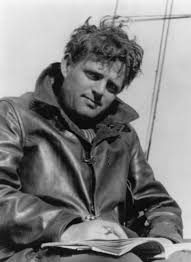
Richard Harding Davis
Harper’s Monthly/September, 1893
THERE were a great many questions asked in Parliament that afternoon. They seemed unusually unprofitable and unusually numerous, the Irish members, as always, being the chief offenders. Everyone else wanted to hear one question answered, a question which everybody in Great Britain was asking everybody else, and which only one man could answer. The one man rose at last, with dignity, or diffidently, or languidly, as his manner chances to impress you, and faced a House in which every seat was filled, from the front row of the opposition benches to the high seat behind the ladies’ lattice. There were cheers from the government benches, and then a sudden and impressive silence. The First Lord of the Treasury broke this appreciative silence by a review of what had been done by the government in the past, what it hoped to do in the little time left to it, and what it would be forced to leave undone. “’And,” he added, “Parliament will probably dissolve not before the first part of such a week, nor later than the last part of some other week.”
The members of the Conservative party, who were just as anxious as anyone else to learn the date of the dissolution, and just as ignorant concerning it, looked blank at this, and the opposition laughed and cheered ironically, as though to admit that they recognized the official utterance as not only unanswerable, but no answer at all. But they took it good-naturedly, like men who do not mind being played with if they are played with cleverly. All but Mr. “Willie” O’Brien, who raises his hat and begs to inform the First Lord of the Treasury that, owing to the government’s failure to push a certain Irish bill, he will, so far as within him lies, oppose the progress of all other measures, to which threat, delivered in a hoarse angry whisper, the First Lord of the Treasury answers by a polite bow of the head and a gratified smile. Then the House emptied itself, and everybody went away not a bit wiser than when he had come in.
A week later the dissolution came. One of the hundred differences between an election in America and an election in England lies in the greater length of time which must elapse before the result of an English general election can be decided. At home Congressmen are elected over a varying number of days, as are members of Parliament, but with us the election of a Congressman only decides the success of that particular individual, while in England the political faith of the members elected decides of what political complexion the government shall be, and from which side the Prime Minister shall be chosen. The result of this is that the election of each and every member in England, no matter how unimportant he personally may be, counts just that much on one side or the other, and the interest is almost as keen in gaining every new seat whether the man who holds it is Mr. Balfour or the unknown son of his father.
This system of spreading the election over so many days makes a general election much more entertaining to the visiting American than is our own, where the people vote for the President before sundown on one day, and know whether he is elected or not, and whether the government has changed hands, before midnight. The English make very much more of a good thing when they have it than that. The American has only one fierce, anxious day of excitement and doubt; the Englishman stretches the excitement and doubt over two or three weeks, and gives everyone a chance to prophesy things, and explain them when they do not turn out his way, and say, “I told you so,” or, “I knew how it would be,” or, “Wait until you hear from the boroughs,” and then, after you have heard from the boroughs, “Wait until you have heard from the counties,” and to hedge several times before anyone knows exactly who is or who is not coming into power. This is the most important difference from a merely physical point of view; the others are the absence of bribery at an English election, and the number of people who work without hope of “getting anything for it,” and the absence of processions and brass bands.
A general election in England is conducted by the entire people. There may be a Central Committee somewhere, as there is at home, but its work is not so conspicuous to the stranger as is the work of the first chance acquaintance he makes. Recall the most enthusiastic politician of your acquaintance during the late campaign, and multiply him by the whole population of Great Britain, and you obtain an idea of what a hold politics has on the people of England. By this I mean all the people, the voters and the non-voters, the gentleman who has thirteen votes in different counties and the young women of the Primrose League who have none, the landlord whose gates bar at his pleasure the oldest streets in London and the lodger who pays a few shillings for the back room.
Every class works for its party and for its candidate in its different ways. Its way may be to address mass-meetings under the folds of the union-jack or to humbly address envelopes, but whatever his way may be, everyone helps. As soon as Parliament ends, this interest, which has been accumulating less actively for some time, becomes rampant, and members fly north and south, taking their wives with them to sit upon the platforms, and their daughters to canvass the division, and their friends to make speeches, and the London season puts up the shutters until it is over. In London itself the signs of the times are various and many. You can see it in the crowds about the newspaper bulletin-boards, in the desertion of the Row in the morning, in the absence of the white light which had been burning over Westminster, in the placards on the hoardings, and in the carts and broughams filled with voters driving in elegance to the polls. The sandwich men on Piccadilly have changed their announcements of new plays and Van Beer’s pictures and somebody else’s catsup to “Vote for Bings” and you look down an irregular line of “Vote for Bings” like the ghosts in Richard III, until you decide that no matter who the rival candidate may be, you will not vote for Bings. The under-butler, in undress livery, tells you that her ladyship has gone to the country to help Sir Charles in his canvass, and will not be back for a fortnight; and men you ask to dinner write you a week later from Ireland to say they have been attending the Ulster Convention, and speak of it as a much more important event than your dinner; and your chambers are invaded by Primrose Dames, who cause your landlady to look upon you with suspicion, and who seem to take it as a personal grievance and as an intentional slight on your part that you are an American and not entitled to a vote.
So I, personally, left London and followed the campaign through the fortunes of one candidate. And as his canvass resembled that of others, more or less, I will try to show through it what an English election is like. My candidate’s fortunes were very pleasant to follow, because his canvass was conducted with much picturesqueness in the form of rosettes and outriders, and was full of incident and local color, the local color being chiefly red.
It might have been my luck to judge an English election by the efforts of a candidate unknown to the borough he wished to represent, who would have stood at the direction of the Central Committee, and who might have been non persona grata to the electors of even his own party. In this case he would have put up at whichever inn favored his political conviction, whether it was the better one or not, and he would have canvassed the division as a stranger, and as a stranger have been treated accordingly. For, as you probably know, a gentleman who has lived in Wales may take a train across the country and stand for a division in Scotland, or vice versa, just as Mr. Stanley, who has spent a great part of his life in Africa, stood for Lambeth, because the Central Committee of the Liberal Unionists assigned him to that division, and not because he was wanted there; indeed, as was apparent later, he was not. But My Candidate stood for a county division where his people had been known for hundreds of years, and where he had been known for at least thirty, where the gamekeeper remembered having handed him his first breech-loader, where the hunting set who follow the Duke of Rutland’s hounds spoke of him as a “clinker” across country, and where the head of the family was the Lord Lieutenant of the county, and the owner of a great mansion which was familiarly particularized for seventy miles around as “the House.” And while all this and all that pertained to it did not make his calling and election sure, it did make his efforts to render that election sure of peculiar interest to the visiting American.
My first intimation that I was to follow My Candidate’s fortunes was an invitation delivered by himself in person during a luncheon in town, into the third course of which he plunged uninvited to ask if I would like to go down to a political meeting of his that night and have my head broken. Mr. Oscar Wilde was also included in the invitation because he happened to be there, but he showed a lack of proper sporting spirit, and pleading an engagement, returned to the consideration of the fourth course. My host let me off, and My Candidate took me in a train to some place, where a carriage met us, and carried us the rest of the way to a village with a queer name. In that way was I pitched forth into English politics. That night we spoke at the school-house. I say “we” because for the few weeks which followed I cast my lot in with the Conservative party and My Candidate, and though I did not speak but once, on which unhappy occasion I turned all the Conservatives of sixty years’ standing into rabid Radicals, I always considered myself in the plural number.
We had a small audience. It was as large as the school-house could hold, but it was small, and it was phlegmatically and delightfully Conservative. The farmers and their wives sat on the front row, with the young ladies from the rectory and the local political agent. Back of these were the agricultural laborers, who correspond as a political factor to our sons of honest toil, and who wore suits of white corduroy and red ties, and who surprised one by looking exactly like the agricultural laborers in the Chatterbox of our childhood and in the Graphic Christmas numbers of today. They had red sunburnt faces, and a fringe of whiskers under the chin, and hair that would not lie down. My Candidate addressed the loyal electors of the village in a happily keyed conversational tone. He made, on the whole, a most satisfactory and clever speech, and I learnt for the first time how to say “hear, hear” in such a way as to convey the sound of “ ’ere, ‘ere,” and the idea of marked approval and deep conviction at the same time.
We did not speak beyond ten minutes, and then we made way for the political agent, and bowed to our electors, and got into the carriage again, and gave our driver the name of the next place. I have followed the fortunes of politicians in my own country from town-hall to local assembly-rooms in much the same way, and I have journeyed from the Pavilion Music Hall to Islington and from Islington to the Surrey side with Albert Chevalier and other great men of the London music halls, and I was reminded during our drives from one queerly named village to another more queerly named of both of these former experiences, and yet there was a vast difference. There was the same slamming of the carriage door, the same quick gallop of horses, and the same welcoming hurrah and glare of light and hand-clapping at the end of it, but My Candidate’s road did not lie over greasy asphalt and between rows of lamps, but through hedges in full bloom and in the soft twilight of an English summer. We forgot our speech and the last placard of the opposition in the silence of the fields, and at the sight of the old-fashioned garden and the bunches of hawthorn and the long single rows of feathery English trees, and we stopped discussing “one man one vote” to point out the spire of a village church or a cluster of thatched cottages with soft roof-lines broken with bunches of climbing-roses and curling smoke. I shall remember those long drives in the late twilight long after My Candidate has become a cabinet minister, and even after I have forgotten his satisfactory and clever speech.
The next place received us calmly, although we came into it at a gallop, and with the Candidate’s dog barking excitedly from the carriage window. Old women, who could not vote, dropped us curtsies from the cottage half doors; and their daughters, who could not vote either, waved their aprons, and ran by the wheels to wave their hands in the windows; but their good men who had votes kept their hands in their pockets and their pipes in their mouths, and scowled uncomfortably over the hedges, as though instinct told them to touch their caps, and the Radical political agent had told them they must do nothing so foolish. Our local agent, with a union-jack in his button-hole, received us thankfully, for the gentleman then speaking had been for the last hour trying to hold the meeting together until we came, and was getting more hoarse as the crowd grew more noisy, and it had become a necessity of night or Blucher. Then the local agent, who is always a young man with smooth hair and strong lungs, suddenly began to jump up and down and to cheer frantically, as though he had just discovered the Candidate’s arrival, and the meeting turned to look, and the speaker said, “Thank Heaven!” and dropped into his chair, breathing heavily. The Candidate’s speech was a little longer this time, because of doubtful spirits in the audience who had to be converted, and on account of their numerous interruptions. It struck me as a very noisy meeting, and I waited with some impatience to see the noisiest one put out as an example and a warning to the others; but no one was at all put out, not even the Candidate. That was my first experience of a mixed political meeting in England, and of the great and most curious institution of “heckling.” Later in the campaign I was not so anxious to see the noisiest one put out as to ascertain at just which point in the proceedings it would be wisest for us to get out ourselves.
The next speaking-place was one of the largest in the division. It was strongly Radical. This was the place where the Candidate had promised me we would have our heads broken.
If you have ever attended a political meeting at home you will better appreciate how strange to an American must be a political meeting in England. The object of a meeting with us is to give the Candidate and some of his political friends an opportunity of telling all of those who care to come and listen what his party proposes to do, what he proposes to do if he is elected, and to point out with damning frankness the corrupt and evil doings of the other party. Those who do not care to hear this remain away; those who do, interrupt the proceedings only by begging the speaker to “let ’em have it,” referring by this, of course, to the corrupt and evil other party. Any further effort on the part of the members of the audience to make antiphonal chorus of the meeting results in their being ejected forcibly and without sympathy or gloves. The result of this is that seldom any but Republicans attend a Republican meeting, and only good Democrats go to Democratic meetings, and everyone departs having heard what he already knew, and more firmly convinced than before, in default of any testimony to the contrary, that his candidate and his party are the right ones. And he in time votes accordingly, like a good citizen.
But the English look at this differently. The Briton’s vote is a very precious thing to him, and he wants to know exactly who is going to get that vote, and why he thinks he should get it. So he goes to the meeting at which the candidate is announced to speak and asks him. This is called “heckling”; it is a Scotch word, and in Scotland is carried out with the careful and deliberate consideration which marks that people. Sometimes the privilege of heckling is conducted in good faith, but more frequently it is not. It has one great advantage, it teaches the unfortunate candidate to think while he is on his legs, and to keep his wits and his temper.
There was a man with a blue necktie. He was a most unpleasant gentleman, and he rose to ask questions at irregular moments with a pertinacity of purpose and a confident smile which no amount of howling on the part of the good Conservatives could dismay.
“Mr. —, sir,” he would say, “I ‘ave a question I would like to put to you, sir. Did you, sir, or did you not, vote for the Impecunious School-masters Bill as presented on July 2, 1890?”
Now it was not at all likely that any of the Radicals present had ever heard of this bill before, or cared two pence about it if they had, but they saw the fiendish purpose of the question, and they howled accordingly, a triumphant mocking howl, quite long and loud enough to drown any possible answer in case the Candidate had one to make, and sufficiently exasperating to make him forget it if he had. But the Candidate would smile easily, and raise his hands imploringly for silence, and then turn his head over his shoulder with a quick aside to his political agent, or to one of the other speakers, and whisper fiercely, “Quick; look it up; what bill does the ass mean?” and then smile encouragingly on the heckler, while the political agent would thumb over a Speaker’s Hand-book, and whisper back, hidden by the Candidate’s figure: “Introduced by Lord Charing, seconded by Paddington; lost on second reading, 64 to 14. You voted for it. It was a bill to subsidize county school-teachers.” Then the Candidate, who had probably been taking tea on the terrace when the bill was introduced, and who had voted with his party at the division, and returned in time to say, “Two lumps, please,” would smile cheerfully, and ask the heckler if he would be so good as to repeat his question, which the heckler judged was a subterfuge to gain time, and would repeat it in a more triumphant and offensive manner than before.
“Impecunious School-masters Bill? Oh yes,” the Candidate would say. “Introduced by Lord Charing, I believe. Oh yes, a very excellent bill; seconded, if I am not mistaken, by Mr. Paddington,” and then, turning to the political agent, “Am I not right?” to which the political agent, after a moment’s consideration nods a decided assent. “I voted for that bill.” All the Conservatives cheered, and the gentleman with the blue necktie sat down, rather red in the face, and scanning the notes, with which the Radical political agent who had sent him there had furnished him, with dawning distrust.
But we did not always triumph. Sometimes My Candidate would sit on a table, patiently swinging one leg and rolling and consuming cigarettes for a half-hour before the room grew sufficiently quiet for a steam-roller to have been heard around the corner. As exhibitions they were the most unfair, the most cruel, and the most unmannerly I have ever witnessed, and they were the same in every division in England. It used to remind me of a thoroughbred horse hitched to a post, with all the dirty little curs in the village, knowing that it could not reach them, snapping and snarling at his heels.
“Gentlemen,” the Candidate would beg —”gentlemen, do you call this fair play? Do you call yourselves Englishmen? Do you — Oh, go to the devil!” and he would roll another cigarette and sit down on the edge of the table and wait. When they were too hoarse to yell and boo any longer, he would begin his speech again, or would imitate the excellent example of one of our Irish speakers, and call out in a breathing spell, “I can’t talk against two hundred men, but I can thrash any one of you here on this platform.” They always rose at this, not because they knew he could or could not, but some latent feeling of fairness would be stirred by it, and they would bid him have his say and “speak up.”
I suppose the abuse has grown to the limit it has reached today because the position in which the candidate puts himself when he appeals to his electors is the only one when he is a petitioner, and not a superior being and a patron. In this country a candidate never dares to pretend that he is better than anyone else, whether he has but his vote or is the President of his country. And so, when he goes forth to ask for votes, his attitude is unchanged; he is still, as he has always been, one of ourselves.
But you can see how different it must be in England. For months or years the candidate, especially a Conservative candidate, lives and moves in another atmosphere from that which his constituents breathe. He subscribes to their societies and golf and football clubs, and addresses them from the head of the table at dinners, and condescends to play cricket with them, and to give them a pass into the strangers’ gallery to look down upon him with his hands in his pockets, his hat cocked over his eyes, talking familiarly to a cabinet minister. They stop trimming hedges to run and open the gate when he rides to the meet, or hurry from the shop to the sidewalk to take his order when his cart stops in front of the door.
And then on one day all this is changed, and their chance comes, and they take it. Their candidate returns to them heralded by posters, and a circular letter which begs a renewal of that confidence which he has already enjoyed, hoping he has pleased them in the past, and promising to be good, and even better, in the future if they will only send him back to that fine club in Westminster again. It is all very courteous and friendly and dignified; but the electors, like Mr. Kipling’s soldiers, know they are “no thin red line of heroes,” and that telling them they are intelligent and free electors is not going to alter the fact that for years or months they have been touching their hats, and that it is now their turn, and that the candidate is taking his hat off to them.
As heckling is the thing the American can’t understand or admire, so the Corrupt Practices Act and its workings is the feature of an English election which appeals to him as its greatest triumph and glory. It is quite safe to say that bribery, as we know it, is unknown in England. The laws are against it, the sentiment of the people is against it, and the condition of things at the present time is against it. The Corrupt Practices Act places the conduct of an election in the hands of one person, the political agent, who is made responsible for, and who must furnish an itemized account for every cent spent during the campaign. Every voter of the opposition is virtually an auditor of that account, and proof of corruption in the slightest degree, if corruption has degrees, not only sends the political agent to jail, but loses the candidate his election.
In England there is as little possible reward for services rendered after the election as there is actual bribery for services rendered before the election. Indeed, the most remarkable thing to me about the English elections was the number of women and men who worked for the different candidates with no other incentive than the desire to see their man and their party win. The shopkeepers, after a long day behind the counter, worked in the committee-rooms until two in the morning, folding and mailing circulars and other campaign matter. The women of the village, led by the rector’s wife, directed forty-five thousand envelopes in one week; and the ladies from the Castle rose early and canvassed the town in rain and storm to fill in the little slips with which the political agent had furnished them, and which they forwarded to him at headquarters before they went to sleep at night. Gentlemen of many clubs deserted these clubs to travel in open dog-carts over rough roads to speak at noisy, heated meetings, to sleep in strange inns, and to eat when and where they might. No fly-by-night theatrical company or travelling tinker works harder or suffers more privations than does the political speaker at an English election. The gentlemen who spoke for My Candidate came from all over Great Britain. Half of them were his personal friends, and as many more utter strangers, who spoke for him because the Central Committee had asked them so to do, and who on the next morning hurried away to speak for someone else.
They were as various as the days of the year, and as entertaining. They came at all hours, unheralded and unknown, some to remain at the House only overnight, to appear for a brief half-hour in the smoking-room, and to depart before we came down for breakfast, and others to remain three or four days, and to fuimish the House party with matter for infinite speculation and delight.
The House party added an element to the campaign which was at least diverting. Its members were the drones in the hive. Some of them could not speak because they were members of the House of Peers, or because if they had spoken they would have gained more votes for the other side than the Candidate could afford to lose, or because they were Americans. But they lifted the strain of the canvass in different ways, and served to turn the Candidate’s thoughts to lighter things, and to give him someone near at hand to abuse. It made an interesting picture at night, after the women had taken their candlesticks and the men had forgathered in the billiard-room, the non-speakers of the House party in their smoking-jackets amused or politely cynical, and planning tennis matches for the morrow, and the speakers enthusiastic and self-important, covered with flecks of flying mud, and very hoarse, and all trying to tell at the same time of the success with which their oratory had been received by the intelligent electors of Pigley-on-Thames, or Little Market Leeping, or Pippingham Corner.
“’You can’t make too much of that,” the London barrister would say, rocking from one foot to the other in front of the fireplace. “That’s an argument which I use in every speech I make. That appeals to their pockets. What does the agricultural laborer know of home-rule, or care—”
“Ah , I think you’re wrong there,” the dissenting clergyman from Cork would interrupt. “Home-rule is the question. Now my experience is that they’ll always listen to that. I find—”
“Well, they wouldn’t listen to me,” the Oxford graduate breaks in, gloomily. “They jolly well booted me.”
“Is that all?” laughs the Central Committee man, easily. “My dear boy, wait until you speak at Eppingham Commons. They chased me for a mile.”
And so it would go on, with the Candidate sitting in the middle, sipping cold Scotch, and nodding his head to each in turn, and wishing they were all in bed, while the drones banged the billiard balls about and made mental notes for the amusement of the women folk in the morning.
The court-yard was always filled with carts or traps or flies from the inn, or the bicycles of the telegraph messengers, and the table below stairs was always set for these worthy people, and the table upstairs always spread with what was breakfast for one man, and luncheon or dinner for another, or all three for the Candidate. They were most amusing, these elongated breakfasts, where a speaker would stop, with his plate in his hand, between the sideboard and the table to repeat a particularly fine flight of the night before, and the butler would wait impassively until the gentleman who had asked for more claret-cup had finished using his glasses to show the position of the Unionist stronghold in Ireland. It was politics all day and long into the night, from the early morning, when the man who valeted you told you sadly, as he fixed your bath, that “we” had lost three seats since the night before, until nightfall, when the last tired speaker came apologetically in from the darkness and assured us that he had saved the sixty votes of Midland Tooting by the greatest oratorical effort of his life.
The part the women play in an English election is one of the things which no American can accept as an improvement over our own methods. It may either amuse him or shock him, but he would not care to see it adopted at home. The canvassing in the country from cottage to cottage he can understand; that seems possible enough. It takes the form of a polite visit to the tenants, and the real object is cloaked with a few vague inquiries about the health of the children or the condition of the crops, and the tractlike distribution of campaign documents. But in town it is different. The invasion of bachelor apartments by young Primrose Dames is embarrassing and un-nice, and is the sort of thing we would not allow our sisters to do; and the house-to-house canvass in the alleys of Whitechapel or among the savages of Lambeth, which results in insult and personal abuse, is, to our way of thinking, a simple impossibility. The English, as a rule, think we allow our women to do pretty much as they please, and it is true that they do in many things enjoy more freedom than their British cousins, but the men in our country are not so anxious to get into office, greedy as they are after it, as to allow their wives, in order to attain that end, to be even subject to annoyance, certainly not to be stoned and hustled off their feet or splattered with the mud of the Mile-End Road. Anyone in England who followed the election last year knows to the wife of which distinguished candidate and to the daughters of which cabinet minister I refer.
I have seen women of the best class struck by stones and eggs and dead fish, and the game did not seem to me to be worth the candle. I confess that at the time I was so intent in admiring their pluck that it appeared to me as rather fine than otherwise, but from this calmer distance I can see nothing in the active work of the English woman in politics which justifies the risks she voluntarily runs of insult and indignity and bodily injury. A seat in the House would hardly repay a candidate for the loss of one of his wife’s eyes, or of all of his sister’s front teeth, and though that is putting it brutally, it is putting it fairly.
It would not be fair, however, if I left the idea in the reader’s mind that the women go into this work unwillingly; on the contrary, they delight in it, and some of them are as clever at it as the men, and go to as great lengths, from Mrs. Langtry, who plastered her house from pavement to roof with red and white posters for the Conservative candidate, to the Duchesses who sat at the side of the member for Westminster and regretted that it threatened to be an orderly meeting. It is also only fair to add that many of the most prominent Englishmen in politics are as much opposed to what they call the interference of women in matters political as they are to bribery and corruption, and regard both elements of an electoral campaign with as pronounced disfavor. The reply which the present President of the United States made to those enthusiastic and no doubt well-meaning women who wished to form leagues and name them after his wife, illustrates the spirit with which the interference of women in politics is regarded in this country. But then it is a new thing with us, and it is only right to remember that from the days of the Duchess of Devonshire’s sentimental canvass to the present, English women have taken a part in general elections; that there is a precedent for it; and when you have said that of anything English, you have justified it for all time to come. The young American girl who would not think it proper to address men from a platform and give them a chance to throw things at her must remember that the English girl would not give the man she knew a cup of tea in the afternoon unless her mother were in the room to take care of her. And I am sure the women in My Candidate’s campaign almost persuaded me that they, as the political agent declared, did more than himself to win the election. They did this by simply being present on the platforms, by wearing our colors, or by saying a kind word here or giving a nod of the head there, and by being cheerfully confident when things looked gloomy, or gravely concerned when the Candidate was willing to consider the victory already assured.
The canvass lasted two weeks. They were two weeks of moonlight rides at night from one village to another, of special trains by day, and speeches in clubs, at cross-roads, in the market-places, and in the crowded, noisy school-rooms, and they ended with a long drive, on the day before the poll, of thirty miles through all the villages. As we were good Conservatives and people of high degree, of whom such things were expected, we made these thirty miles behind four white horses, with postilions in red jackets and green velvet caps, and with long cracking whips. It made me look back involuntarily for the pursuing parent, or ahead for the gentleman in the gray caped coat and cocked hat who should have waited for us at a cross-road behind pistols and a black mask. The Radical Candidate made the same final trip over the same route in a dog-cart, driving tandem, with his sister beside him and a groom at the back. We met at the principal town on the road, and he pulled up smartly, and he and our Candidate leaned over and shook hands, and the sisters of the rival candidates smiled sweetly at one another, and said, “What a pity it is such a rainy day!” and we men raised our hats stiffly and proudly, and the excited populace wept tears of joy. It was a historical moment, and gained both Candidates many votes. We left our starting-point in a drizzling rain, with the sisters of the Candidate in beautiful red silk capes, and the Candidate in the open carriage, and with two of the “hangers-on,” as we aliens from America or London were called, on the box. And we all bowed and smiled for thirty miles. The two on the box bowed to the prospective voters back in the fields behind the hedges, and we in the carriage to those at the cottage doors, and so every one was included, and the feelings of no possible voter were intentionally hurt. Sometimes they appreciated the honor done them and sometimes they did not.
At one place it was all blue, blue being the Radical color in that division, and the streets looked like the grandstand at the Polo Grounds when Yale has scored. They greeted us in this village with curses and groans, and the women ran into the street beating tin cans and waiters to frighten the horses, and made unladylike faces and used unladylike language. We thought it a most dirty and unpicturesque village, and the postilions put their heads down and lashed the horses into a gallop. But at the next place and the next they had luncheons spread for us, and everything was red, and all the windows were hung with the Candidate’s portrait, and nice old ladies with red bows in their lace caps bowed to us from the front windows, and the maids waved flags from the doors, and the constituents raced alongside in the mud and made us feel very important indeed. The Candidate never properly appreciated the luncheons. He did not consider them important. But my brother and the other “hanger-on,” who was a very smart youth in a longtailed coaching-coat and a winning smile, used to help the cause along wonderfully. “You’re very good,” the Candidate would protest to the anxious host, “but I really cannot eat anything more. I have some friends outside, though—” Then he would call down the hangers-on from the box-seat as substitutes, and they would set cheerfully to work again, as though the effects of the luncheon of the last village had been washed away in the rain.
“I assure you, sir,” the political agent would say, pounding the table, “that the meeting last night was the greatest—”
“I say,” the one in the coaching-coat would interrupt, earnestly, “would you kindly pass the pigeon pie? Thank you.”
We had three luncheons before we reached B , where we stopped two hours to rest the horses. B was the place where the votes were to be counted the next day, and strongly Radical. We found it very stupid waiting about after the exciting progress of the morning, while the horses were being baited, and so we wrote out a placard in the inn announcing the loss to Mr. Gladstone of four thousand votes in Midlothian, and put it up outside. I regret to say that this placard, when viewed from a distance, read as though Mr. Gladstone had lost Midlothian. The line “four thousand votes at” was there, but it was written so very small that no one could make it out unless he got within a few feet of it, which some good Conservatives prevented by standing in front of it. But the Radicals reached it at last and tore it down, and while we remonstrated the hanger-on in the coaching – coat went into the inn to prepare another bulletin. The remonstrances drew the crowd around us, and the crowd began to hustle, which is not what we mean in America when we use that word, but is putting your shoulder against a man and shoving him. About three hundred Radicals began to calm, but the announcement in the papers of the morning that the Conservatives had lost fifteen seats on the day previous did not send us to B rejoicing. They surround the counting of votes in England with much dignity and a proper degree of mystery. The votes came into town locked up in big black tin boxes, carried between two constables of the different villages in the division, and the boxes were piled in great heaps in the townhall. Then those who were to be present went before a magistrate and swore themselves to secrecy as to what they were about to see. About one hundred people took this oath, eighty of whom were the young men who were to do the counting and the officials, and the remainder were a half-dozen friends of each of the candidates.
What I saw, which I am sure my oath of secrecy will allow me to tell, was a long bare room, with a dozen tables in the center, shut in by a railing. Inside of this railing the young men unfolded and counted out the votes and kept tally. Outside the railing hung the interested ones of both sides—the friends, the late speakers, and the sisters of the rival Candidates. Sometimes the votes at one table would all run one way, and if that was not our way we would crowd along the railing to a table where things were progressing more cheerfully. At each table there were little books with each page marked to hold the record of twenty-five votes, and so by multiplying the number of the page by twenty-five, and adding the result to the results obtained in a similar way at the other tables, one could make a rough guess at how things were going. As a matter of fact, things went entirely too evenly. For one hour, and it seemed much longer than that, we hovered over those rails like gamblers over a roulette table, or ran to a corner to compare calculations with someone else, the satisfaction of such comparisons being sadly marred by the fact that the Radicals were returning from another corner with cheerful countenances. Someone’s arithmetic was most evidently in the wrong.
It was a scene quite different from anything of the sort in this country. We receive the returns here in the seclusion of a private room by wire, and the hated other party can neither hear us swear nor rejoice; but at B– we had to control our satisfaction when things were going our way out of deference to our rival’s presence, and we dared not show our despair for the same reason. The sisters of the candidates smiled bravely and kept out of each other’s way; and the voices of the tellers as they called the names of the candidates monotonously from the twelve tables and the shuffling of the hurrying feet around the rail wore all that broke the silence of the big room. Outside, beneath the windows, the market-place was packed with a great mob of anxious people, who were almost as silent as those inside.
It was noon before the twisted pieces of paper had sunk from high white piles to a few scattered leaves on the twelve tables. And then one noticed a drawing away of the Radicals from one another, and an equally marked gathering together of the Conservatives, and one heard little gasps of doubt and hope and the louder swaggering- tones of congratulation.
The Mayor of B— rose at last and held the returns in his hand, and raised his eyes from them to smile slightly towards My Candidate. He had no business to do that, but he was only human. And then, while he pushed his way towards the window to officially announce the result of the poll to the waiting mob, we executed dance steps, or wrung the Candidate’s hand, or punched each other in the side, or tried to look superior and as though we had never doubted the result from the first. But the Radical candidate’s sister, who had driven at his side over so many rainy miles and sat through so many weary anxious meetings, made a straight line for our Candidate’s sister, and held out her hand, and of the two I think she was the least embarrassed.
“My brother is something of a philosopher,” she said, bravely; “he will take it well.” I was very glad we had defeated the Radical candidate, but I wished he had left his relatives at home.
And then we were rushed out into the street, but not into such an unfriendly mob as that of the day before. It was all red now, and they were quite crazy. They raised the Candidate up and carried him on their shoulders to the stone well in the market-place, where he made a speech which no one heard save the reporter, who had crawled between his legs, because we all yelled so; and then we had a luncheon at the inn, and everybody drank everybody’s health, and the Candidate went to the window every other minute to show himself to the howling crowd and to bow. We had meant to return by rail, but that was much too insipid after such a victory; and the red postilions appeared suddenly, and the four white horses, just as the fairy coach did for Cinderella, and fourteen other coaches and dog-carts and drags fell into line behind, and we left B— at a gallop, all standing up and cheering and waving our flags or hats, and drunk with pleasure and success.
They telegraphed on ahead that the successful Candidate was coming, and at each village the people met us, and unhitched the horses, and dragged the Candidate’s carriage through the streets, and all the people came to the doors and hedges and cheered too. And at every little thatched cottage the good Conservatives ran into the road and danced up and down, and at all the big estates the house-servants and the keepers and the men from the stables were gathered to welcome us, just as though they had scented victory from afar; and I regret to say that we stole most of their flags as we galloped by, and decorated the fourteen carriages, so that it looked like a trooping of the colors as the cavalcade of union-jacks wont rocking and rising and falling over the hills. It was a grand triumphal march of twenty miles. It was near six before we reached the big town near the House, and the people met us three miles out, on foot and on bicycles and on horseback, and dragged the coach the rest of the way under rows and rows of swinging flags and between lines of wildly excited people; and the Member, no longer a Candidate, made a speech at the Angel Inn—the fifteenth that day— and the landlord rubbed his hands, and said, cheerfully, “Every window in my ‘ouse will be broke this night,” which he accepted as a compliment to the stanch principles of his inn, which has been Conservative since the night Charles II slept in it. And then we hitched up again, and rode out of the noisy town and through the quiet lanes on to the House, more soberIy now, for we were conscious of how much victory meant there.
The House stands at the end of an avenue of elms a mile long, and the lodge-keeper had the great iron gates open in readiness for the first time in his life, and we raced through. It was just six, and the sun was going down behind the House and the great elms, and the park lay half in shadow and half in twilight, and as we came swiftly up the homestretch we came so soberly that the deer did not run away, but merely raised their heads to look. That door of the House which opens on the mile of elms is one seldom used; it was opened once long ago for William III, and once again more lately for the young prince who died, and again that day for the Member. On the lawn in front of it all the tenants stood in their best clothes, with red wherever they could put it; and on the steps were the ladies from the other houses about, and the officers who had ridden over from the camp, and back of them all the servants in their best livery and powdered hair.
And in the center, standing very tall and quite alone, with a red silk cloak falling from her shoulders to the stone flagging, was the Lady of the House. And the Member jumped out first and ran up the steps and stooped and kissed her hand, while she did not look at him, but out across the park, because, being a great lady in the land, she could not let these people see how much she cared, as other women could. The Candidate had returned bringing his sheaves with him, and from the steps of the place that had been his home, and to the people who had known him when he was a boy, he made the last speech of his campaign. I do not remember that speech now, except that I went away suddenly in the midst of it, and gazed steadfastly at a somewhat blurred painting of the “Sixth Countess of — at the age of nine”; but I shall always remember that home-coming—although it was not my home-coming, and although I was a rank outsider and had no business there—and the sun setting behind the gray walls, and the long line of elms throwing their shadows across the park, and the cheering, happy crowd of tenants, and the tall, beautiful figure in the red cloak standing silent and motionless in the center.
 The Archive