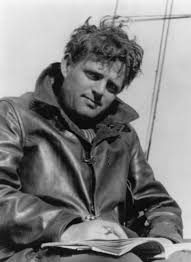
O.O. McIntyre
Dayton Daily News/June 22, 1914
NEW YORK, June 22—The hell hath no fury like a woman scorned thing has an Illustrious example in the appearance of Mae Sullivan on the vaudeville stage. Mae, you may remember by the well-known public prints, came from a little country town in the west and shortly after she struck Broadway ran into the novel experience of being handed $1,000 bills every day. When she brought suit against the wealthy Arthur Hoe the other day for $250,000 damages she unrolled some nice juicy morsels for the Broadway gossipers. But the jury was eight for Mae and four against, so Mae didn’t get the kale. Promptly, however, she accepted an offer to appear at Hammerstein’s at $2,000 a week. Hera is where the “fury” part comes in. She has named her sketch “The Man With A. Hoe.” Do you get the period after the A?
Julius Tannen was traveling on one of the well-known joke railroads this spring—he says this is true himself—and as the train jerked along he said to the conductor that he would like to get out and gather some flowers along the track. In all earnestness the conductor replied that the flowers were not yet out, it being too early.
This didn’t quiet Tannen. “It’s all right, conductor,” he said, “I’ve got a few packages of seed.”
It is something awful the way our gunmen treat chauffeurs in this village. Take for instance the other week when four gunmen blackjacked two factory employes and got away with about $2,500. One would think that the driver who piloted them through the streets would at least get a century note out of the deal. Particularly is this true when it is understood that the robbery took place during the noon hour rush on Fourteenth Street. Frederick Kelley was the chauffeur. Five hours later he told the police who did the job. Then he confessed that the reason he “snitched” was that he only got $15. “I can get that much drivin’ hicks about town,” he said.
Hera is a little yarn for life insurance solicitors. George F. Baker, since Morgan’s death the biggest man In Wall Street, is as one might judge a hard man to see. He is also quick and snappy in his movements and once you get in to the inner sanctum you must act quickly. The other day a well-known solicitor by a miracle reached Baker at his desk. When he frankly told his mission he was dismissed, of course, with scant courtesy, as is the way with busy men. This is what the solicitor said: “Mr. Baker, you nor no other man can drive me out of the office as you would a common beggar. I am as much of a philanthropist as you or anyone else down in the street. If it were not for may persistency there would be thousands of widows struggling for a bare living whereas they are now comfortably fixed. Persistency with their husbands did it.” He sold the policy it is said.
George Shaw-Lefevre, Lord Eversley, of Winchester, England, was In New York last in 1867. At that time he lived on Manhattan Island. Then he went back to England and now after a lapse of 47 years he is back on a visit. Little Old New York has changed a bit since that time. In fact Lord Eversley made a note of the following things that he didn’t see when he left us: Skyscrapers, Brooklyn Bridge, elevated railroads, The Great White Way, taxicabs, cable cars, the subway and telephones.
Park Row was much interested in the withdrawal of the suits in Washington, D. C, for libel against Whitelaw Reid and Charles A. Dana. The suits were filed 40 years ago by Boss A. B. Shepherd, then governor of the district. Reid and Dana were then Washington correspondents for New York papers.
 The Archive