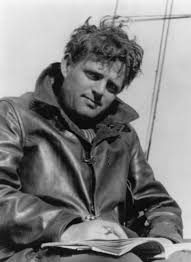
H.L. Mencken
Baltimore Evening Sun/February 1, 1911
What Coddling Has Accomplished
That sentimental coddling of the inefficient and useless which began in England with the establishment of parish almshouses, in 1722, is denounced for the evil thing it is in a recent report of the Eugenics Education Society. The society finds, in brief, that the English poor laws have bred a race of chronic paupers—a race of sub-men, midway between man and the ape, to whom destitution is as natural as muck to a hog. These paupers multiply enormously and by inbreeding. Each new generation is more lazy, more drunken and more filthy than the one before it. If it were not for the fact that alcohol and tuberculosis are constantly on its flanks, ready and eager to seize upon the weakest, this race of sub-men would overrun the island. As it is, the enormous birth rate which it shows is benevolently set off by an equally enormous death rate.
But even so, the relative number of paupers in the kingdom shows a tendency to increase year by year. In 1875, if the returns of the Local Government/Board are to be believed, rather less than one Englishman out of every 25 belonged to this submerged and parasitic caste. Today, according to the London Express, the ratio is nearer one in 20, and in London it approaches one in 14. Between October 1, 1906, and September 31, 1907, a period of 12 months, no less than 1,709,432 persons accepted public charity in London. A quarter of these, perhaps, were chance victims of industrial hazards—out-of-works who might have worked if work had offered. But the rest were professional paupers—swine born to the life and jealous of its joys.
A Cause Or An Effect?
That charity is the chief of all the causes of pauperism has been known to unemotional observers for many years, but it is only of late that lawmakers have begun to recognize it as a fact. Throughout the nineteenth century the English people proceeded on the assumption that poverty was a fault of environment. It was the theory of their law that a pauper was a victim, that he would turn to and make an honest living if he were given the chance, that his idleness and filth were as disgusting to him as they were to his betters. So he was given food, lodging and clothing and urged to be of good cheer. It cost millions, but it was extremely virtuous.
What was the result? Simply that the race of paupers multiplied outrageously. Gentlemen living at the expense of the parish took to wife ladies living at the expense of the parish, and their numerous children were promptly enrolled at birth. These children, growing up, married in their turn, actually if not ceremoniously, and so the horde of paupers kept on increasing. The snowball rolled on and on. It is rolling still. Two million Englishmen, idle from year’s end to year’s end, live upon their laboring fellows. One Londoner out of 14 is a professional beggar.
It is seldom that any member of this Sudra caste emerges from it. It is seldom that any member of a caste higher up the scale falls into it. As the report of the Royal Commission recently appointed to pry into the subject shows, the English paupers have come to be a separate race, as distinct from the true English as negroes are from white men. This race is marked by distinguishing traits of body and mind. Its typical individual resembles a civilized man only in the fact that he has, or is assumed to have, a soul. In body he is weak, bloodless and ugly; in intelligence he is a child; in morals he ranks with the rat. He is, in fact, a sort of artificial animal, in the sense that a Jersey cow is an artificial animal, for he owes his existence to human interference with the law of natural selection. Nature tried to make him impossible, but sentimental man saved him for the world.
Five Marks of the Pauper
The Eugenics Society, in commenting upon the report of the Royal Commission, points out that five peculiarities characterize the pauper class. In the first place, its members almost invariably marry within the caste boundaries. There is never any influx of healthier blood from above. In the second place, and as a consequence directly following, the inherent defects which make for pauperism are transmitted unbrokenly from generation to generation. Imbeciles beget imbeciles; beggars father beggars. In the third place, practically every pauper shows some marked physical blemish. If he is not tuberculous, he is weak-minded, and if he is not weak-minded, he is a chronic and incurable alcoholic. In the fourth place, no true pauper will work, no matter how tempting the offer. In the fifth place, 99 paupers out of every 100 are illegitimate.
The Royal Commission recognized some of these earmarks of the pauper, but its members could not rid themselves of the idea that ameliorative legislation would yet avail to transform him into a man. The Eugenics Society points out the error in this view. The only sensible remedy for pauperism, it argues, is to treat chronic paupers as we now treat the insane—that is to say, as persons who deserve human care, but are not to be permitted to become the heads of families. Thus the London Times summarizes the argument:
The pauper is a person born without manly independence and unable to do a normal day’s work, however frequently it is offered to him. His main spring came into the world broken. The community requires some means of controlling the pauper population which it must inevitably support, and the only basis on which the necessary institutional care can be made effective is the power of detention. Pauperism must be classed with feeble-mindedness, from which it is barely differentiated, and hence the restraints which all agree should be placed upon feeble-mindedness should be imposed also upon pauperism of the real and hopeless character. Those who cannot be self-supporting should be eliminated as speedily as possible. This can be done by giving to such unfortunates kind and permanent care, but accompanied by a refusal to permit them to reproduce their kind.
Alcohol and the Alcoholic
Will Parliament listen? It is not likely. The English will cling for yet awhile to their old delusion that the way to cure a pauper is to protect him from the natural consequences of his laziness and inefficiency. We Americans are very fond of a kindred delusion. It is the idea that alcohol makes loafers. As a matter of fact, alcohol is but one of the means provided by nature to exterminate loafers, and if the secret of its manufacture were lost tomorrow, other things would do its work just as well. In brief, we confuse cause and effect. Pathological alcoholism is not so much a cause of degradation and viciousness, as a symptom thereof. The ‘coon is coon-like because he was born that way.
 The Archive