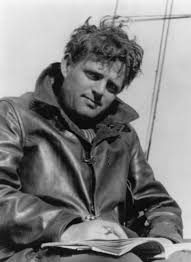
Westbrook Pegler
Fort Worth Record-Telegram/February 19, 1929
Persons who were beginning to think they understood the mystery of football will be interested to learn that the intercollegiate football rules committee has come out of its annual huddle with a set of new regulations calculated to keep them wondering what it is all about
One of the new acts of the football legislature reverses an old principle of football law, and one of the few principles of the game with which the mass of spectators, or customers, were familiar. Henceforth, until the committee emerges from some future huddle with a resounding rule, it will be illegal for a player to scoop up a ball fumble by his opponents and proceed in a spirited dash to a touchdown.
The new rule states that a fumbled ball shall become a cold, or dead ball, upon recovery by a member of the opposing team at the point of recovery. It applies to fumbled punts, fumbled lateral and backward passes, scrimmage fumbles, and fumbles of kickoffs and free kicks. The recovering team obtains possession at the point of recovery but that is all.
No More Sammies
Intercepted passes may be advanced as before and so may blocked kicks, but under the new regulation there will be no opportunity for anyone to do as Mr. Sam White of Princeton did. It is always taken for granted that everyone everywhere will remember who Sam White was and what he did, but all I know about him is what I have read in the papers and that is he practiced scooping the loose and bouncing the ball for weeks, or perhaps years, becoming so skillful that he could tell which way a ball was going to bounce before the game began. Finally he recovered a couple of his opponent’s fumbles and stepped over the goal for touchdowns, defeating Harvard and Yale.
Hard on Movies
The touchdown from the recovered fumble had become one of the dramatic treasures of the game and all magazine fiction and moving picture material dealing with football had to include one dumb but earnest male Cinderella, playing as a substitute, who picked up an ownerless ball a good distance out from the goal and ran through everybody like a something through something (insert favorite gag here as like scandal through a suburb) and won the game for dear old Oskywowow.
Penalty Lessened
W. S. Langford, of the rules committee, said that the new rule would reduce the penalty on a whole team for a physical error on the part of one of its members, wherein the legislature seems to be endeavoring to emphasize team play and minimize individual responsibility and glory. He also suggested that the team losing the ball suffered enough anyway, in loss of yardage. There were two other changes in the rules. One provides that after a touchdown the ball shall be put into play on the two-yard line, not on the three-yard line as heretofore. The intention of this is to develop the try for the point after the touchdown into a triple threat play, with goal to gain by a kick, run or pass tfor the additional point.
The third change probably will be unintelligible from the stands in the first place. It deals with the screened pass. No members of the passing team will be permitted to interfere with a member of the defending team unless by his demeanor at the time, or by the arguments of counsel, afterward, he is able to convince the police that he was sincerely trying to catch the ball himself and not merely outrowdying to prevent his opponets from intercepting it.
How They Did It
Mr. Langford and Mr. E. K. Hall, chairman of the rules committee, revealed the amazing fact that the committee had been in secret session for three days at Absecon, N. J., preserving the mystery of football. Mr. Langford went to Absecon in a closed car late at night and vanished into the rendezvous of the committee, successfully eluding an aroused nation. Mr. Hall disguised himself as an old Quaker woman selling salve for chilblains until the door of the meeting place swallowed him up. The other members completely deceived the public by announcing that they were going to Oswego to see a man about a deal and it was not until today with their work finished, that the rules committee triumphantly revealed their meeting place.
The house will be burned to make certain that the United States Lawn Tennis Association will never use it for a secret meeting place.
 The Archive