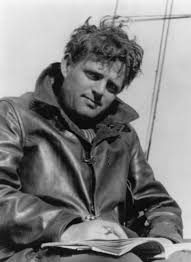
Dorothy Thompson
Charlotte News/January 4, 1946
FROM the Soviet viewpoint, shifts in policy during the months since the war must appear bewildering. For clearly, during the war alliance a policy did come into being resting on three principles: That the three heads of state should remain in close consultation; that since the interests of the three powers varied from place to place each should be responsible for policy within its own “zone of influence”; and that in a United Nations Organization the Great Powers and they alone should have a veto on any question which they believed vital to their interests.
In some cases zones of influence were specifically laid down. The American armies, for instance, halted at the River Elbe though there was nothing to stop their advance. They halted at Peron, which is almost a suburb of Prague, unheeding the SOS front the Czech capital where the population was fighting the SS with hardly more than bare hands, in order to permit a Russian tank corps to liberate the city by rushing 300 miles from Berlin.
Polish Arrangements
Although the Polish arrangements both in respect of the Eastern frontiers and the composition of the Polish Government were not satisfactory to the Western Allies—in particular not to President Roosevelt—they were accepted in the framework of the sphere of influence policy. The partisans of the Soviet Government abroad and many liberals vehemently attacked British policy in Greece, assigned as a British sphere, but the Soviet Government and press left it strictly alone until criticism of Soviet policy in their zones was aired in the West, when the Soviet press answered in kind.
When Mr. Molotov remarked with some bitterness in London that he wished he had Churchill and Eden to deal with, rather than Attlee and Bovin, he was calling attention to the departure of the new British Government from the established policies of the Alliance. And, in his observation, Molotov was correct.
At Moscow, now, there is a return to the original policy. But what caused a departure from it in the first place?
Growing Dismay
It was, I think, growing dismay among Western statesmen and and Western public opinion, as they saw the results of that policy.
How, first of all, does the atom bomb fit into a Big Three world? What, exactly, is the “sphere of influence” of the atomic bomb? No one yet has been able to present an atomic program that satisfactorily de-mobilizes this weapon or restricts it to defense, and is still compatible with the structure created in San Francisco. Nor will all the commissions that may be appointed be able to do so.
Secondly, what becomes of the rights oi small nations, or, even more importantly, the rights of human beings who fall into any of these spheres? Must not the policy cancel the preamble to the San Francisco Charter reaffirming “faith in fundamental human rights in the dignity and worth of the human person, in the equal rights of men and women and of nations large and small”?
It must, and slowly Western public opinion comes to realize this.
Different Orders
For the Big Three are not only three nations; each embodies a different social order or way of life. The spheres of influence set up assign millions of persons entirely without consultation or consent, not merely to defense spheres but to social systems; reconstituted Poland, for instance, breaks every Polish tradition and condemns hundreds of thousands of Poles to permanent exile, deportation, or prison camp. The new Yugoslavia demolishes Serbia and puts the people—20,000,000 of them—under a police state incompatible with centuries of struggle for freedom. At the same time people see that because of other Big Power arrangements, Hungary and Austria have, apparently, really free elections. How is this to be explained—to people? For that is the difficulty with the arrangements. The earth is inhabited by persons! They are not cattle who can be herded into this stall or that. They are those most difficult of animals—humans—possessed of brains, emotions, prejudices, and wills.
Wherever opinion and information are free, all peoples win allies. Men and women in America and England do not accept all the arrangements made for other human beings. Nor do they agree that Mr. Bevin or Mr. Byrnes are Britain, or America. No policies made by agreements between individuals become thereby binding on free peoples.
Sense of Solidarity
Far stronger also than the statesmen dream is the sense of human solidarity. Men and women put themselves in the shoes of other men and women far away, and feel “This, were it done to me, I would not endure; and if it can be done to others, it some day can be done to me, too.”
That thing, the human mind, which when free just doesn’t stop at the borders of “spheres,” is what is the trouble, and it is a great trouble. In fact, to make the policy really work, all Big Three should be absolute dictatorships and all the people absolutely obedient.
It is odd that this was not considered by representatives of free men when a policy supposedly so “realistic” was being framed.
The chief reality to be considered by the statesmen of the West Is the reality of the reactions of their own peoples, who still cherish the belief, however illusory, that they are the ultimate judges and molders of policies.
 The Archive