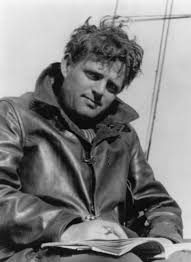
Dorothy Thompson
The Virginian Pilot/January 2, 1921
VIENNA, Jan. 3—All over Europe people are still thinking and feeling war. More depressing than the material wretchedness of the countries are the hatred and bitterness which exist between nations and between men. No one is thinking peace or feeling peace.
Except in Vienna. In the city which has suffered most, which is utterly crushed and bleeding, I have found the first really heartening expression of a new spirit. I have seen workingmen whose wages are Insufficient to buy them food, who face the rigors of the coming winter almost with terror, giving of what little they have in order to teach their children that hereafter men and nations must live together in peace.
The work of the ’‘Gesellschaft der Kinderfreunde,” in English the Association of the Friends of Children, is supported and maintained entirely by the Austrian trade unions. Its expenditures, compared with the amounts which are being dispersed by organizations like the American Reorganization Committee and the Red Cross, are insignificant, but it is animated by two of the biggest ideas in the world. The first is that no nation Is so poor and broken that it cannot do something for its own children, and that while one Is grateful for charity in the hour of need, nothing permanent can come from that source. And the second is that if there is ever going to be a real League of Nations, it must be founded in a different spirit than exists in the world today. And the only hope for that spirit is in the children.
Aid for Children
To help to save the children and educate them to love and respect all nations as they do their own, the workingmen of Austria contributed last year a hundred million kronen. They formed an organization with 50,000 members. They took under their care 80,000 children. They purchased three farms with twenty cows and 160 sheep. Today they own a million square metres of land and direct 145 stations for child care. They have done this in the darkest period which any country has ever gone through, without asking a cent from those outside their ranks or without a kronen of subsidy. It has come out of their own meagre wages.
They not only preach interdependence and brotherly love between nations to their children, but they give them a chance to practise it. This coming spring the children of Austria will invite the children of France, Italy, Switzerland, Norway, England who are suffering from rheumatism or other ills for which the famous Austrian baths are still a cure, to come and be their guests. These little guests will be the children of workers from other lands— fathers who can not afford to send their children abroad for medical treatment.
Rent Famous Palace
The Austrian workingmen, poverty strlcken as they are, have rented one of the most famous palaces in the world—the summer retreat of the Austrian Emperors, in Schonbrun, a great park with gardens, fountains, stretches of greensward and shaded lanes. This place where in the past men have plotted for war has become home and school where the children of workingmen are planning for peace.
I went to Schonbrun with the man who more than anyone else is responsible for this idea. I have mentioned him before in these little sketches of Austria—Max Winter, the vice-burgomaster of Vienna. He is a little man with a pointed beard and the kind of sparkling eves which would make him an ideal Santa Claus. He is one of the most beloved men In Austria. When he walked up the broad roadway leading to the castle and bordered by tall chestnuts, trimmed in French style into a sort of gigantic green hedge wall, the children spied him from afar and came catapulting out into the November drizzle to meet him, clasping him around the legs, climbing up his sides, and emitting little squeals of delight. If the children of Austria could vote he would not be the vice-mayor of Vienna. He would be president of the Republic. I’m not sure that they wouldn’t restore the monarchy and make him king.
In the rooms where ladles in waiting to the Empress used to sleep there are rows and rows of little iron cots. The former suite of a prince is a workshop for small boys. In a grand salon we saw a dozen young girls being put through calisthenic exercises.
Only One Bathtub
“There Is only one trouble with this castle,” said Dr. Winter ruefully. “It has only one bathtub. Workingmen’s children seem to like bathtubs better than the Hapsburgs did.”
The Association of the Friends of Children existed in the early day of the war. Then it was a charitable organization of the well to do for the proletariat. In 1916 the workmen of Austria took over its management themselves. It was bankrupt then, and they built up the present financial standing by voluntarily taxing themselves 1 per cent on all their earnings. In 160 factories in Vienna every workingman pays his tax to the children.
“The children of the Austrian workers have no homes now,” said Dr. Winter. “The rooms where they live are unheated and are often stripped of furniture. But it is wonderful what people can do even in poverty if they stick together and pool their resources.
“We have opened stations throughout the city where the children are cared for all the tlme out of school hours. In these stations they are given two meals every day, are supervised in playing, singing and dancing in warm and cheerful surroundings, and are taught those things which are not in books or if they are, seldom reach our children. They learn how to use their hands, how to know birds and animals, trees and flowers, and above all they are taught to appreciate other nations. Internationalism is instilled into all the teaching.
“We aren’t able to pay teachers to look after these children,” he continued, “so necessity forced us to work out an idea which has been amazingly successful. We didn’t want to separate children from their parents too much, anyway, and we decided that since most parents know at least one thing very well, they could teach it not only to their own children but to others. Fathers who are carpenters, for instance, teach manual training quite as well as most teachers of that subject. Mothers who are clever cooks can teach cooking. Fathers who are taxidermists, or furriers, know more about animals than many a professor of natural history. We have hundreds of clever parents whose talents as teachers are never used.
“So these fathers and mothers serve in turn at the various stations. Of course they aren’t paid. They work for the pleasure that they are giving their own children and others.”
Dr. Winter took me to one of these stations. It had been a former barracks. Just a big bare room but warm and bright, its walls decorated with pictures and exhibits and all manner of interesting things. The children rushed out to meet us, and we had to shake hands all around while they gave us the association’s greeting. “Freundschaft,” “Friendliness.” Poor little beggars. Even the anxious care of their organised fathers and mothers couldn’t keep away from their faces the marks of bad food and too little of even that. But here they were, learning the art of “freundschaft” in a place where the preceding generation had learned schrechlichkeit.
Have Tiny Theatre
At the end of the room was a tiny theatre. Over the stag were the magic words “Es war Einmal,” “once upon a time.” The theatre and the stage had been built by the children themselves under the direction of a carpenter father and another father who was a professional sign painter had helped them to paint the scenery.
The children, came to this station directly from school and stayed it was bedtime, getting their meals and their afternoon naps here. The parents of each child paid the actual cost of the food, which was prepared by an attendant mother. Since the association bought in quantities the children were fed here better and more cheaply than they could be at home.
I was particularly interested in the library. It contained the folklore of every country in the world. There was also a wonderful collection of stamps from many countries, each child contributing to the communal album.
These were only a few indications of the brave attempt which is being made to evolve a race of human beings who will not make war on one another.
Pain and Humiliation
“We conquered people have a great mission,” said Dr. Winter. “Other countries have suffered in the war but they have glory. We have suffered and there is no glory. Only pain and humiliation of the spirit. We know the hideousness of war. And we can teach our children that in all wars there is some country which will suffer as we have suffered in this one, and whose children, who have had no part in the struggle, will suffer also.”
When we left the barracks the children had formed a circle and were singing. Their little pinched faces were gay. I caught only one line of the song. It was “Wir sind jung und das ist schon.
“We are young and that is fine.”
 The Archive