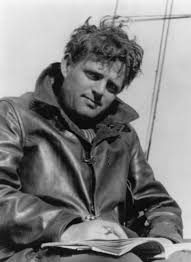
Dorothy Thompson
Charlotte News/April 24, 1921
Europe’s Choice Now Between Rosy Delirium and Grim Sanity, He Says.
Hungary’s Finance Head Has a Radical Program to Cure Country’s Ills.
Budapest, April 23. A cartoon from a New York newspaper entitled “Illegal Loans to Foreign Countries,” and picturing the United States taxpayer pouring his gold into the bottomless pit of Europe, hangs on the wall of the office of the Hungarian minister of finance, Mr. Kegadus, whose efforts to restore the Hungarian currency to a sound basis have brought down upon his head both blessings and maledictions. In an interview recently, he laid this cartoon before me, and slapping it with his hand, said: “The man who drew that cartoon knows what he’s talking about. Foreign loans to Europe are like constant morphine injections to a sick patient: a pleasant treatment, only eventually the patient dies. What Europe needs and what Hungary is going to get is a surgical operation, mighty unpleasant while it lasts, but it will cure.”
Hegadus was for 20 years president of one of the largest banks. For 20 years he was a member of parliament and for 10 years a professor of economics in the university. He has worked out an absolutely new and highly ingenious state finance system, which he claims is based on the Einstein theory. He is the closest and most enthusiastic student of Einstein. The feature which makes it differ from every other system is that it taxes mobile capital instead of static values.
“Up to now,” he explained, “Hungary has always adopted the German system of taxation—60 per cent of the value over a period of 26 years. This system is nonsense. In Germany a man is asked how many shares he has in the bank, or in a corporation, and then he is taxed on the presumable value of the shares. What happens is, first, that everybody lies or else he sends his money abroad. I say to every corporation—every incorporated organization: ‘You must level your capitalization by 15 per cent, and you must give me 15 per cent of your shares. Then I sell his shares back to him. I get the money; he can’t escape. You have deposits in the bank. I don’t ask you to declare what you have. I take 20 per cent of all deposits in all the banks, without any declaration from anyone, and all is finished.”
The man who has doubled the value of the Hungarian krone in three months is an extraordinary personality. He is a little, stooped man, with piercing gray eyes and a drooping mustache. He walks up and down the room all the time he is talking, and he speaks an absolutely amazing English—a combination of Chicago slang and French and German expressions. He never stops unless he is interrupted. If he doesn’t know the English phrase for his idea, he inserts a Hungarian sentence without pausing for breath. He is the only man I have ever known who speaks a language better than he understands it. He has remarkable fluency, but has to ask twice before he can comprehend a simple English question addressed to him. Twenty years ago he was in America and has brought back extremely vivid impressions.
“Listen,” he said to me in the middle of a discourse on taxation schemes in central .Europe, “the Hungarians are a conceited people. That is why the Americans are so sympathetic to us. I am a conceited man. I am almost like an American. Other countries of Europe whine for American help, but I adopt the American philosophy, which says that a man must be self-dependent and that foreign money is a hindrance, not a help. I have studied your financial systems exhaustively. You have the best budget in the world. Indeed America and English are the only countries—outside of Japan, perhaps, which I haven’t studied—which have decent budgets at all. Your Secretary Houston’s plan is a marvel. In May I shall have a budget in which expenditures balance credits and without any foreign loans. But to do it, I am having to make cuttings which are colossal—fantastic.”
Walking up and down the room, and punctuating his remarks with vigorous gestures, Hegadus told how he had thrown out clerks from government offices, taken away official automobiles and said: “The next thing which I shall force to reduce its expenditures is the army.”
I interrupted to repeat what I had heard on pretty good authority, that France was considering a modification of the treaty of Trianon in order to permit Regent Governor Horthy to keep more troops than the treaty as at present framed provides. Hegadus jumped up and down and banged the table:
“No,” he shouted, “Hungary cannot have any more troops. She can’t keep what she’s got. She’s got to cut. No one needs to send a reparations commission or anything else to make us reduce our army. Hegadus will reduce it by cutting off its allowance. The war is finished. This everlasting armament is mad, mad, mad. The only way we can fight bolshevism in central Europe is to get back on a sound economic basis. People who think fighting will save us don’t know what is true.
“Hungary,” continued Mr. Hegadus, “has her chauvinists. They say that the map of central Europe is unjust. So it is. It is crazy. But war won’t remedy It; fighting won’t win us back what we have lost. Natural economic adjustments will, if we bide our time.
.”When we get order we shall appeal to America. We shall ask her to throw her influence and might behind a movement to compel free trade in central Europe. We need that more than anything else. When I was in Chicago I used to like to see Kid McCoy box. I like boxing—particularly the American ring. And I would say to America: ‘Give us a fair chance in the ring—and we will get our forces together and wallop the rest of these people that some of our statesmen seem to be afraid of.”
Mr. Hegadus had a word about his enemies. He has more, I presume, than any man in Hungary. The men and women who sit about in the Ritz and Hungarian hotels may tell you that he is ruining the country. Says Hegadus:
“If I level the money, the stock exchange goes down. Who is cursing me? The porter of the hotel or the rich speculators and foreigners? All the nations of Europe are living in a rosy delirium. Would you rather be happily insane or grimly sane? That’s the question. Some countries in this part of the world are saying to America: ‘Help us to continue our sweet delirium.’ But I say to my people: ‘Wake up and face the music; make the sacrifices which you have got to make, and one of these days we’ll pull out of this beastly hole.’ “
People have said that Hegadus would strike his first real snag when he came to tax the canny peasants. But Hegadus has an idea here, too. “The peasants have got to pay,” he said. “But I am going to help them get something which they very much want, and that is land. The land reform bill breaks up the big estates, but a mere law doesn’t always deliver goods, and the peasants aren’t getting the land to which they are legally entitled. Now I shall tax land. The small holders must pay in produce, which I shall sell; the middle holders in money. But the owners of the big estates must pay in land. Then I will sell the land to the peasants at a cheap price and we shall kill two birds with one stone.”
Hegadus has three planks in his platform and has given himself one year to accomplish them. He came into office on December 16 and swears that on December 16 next he will resign. The three planks are: First-To stop the printing presses. “If you keep on pouring water into the tea after a while it ceases to be tea, doesn’t it?” he asked in his picturesque way. This promise he has already fulfilled. Inflation has stopped in Hungary. The printing presses are at rest.
The second is to design a budget. He proposes to introduce a budget on the first of May and thereafter to publish the state’s balance weekly, exactly as though he were reporting to the shareholders in a private corporation.
The third is to liberate Hungary from the Austro-Hungarian bank system. He told me he proposed to introduce a bill changing Austro-Hungarian bank notes into state notes.
Finally, he proposes to establish a permanent system of taxation which will distribute the burden equitably.
“The present time is an emergency period,” he said. “These measures which I have introduced and pushed through against every opposition are extravagant—they are bizarre. But they are necessary to meet an extravagant and a bizarre situation. My predecessors had a monthly deficit of a billion kronen. I stopped this. The tax on tobacco is the most exorbitant in history but from it I get five hundred millions. From this 20 per cent levy I shall get three hundred billions of kronen.
“This year Hungary shall get onto her feet. Then we must plan our future policy. We must subsidize children, because our country is fearfully depopulated. The American income tax provides proportionate exemptions for families with children, and that is an idea which we shall introduce into Hungary. We must have funds for social service. I shall shortly propose a bill taxing all those people who took no part in the war and the funds derived therefore shall be used for disabled soldiers. Their state is terrible. How much worse it would have been had not the American Red Cross and the other relief administrations assisted.
“What Hungary owes to America cannot be stated. You stopped the war. If America hadn’t come in we should be fighting yet. Then, America made peace. Other nations signed a peace and acted as though the war were still going on, but America didn’t sign and acted as though it were over. We shan’t forget it. Hungary is like America in lots of ways we both eat green corn and watermelon; we both hate dependence; we both believe in ourselves.”
 The Archive