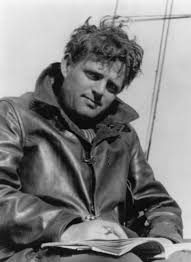
Dorothy Thompson
Wilmington Morning News/August 20, 1920
LONDON, Aug. 18.—Abel Pann, the Jewish artist, whose paintings of the violation of Belgium attracted world-wide attention during the war and were bought by the French Government, and who has exhibited in the leading galleries of Europe and America, is on his way to join the Zionist colony in Palestine. He attended the International Zionist conference here.
He will devote the next twelve years of his life to painting a series of illustrations of the Bible.
“The Bible, which is the product of the Jewish soul, has never been illustrated by a Jew,” he says.
“The two great illustrators of the Bible were Tissot and Dore. One was a Protestant, the other a Catholic.
“Tissot’s types are accurate enough, his costumes are true. But he has lost the poetry and mysticism of the Bible. He illustrates a contemporary story. Dore was a great artist in imagination and execution. But a Jew would never paint God with a knife in his hand as he cut the rib of Adam to create Eve!
“The legend says that God created the world with light. When I painted the birth of Eve I showed Adam, not a thing of flesh, but a dim mass and outline, and issuing from his side a radiance that melted into the form of a woman.”
Mr. Pann made his first visit to Palestine a few years ago. He had then reached the height of his fame in Paris, although he is still a young man. In speech, manners, appearance and style he was a Parisian.
“But when I came into Palestine I felt for the first time in my life that I was at home,” he said. “I seemed to have seen it all before in some happy, long-forgotten past.
“I do not wonder that Palestine is the cradle of rich legends There everything is magnified. The blue of the sky is too blue; the moon too silvery. The shadows are deep and gloomy and the sunlight blinding in its radiance. When you walk on the Olive Mountains a deep melancholy comes over you. You understand why the conception of the One God originated in Palestine. And it was there on the Olive Mountains that I conceived what is to be my lifework—the representation of the Bible in pictures. I want to be the first Jew to put into pictures the Jewish history and the Jewish soul.”
On this first trip to the Holy Land Mr. Pann completed the first twelve illustrations. They are painted in pastel and when they were subsequently exhibited in Baltimore and Chicago, they attracted the attention of critics and artists alike by their glorious coloring and mystical imaginative quality. The Art Institute in Chicago wished to buy them for the permanent confection, but he would not sell them. They belong, he says, to the Jewish people.
Mr. Pann will be one of the pioneers in building the Jewish homeland in Palestine. He will become one of the instructors in the Jewish art school at Bezalel. From this centre he sees a school of distinctive Jewish art emerging.
A new school of household arts is included in his scheme.
“People say that we have not sufficient timber in Palestine to build proper houses, and that we shall have to import all our furniture,” he says. “But I have designed a house for myself, and all the furniture as well, and I shall supervise the building of both. The house will be of white stone, and although there will be wings to give it breadth and stability of design, the main rooms will all be round, and a balcony will run round the tower. But my studio will be in the basement, because no one could work all day in the blazing Palestine sun.
“But the sun will be useful. I am working now on a plan for concentrating sun rays through a series of powerful lenses upon a tank on the roof. I believe that I can work out a plan for getting continuous hot water without burning any fuel.
“As for the furniture, I shall show what can be done with wits and native materials. I shall make my furniture out of the sands of the desert. Is not sand the principal ingredient of concrete?
“I shall build tables, divans, beds and benches, as well as the frames for cabinets and chests of drawers out of a form of concrete composition which has a smooth surface and will take paint. It is possible to work out very beautiful designs. Then I shall paint my furniture in beautiful colors, using old Hebrew motifs, and upholster it with lovely rubrics, such as only come from the East. When my house is completed and set in a grove of orange trees I think It will be very beautiful.
“And there,” concluded this artist idealist, “I shall, paint my pictures of the prophets who led the children of Israel out of the wilderness in the olden days, who prophesied that their God would never forsake them, and who foretold the good time which has come to us again, when we should return to the promised land.
“If I build only a house which is beautiful and plant trees which will endure and illustrate the Bible as a Jew conceives It, that is enough to have done.”
 The Archive