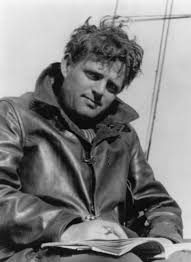
Dorothy Thompson
Enid Daily Eagle/September 8, 1920
Dorothy Thompson Tells Of Irish Volunteers
Note:— This is the first of a series of several pen pictures of Ireland written by Dorothy Thompson. Miss Thompson has written about Ireland as the story should be told— by telling little things of significance, by getting across some snapshots of Ireland that give a real picture. She has avoided the common fault of knowing so much about it that there is danger of wandering off into political details. A second will appear in an early issue.
Dublin, Sept. 8 — The reality of the military occupation of Ireland and the strangeness of the relation which exists between the police, nominally civil officers, and the local elected government, will never come home keenly to the visitor in Dublin. To get any conception of the situation in Ireland one must go to the south or west.
It was a sunny, windy day on which I went to Cork. Lying in a valley between sheltering hills, it looked singularly peaceful and remote. Masted ships were lying at anchor in the River Lee, which winds picturesquely through the little city. Its wide, quiet streets, the old plastered houses clambering up the hillside, many of them buried in rank gardens, the almost total absence of automobiles, the girls sauntering along with shawls over their heads, all add to the impression of age, as though the city had been left in the backwaters of progress. It seemed so casual and friendly a place that the report that it, among all cities in Ireland, was nearest civil war, was incredible.
But the faces of the people, when you looked at them closely, were strained, and their eyes rather abnormally bright. And all of them were either profoundly discouraged or showed traces of an ugly mood lying underneath a surface of disciplined restraint.
Cork, like every other city in the south and west of Ireland, has two governments. There is the elected government which was put into office on the single issue of the establishment of an Irish republic. This government has sworn allegiance to “Dail Eireann,” the Republican administration. It has its own courts. It has its own army—a force of un-uniformed, unpaid men, most of them very young ,with only a partial supply of arms. They are organized along regular military lines and call themselves the “Irish volunteers.” These same forces serve as the local police.
On the other hand is the British administration. It is now entirely a military organization. It has its own police, but in Cork they are devoted entirely to apprehending political prisoners. It has its own courts, but they are courts-martial, since it has been impossible in the last few months for any English court to empanel a jury. Out of 347 men recently empaneled in Cork I was told that only ten would serve.
Some of the situations which arise because of this dual government, one side supported by armed force and one by the rebellious will of the population, are extraordinary. While I was in Cork a military court martial convicted and sentenced to imprisonment two volunteers on the charge of illegal assault upon another man. The case looked like a political one, justifying the accusations of terrorism on the part of Sinn Fein. The facts were these: Two volunteers acting as civil police arrested a thief. The thief escaped and appealed to the English police against his captors. The English police promptly arrested the Irish police and court-martialed them. The thief, of course, escaped entirely.
One of the men with whom I talked in Cork was a colonel in the army of occupation in that area. I had asked to see General Strickland, the commandant, but he was engaged and this colonel offered to speak for him. I gleaned three things from my conversation with him. First, that if Sinn Fein is terrorizing the Irish population, no section of the people is seeking refuge in the British military. Second, the casualties inflicted on Sinn Fein by the military are twice as severe as those inflicted on the military by Sinn Fein. (This statement the colonel made categorically in answer to a direct question.) Third, that the British civil administration has broken down, and admits it.
“Withdraw the army from Ireland and you withdraw the British government” said this Englishman. “The object of Sinn Fein, supported by the volunteers, is to make the British administration completely ineffective, and substitute their own. And of course they are succeeding,” he admitted frankly. “Things have been quieter in the last few days since the military tightened the screws, but there is no change in spirit. It Just means that we have machine guns now. The resistance, though passive, is just as great.”
I told him that I had heard bitter complaints against the military in the city. That I had been told that they looted stores, stole cigarettes and broke windows.
“Well,” he said, “some of those accusations may be true, but we have a very bitter population to deal with and our army is made up of very young men, hardly more than boys.
“We want to defend the population against terrorism. But our men are likely to be shot at by ten year old children in the streets.”
Nevertheless it is another Irish paradox that the volunteers, anxious to avoid open clashes with the British soldiers, are using their civilian police powers to enforce military curfew.
On the one night that I spent in Cork, I remained out after the 10 o’clock curfew deliberately. The city seemed to be in a nervous mood, greatly augmented when the soldiers rode down from the barracks on the hill with fixed bayonets and with machine guns rattling after them; I contemplated trouble and wanted to be on hand if anything happened. As I lurked in the shadow of a building on the main street I was startled by a man in civilian clothes who came up to me and said: “Young woman, don’t you know it is past curfew hour. You ought to be at home.”
“But I want to see what is going on,” I protested.
“It is dangerous,” he said. “Last night there was shooting.”
“If there is going to be shooting I want to see it,” I continued obstinately.
“But we don’t want unnecessary trouble,” he said firmly. “Where do you live? I will take you home.”
At the door of my hotel he explained himself: “I am a volunteer.” he said.
“We never think of you keeping the peace for the British military,” I said smiling.
“It isn’t always that we’re doing it,” he grinned. “But as I told you we want no unnecessary rows.”
“How long can you keep this up,” I asked impulsively. “Won’t you boys with guns come to open clashes with the soldiers some day?”
“It’s thinkin’ we are that that’s what they want,” he said gravely. “But that’s what we’ve done before. Always before we have lost. For what can even 20,000 of us here in Cork or 200,000 in Ireland do against the might of the British army? No we will not have war, however much we are provoked. I mean we will have war but it will be our kind of war, fought according to our methods. To kill men is one thing, isn’t it? But to coerce a whole people—that you cannot do at all!”
Thus did my guardian of the night summarize the policy of the Irish volunteers. A minimum of armed force and a maximum of moral resistance.
 The Archive