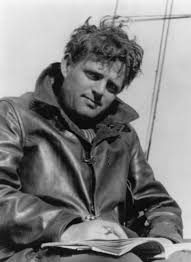
Dorothy Thompson
Wilmington Morning News/September 15, 1920
LONDON, Sept. 14.—However these dark days in Ireland may end, when the book of the period is written and added to the tragic history of the past, its most romantic chapter will be the story of the Volunteer, the citizen army of the Irish Republic.
A league of youth 200.000 strong, organized secretly, defending themselves with smuggled arms and weapons wrested by daring holdup of soldiers and constabulary, wearing no uniforms, receiving no pay, working In the fields and shop by day, drilling by night, preserving the peace and order of the infant and perhaps ill-starred republic on the one hand and waging a guerilla warfare with the British military on the other, they represent a spirit which is both chivalrous and ruthless. Their enemies speak of them as “the terror.” To the vast majority of the people of Ireland they epitomize the hope of national independence.
The Volunteers antedate the republic and even Sinn Fin, considering the latter as a practical movement. When Ulster unionists a few years ago drew unto themselves six of the nine counties of Ulster and took a solemn covenant to preserve the union with Great Britain at all costs, they organized for defense against the rising tide of national spirit, the Ulster Volunteers. The Irish Volunteers was the answer.
Sinn Fein, as a movement, is pacifist, philosophical and sophisticated. Arthur Griffith, the vice-president of the republic and unquestionably its directing genius, studied the resurrection of Hungary and saw in it a case which Ireland might parallel. He developed that policy and as a publicist presented it to Ireland and called it “Sinn Fein.” His idea was to cease fighting England; to cease petitioning England, but, bit by bit, to take over the government constitutionally, and by the exercise of passive resistance, refusing to recognize British laws, or obey British authority, gradually to elbow Great Britain out of Ireland.
It was the Sinn Fein policy which quietly carried by-election after by-election in the various localities, until in 1919 it established a republic controlling 73 out of 105 seats In all of Ireland. It is this policy which set up republican courts, encouraged the population to bring their cases there and to refuse service in British juries, and which in the course of only a few months has literally wiped out British civil jurisdiction in the South of Ireland.
Volunteers Are Aggressive
The Volunteers, on the other hand, are militant, aggressive and young. They led the bloody rising of Easter week, 1916, and kindled the fire which Sinn Fein directed to its own ends. Now they serve the republic which they, above all, helped to create. The ardor of their youth is somewhat tempered by the cooler, more disciplined, more conscious policy of Sinn Fein and the republican government.
To understand their power you must know the geography of Ireland. A country with a population which has been steadily declining for a hundred years, Ireland today contains fewer people throughout its entire length and breadth than the city of New York. It is a country of bogs and mountains, and of easy access to the sea. These youths are for the most part farmers’ sons. They know every inch of the land, every nook in the hills. They have behind them a sympathetic population and they have in them a love for adventure and for personal exploits.
Their record is like a tale from Robin Hood. They are responsible for the “outrages” which have led to the establishment of martial law in Ireland—the killing of constables, the burning of barracks, the robbing of the mails. At the same time that they are crippling every effort of the British police they are themselves responsible for prosecuting thieves, suppressing secret distilleries, enforcing the licensing laws, and in all respects fulfilling the capacity of civil police.
An Unusual Warrant
They have to their credit the securing of at least one prosecution where the British police failed, the famous “cause celebre” of the Munster and Leinster Bank robbery which took place last fall when they not only apprehended the thieves, but were able to restore the bulk of the 17,000 pounds which had been stolen. The warrant which they served on the criminals is a document worthy of preservation. It not only authorizes the arrest, but indicts the British police at the same time. It reads a follows:
“To ………………..:
“I (name of volunteer) being the officer for the Millstreet area, responsible for the Uvea and property of all Irish citizens, hereby arrest you on the charge of having (with others) waylaid and robbed certain bank officials on the morning of November 17.
“As the enemy police (The Royal Irish Constabulary) have aided and abetted this outrage instead of tracking down the culprits, it is my duty to the public until such time as an Irish police is established to capture and punish the robbers in this particular outrage, which is only one of many carried out at this period when Irishmen are making the final struggle for independence.
“Signed ……………………….
“Commander.”
Whether they are committing the assaults which the British call “outrages,” and they call “act of war,” or whether they are hauling a man into court for being unkind to his mother—as they did while I was in Ireland—they are acting illegally and are subject to arrest.
Amazing Secret Service
They have a system of secret service which is amazing. Hidden away in whitewashed cottages in the hills, they have hospitals where they take their wounded, and their sisters, trained in first aid, are welcomed into the ranks of this strange army. There are many girls among the Volunteers. They are especially used as dispatch riders and carry messages from town to town on bicycle or on horseback.
There are Volunteers in every crowd that assembles. On the last Sunday night that I spent in Dublin the city was in an ugly mood. Some soldiers got into an altercation with civilians on O’Connell Street. A crowd grew, the quarrel threatened to be a riot. The police could not disperse the crowd, their presence only increased the tension. Two or three men stepped out from the shadow. They spoke a few words quietly and firmly. The crowd broke up. The danger was over.
But they can make a lightning change from acting as preserver of the peace to being violator of the law. Some few weeks ago the Viceroy at Dublin Castle, the headquarters of the British administration in Ireland, was accustomed to send an officer to the port office every morning at 8 o’clock to get the official mall. At 10 minutes to 8 one morning a smiling British officer rode up on horseback, took the mail which was handed to him and rode away. At 8 o’clock another officer rode up, asked for the mail and was promptly arrested. Only, unfortunately, he was the emissary from Dublin Castle, and the Volunteer had the mail.
Raiding the Mails
With guards everywhere the Castle mail continues to be raided. During the time that I was in Ireland thirty men, armed but unmasked, held up the mail in the streets of Dublin in daylight with such speed and precision that no one was disturbed. More daring still was the raid on the post office itself soma weeks previous, when a dozen or more armed men came sliding down the mail chutes with the post bag and leaped Into the sorting room with revolvers In their hands.
“I hope the Irish question will be settled soon,” complained an Irishman, “because we are training a fine bunch of highwaymen.”
But they are not without a sense of honor. In Cork a man showed me a copy of a letter which he had sent a few weeks previous to his wife in another city. He had enclosed 26 pounds in bank notes. Twice on the way the mails had been raided by masked men, holding up the mail wagon on the high road. Both times the letter had been opened. But two weeks after it had been posted it reached its destination. It was pasted up, stamped with the seal of the Irish republic, and it still contained the 26 pounds.
 The Archive