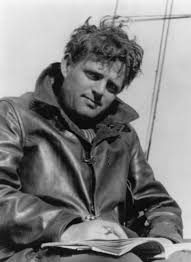
Dorothy Thompson
Helena Daily Independent/January 1, 1939
Reading the papers these last days I have been vividly reminded of Eduardo. Eduardo came with the little dependence of the Villa Carlotti which I rented some years ago for a long Neapolitan spring. The dependence was hardly a villa. It was really a tower, with a room or two on each of four floors, a terrace on the top, surrounded by crenellated wall, stone floors, a bathroom with geyser that did not work, and a glass-veranda full of camellias, gardenias and chill looking out to Vesuvius across the Bay of Naples. In the bedrooms were tall, black beds with perpetually damp sheets. In the garden were chipped pots of stocks, tangles of thorny roses and broken bits of ancient statutary, and in the kitchen was Eduardo.
The kitchen itself was a vine-darkened room at the garden level, not more than 9×11, containing a sink of yellowed marble, a large table almost filling the room made of a slab of cypress on two tree stumps, and a stove which was only a bank of tiles with numerous holes, in each one of which a separate charcoal fire had to be kindled. There was no bake oven. The oven consisted of any pan set upon the charcoal fire with a high iron cover over it plied with smouldering coals. The stove had no draft. That was manually furnished by the perpetual waving of a fan of turkey feathers.
On the table was always an immaculate white cloth, and upon it, laid out with a considerable sense of form, were innumerable knives impeccably polished and terrifyingly sharp. The knives came with Eduardo. They were his own. They arrived with him in the morning and they departed with him at night.
Above the level of the table everything was always immaculate, including Eduardo. He was undoubtedly a fine figure of a man, a man to inspire confidence, and even awe. Nature had designed him to be at the least a senator, at the most a duce. His eyes were masterful and bold. His mustaches were long, curling, black and impressive. His eyebrows mimicked his mustaches, and he had a stubborn brow. It supported a lofty, starched white cap, fresh every morning, and his handsome shoulders carried a white jacket, equally immaculate. His hands were fine, white and manicured.
Below the table, his sturdy legs, incased in greasy, black trousers, stood ankle deep in the peelings and rinds of the fruits and vegetables which he prepared for my meals. He hewed to the table and let the scraps fall where they might. It would not have occurred to me to criticize this procedure. It was very hard to criticize Eduardo for anything, and more important matters were immediately on my mind.
For Eduardo did the shopping himself, and in the evening before he departed he presented the bill. He presented it in the menacing manner of a tax collector confronting an evader. One suspected a badge beneath the coat lapel. Even a hidden pistol.
And that bill was curious. My mind would recall what I had eaten that day. Whatever I had eaten had been exquisite. Still it had consisted of, let us say, a diminutive omelet, a small nugget of veal cooked in marsala, a salad of lettuce and a little cheese, with bread and coffee for breakfast, and a dinner as unpretentious as lunch.
And here was Eduardo’s account amounting to 150 lira, and including five pounds of beef, two dozen eggs, some of the finer and more expensive fruits, and a long list of essential groceries and condiments. Every day there were the same number of eggs and the same array of essential materials. Coffee, flour, sugar never lasted for more than 24 hours. There were enough eggs to make an omelet for the entire suburb of Posillipo.
Diffidently I would approach the subject of five pounds of beef. “For soup, madam,” he would say with dignity. “But there was no soup,” I would reply, weakly. “For the kitchen, madam,” he would answer firmly. But the “kitchen” consisted exclusively of Eduardo.
That is to say it did at first. One day I entered the kitchen to find another occupant, a youth of about 17, also clad in a white coat and a tall, starched cap and also immaculate above the waist. He was fanning the charcoal fire. “My son,” explained Eduardo. “He comes to take care of the fire, he costs nothing but his food.” And then, with hauteur, “I am not accustomed to fan fires.” And thereafter the account went up 15 lira.
One day I found a third incumbent in the kitchen attired like the others. He was about 14, and he was unloading a market basket. “My son,” said Eduardo. “He carries the basket from Naples. I am not accustomed to carrying a basket.” I could well believe it. It did seem incompatible with the dignity of Eduardo, and even of his more mature son, but the kitchen was getting crowded, and I hoped to live cheaply, and a suite and meals at Bertelottis would have been more reasonable. I was finishing a book; I had a budget to last me through the spring before I went back to the cable desk and slavery.
Gathering myself together and marshalling all my powers of indignatlon, I finally summoned Eduardo. It was obviously impossible to intervene between Eduardo and his family. I could see that he was strongly philo-progenitive. I hoped that the rest of his sons—I had a feeling that all his children were sons—were otherwise employed or were infants in arms. The capacity of the kitchen was already strained and the laundry bills for coats and caps was already larger than my own.
But I would concentrate upon the accounts. There was no good raising questions. When Eduardo regarded one with that bold, proud and authoritative gaze it was impossible to question the price of gnocchi. I had thought of something shrewd. “Eduardo,” I said, “here are 300 lira. This magnificent sum of money must feed me and the kitchen for a week. There is no more forthcoming. I expect to continue to eat as well as I have in the past. I do not wish to see any more accounts. Bookkeeping is not my strong point. What you do with this money is a matter of indifference to me. I wish to be fed. That is all.”
There was a moment of tense silence. Such a moment Mussolini’s more incompetent followers must have felt when summoned for some mistake in Ethiopia. Seldom have I seen a glance so full of pride and contempt. But there were no words. Eduardo bowed, deeply, mockingly.
There is a cheese in Italy made of goat’s milk. It comes in a skin and it is very cheap. It became a staple of my diet. But any criticism to which I might have felt was drowned in admiration. For this cheese appeared upon my table in scores of forms. It appeared as the piece de resistance of an incomparable souffle. It appeared in the most exquisite pastries. And if the nuggets of veal were a little smaller (as they were) they were more exquisitely cooked and served with a gardenia—from the garden.
One day my landlady the baroness called. She was beautiful and courteous as always. But there was wistful note in her voice. “You are keeping Eduardo very busy, I imagine,” she said. “He does not send me those beautiful cakes and pastries any more.” And she added, wistfully, “he is so faithful. You are fortunate to have him.” I cannot remember Eduardo’s last name. But it seems to me that I recall that it was Musica.
 The Archive