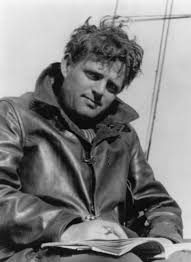
O.O. McIntyre
Evansville Journal/September 2, 1920
NEW YORK, Sept. 2— No class of professional men live up to the last notch of their income so consistently as magazine writers. Isaac F. Marcosseu is said to be the only one who has ever announced that he intended to retire. He is said to be wealthy. Irvin Cobb has one of the most magnificent country places on the Hudson but he confessed that the only possible reason for a recent chautauqua engagement was because he needed a new garage and a back porch.
Many of them live in the world of fiction where values are unreal and no doubt they apply these values to their everyday life. Scarcely a magazine writer or novelist in New York who does not own a summer home could be found. Dana Burnet has a magnificent estate at Ogunquit, Me. Will Irwin’s place is one of the sights of Scituate, Mass. Arthur Somers Roche has a castle built on a rock at Tokeneke, Conn. Donn Byrnne has a home and private golf courses near Darien.
Only a few years ago these men were grubbing away at space rates on Park Row and dining—when they had the price—at Dolan’s “Ham And” sanctuary near the World building. Most of the present day writers too were valued patrons of Doc Terry’s famous apothecary shop. Good Old Doc has gone and his principal wares are banned by the government.
Despite the fact that the successful magazine writer may easily triple his writing income through the agency of the movies, he manages to live accordingly so that there will be no annoying surplus. The managers of the best restaurants say that writing men are the best customers. They never inquire the reason why a matter of twenty-four hours has hiked the price of a lamb chop from 45 to 90 cents.
They patronize the best tailors and having large veins of sentiment keep many florists and bon-bon makers in limousines. And yet despite this apparent profligacy, it rarely happens that a magazine writer dies in want. He generally has foresight enough to salt something away to butter over the lean days, but his friends are always amazed at how he manages to do it.
He was pointed out to me by a boulevardier as the best dressed man in New York, a man who kept shirt and scarf commissionaires in Paris and who had tweeds brought from Bond Street, London, months in advance of the season And as he was window shopping I had a chance to survey his sartorial splendor. It was morning. His hat was a semi-stiff felt of dark gray, with the rim turned up high all around and down well over his head—English style. His collar was high in the back and came down to a lower degree in front. It was a turnover. He wore a plain white silk shirt. His cuffs were square cornered and were held by black and white enamelled sleeves buttons. His tie was dark brown. His suit of dark gray. In his pocket was a monogrammed handkerchief—with the monogram showing. His shoes were rubber-soled cordovans. He carried gloves and a malacca walking stick in his hand.
In a vacant lot in the Bronx a 10-year-old youngster was pummelling a diminutive 8-year-old. A passing scoutmaster sought to intervene with the query: “What’s this all about?”
The battle stopped long enough for both youngsters to grin up at him. “Aw, nuthin!” they said. “We’re jist playin’ Elwell beatin’ up McGraw.”
 The Archive