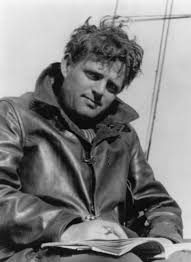
Dorothy Thompson
Buffalo Evening News/February 6, 1928
Dorothy Thompson, a Buffalo girl, has written a story of extraordinary interest to Americans on the most colorful chapter in history since the French revolution. This article, the first of a series on Soviet Russia to be published exclusively by the Buffalo Evening News in Buffalo, describes an experiment in political economy which has had the world guessing.
BERLIN, Feb. 6.—Soviet Russia, after ten years of revolution and Soviet government under the dictatorship of the Communist party, is a land of the most amazing contradictions, the most crass contrasts, the most mooted possibilities. No two people who go into Russia with what they think is objectivity bring out the same judgment or see the same picture.
To what Investigation I could make in Russia by examining institutions, factories, schools and by talking with officials I added talks with business men, with journalists and with diplomats who have had opportunity to study the situation in Russia over a period of years.
Aims Lauded and Assailed
It cannot be said that political bias always influences the judgment of these observers, because I have found businessmen, rooted in capitalism, who had more respect for the system in Russia and more optimism for the country’s future than so-called radicals. I found artists who thought that Russia was the art center of today and of the future and artists who thought that Sovietism, and the peculiar life form practiced in Russia, which, for the want of a better name, we will call Russian Communism, mean the death of art.
A liberal diplomat with whom I talked had hardly a good word to say for the country where he has been living for the last few years; an aristocrat of feudal tradition, also a diplomat, told me that, in his estimation, there was more self-sacrifice, personal devotion, concentration of will and hard common sense acceptance of realities in this government than in any government in present Europe.
Country in Mighty Movement
The most definite impression and the only judgment which I brought out of Russia are of a country in mighty movement, of an experiment of far greater significance than the western world dreams of; of problems spiritual, mental, economic and administrative greater than have ever concentrated themselves at once in any nation, and which are of profound meaning for the whole world, and of the impossibility of making a definitive estimate of this experiment or even of its tendencies and its course of development at this time.
Just ten years have passed since the “ten days which shook the world.” These ten years have laid low many prophets. Neither assaults from the outside nor the predicted revolution, decadence, corruption and inefficiency from the inside have brought down the system which Lenin founded, and whose word has become its Bible, whose memory its religion.
Progress Apparent
The nations is administered and makes, with whatever slowness, a certain program under conditions which are, for the orthodox economist, “impossible.” The economic laws which operate for other countries glance off here on the armor of the system itself.
Isolated spiritually, mentally and commercially from the remainder of the world, a country which occupies one-seventh of the surface of the earth, includes 193 nationalities with about as many languages, is attempting to lift itself by its own bootstraps in one generation from an economically and culturally backward and half-Oriental nation into a modem industrial state, fancying itself at the same time a missionary to the world.
Out of the colossal incongruities of this original aim and thesis spring a million incongruities, and they are reflected in even the most obvious and outward aspects of everyday life, in the look of the city and countryside, in the way the people act, in the way business is conducted and above all in the mentality of the people.
Medley of Contrasts
Moscow is at once a modern town and an Oriental village; it is at once the most progressive and the most pitifully backward capital in Europe. It is at once Europe and Asia; it is the center of a frontier, pushing civilization of anarchic quality and it is the center of a working theory of government rigid in its rationalism. It is the most isolated capital In the world and thousands of dispossessed from all corners of the earth call it “home.”
The concentration of all these conflicts and incongruities, the undeniable sense of pushing life which one gets immediately one has passed the country’s borders, produce an impression of vitality, and this is increased for the visitor from outside by the necessity of constantly making mental readjustments in order to get any perspective whatsoever upon the system and its manifestations. The result is that all visitors—all the people I met In Moscow, whether they were journalists or businessmen or tourists—in proportion as they were intelligent, sensitive, curious and receptive, were excited and stimulated by the impinge of Russia and this fact in itself colors their impression and their judgment.
A Frontier Landscape
The frontier quality of life in today’s Russia impressed me vividly before I was an hour over the border, and this is one feeling for the country which never left me. From Negerolje, the border station between Russia and Poland, the Russian landscape begins to assert itself. At this time of year a fine wind-driven snow is blowing; right and left of the train stretch wide, untidy fields. The roads, through the thin snow, show themselves rough, muddy, rutted; the fences are no longer the trim hedges and walls of Europe but are wooden and weathered and reminiscent of the fences of home, before our own civilization became somewhat mellowed.
The towns which one passed in the twilight have a frontier aspect. Ona sees wooden houses; not the quaint chalets of Switzerland, so foreign to us, but precisely the log cabins or the little wooden houses, painted a horrible mustard color with dinky verandas on the front which housed American pioneers not so long ago.
Flimsy villages in the midst of a vast unkempt landscape, main streets with rows of board fronts, the general store, the feed store, and now, the movie house; the irregular, rutted roads, the tallness and the independent and rather impudent and friendly way of the peasants, the outlying fields, full of stumps—a sight seldom seen in overpopulated and thrifty Europe— the wagons rattling along the roads—all them are the mark of a new Russia.
Like a Church Party
I must admit that the first Soviet celebration which I attended reminded me of nothing so much as the end of a sleigh-ride party arranged by the Ladies’ Aid of the church, as I remember it from my childhood.
The companions of my journey from Berlin were German Communists come to attend the celebration of the tenth anniversary of the revolution. In their honor we were all taken off the train at Negerolye, which is a village in the Constituent Soviet Republic of White Russia. Over the railroad track an arch had been erected covered with crimson bunting. In the middle of it a frosted glass star, the emblem of the Soviets, stained red, contained an electric light and twinkled for all the world like the topmost ornament on a mighty Christmas tree and shone all along the rails in two great streaks.
Cheers greeted the sight and my German traveling companions forthwith started to sing “The international” as they were directed through the snow toward a large hall when a matting of welcome was arranged.
American Atmosphere
The tall room smelling of wood walls, a wood fire and the pine and fir used for decorating; the crimson bunting awkwardly put up and painted with the word “Welcome” in four languages; the “cold supper,” bountiful and homemade, and above all the manners of the greeting committee, awkwardly cordial, rather taciturn, but genuinely pleased and hopeful of making a good impression— one had far more the feeling of returning to the old home town after a long absence than of entering the land which is the home of World Revolution.
The eternal speechmaking which immediately began and which I came to learn is an integral part of Russian Iife was also in the picture. Oratory always flourishes in pioneer civilizations and did in our own.
The innumerable posters which decorated the room had a sentimental benevolence. They were designed to show the peasant what 10 years of revolution have done for him. Ona showed a peasant woman sitting under a hay wagon, her little boy at her feet, reading a picture book; the title indicated what joys are open to those who can read. In the distance caricatured and most unreal figures of the Czar and royalists were represented as gnashing their teeth. Other posters urging peasants to participate in local committees for the uplift of the village pointed “This Means You” fingers in an almost Rotarian manner.
“Comrade” Brings Tea
Nor does the substitution of tovarish for regular conductors, waiters and porters in the spotless new red mahogany and blue velvet sleeping car train which meets the visitor at the Russian border seem fantastic in this frontier landscape. The tovarish wear no uniforms and do not in the least act Ilke either officials or servants. In blouses and boots they make themselves useful and chat with passengers in an entirely independent and equal tone. And they are extremely kind “Could I have some tea, comrade/’ one asks, and the comrade brings the tea. He is not tipped.
But it would be a vast mistake to draw conclusions from this. One is also served by comrades in hotels in Moscow, but one tips these comrades, otherwise one is not served, and, apart from knowing no language but Russian they are, in deportment and appearance, like waiters the world over.
The frontier quality of life in Russia extends into Moscow but with added incongruities. Hera there is the background of another preceding civilization, unfinished, sumptuous and yet crude and touching only the top of life. In today’s Moscow, after 10 years of revolutionary government, in the simple aspect of the city, one can see how top-heavy and superficial were the civilization and system which the Bolsheviks overthrew so violently and so completely in 1917.
Moscow Has Small Town Air
The streets are cobblestoned, and, if the snow has malted, are swimming in mud. The famous Tveskaya, through which the emperor used to enter the city and which runs, so they say, clear to Leningrad, is Ilke the shopping street of a small town.
There are beggars on the streets, now, as there were before the revolution declared the dictatorship of the proletariat. If the droskies and their Izvotzhtik are shabbier and dirtier than they were before the war, their spirit of amiable bargaining, their shrewd stupidity, is surely essentially the same as before. There are the same booths along the theater square, opposite the Grand opera, where men in beards, boots and sheepskins sell piroschkis, cigarettes and fruits from the Crimea, and women with shawls over their heads peddle everything from apples to brassieres.
Mud markets which recall the Oriental bazaars, beggars, shabby peasants in evil-smelling sheepskins, cobblestones and a general untidiness and casualness—these were not introduced by the Bolsheviks. Against them is the Byzantine glory of those monuments to former rulers — palaces and above all churches lavish in gold, roofed in cobalt and jade, making up for what they lack in grace of form by fantastic design and daring ornamentation — looking Iike barbaric jewels lost in mud puddles.
Patches of Grandeur
Occasionally there are patches of consistent grandeur. There is the Red square, vastest of public places, faced at one end by the huge and rather clumsy Historical museum, flanked on one side by a long white building with arcades, now a great co-operative department store; at the other end the incredible church of St Basil, built in the time of Ivan the Terrible — the orgy of an architect who must have built it after reading “The Thousand and One Nights” under the influence of vodka, such a riot it is of domes and colors, domes like the striped and silken turbans of Oriental pashas, twisted in many colors.
And to complete the square, the long, ruddy Kremlin wall, out of which bloom such shapes of towers and clusters of domes, such princely roofs and cornices as Aladdin might have conjured out of his lamp. Atop them all the golden double eagles of the Romanoffs or the flashing double crosses of the Orthodoxy.
And all of this, lavish and miserable, handsome and neglected, is old Moscow.
Not a single one of the numerous buildings erected in the last ten years shows the slightest trace of Oriental influence. Modern Germany and America are the inspiration for the designs in the new Moscow.
 The Archive