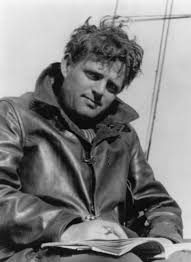
Dorothy Thompson
Buffalo Evening News/February 8, 1928
BERLIN.—Russia, after ten years of Communist rule, is, like primitive America, a nation without a past. America never had one. It was built out of forest and prairie, after the singularly fragile aborigines had been rooted out. Russia has willfully destroyed her past. The revolution of ten years ago was the most thorough that the world has ever seen.
All previous European revolutions built up a new order on the basis of the old. Even in France, where revolution established a democratic and liberal state, the spirit of the country and of the leading men of affairs retains a large measure of the old aristocratic flavor. But Russia’s revolution goes to the bone. In buildings alone can one trace the existence of Peter, Catherine and Nicholas. There is only the most esoteric connection between these former rulers and the civilization which they produced, and the new generation.
In these ten years urban Russia, having destroyed, exiled, or reduced to the most abject misery all representatives of that previous civilization, is without most bourgeoisie amenities.
The foreign visitor feels this the moment he lands in a Moscow railroad station. Unless he speaks Russian he is in a dilemma. The people who spoke foreign languages in Russia were most of them either revolutionary intellectuals, who now have important posts in the government, and don’t have time to meet the trains, or were bourgeoisie, or persons who lived from the bourgeoisie and were therefore sympathetic to them.
Today these people have been weeded out of the proletariat as unreliable and the new workers know no foreign tongues. Neither in the information bureau, ticket offices, or baggage room will you find anyone who can speak English, French, or German. Neither do any of the drivers of dilapidated taxicabs, or of the dirty droschkis, with their torn seat coverings, and chipped and rusted fenders.
Hotel Service Lax
For a time some of the Moscow hotels were privately administered, but now they are entirely run by the Moscow Soviet, who seems to have picked its employees rather for their political reliability than for their experience or cleverness at hotel management. Whether one stays at the Savoy—frequented for the most part by foreign businessmen, concessionaires, etc., at the larger and more florid Grand, which houses foreign journalists, distinguished guests of the Soviet government, and visiting Russian officials, or at the Metropole, one will find a very sketchy, if good-natured, service.
At the Grand one may have a room full of the most gaudy Empire or Louis Quinze furniture, decorated with carved bronze, inlaid with Sevres porcelain, upholstered in pale damasks—requisitioned by the state from former private palaces and brought here for want of a better .storehouse—but it is difficult to get a clean towel, even though when it comes it may be of damask and be embroidered with a crown.
Porters are Detectives
I was repeatedly told that all of the porters in the hotels which house foreigners, are G.P.U. men—agents of the secret political police. But the visitor is likely to err in spotting detectives. The little men in blue blouses and boots who guard each floor, doze on benches, and wake very alertly if you pass by them at any hour of the night, may be there partly to watch you, but more probably to watch your property.
The Soviet Government is anxious above everything to preserve before foreigners a reputation for honesty. You can safely leave your money, your jewels, and your most private documents in a hotel room. My friends in the diplomatic service assured me that the latter would all be read, but in my case, they ever were, they were replaced with remarkable exactitude as I had left them.
There are no pass keys which an employee can take to enter your room in your absence. If you do not personally hand your key to the maid and tell her to clean your room, you will return at night to find your bed unmade.
Every Worker Shadowed
Incidentally, the hotel employees are called “officiat” (officials) and not servants. In the matter of tips, however, they are amenable. No one of them may enter and work in a hotel room alone. If the guest is out, one of the worker’s colleagues is sent to “control” him.
So far as amusements go, Moscow is for the Westerner the dullest city in the world. The theaters, where those geniuses of the theater world, Stanislawsky, Maierhold and Tairoff, still work and produce, are fascinating in their acting, their mise en scene, and their use of new technique, in which they probably lead the world. But the spirit of Bolshevism, which never for an instant loses an opportunity to preach a doctrine and teach a lesson, will not let the theaters alone and they are crowded ad nauseam with propaganda.
Every play which is produced and for that matter, every book that is published, every picture which is exhibited, every film which is turned is subject to the Board of Censors. In theory this board merely “makes suggestions.” It is composed of workmen—shoemakers or factory hands—small officials and perhaps a school teacher, picked for their communistic loyalties rather than their powers of artistic discrimination, and it tries new productions for heresy.
No Sex Plays
It judges whether the general tone of the work to be produced is in harmony with Soviet principles. In the matter of morals, it would delight the heart of Mr. Comstock. Romantic love in even its purest phases is not thought to be a fitting subject for the consideration of citizens of a communist state, who have no time to waste on such trifling; the sex play is unknown in modern Russia.
Since it is not permitted to criticise in any way the fundamentals of the communist doctrine, satirical plays—and there are some—have to trim their sails too closely to be very effective. The problem of the individual soul and his Maker is also outlawed. Social comedy would pass completely over the heads of this proletarian public who neither understand the bourgeoise world nor wish to understand them.
There remains as the ubiquitous theme for plays: revolution, with all the patriotic and nationalistic connotations which have grown up around it; heroism, sacrifice for the nation and class; consciousness of solidarity with one’s fellow proletarians; common suffering; great adventures with new ideas; great prospects for the future machine age, which is to be a sort of Russian – Communist – Americanism. These are the materials of the new Russian theater.
World’s Strangest Audience
But it is perhaps significant that the one theater which continues almost entirely in the old tradition is most popular with the masses. This is the Grand Opera. Over the box of the former Tsar hangs the hammer and cycle, encircled in a sheaf of wheat, which is the emblem of the Soviet Republic. In the boxes and dress circle sit the most curiously dressed audience in the world. If there is any evening dress, it is worn by visiting foreigners or diplomats.
One sees Chinese students in baggy trousers bound around their ankles, girls in cheap woolen jumpers, bobbed hair and plentiful lipstick (cosmetics are a bourgeois vice, which it has been impossible to stamp out and has instead resulted in the establishment of a state cosmetic factory), men in boots and blouses, occasionally timid looking bourgeoise in worn clothing and fine, lace shawls. On the whole, however, the audience is dressed much as a Middle Western small-town audience at a church festival in America might be garbed—modestly, but decently.
As far as the personalities of the old regime are concerned, they no longer exist in Russia. Tha stories which periodically come out of Russia about the grand duchess who has been arrested or that grand duke who has committed suicide are almost all pure fakes. The upper aristocracy and even smaller nobility are dead or in exile. The masses of the former bourgeois have died under the privations of the last 10 years or have been absorbed.
Sunday Big Market Day
It is hard for them to enter trade unions even if they work in factories, so most of them eke out a wretched existence giving lessons in foreign languages, doing plain sewing or working in smaller and well controlled posts in government offices, where their education is useful.
Their existence is precarious, because they are always suspected. They are the hardest people to see in Russia because pity and respect for the difficulties under which they live keeps a foreign visitor from calling upon them and so prejudicing their position before the Soviets.
Even after 10 years some of them still have things to sell and the best place to see them is on the Smolensky market on Sunday, which on this day is open lo everybody.
Yet even on this market one cannot make too hasty judgments about the salespeople. The Russians are a childlike people. This market tor many of them is just fun. They come for the excitement of selling something and buying something else. And here selling her winter coat, is a young girl, far whom I might be sorry if I did not recognize her as the well-paid secretary of a foreign journalist, who is merely selling an old garment to buy a better new one.
The old bourgeois are undoubtedly passing. In a very few more years the visitor to Moscow will have to hold off sob stuff.
 The Archive