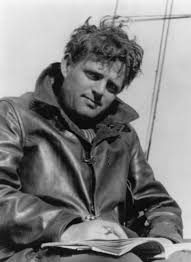
Dorothy Thompson
Spokesman-Review/September 8, 1939
It would seem essential that while we are considering means of cushioning this country against the economic shock of war, and reconsidering whether the existing neutrality legislation is actually in the best interests of our neutrality, we should also have a policy adopted regarding propaganda, and particularly regarding propaganda on the air.
The spoken word is probably far more inflammatory than the written word. The human voice is a more potent conveyor of emotion than is the printed page; it is less likely to appeal to reason; it is more capable of being misunderstood; from time immemorial it has been used to sway and control masses, and this possibility has been incalculably augmented by the radio and the power of reaching millions.
During the past fortnight a vast amount of time on the air has been given to broadcasting the news from Europe, and together with the news that comes from official bulletins and communiques and the reports of American foreign correspondents, we have listened day by day, on short wave and on rebroadcastings of phonograph transcriptions, to the official propaganda of foreign governments.
This last, particularly, seems to me to be of very doubtful policy. It is technically impossible to prevent the American people from listening to the short-wave broadcasting directly from all countries, but I wonder whether it is in the public interest for any great networks to assist foreign governments by relaying their counsels to Americans so that they are available to everyone with a radio.
This war is a peculiar war—peculiar in many ways already, and bound to develop day-by-day surprises. But one of its most powerful weapons will be sound. This is the first war in history which the whole world can hear. In one country at least, so far, the war is being conducted by a revolutionary government which has an incredibly perfected technique of propaganda. This is Germany. The Nazi regime overthrew the German republic and captured the instruments of power inside Germany largely by an astute, ruthless, subtle and cynical platform and radio propaganda. Each of its separate campaigns—against Austria, Czechoslovakia, Poland and now against Britain and France—was preceded by a barrage of words over the air. That barrage now continues, both as an instrument of war and as an instrument of Nazi ideas.
It happens that of all the warring nations, Nazi Germany has the strongest sending station on the continent. Reports of the Warsaw Broadcasting company are very difficult to hear and are transmitted by speakers with a bad English accent. The same is true for France. Germany, however, has an announcer whose English is perfect, and whose voice, transmitted from a phonograph record, is as clear as if he were speaking from the United States.
The German government itself is so aware of the power of the spoken word that immediately on the outbreak of the war it first prohibited listening to foreign broadcasts on pain of arrest and decreed the death sentence for anyone who reported further what he might have heard. Fearing, apparently, that even this was inadequate, it then confiscated all short wave sets.
The British government has done nothing to hinder its population from listening to any foreign broadcasts, believing that the die having been cast and Britain engaged in a life and death struggle, its people are immune. Furthermore, we are assured that there is no censorship of broadcasts from England by representatives of American broadcasting systems, except for reports about military operations which are, of course, forbidden to everybody. That is apparently true, but it may not remain so.
And certainly the broadcasts of American correspondents from Berlin are not only censored but apparently partially ordered. I heard two broadcasts this week from American correspondents which were obviously transmitting very clearly what the German government wishes the rest of the world to know or think, but which in the most veiled way, in a manner explicable only to students of the German situation, attempted to convey certain other facts as clues to conditions there.
Is it really in the public interest that this should go on?
The German propaganda, unlike any other that I have heard, relates also to the reporting, often falsely, and always for propaganda reasons—of conditions in the United States. It is, of course, primarily designed, from this viewpoint, toward influencing our neutrality policy.
But do we wish to have it influenced by them, or by anyone else except by ourselves?
What would be our policy if Russia in one way or another became directly involved in the war? Would we wish the propaganda of the Soviet government, which is also the center of the Communist international, distributed here, over the ether, by courtesy of American networks?
And, finally, in these extremely critical times when, from day to day, the most delicate decisions must be taken by our government for our safety and security, do we want a free-for-all expression of the opinions of individuals every time we turn the dial?
Do we want to hear General Johnson, presented as a military expert and presumably commenting on military affairs, make remarkable (and mostly inaccurate statements) about why we entered the last war?
What he said was immediately taken up by one country abroad and retransmitted to the world as an expression of American opinion.
Or do we, for that matter, wish to hear Dorothy Thompson except as she confines herself to an attempted analysis of facts?
This columnist, who is seldom inhibited about the expression of convictions in the printed word, is aware that on the air she is exercising a brief monopoly of a certain space of time over major networks, and this, together with the extraordinary power of the spoken word, seems to her to justify the establishment of a clear policy.
I do not presume to recommend a policy, but I do suggest that one should be made.
 The Archive