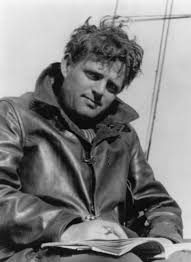
O.O. McIntyre
Dayton Daily News/November 28, 1914
NEW YORK, Nov. 28.—William Faversham has returned to Broadway with a success in “The Hawk.” Probably no actor on Broadway or off is more popular with the theatrical-going public in New York than Faversham. And there is a reason. Faversham never overlooks a bet to help the other fellow.
Just now he is concentrating on relieving the distress abroad, and through his own efforts has raised several thousands of dollars. The money will go to the destitute actors and their families in the war zone.
Inspired by Faversham’s activities, Julia Arthur sent him a check for $2,285, the sum being half of the receipts at the Julia Arthur Benefit, given recently in Boston, for war funds.
***
It has been said that it is almost impossible for a newspaper man to put across a play in New York and not have his brain-child unmercifully panned by the critics. Louis Sherwin, dramatic editor of the Globe, asked Bayard Vellier about the author of a current play on opening night. Vellier said:
“Why, he’s a newspaper man. Now go to it, the whole pack of you, and roast him to a brown.”
There is a good deal of truth in the accusation. It may not be done deliberately, but it is done just the same. Newspaper men and the critics, too, are charter members of the I-Knew-Him-When Club. They remember so-and-so when he used to chase the festive item on the Podunk Morning’s Milk. In fact, there was a city editor in San Francisco who boasted for years that he refused to give Kipling a job. It is his only distinction.
On the other hand, the American play Is being produced mainly by ex-journalists, for instance, Thompson Buchanan, Bayard Vellier, Eugene Walter, George Broadhurst, A. E. Thomas, August Thomas, Channing Pollock, Rennold Wolf and George Bronson Howard.
***
Henry C. Frick’s new two-million-dollar home on Fifth Avenue, near Seventy-first street, is now occupied. Frick erected the home on the old site of the Lenox Library, for which he paid $2,400,000 in 1906. Only three members of the Frick family will occupy the huge house: Mr. and Mrs. Frick and their daughter, Miss Helen Clay Frick.
The new house rises only three stories above the street, and followed Frick’s ideas based upon his purpose of giving the structure upon his death to the city as a museum.
Thirteen horse chestnut trees were transplanted a year ago from Germantown, Pa., to the Fifth Avenue side of the Frick home. All of the trees were more than thirty years old.
***
Dancing for the kiddies is to be revived. New York almost forgot them in its zeal to teach mamma and papa the latest steps. It has been discovered that dancing tends to give the child a poise that cannot be gained in any other manner, and also that it begets the love of the beautiful in all things.
Mrs. Harry Payne Whitney, Mrs. W. K. Vanderbilt, Jr., Dr. F. P. Peterson, professor of psychiatry of Columbia, and Mr. and Mrs. Jacob Schiff have taken an interest in urging parents to teach their children gracefulness through the interpretive and Greek dancing. Louis H. Chalif, who teaches society to dance, says:
“The interpretive, Greek, esthetic and national dances for children mean eventually an absolutely improved race, both physically and mentally.”
***
A baritone, seeking employment, visited the offices of Henry W. Savage the other day. “What are you doing musically?” he inquired of Madison Corey.
“Well,” replied the Savage general manager. “I’m learning to play ‘This is the Life on the Mandolin.’ That’s about all.”
 The Archive