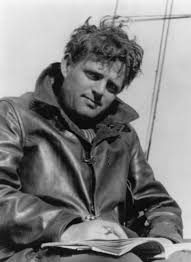
O.O. McIntyre
Lima Morning Star/June 28, 1914
ew York June 26. — New York stenographers are writing to the editors and complaining of the frivolous treatment of their profession by popular writers. It seems that O. Henry started the attacks on stenographers in “Romance of a Busy Broker” when he described her as “a high rolled fringe of golden hair under a canopy of velvet and ostrich tips, an imitation sealskin sacque, and a string of beads as large as hickory nuts, ending near the floor with a silver heart.” The most recent slander is in Professor Pitkin’s reference to “the gum chewing stenographer, who devours the literary offspring of Mr. Robert Chambers,” and the alleged humor of the business man’s remark: “Have I done anything for spelling reform? Yes I fired my blond stenographer.”
***
One of the current magazines by a mechanical “bull” ran the same poem twice in one issue. A reader Immediately writes to a newspaper saying: “I didn’t care much for the poem myself, but the editors liked it so well they ran it twice.”
***
Walter Trumbull, the World sporting editor, evidently is not as keen for polo as other things. He says: “Polo is truly an exhilarating pastime. Except for the absence of armor, it is strongly reminiscent of the knightly days when gentlemen, by way of diversion, had at each other with battle axe and mace. We might even say there is more danger in the modern than in the ancient game. Nowadays when one warrior pops another upon the bean, the recipient wears no iron kettle to break the blow, but stops it with his scalp. If a pony falls with a man and rolls on him, walks on him or kicks him, the victim’s epidermis is not swathed In sections of “stove pipe.”
***
Stage folk who are Catholic have formed a society in New York. The purpose of the new organization is to remove the prejudice which still exists among the Catholic laity against the stage. Cardinal Farley, it is announced, is in sympathy with the movement. Among the prominent stage folk who are identified with it are Emmett Corrigan, Jerry Cohan, James E. Sullivan, Fritz Williams, William Courtleigh, Frank McIntyre and Frank McGuinn.
***
Dinah Meyers and Pearl Schwartz, step-sisters, came from Germany and secured employment. They had promised their parents never to separate. One lost her job and the other quit hers and they decided to live in Central Park, which they did for two weeks. They built a little den in the shrubbery and slept there at night, and in the day time they roamed about the park subsisting on what was left from picnic lunches. The last two days they had nothing but peanuts to eat and they told a park policeman of their plight. New York may be cold-hearted but it is significant that the day after the story about them was published more than 40 positions were offered them.
Since writing the above it has come to our attention that the story is correct except for several little details. The girls did not come from Germany, they never slept in the park or subsisted on picnic debris and peanuts. It seems from later reports that the girls were romancing and the kind-hearted policemen was taken in. The many jobs offered them, it is reported, were hastily withdrawn — their parents, it has been learned, have plenty.
***
Theatrical New York is watching with intense interest the picturesque controversy being waged between Rostand, poet and dramatist and Sarah Bernhardt, the actress. M Rostand wants to put his play “L’Aiglon,” of which Mme. Bernhardt holds the acting rights, on the cinematograph stage. Mme. Bernhardt sought to block the transaction by a lawsuit. Rostand says he cannot take any legal step against the tragedienne; he backs down, abandons his rights to her, and kisses the Bernhardtian hand. Whereupon she responds with an equal show of reverence and regard, refusing the rights — and declaring that she remains the “sole one injured, as is just.” Underneath the reverence, the battle however goes on. No one expects Mme. Bernhardt to lose a franc and the probabilities are strong that “L’Aiglon” will be seen on the films. But the dignity of art will be maintained!
***
It is whispered about the Rialto that Mrs. Florence Ziegfield (Billie Burke) had a re-forming influence on her newly acquired husband with such effect that the latest “Follies” is tamed beyond recognition. Throughout the play Ziegfield has eliminated the slightest semblance of the risque — an element in his former revues that usually brought record prices for front seats.
***
Came into port the other day Frau Otto Von Warpf, the bride of the celebrated hat blocker of Danbury, Conn., who lost his bride halfway across the ocean weeks and weeks ago and has been missing boats on both sides of the Atlantic ever since. Here Is Frau Warpf in New York already, but where is Otto yet?
Otto is now by Bremen. He missed another boat!
When Frau Von Warpf arrived this time she looked hopefully over the crowds on the pier but presently lapsed into sadness. It was along In the early spring when Otto Von Warpf, having saved a bankroll, went over to Rotterdam and married Fraulein Edwina Haariven. They started for New York on the Uranium. The Uranium stopped at Halifax and Otto went ashore to stretch. When he got back the Uranium was a black smudge on the horizon. His bride was on her. Otto started for New York by train and landed In Quebec. Ten days later he arrived in Danbury to learn his wife, believing she had been deserted, had sailed for Rotterdam. Otto sailed after her and in the meantime a friend cabled an explanation and she started back to America. She is here and Otto is not.
***
From the Folies Bergere In Paris and the Jardin d’Hiver in Budapest came Nila Devi (she says it is her honest to goodness name) to show Broadway a new dance. The dance is called “The Bath of Phryne” and made well-seasoned, blase persons of foreign capitals sit up and take notice. Asked about her dance she said: “I really think that my dance is interesting; it is some development.” Before the flock of ship news reporters could query: “Whadda you mean development?” the girl had fled with her mother.
***
Max Dam, the celebrated New York lawyer, is said to be responsible for this story:
“The train struck the man, did it not?” asked the lawyer of the engineer at the trial.
“It did, sir,” said the engineer.
“Was the man on the track, sir” thundered the lawyer.
“On the track?” asked the engineer “Of course he was. No engineer worthy of the name would run his train into the woods after a man, sir.”
 The Archive