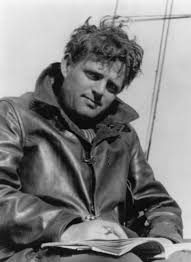
Ray Stannard Baker
McClure’s Magazine/July, 1904
SEVERAL elements have united in producing the present amazing storm of opposition and organization against labor unionism. One of the chief inciting causes was the anthracite coal strike of 1902, which gave the employers of the country a sudden perception of the immense and hitherto unsuspected power of unionism—the new business unionism. Here was a conflict conducted on the side of the working-men with such business acumen, with such a keen regard to the influence of public opinion, with such political intelligence, that it defeated one of the strongest combinations of capital in the country. It was a tremendous object lesson to employers everywhere; its moral was plain: organize or go to the wall.
At the same time there began what may be termed a period of inflation in trade-unionism. We had and still have the watered union as truly as we have the watered trust; and the effect of the indigestible unionist is not less disastrous than the effect of the indigestible security. Both were caused by the same conditions: a time of great prosperity with a strong demand on the one hand for more labor and on the other for a greater opportunity for investment. It was a time of credulity, when flimsy organization, irresponsible and penal leadership, and untrustworthy methods could be glossed over. Industries hitherto almost wholly unorganized now sprung into full-fledged unionism, many of the men not having grasped the first principles of the movement, and easily the prey of designing manipulators and exploiters—the Charles M. Schwabs and the Whittaker Wrights of unionism. Sam Parks was such a man. The teamsters in various cities organized helter-skelter, and were often undisciplined, violent, and dangerous. Semi-unskilled or wholly unskilled workers, like building-laborers, gravediggers, freight-handlers, building janitors, messenger boys, street-car employees, and the like, who, though they may ultimately make good union men, have so far, as a mass, barely grasped the first principles of unionism.
Well, these inflated unions went to all manner of excesses; and many suffered from a plague of strikes, boycotts, picketing, the slugging of “scabs,” and other excesses and absurdities. The Housesmiths’ Union in New York, which was used so disastrously by Sam Parks, was a raw, undisciplined organization, made up of men, many of whom had never had any experience in organization. A large part of the trouble during the past year is traceable directly to these inflated classes of unions; or to older and more experienced organizations, which, for lack of energy on the part of their members, have fallen into the hands of self-seeking Labor Bosses. It is, indeed, the labor union as distinguished from the trade union which has been responsible for most of the trouble during the past two years.
All this brought disgrace on the entire union movement exactly as the exposures of the rank operations of the shipbuilding trust disgraced Wall Street. Scores of older financial corporations, though affected by evil ventures in stock inflation, were intrinsically as sound as ever, and just as safe for investment. And so we have unions like the Railroad Brotherhoods, the Typographical Union, many of the building trades unions, the Cigarmakers, the Longshoremen, the United Mine Workers, and scores of others going forward, quietly gaining strength and influence, and yet so well disciplined that little or nothing has been heard of their operations; and such organizations constitute the real unionism.
Why Employers Are Organizing
Two general causes, then, account for the present movement toward the organization of employers:
First: the sudden recognition and fear of the real power of the new unionism. When an organization like the United Mine Workers of America, with 350,000 members and $4,000,000 in its various treasuries, has reached the point of discipline and self-restraint where it deliberately votes not to strike and agrees to accept a reduction in wages—as this organization did last March —employers may well be respectful of its power. That was one of the greatest victories unionism ever won in the United States—a victory over itself, an evidence of the far-sighted leadership and the excellent discipline which, surrendering the sentry post of to-day, plans to capture the citadel of to-morrow.
Second: the excesses of a false power—an inflated unionism. Organizers of employers base their strongest arguments upon these features of the union movement, they tell stories of silly strikes, of petty exactions, of absurd boycotts, of the brutal slugging of “scabs,” of maddening jurisdictional strikes—and unionism has borne an amazing crop of such absurdities during the past two years—all calculated to prick employers into the hasty formation of defensive associations, and to stir the blood of the liberty-loving and law-abiding public. Almost no employer of labor has escaped some annoyance of this sort, upon which he bases his judgment of the entire union movement.
Pitiable Position of the Small Employer
At Chicago I attended a meeting of certain retail butchers who had come together to form an Employers’ Association. It was the first time that they had ever met with a common purpose in view, and nothing struck me more forcibly than the resemblance of the meeting to a first gathering of working-men to form a union. These small merchants were smarting under their wrongs—genuine wrongs they were, too—and, though they knew nothing about organization, they were eager to unite, and their first impulse was to relieve their feelings by fighting, just as the first impulse of the new union, overestimating the potentiality of organization, is to strike. One man, for instance, told with tremendous earnestness how his business had been tied up for days through no fault of his own, because the teamsters could not agree with the butchers’ union as to who should hang up the meat. Another told of the exactions of the retail clerks, another of his troubles in getting plumbing done. Squeezed on one side by the meat “trust,” on the other by the unions, and open to the bitterest sort of competition and underselling among themselves, the position of many of these small merchants was unfortunate in the extreme—much worse, indeed, than that of many working-men. By years of agitation the trade-unionist has created much public sympathy for himself, whereas the difficulties of the small merchant, and even of the larger manufacturer, subjected to the fierce competitive conditions of our modern life, have been largely overlooked. In San Francisco, in one of the associations of master-builders, I found that over seventy per cent of the membership had gone bankrupt or had compromised with their creditors in the past year; not wholly as a result of labor organization, of course, though this has been an important factor.
Fate of “Watered” Unionism
Inflated unionism will, however, like the shipbuilding trust, pass from view, or, like the steel trust, it will lose its water: and it will be better for the contraction. I asked Thomas I. Kidd, vice-president of the American Federation of Labor and one of the foremost leaders of labor in the country, how many unions in Chicago would be forced out of existence with the return of hard times. He surprised me by saying he thought the contraction would reach at least thirty per cent.
“These mushroom unions will disappear because they do not yet understand the principles or the necessary discipline of unionism,” said Mr. Kidd, “but their membership will have learned some valuable lessons—an army has to be whipped once before it learns its own strength—and when they come to organize again they will act with more wisdom.”
Conservative union leaders everywhere have seen the danger of undue power in the hands of poorly disciplined leaders. Henry White, general secretary of the United Garment Workers, says in an editorial in the Weekly Bulletin of the Clothing Trades:
Will the unions show a consciousness of the responsibility that goes with power, develop the ability to restrain themselves, and keep on in the path of least resistance, or will they plunge ahead, driven by the clamor of the unreflecting among the membership?
I quote the following from the Shoe Workers’ Journal:
Employers are organizing throughout the country against organized labor for no other reason than to combat the unwise policy resorted to whenever the fanatical element of trades-unions gain control. There are two roads for us. Shall we as trade-unionists use our power arbitrarily, or shall we let reason, intelligence, wisdom guide us in our manner of meeting and carrying out the responsibilities that a great economic power is forcing upon us?
Disagreement of Association Leaders
One who comes fresh to the study of the Employers’ Association movement will find himself much confused by the wide diversity of opinion among its various leaders. Apparently no two leaders exactly agree on anything; there seems to be little uniformity of organization, and often no clearly defined program of operation. Mr. D. M. Parry, who is the foremost representative of the new Employers’ Association movement, is leagues away from Mr. Justi, of the Illinois Coal Operators’ Association; Mr. Kirby, of the Dayton Employers’ Association, does not agree in the least with Mr. Driscoll, of the American Newspaper Publishers’ Association, and Mr. Job of Chicago has quite different views from Mr. Craig of Denver, or Mr. Eidlitz of New York, or Mr. DuBrul of Cincinnati, or Mr. Sayward of Boston. Each has his own scheme and is insistent in advocating his own beliefs. A few even defend the “closed shop,” others fire up at the mention of it, demanding the “open shop” as the very basis of American freedom; some favor arbitration, others oppose it; some look on trade agreements as the universal panacea, others scout the idea of contracts of any sort; some demand the lockout as the cure for the strike, others decry the lockout as an inverted strike, and so on, and so on. No two agree, because the movement as a whole is yet new and its positions and principles have not crystallized. On the other hand, the labor movement has been so long under way that we discover a somewhat remarkable uniformity of purpose. We find little diversity of opinion among the more prominent labor leaders as to basic beliefs, and comparatively little as to methods, though there are a few mooted questions, like that of the endorsement of socialism or of political action. These principles have been settled by long experience, through frequent defeat; and it is this unity of purpose which constitutes the chief source of strength to the movement.
Two Classes of Employers’ Associations
Employers’ Associations as now constituted may be divided roughly into two classes:
First: those which propose to fight the unions. Their leaders emphasize the fact that industry is war.
Second: those which seek to deal with the unions. Their leaders emphasize the fact that industry is business.
Of course those of the first class may often deal with the unions, and those of the second may sometimes fight, but the associations fall naturally into these two categories. And they run the whole gamut from the peppery organization which, looking upon unionism as dangerous in itself, always fights, to that which, Utopian in its views, seeks to eliminate the strike entirely.
To the first class belong nearly all the newer organizations, and especially the Citizens’ Alliances of the West, which have often sprung into existence with the explosive enthusiasm of a vigilance committee.
Nearly every city in the country making any pretense to industrial importance now boasts its full-fledged Employers’ Association or Citizens’ Alliance, sometimes both, and these organizations are already agglomerating into state and national federations of which the Citizens’ Industrial Association of America—Mr. D. M. Parry, president—is an excellent type. Scores of local and state organizations and a considerable number of important trade organizations (like the National Metal Trades Association) are affiliated with this great central organization. Its membership, direct and indirect, numbers many thousands of manufacturers, merchants and other business men, a large proportion of whom, it is to be noted, were never organized before. The total capital represented must run far into the millions, and although not, of course, at the command of Mr. Parry and his associates, it gives the organization an appearance truly formidable.
Real Motto of the Fighting Association
The motto of D. M. Parry’s organization, of Mr. Job’s Employers’ Association of Chicago, of Mr. Craig’s Denver association, Mr. Kirby’s Dayton association, and many others, all distinctly fighting bodies, may thus be summed up:
“Yes, we believe in unionism, but damn the unions.”
Printed declarations of principles are only incidentally significant. We must judge associations of men exactly as we do individual men, not by what they say but by what they do. Mr. Job, for instance, asserts his belief in “good unionism,” but the ideal condition as he sees it is well expressed in a little account written by him of conditions in the City of Beloit, Wisconsin, called “The Tale of Two Cities.” Here the good condition is not so much one of good unionism as of no unionism. After an account of how the Employers’ Association of that city had wiped unionism practically out of existence, the story closes: “It is again called beautiful Beloit.” Similarly, Mr. Parry, while asserting his belief in the right of workmen to organize, has prevented organization in his own factory.
I give these instances merely to show the real attitude of the leaders of many of the new Employers’ Associations.
These fighting associations are roughly of two sorts: the Employers’ Associations, proper, like Mr. Job’s Chicago organization, made up wholly of subsidiary associations of employers and largely of employers not hitherto organized, and the Citizens’ Alliances, like Mr. Craig’s Denver organization, made up of citizens generally, including even non-union working-men. These organizations, while varying widely, generally announce the following principles: the “open shop,” no sympathetic strikes, no violence to non-union men, no limitation of output or of apprentices, no boycott, and some go further and declare against arbitration, trade agreements, and picketing. Most of the organizations of this class are secret, both as to their membership and as to their business methods.
Associations that Deal with the Unions
To the second class of employers’ organizations, those organized to deal with the unions, belong nearly all the older and more experienced associations; like the Illinois Coal Operators, of which Mr. Herman Justi is the commissioner, the National Stove Founders, the American Newspaper Publishers’ Association, the Typothetae, and the Master-Builders of various cities, and many other similar organizations. These associations, the leaders of which have long been studying the labor problem, look upon the labor union as an accomplished business fact and, while strong enough to fight, and fight hard, if necessary, their prime object is to deal with the unions on an amicable basis. None of these organizations has a secret membership, and their methods are as open as those of any business association.
As Mr. Justi said to me: “It is extremely curious that as business men we should be inclined to omit the element of labor from the ordinary rules of business. We contract for our raw materials after a friendly conference with the man who has raw materials for sale, and in turn we dispose of our products by friendly agreement with the buyer. Why should we not treat labor, so far as the wage question is concerned, as a commodity and agree to buy so much of it at such a price after a friendly conference with those who have labor for sale?”
I asked Mr. Justi if he would wipe unionism out of existence if he could.
“No,” he said; “we believe in it. We believe it has come to stay. It has been of great value to us, as it has also been to the laborer; and I say this knowing that there are many abuses practised which must be stamped out before the miners’ union is a thoroughgoing business organization, engaged in a legitimate business pursuit—that of selling the best labor of which its members are capable for the highest wages which trade conditions will permit. Since we have engaged in joint agreements with the United Mine Workers of America—now more than six years—we have never had a general strike in Illinois, nor any local strike of consequence. These agreements have saved us, as well as the mine workers, I am convinced, hundreds of thousands of dollars. Besides doing away with strikes these contracts enable us to figure accurately on the cost of the production of coal, thus placing us all on the same competitive basis as far as the wages of labor is concerned.”
Associations and Unions Compared
Thus briefly, before going more deeply into details, I have tried to characterize the two classes of Employers’ Associations. They are singularly like the two classes of unions. The new association, like the new union, springs into existence with great enthusiasm, vehemently airs its grievances, bitterly arraigns the other side, pays its dues reluctantly, usually wishes to fight immediately, and chafes because results are not more rapidly forthcoming. But gradually the association as well as the union begins to understand the real principles of industrial organization—it begins to overlook the inevitable small annoyances; it learns that the strike and lockout instead of being the prime object of organization is really the reluctant weapon of last resort; it discovers finally that the labor problem cannot be settled over night, nor by sulphurous speechmaking, nor by violent methods; that it requires long continuing patience, self-restraint, decency, on both sides.
And yet these new associations of employers and citizens—Mr. Parry’s, Mr. Job’s, Mr. Craig’s, and others—have their inevitable and important functions. You will hear some union men assert that this movement is nothing more nor less than a giant conspiracy to crush labor organization. Nothing, surely, could be more absurd. One of the most surprising features of the movement is its spontaniety, the way in which dozens of cities began organizing about the same time, not because the employers were inspired by some outside influence, but because the soil in each place was favorable to the growth and because the organization of employers generally is a logical stage in the evolution of our complex industrial life. The unions themselves are no doubt responsible for the movement; their domineering tactics, their excesses, the misuse of their power, have resulted in the inevitable revolt. The unions in many places had reached a point of unruly dominance where they had to be thoroughly thrashed. And in cities where the unions have been most unreasonable, as in Chicago, the Employers’ Associations are most vigorous.
Unions and Associations Use the Same Methods
One cannot fail to be impressed with the similarity of human nature expressed in the Employers’ Association to the human nature of the Labor Union. They are extraordinarily alike in their methods of reasoning, in their plans of campaign, in their limitations. Take, for instance, the chief weapon of the unions: the strike. The strike, under the name of “lockout,” is equally the chief weapon of the Employers’ Association, and it is as fair for the one as for the other. The recent strike of the laundry workers in Chicago is an excellent example.
Some 5,000 employees had organized a union and decided on a strike campaign to force recognition of the union and an advance in wages. Immediately Mr. Job got the laundry employers together, formed a strong organization, which affiliated itself with the Chicago Employers’ Association, and when the new union made its demands it was boldly defied. The union called a strike in nine laundries, after the usual custom of whipping employers into line a few at a time. On the same day every laundry owner in the association, and that meant practically every owner in Chicago, locked out his employees, thus, throwing the entire union out of work. Some of the smaller laundry owners, running close to the financial wind, had to be assisted by Mr. Job’s organization to keep them in line, while the union on its side soon consumed its treasury, and many of its members were reduced to the very edge of want. The strike, which was most bitterly contested, lasted nearly two months, until both sides were worn out and thoroughly beaten. The owners lost a large amount of business and the workmen a large amount of wages. Neither side won a clear victory; the employers succeeded, indeed, in establishing the “open shop,” but the workers maintained their union and got an increase in wages.
Similar battles of strike and lockout were waged with the candy makers, the cooks and waiters, the carriage-makers and others, and with similar results. And the Employers’ Association played a part, also, in the streetcar and teamsters’ strikes. It will be observed in passing that in nearly all of these cases the unions were of the new and inexperienced sort. It was the first time in Chicago that unionism had been met by a thoroughly organized opposition; and it taught some wholesome lessons.
Employers Use Sympathetic Lockout
All Employers’ Associations and Citizens’ Alliances are strong in their denunciation of the sympathetic strike, and yet we find the new associations—not all of them, but here and there a case—applying this very device against the unions, using the sympathetic lockout ruthlessly and effectively. In Idaho Springs, Colorado, for instance, there is a strong Citizens’ Alliance, including in its membership not only mine owners and employers, but practically all citizens not members of the miners’ union. It sprung into existence as a result of an attempt to blow up the Sun and Moon Mine, in which a union man lost his life. I have related in a former article how members of this alliance got together at night, went to the jail, took twenty-six union leaders there confined on suspicion of complicity in the explosion and marched them out of town, expelling them violently from their homes with threats of lynching if they returned—a very good example, by the way, of how easy it is for the Citizens’ Alliance to follow the union in the use of physical violence.
A Victim of Employers’ Sympathetic Lockout
After that the alliance resolved to wipe the miners’ union out of the district. I give here an account of the methods pursued, exactly those of the sympathetic strike inverted, in the case of a single man—A. D. Olcott, former secretary of the miners’ union at Idaho Springs. Olcott had been a resident of that city for nine years, he had his family there, he had always borne a good reputation. He was one of the men arrested for complicity in the explosion, he was driven from the town by the Citizens’ Alliance, but he returned to his family and was subsequently acquitted in the courts of having had anything to do with the explosion. But the alliance wished to drive out every “agitator,” and when Olcott came back to Idaho Springs he found that he was a marked man, that there was no chance there for him to make a living. He found himself “unfair” not only to the mine operators but to all other employers in town, who, members of the Citizens’ Alliance, had joined in the sympathetic lockout against him.
Olcott got a lease on a mine, hoping to work it himself; the alliance heard of it, pressure was brought to bear on the owner, and he was compelled to throw up the work. Then he took a contract to sink a shaft. He needed a rope one hundred feet long, and borrowed it from a harness-maker of his acquaintance—a man he had known long and well. A few days later the rope was demanded of him with the remark:
“You belong to an organization not entitled to any favors.” The harness-maker had struck sympathetically with the mine owners. So Olcott had to abandon this job. Finally he got a chance to sink a shaft in the mountains, three miles from town—a far-off, unobtrusive job—on a property owned by a London insurance company. This job, surely, he could hold. But the alliance brought pressure upon the Denver agent of the company, and the agent at once hurried to Idaho Springs and Olcott was again forced into idleness. When I talked with him he had no work at all. He could get no job in Idaho Springs, and he could not move away because he was under bond to appear in court. And there he was!
I am not here arguing the ethics of the sympathetic strike and lockout, nor am I even asserting that these vigilance committee methods were not necessary to meet the conditions in Idaho Springs; I am merely comparing the respective sauces of goose and gander.
Boycott Used by Employers’ Association
Take also the subject of boycott. No one thing the union does is held up to more bitter denunciation than the boycott, and very often justly so. The unions, for instance, have been guilty of boycotting newspapers which have not agreed with them, endeavoring to punish the editor who spoke his mind. They did it in the recent strike of the metalliferous miners of Colorado, of which I have given an account in McCLURE’S MAGAZINE for May. They boycotted the Telluride Journal, and not only the Journal itself, but every advertiser who patronized its columns, thereby forcing many of the merchants and others to withdraw. I am not here saying that the Journal was not unfair or over violent in its attack on the union; that is not the point: the point is, that the union attempted to stifle free speech. Well, the fairest friends the union has had in Colorado were the metropolitan dailies, the Rocky Mountain News and the Times, owned by Senator Patterson. The Citizens’ Alliance of Denver thought these newspapers should be disciplined for their position on the strike question, and on October 13, 1903, the alliance passed this resolution:
Resolved, that we, as a body, urge upon the Denver Advertisers’ Association the importance of cooperating with us in this effort, and request such Association to so place its advertising matter as to assist in upbuilding instead of tearing down business interests, to the end that a just and conservative policy may be adopted and advocated by the daily press.
The Advertisers’ Association, including nearly all the large mercantile interests of Denver—all belonging to the Citizens’ Alliance—took just this action. A committee was sent to the papers named. I suppose the “request” of the alliance was conveyed in the softest language, and yet that committee, with its power of withdrawing the advertising mainstay of these newspapers, was as truly a threat to boycott as though it had gone to the editor with a club.
If one side limits free and fearless speech—even though it be too free—the other side sooner or later is going to do exactly the same thing.
“Scab”’ Employers
A great point made by the Employers’ Associations is that the unions, directly or indirectly, force unwilling non-union men to join their organizations. No argument appeals more strongly to the public than that which advocates the right of the individual worker to belong or not to belong to the union. This is the tap root of the “open shop” argument used with such purpose during the past eighteen months. At every convention of the Employers’ Association we find a great deal of patriotic speechmaking upon the rights of this non-union worker. Well, let us say we all agree with this talk, but we find the Employers’ Association and Citizens’ Alliance, in many instances, turning from their horror at the abuse of the nonunion man and employing exactly the same methods themselves. Why should they not? In order to be effective against a very strong union, they are confronted by identically the same problem. Their association must include every employer in the trade, otherwise, while they are busily doing the fighting, this “scab employer” is getting the business, and, sooner or later, if he is allowed to continue, he, not the union, will defeat them, exactly as the “scab” defeats the strike. In New York, for instance, during the building trades strike of last year, the Fuller Construction Company was a “scab”; it insisted on working while its fellow contractors were “striking.” So, in the Cripple Creek miners’ strike, James Burns, the owner of the Portland Mine, was a “scab” on the Mine Owners’ Association.
There are, therefore, as truly “scabs,” or non-union men, among employers as among workers, and one is not surprised to find that the associations are as bitter against their “scabs” as the unions are against theirs. 1 heard the Fuller Company abused in New York and Mr. Burns rated in Colorado with a violence not exceeded by the union abuse of the “scab,” although in different terms. The methods of the associations, of course, are not so crude as those of the unions; the rich manufacturers do not go out by night with clubs and waylay their brother manufacturer who does not agree with them, but they employ methods quite as effective. I do not wish to imply that all Employers’ Associations go to this extreme, but they have done it, and will do it again, in cities like San Francisco, Denver and Chicago, where unionism is exceptionally strong. And it is being done now in many lesser associations in every part of the country. Necessity here is the only law: compulsion of the non-unionist, whether worker or employer, in one form or another, will exist just so long as it is necessary for either or both sides to employ that weapon in winning its battles.
Compulsion of Meat Dealers in San Francisco
During the strike in San Francisco in 1901, for instance, a tremendous struggle for supremacy between organized labor and organized capital, to which I referred in my article in McCLURE’S MAGAZINE for February, the Employers’ Association forced merchants and others into their organization with perfect ruthlessness. Certain retail dealers in meat, for instance, wished to continue their agreement with the unions, and use the union label, but the wholesale meat dealers, led by the Western Meat Company, Miller and Lux, and others, shut off their supplies, refused to sell them any meat until they took the union labels out of their windows and joined in the fight. In some cases they went further than this—refusing to supply retailers who supplied restaurant keepers who insisted on dealing with the unions. The retailers were given no choice: they either had to join issue with the Employers’ Association or shut up shop. They were not allowed to “scab.”
The Carriage Makers’ Association was willing to accede to the demands of the various unions employed by its members, but Secretary Michael, of the Employers’ Association, told them bluntly that if they entered into any agreement with the union they would be refused supplies, especially steel, and that orders for carriages would be sent to the East; on the other hand, if they affiliated with the association, they were assured of its support in maintaining the fight.
If it were necessary, many other instances of a similar nature in this San Francisco strike, in the Denver strike of 1903, and elsewhere, might be cited. In short, it is exactly the principle upon which the union operates when it knocks the non-union man on the head or exercises its right to refuse to work with him. 1 was never more impressed than by the arguments of a member of the San Francisco Employers’ Association in defending this system of “discipline,” as he called it. It was exactly the defense 1 have so often heard from union leaders whose strikes were marked by violence to “scabs.”
We also find the associations declaring against picketing—and themselves using detectives and spies who are merely pickets of a slightly different sort. We find the associations sometimes adopting cards like the cards of the unions—as in Denver—and in other ways following the exact methods of unionism.
Unions Employ “Judge-Made Law”
And I cannot pass this subject without referring to the fact that the unions on their side have applied some of the very methods which they denounce most bitterly when used by employers. Nothing stirs the labor leader to greater anger than the use of the injunction—“judge-made law”—against the unions. And yet on May 15, 1903, we find the labor leaders of Denver obtaining an injunction from Judge Mullin against the officers and executive committee of the Citizens’ Alliance. Similar injunctions have been obtained in Omaha and elsewhere.
The unions in the past have always defended the boycott, the sympathetic strike, picketing, and even the coercion of nonunion men as moral, if not legal—as the inevitable means to be used in accomplishing their ends. But the use of the same methods by the employers quite changes the conditions. Even admitting that these things are rights, we shall probably hear such weapons of unionism discussed in the future from the point of view of policy rather than of right. The torture of prisoners was a feature of old-time warfare, a right of’ battle, but when it became well established that one side could torture as effectually as the other, torturing disappeared. Letters of marque and reprisal disappeared for the same reason. The boycott is a sort of reprisal which must eventually go out of existence on both sides. These doubtful methods, indeed, should eventually disappear, and more and more we should see the union and the association base their claims to recognition upon excellence and intelligence, and less and less upon force.
Valuable Service Performed by Employers’ Associations
In another way these new Employers’ Associations have performed a valuable service. No other single agency has accomplished so much in calling attention to the vital public importance of this whole labor question. They are making it, what it was destined sooner or later to become, a great national issue, and they have set the entire American people to thinking about it. Indeed, this object is declared to be one of the chief purposes of organization. 1 quote from a letter of Mr. D. M. Parry:
The prime object of these national organizations is an educational one. They aim to mold public opinion, to influence political action, to defeat socialistic legislation, to develop public thought.
The associations are also doing valuable work in prosecuting lawlessness wherever found, whether the beating of non-union men or the destruction of property. This active opposition has naturally embittered the unions, and yet in so far as it prevents the use of violence it is really of benefit to the union movement; for unionism must learn, what its best leaders already teach, that organization founded on intimidation and violence in the long run cannot succeed. And if the unions find members of Employers’ Associations committing unlawful acts they will win, equally, the support of public opinion if they assist in prosecuting such law breakers.
In short, these new associations and alliances perform one of the functions of the new unions; they are agitating bodies; their leaders, men of energy, dramatic public speakers like Mr. Parry and Mr. Job, are truly agitators doing the pioneer work of organization, stirring up the people. And many of their organizations, usually hasty and not homogeneous, are destined to go the way of the inflated union—when they have served their purpose. They are fighting or defensive organizations, therefore unstable and temporary; they will give place gradually to the sort of associations which I have grouped under the second class—the associations which, looking upon the labor problem not as warfare but as business, are constructive and conciliatory, and therefore stable and permanent.
Associations That Deal with the Unions
I wish now to give some more detailed account of these organizations of the second class, and perhaps I can do no better than to tell the story of the Chicago Metal Trades Association. It is no more remarkable than that of the Bituminous Coal Operators, nor of the Stove Founders, nor of the Typothetse in various cities, nor of the Newspaper Publishers’ Association, nor of many other trade organizations, but I choose it because it comprehends in small compass all the essential details of the system and shows how it works under favoring conditions.
The Chicago Metal Trades Association is an organization of more than 100 manufacturers, employing some 15,000 men. Its president is John D. Hibbard, of the John Davis Company, and its secretary is Paul Blatchford, an Amherst graduate, a type of a new profession—that of labor commissioner to Employers’ Associations. Mr. Blatchford, indeed, is the walking delegate or business agent of several organizations besides the Chicago Metal Trades Association. He has commodious offices in one of the large downtown buildings, where he meets the walking delegates of the unions, and where joint conferences between the unions and the associations can be held. This new profession, like that of the walking delegate, is one of great importance and power, capable of being used for advancing the welfare of thousands of men or of being prostituted to selfish ends. Association leaders, like labor leaders, are destined to play a more and more important part in our industrial life.
Mr. Hibbard is the genius of the association, a man of enthusiasm and earnestness, a graduate of the University of Michigan, with a training in fair play on the college ball-field. But more than anything else, he has the open mind, the mind that is constantly instructed by events. When he first went into business in Chicago he fought unionism consistently and energetically; he has gone through no fewer than seventeen strikes in as many years.
“I have had men brought into my office,” he told me, “with heel marks in their faces. 1 have seen violence that made my blood boil.”
And his conclusion finally was that there must be a better way than this perpetual and often bloody warfare with results not less disastrous to the manufacturers than to the workmen themselves. He concluded that it was worthwhile, at least, to try dealing with the unions. Two or three things he told me impressed themselves upon him as self-evident truths.
1. That the employer and the worker are naturally antagonistic, exactly as the seller and buyer are antagonistic—but not necessarily pugilistic.
2. That the right isn’t all on one side.
3. That the old idea among employers of waiting until there was trouble and then getting together hastily to meet a well-trained labor organization, was no more sensible than sending a mob out to meet an army; and finally, that a good fighter doesn’t despise his opponents—an important point.
“Well,” he said, “I believed that we were not qualified to judge on all the questions involved unless we had an accurate knowledge of the facts as they appeared to the other side. The question then presented itself: how are we going to get those facts? The answer was evident: by getting together with the union men and finding out through personal relationship what sort of men they were and whether or not they were as arbitrary and unreasonable as we had supposed.”
How Agreements Are Made
So the Metal Trades Association requested each of the unions having men employed in the shops of its members—some six in all—to appoint a committee of three men to meet similar committees of the association and talk things over. When they got together they were all suspicious of each other, each expecting some trick, enemies come to arrange a truce. Mr. Hibbard then stated the case to the conference:
“We are here, gentlemen, in good faith and in good temper. Neither of us wants any more trouble; we’ve had enough of it. We want to find out, frankly, what you men want, and we will tell you frankly what we want. We believe we can discuss everything, everything, mind you, and stay good natured, and that we can finally come to an agreement satisfactory to both sides.”
Well, after much discussion, they formulated a preliminary agreement, submitting every question at issue to a committee of six members, three from the union concerned and three from the association, and stipulating that any questions upon which this committee failed to agree should be submitted to arbitration. But the chief clause of the preliminary agreement was:
“That pending such settlement there shall be no lockout or strike.”
All the unions signed and the joint committees got down to work. They expected to have no end of trouble, but when the questions were talked over quietly and reasonably, they found that there was nothing really difficult of settlement. Of course, nearly all the unions in the metal trades have had long experience in organization and know the value of business methods and conservative leadership. It was not found necessary to submit a single question to arbitration; everything was agreed to in a spirit of mutual friendliness, both sides giving and taking.
The “Open Shop”’ Agreement
“We insisted upon four cardinal principles,” said Mr. Hibbard. “First, no limitation of output; second, no sympathetic strike; third, no cessation of work under any circumstances; and fourth, freedom in the employment of labor. A great deal is said about the ‘open shop,’ but there is no real problem involved if both sides are willing to be fair. We say to the unions: ‘We will not compel any man to belong to your union in order to work in our shops and you should not attempt to make us. A man coerced by us or intimidated by you is of no value to you. There’s the non-union man; if you can persuade him fairly to belong to your union, all right; if not, you must not interfere with him or his work.’”
All these points as well as those pertaining to hours, wages and so on, were agreed to and a year’s contract covering every issue was signed with each organization. The only trouble experienced was with the Blacksmiths’ Helpers, who, violating the non-strike clause of the preliminary agreement, went out because they thought they could not secure the wages they desired from the conciliatory committee or by arbitration. Here was a clear case of broken agreement. The facts were laid before the other unions and given frankly to the newspapers.
“We believe,” said Mr. Hibbard, “that in the end public opinion is the final arbiter in every strike. So we make it a practice to tell the labor reporters frankly and fully every fact regarding our negotiations. Publicity is the best remedy for unfairness.”
They replaced the Blacksmiths’ Helpers with non-union men. “If you don’t live up to your agreement we cannot have anything to do with you,” the committee of the Helpers was told. Then the Blacksmiths went out in sympathy with the Helpers, refusing to work with “scabs.” Here, then, was to be the test of the whole plan: would the Unions abide by their agreements, or not?
How a Union Was Disciplined
Slocum, Cummins and Kerr, officers of the International Brotherhood of Blacksmiths —“three as honest and conservative men as I know,” said Mr. Hibbard—came on and investigated the facts thoroughly, Mr. Hibbard and his associates dealing with them frankly. They decided that the Metal Trades Association was right, that the Helpers, having broken their agreement, were wrong, and they ordered the Blacksmiths of Local 14 to go back to work with the non-union helpers. Now, No. 14 was one of the strongest locals in the country, and it refused to let its men go back, defying the International officers. It required pluck of an unusual degree, but the International Brotherhood suspended Local 14, and then threatened to bring in men from the outside to take the places of the strikers. It was a fine bit of discipline, and Local 14 surrendered and went back to work, the Helpers following.
“We took no unfair advantage of the situation,” said Mr. Hibbard; “the men came back and the agreement was signed.”
What has been the result of the year’s work?
Where strikes were frequent before, neither workers nor employers this year lost a single hour. There were complaints on both sides, of course—about fifty in all. Of these about half were adjusted by the Secretary office, the other half required the calling together of the officers of both sides, but there was no case that required outside arbitration, although arbitration was provided for as a last resort. The cost of the association to its members has been only a few cents per month per operative. Seven hundred and fifty dollars expended during the Blacksmiths’ Helpers’ strike, to assist those affected, represents the entire expenditure on strikes for the year, where tens of thousands of dollars had been devoted to fighting strikes by individual employers in previous years.
What Follows a Successful Agreement
“The reason for our success,” said Mr. Hibbard, “was that both sides started out with an honest intent—honest, mind you—to live up to the agreement in spirit as well as in letter. I believe firmly that good faith will always bring success in these arrangements.”
It was understood that there was to be “no discrimination” against union men, that no employer should use the “open shop” agreement to force out union men. No discrimination meant no discrimination; and when one employer let out a union man, evidently because he was a union man, the association compelled him to put that man back again. On the other hand, no discrimination meant that the non-union man was not to be molested or interfered with.
“They can talk to my workmen outside of shop hours all they want to,” said Mr. Hibbard; “and they are at liberty to get them into the union if they can, but they mustn’t use my time to talk either unionism, religion, or other matters not pertaining to my business.”
Lees Fisher who, with Jacob J. Keppler, represented the International Association of Machinists in these negotiations, told me that the conditions had been wholly satisfactory on the side of the unions; Mr. Kerr, of the Blacksmiths’, gave similar testimony. Indeed, so thorough has become the understanding that a few weeks ago, near the close of the first year of the contract, the officers of the unions invited the officers and committees of the association to a little dinner at the Sherman House, where some of the questions at issue were discussed. And both the association and the unions are now looking forward to a satisfactory renewal of the agreements for another year. To Mr. Hibbard himself is due much of the credit for these admirable conditions. He has devoted a large share of his time to the work, serving wholly without pay. Not long ago an employer in another trade, who had had a plague of strikes, asked Mr. Hibbard how the Chicago Metal Trades Association got along with so little trouble.
“How much does it cost you to ‘fix’ those walking delegates?”
“Not one cent,” replied Mr. Hibbard.
“Haven’t they asked you?”
“They have never even suggested such a thing.”
Some Explosive Questions Discussed
I attended a meeting between Mr. Hibbard and Mr. Blatchford on one side, and Mr. Kerr of the Blacksmiths’ Union, Mr. Fisher of the Machinists’, Mr. Morton of the Steam Power Council, and Mr. Crane of the Brass Workers, on the other. We discussed some of the explosive questions in the labor problem, and I here set down at random and verbatim some of the things said on both sides:
Mr. Fisher (union)—We agree to the “open shop,” but we are getting the non-union men into our organization. I would rather work six months and get a man by good-will than to get him by force. The mere getting of a man into the union doesn’t mean that he is organized.
Mr. Hibbard (employer)—The worst thing about a strike is the hard feeling it engenders between the employer and the employee. Men on strike often go to the devil with drink. Some fellows have hard work to keep straight. As soon as they get well braced up along comes a strike and they go to pieces again.
Mr. Kerr (union)—-You can say the same of strikes as of war: Striking is hell.
Mr. Morton (union)—-The union should keep the strike as a last trump up its sleeve. I’ve been a labor leader for eleven years and never yet called a strike, and never intend to if I can help it.
Mr. Hibbard (employer)—Good feeling in the shop between the men and the employers is one of the solutions for this question of limitation of output. Men who hate an employer are not going to give him their best work. We say to our men: “You give us good honest work and we can afford to keep up the wages.” It’s fair on both sides. The fundamental things are mutual respect resulting from intimate and cordial relations and an accurate knowledge of the conditions which both employer and employee have to meet.
Mr. Blatchford (employer)—Not only at the time of making the agreement but these close relations must be maintained all the year through.
Mr. Hibbard (employer)—We are getting in touch with every man, individually, in all of our shops. We have instituted card indices containing the names and the record of every workman.
Mr. Fisher (union)—We also have card indices giving us all the facts regarding every machine shop in Chicago, the number of men employed, how many are union, and so on.
Mr. Hibbard (employer)—The buying and selling of labor is coming to be more and more a strict business affair. Industry, after all, is business, not warfare.
So much for this method of dealing with the labor problem. It works, but it takes service, genuine honesty of purpose, and the real spirit of democracy to make it work. And few people appreciate the extent to which this system of “solving” the problem has been carried in this country. I wish there were room here to tell of the conferences of the Bituminous Coal Operators and the United Mine Workers, the days and weeks of patient discussion with concessions on both sides, with education of both sides, that goes on every year, and that keeps thousands of workers in their places practically without strikes of any sort, where hundreds of strikes took place in every year before the agreement was adopted.
Unions not Opposed to Organisation of Employers
The public has a mistaken idea that labor leaders and labor unions are opposed to the organization of employers. They are not. I never found one yet who did not look forward to the day when employers would be organized. They are too thoroughly convinced by long experience of the value of organization; but naturally they like associations of the type of Mr. Parry’s, or Mr. Job’s, as little as employers generally like the raw, irresponsible, undisciplined unionism represented in many cities by the Teamsters.
Certainly these democratic relationships, this business adjustment of labor troubles, this even balance of organization, this mutual respect not unmingled with fear, is the best thing we now know for dealing with the labor problem. All unions and all associations are not ready for it yet—the unions have still to learn a great deal more of business methods and of the sacredness of contracts, employers must learn a great deal more about democracy—but the agreement system, when lived up to even poorly, is surely better for the industry involved than continual warfare.
What the effects of this wide organization of capital and labor and of these amicable arrangements between employers and employees are on the general public, and especially on that part of it which is without organization — a most important question—cannot here be discussed.
Conclusions
And finally, we may suggest certain general conclusions:
1. Both sides have an equal right to organize.
2. Employers’ Associations cannot refuse to the unions the same rights and the same methods of fighting which they themselves exercise, and vice versa. If one side boycotts and “slugs” and uses injunctions, the other side will use the same weapons. If one side deals fair it will get fair dealing from the other side sooner or later.
3. Absolutely stable and continuing conditions are not possible in industry any more than in any other department of life; both sides must be prepared for constant readjustment and for the attendant concessions.
4. The condition at present most favorable to industry would seem to be one of strong, well-disciplined, reasonable organization on both sides. A great disparity of strength always means the abuse of power by the more vigorous organization.
5. Organization always presumes a fighting force, as each nation has its standing army, but the prime object should be peace.
6. The same qualities of fair-dealing, honesty, and personal contact required in business generally are equally necessary in buying and selling labor—a transaction which is, after all, neither sentiment, nor warfare, nor speechifying, but business.
 The Archive