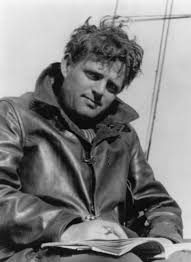
Dorothy Thompson
Wilmington Morning News/June 25, 1921
VIENNA, June 24.—Do you want to sell a handful of jewels or a wagon-load of grain and no questions asked? There is a market in Vienna where it can be done. If you are a Philistine you have probably wandered in and out of the place half a dozen times during a short sojourn in the city without realizing that you were in the most famous “schieber” exchange in all Central Europe and the Near East. For the Atlantis cafe bears no visible sign to distinguish it from any other coffee house along the Ringstrasse.
Only the dealers in illegal traffic have put their cross over its door, and if you belong to the famous international of the profiteers, beside which the Third of Moscow is harmless as a dove, be you Italian, or Serbian, or Hungarian, or German, the Atlantis is the Mecca of your journeys. It stands on the busiest Vienna street, across from the great Imperial Hotel. Behind its plate glass windows, candidly open to every passerby, is a large room, upholstered in red leather, with comfortably padded benches along the walls and around the posts which support the ceiling. Armchairs are fitted into cozy nooks, and efficient waiters trot from table to table, carrying siphons, filling liqueur glasses, pouring Turkish coffee thickly out of little copper mugs. The orchestra, goaded by a temperamental conductor, sighs out the strains of a heavy, honey-sweet Viennese valse. Altogether a typical Vienna cafe.
But—if instead of burying your nose in the Neue Frie Presse or the Arbeiter Zeitung, both of which are handily at your elbow, supported on frames fitted with handles—you look about you keenly, you will hear strange whisperings and see hands reaching out to each other, under cover of the table, and now and then you will see something gleam in transit. Or you will see eager heads bent together over some small package wrapped in tissue paper, and over and over again you will catch one word, repeated in all languages, “Combien?” “Quanto?” “Skolko?” “Wie Viel?” “How much?”
The Uninitiated Barred
If you want to do business in the Atlantis you must know the ropes. This is no place where you come in, put down your money and ask for what you want. You would be thrown out if you did, with the indignant protests that this is no shop, but a café. No, you must know exactly to which table to go in order to dispose of grain, jewels, money and women.
Yes, even women are bought and sold, so they say, in the Atlantis Café. Pretty Viennese, with their shoes run down at the heel and their stockings in holes, are offered positions as actresses in Rio Janeiro or Buenos Aires and are contracted for and shipped away. What becomes of them afterward no one knows, but many hazard a guess.
When you have seated yourself at what you judge to be the right table the conversation begins in cryptic phrase. Recently a man said to another laconically: “I have a wagon.”
The other (equally laconically), “How much?”
The first man named his price.
The second: “Very dear. White or spotted?”
The first, snorting, “White or spotted! Are you crazy?” And he goes away in a huff. He had been trying to sell wheat at the bean table!
Around the different tables different nationalities gather. It is mostly Jews who slip watches and cigarette cases and chains of pearls from hand to hand at the jewelry table. Dark-eyed and excitable Italians gesticulate in another corner over objects d’art; and Austria’s pictures, ceramics and gobelins change hands around glasses of coffee. The Italians are the noisiest and, so a habitue of the cafe assured me, spend more money than all the rest put together. Always at the Italian table are one or two Italian soldiers who will be useful in getting goods over the border.
Passports Minus Red Tape
Serbs, Rumanians, Czecho-Slovakians negotiate chiefly in foodstuffs. From them comes the wheat to make the little white rolls which you eat with such pleasure in the famous restaurants, while the rest of Vienna lives on bitter black bread. But more underground than the traffic in food is the traffic in passports. The “schieber” knows no frontiers. For five to ten thousand kronen, if you are a “wise one,” you can get a Rumanian or a Serbian or a Czechoslovak passport that will take you where Bulgarian, Hungarian or Austrian papers are useless. And vises—needless to stand in queues before the Consulates if you have friends at the Atlantis. Any visa in an hour is the unadvertised promise of the gentlemen who haunt a particular corner of the cafe.
The Atlantis has its personalities. There is a little spectacled woman in a red hat, with the manners and hustle of an American stenographer, who has been reading the success stories in the American magazines and means to rise. Mark her well. She is the liaison officer between visitors to the cafe and all the Italian profiteers. She walks jauntily from table to table, finding here a man who wants to sell leather goods, and there another who wants to buy. Now she is offering an exceptional bargain in a lot of gold lorgnettes. No one can estimate how great a volume of business she does in a single day.
Nor need you confine your interests to business in the Atlantis! Over there is the table where volunteers were collected for an army to bring down the Social Democratic regime in Austria. Refugee communists from Hungary gather at that table and, presumably, plot. The revolution table is in a secluded corner, and its habitues are usually very well behaved. Revolutions are quiet in Central Europe just now, much quieter than grain transactions.
 The Archive