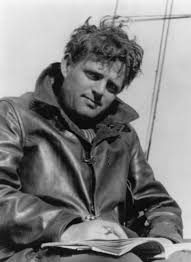
Dorothy Thompson
Wilmington Morning News/June 14, 1921
BUDAPEST, Hungary, June 13—The peasant has elbowed himself onto the scene so quietly that some statesmen still think that the great and ubiquitous bulk is a vision which will shortly “vanish into air, into thin air.” Nevertheless every crisis demonstrates the peasant’s power anew. Now. for example, that King Karl has gone back to Switzerland, the most noteworthy result of his visit has been to show where the peasants stand on the Hapsburg question—and how firmly they stand. The older legitimates, like Count Apponyi, will tell you that the common man has an almost holy regard for the mystic and historic crown of St. Stephen and for him who has worn it, but if the small holder is a type of the common man, recent events have demonstrated that there is nothing in this sentimental idea. The Hungarian peasant is neither royalist nor anti-royalist. He is indifferent whether there is a king or a republic, so long as he can hold on to the gains which he has made during the past three years—gains in land, in political power and in control. But he is a deadly enemy of the Hapsburgs. In his mind the Hapsburgs are connected with the German spirit and with militarism, and the peasant hates both. The town workers are much more Germanized.
Indeed the first industrial workers in Hungary were Germans, organization has proceeded along German social democratic lines, and the attitude of the town workers toward the Hapsburgs was summed up for me the other day by a Socialist editor who said: “Of course, if an attempt is made to restore the monarchy we protest formally. But really it wouldn’t be a bad thing. For one thing it would bring about an amnesty for all the workers still in prisons. At the time of the Karl putch—if the King’s visit can be given such a title—the peasants took an unexpectedly firm stand. They challenged the government for permitting him to remain in the country as long as he did, forced the resignation of the Prime Minister, used the occasion to get two valuable positions for their party in the Cabinet—particularly that of Secretary for Home Affairs, an important post in view of impending elections—and forced the government to take a stand in favor of the restoration of free speech and a free press and the abolition of the requisitioning of corn.
Both in Hungary and Bavaria the peasants have forced the recognition of their local and district “agricultural chambers,” called by the opposition “peasants’ Soviets.” These councils are democratically elected bodies, made up of an equal representation from agricultural laborers, small holders, middle holders and the owners of large estates. They are empowered by the government to divide the estates which, in Hungary, must be sold to the peasants under the terms of the land reform bill and to oversee all legislation affecting the interests of the land workers. They send representatives to district, provincial and larger bodies, and it is possible that in the future they may acquire great power in countries where the population is predominantly agricultural.
In Jugo-Slavia there is the same ascendancy among the peasants. Bulgaria is a peasant state, with an enlightened land policy. Rumania is having to make concessions to the peasants in order to temper the unrest among them.
The End of European Culture?
If the peasant movement pursues its present accelerated pace this whole section of Europe may be reduced to a series of purely agricultural states. Pessimists see in this movement the decline of art, music and culture. These things, they say, are the products of cities, of a highly complex industrial civilization. The opera of Vienna, the glory of a declining city; the galleries of Budapest; all that civilization of an ancient and sophisticated people, will gradually perish and the pride of the world be given over to land grubbing.
Certainly the peasants hate the towns. They consider them a blot on civilization. There is nowhere any tendency among them to greatly care whether the town industries live or perish. In these unproductive times the peasant hoards his money and gets along without what he formerly considered essential, or if he must have some article which the town fails to manufacture for him, his tendency is to manufacture it himself. Thus, in Linz, in Upper Austria, you see the beginnings of cooperative factories, for the manufacture of artificial manure and farm machinery, set up by the peasants themselves.
On the other hand, some optimists believe that a return to the land is the only salvation for Europe and have faith that the peasants will evolve a new state, antimilitaristic, democratic and productive, with a culture of its own not inferior to that of the ancient cities—given time in which to do it.
Certainly here in Central Europe reconstruction has gone hand in hand with land reform. In Rumania big landowners had been holding the land up until a short time ago; a land reform has only recently been voted. Agricultural laborers have always been treated as a slave class in Rumania and at present are so dissatisfied and unwilling to work that the situation is really serious, particularly in view of a threatened Bolshevik invasion. Whereas in peace times Rumania was one of the most important exporters of grain in Europe, second only to Russia, there is the possibility that this year’s crop will be insufficient for her own needs.
Bulgaria and Serbia have enjoyed the same advantages. There have been no big landowners in these countries, and the peasants have led a contented life, growing corn and breeding pigs and cattle. The situation in Jugo-Slavia as a whole, however, has become complicated, with the acquisition of new territories and by hasty reforms, which, where they have not been carefully thought out and intelligently administered, have brought a change for the worse both as regards production and the spirit of the people. The Banat, for instance, was formerly in the hands of large landowners and was the richest corn and cattle land in all of Hungary. Properly organized it could supply food to Hungary, Austria, Czecho-Slovakia and even, perhaps, Germany. The estates have been divided hastily, however, and without a constructive policy, and the whole area is desolate, with production down to one-fourth that of pre-war times.
But with these exceptions the peasants as a whole are moving forward, and they are the one constructive element in Central Europe. They may not offer hopes for a glorious culture for Europe, but they offer life.
Socialist Russia Checks Peasant Movement
If Bolshevism dies of inanition in Russia, or perishes in a final Armageddon, and Russia divides into smaller entities the ascendancy of the peasant will be assured. But if Bolshevism works itself out into a practical system the economic power of the peasants will be everywhere counterbalanced by the growing political power of the town workers, and the ensuing situation will be fraught with many possibilities. The strengthening of the rule of Lenin would particularly affect the minds of the proletariat of three countries—Italy, Austria and Czecho-Slovakia. In Italy there is a healthy peasant movement which would help to maintain equilibrium in any emergency; but in Czecho-Slovakia and Austria there is no peasant movement at all worth mentioning, whereas the town workers grow more and more radical. Thus, supported by a Socialist Russia, a Socialist wedge might be driven into the heart of Central Europe. The parties of the left in Germany would be greatly strengthened, and a northern block of town workers would face a southern union of agricultural states—two big blocks against each other.
Central Europe and a Russian Reaction
But if Bolshevism should be followed by an extreme reaction and a return to the monarchy the resituation of Hohenzollerns and Hapsburgs would be almost inevitable. Either Bolshevist or Czarist Russia would be anti-Entente. Bolshevist Russia would seek an alignment with a Socialist Germany. Czarist Russia would work for the restoration of a German monarchy. Whereas France would seek the restitution of Austro-Hungary under the Hapsburgs as a protection against this block.
Thus it is that all students of the situation in Central Europe watch Russia and regard peasants councils, Karlist putsches and communist risings as so many events by the way.
 The Archive