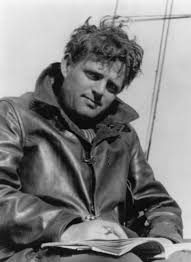
Dorothy Thompson
Roanoke Times/January 11, 1940
The reasons for the dismissal of Mr. Leslie Hore-Belisha as British Minister of War are still obscure. Perhaps they will remain so for some time. One can only speculate about them. But several things must be taken into account.
Mr. Hore-Belisha is not an endearing personality to those who come into regular contact with him. He is startlingly brilliant intellectually, and that is a quality that is usually suspected in Great Britain. If one has it one should, it seems, keep It as carefully concealed as possible. Mr. Hore-Belisha, who has degrees from half a dozen universities, more or less, including Heidelberg and the Sorbonne, is a classical scholar who reads Latin and Greek daily. That at least is his reputation. He is arrogant about his intellectual prowess and that does not help particularly in dealing with army men. In the House of Commons he was always known as the best master of the ironic jibe in that body of effective talkers. But the ironic jibe does not increase one’s popularity in council meetings.
He is terrifically ambitious; his idol is Disraeli, for whose day-to-day life he can account, even to knowing the size of his shoes. And he has the reputation of being a master of intrigue.
He was a wonder-child—a major in the army, during the last war, and a member of the House of Commons at twenty-five. He is given to the spectacular—he once slapped a critic’s face in public and made the nation ring with it. And he is a Jew, which neither in England nor anywhere else is an advantage.
As for his politics—although he is a member of the National Liberal party his predilections are extremely conservative. He is a Tory, if there is a Tory, and to interpret his dismissal as a blow against “labor” or a triumph for the “right” seems quite absurd. Mr Hore-Belisha’s democratization of the army was done in the interests of efficiency and morale. not for “ideological’ reasons.
It is difficult to see why the Nazis should find any cause for rejoicing in the dismissal of Mr. Hore-Belisha, except, of course, for propaganda reasons. They are doing their best to exploit It as a welcome evidence of Nazi tendencies in Great Britain. But it would seem likely to Indicate a more vigorous prosecution of the war rather than the opposite.
There are several viewpoints in England regarding this matter of the prosecution of the war. There is still a considerable “appeasement” bloc whose program is to hold the British hand, count that Hitler will be overthrown by Goering—who might, they think, renounce all claims to further “Lebensraum,” restore old frontiers and liberties, enter into economic agreements with Britain and France and, in short, establish a conservative rule under the army or a restored monarchy. This group also hopes for a possible deflection of the German war spirit under Goering into a crusade against Bolshevism.
This hope is being sedulously cultivated by the Nazis themselves.
At the other pole are those who believe that the issue having been conjoined, a swift and vigorous prosecution of the war is the best policy and will bring about an early decision, save lives and money—in the long run—hold the morale of the country and make possible the reorganization of Europe along lines compatible with freedom, order and co-operation.
They argue that Hitler can better stand the “permanent war” than the Allies; that unless he is forced to use up vast amounts of materials in active warfare; he can keep the country together and behind him; that the only thing that will break down the Nazi regime will be serious defeats, and that Hitler is holding his followers because the German people believe that Britain and France have no stomach for the war.
In the center is the group who believe that Britain and France should wait; that time is on their side; that the blockade is working; that Russia’s aims are in doubt, and that she may yet come to blows with Germany in Scandinavia or Finland.
Mr. Hore-Belisha is known to have leaned toward the latter viewpoint. He is an exponent of the ideas of Capt. Liddell-Hart, who until a few weeks ago was the military expert of “The London Times” and whose book “The Defense of Britain” has been said to have been written at the Instigation of the War Minister.
Capt. Liddell-Hart believes that the defense has a great advantage over the attack, that the chief risk of losing a war lies in trying to win it by the mirage of a decisive victory, and that the most effective modern warfare is a sort of super-guerrilla war.
He questions the wisdom of sending large expeditionary forces to the continent, and holds that the object of the war should not be to conquer the enemy but to prove to him that he cannot conquer either.
To what extent these have been Mr. Hore-Belisha’s views, this column does not pretend to know, but he was certainly very closely in touch with Capt. Liddell-Hart. And the soundness of such views would also depend upon what the Nazis may, in the opinion of the British intelligence department, be planning to do. If, as Lord Lothian seemed to predict in his Chicago speech, the Nazis themselves are planning a terrific offensive in the spring, the defense plans of Britain might well take a different turn.
Nor is it possible to see in Mr. Hore-Bellsha’s dismissal so simple an explanation as that the “generals” have won over the civilians. Mr. Winston Churchill is certainly a civilian, and as brilliant an intellectual as Mr. Hore-Belisha. His star, however, has been in the ascendant ever since the masterly defeat of the Graf Spee. And Mr Churchill is an activist.
 The Archive