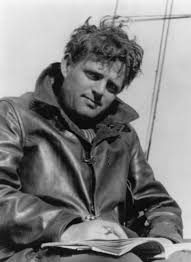
Stephen Crane
Chicago Tribune/May 28, 1898
Key West.Fla., May 6. Cervera is juggling his fleet here and there dexterously. Schley has gone somewhere at a pace and with enough coal to confuse and defeat a modest newspaper tug. Ostensibly he has gone to line up in the Yucatan Channel and send scouting cruisers to locate the enemy. He has probably found them by now, but off Havana everything is peaceful save the sea, which is spinning the small fry as if they were tops.
The interest at Havana in our movements must be intense. Sometimes twenty sails are in sight of the shore batteries. Yesterday we steamed up within range and looked over the defenses. They are making a nice collection of modern artillery in Havana and have it all arranged neatly behind earthworks. It makes a man sad to think they have accomplished all the formidable part of their system of defense since the beginning of the war. Nobody cares about Morro Castle, which is about as important to Havana as Governor’s Island is to New York, but it will be a bitter thing if we lose any gallant men from the fire of the batteries our strange policy allowed to be completed. A few shells judiciously applied from time to time would have prevented their completion.
Our scouts are out in the Windward Passage. It is possible that the enemy’s fleet may escape Schley, and instead of dashing far to the northward may attempt to run into Havana. If they do they will be gently but firmly received by a committee formed of Admiral Sampson’s fleet.
All day Saturday and all day Sunday the New York lay off Havana palavering with this cruiser and that cruiser by wigwagging and otherwise. Then on Monday morning the New York headed into the teeth of the eastern gale and at its heels a fleet followed.
The dawn of Wednesday revealed the fleet headed in line to the westward. Five miles to the northward a flying division of the fastest ships in the squadron had been found under Commodore Watson. His flagship headed it, and then followed in line the others at perfectly preserved intervals.
No word came from either Key West or the speeding scouts over guarding the Virgin, the Mona, and the Windward. No word from Schley. The fleet barely moved, but staid always off Santa Maria Keys. on the Cuban coast. The correspondents debated bitterly the question of why the Admiral clung so closely to this particular spot, but it was generally understood among the naval officers that Schley’s raid into the waters of south Cuba had placed Sampson’s in position as the second line of defense. and that the strategy board had probably ordered Sampson to assemble his ships at a point somewhere off Cayo France’s light or Cayo Santa Marie. because there was the junction of three vitally important channels—the Santaren, the Nicholas, and the old Bahama.
In case the scouts report the Spanish fleet is bottled in some southern harbor by Schley, or as coming toward some of the eastern passages, Sampson is already at the mouth of the old Bahama Channel and has gained thirty-six hours from Key West for his heaviest ships. Then in the remote possibility of some Spanish ships breaking around Cape Antonio and heading for Havana, or if any happening demands the fleet’s presence off Havana, he has a short road by way of the Nicholas Channel.
 The Archive