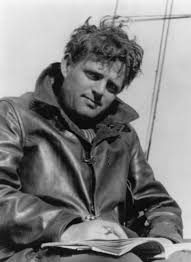
Dorothy Thompson
Buffalo Evening News/February 20, 1928
Russia Seeks to Produce Next Generation Bred in Theory of Leninism—Schools Sovietized.
A vast experiment in government according to political and economic theories never before put to practice has been going on for ten years in Russia behind a veil of censorship, conjecture and rumor. The Buffalo Evening News and the New York Evening Post sent Dorothy Thompson, a Buffalo girl, into Russia to survey the true conditions. This is the 13th article in a series placing before the American public for the first time a detailed revelations of the Russian picture and a discerning insight into what the Soviet government and its aims actually mean to the remainder of the world.
It is the familiar phrase to religious educators: Give me a child until he is seven, and others may have him for the rest of his life. Communist Russia, which has taken many cues from the church, has taken this one, too.
Through public education, which includes not only the schools and universities but the theater, film, press and publishing business, the Communists are trying to create a new type of human being who, bred in the theory and practice of Leninism, will work to intrench the present system more firmly and to spread its doctrines throughout the world.
There is neither art for art’s sake nor knowledge for knowledge’s sake in Russia. Both are “bourjui” conceptions, according to the Bolshevists. Education is a weapon in the hands of the state, a means for assuring the stability of that state, and for creating a type of human being to fit it. All education is class-conscious and Marxian.
Proletariat Preferred
Since not nearly all the children in Russia can go to school under present facilities, the Soviet government selects the children of the proletariat for education and shuts the children of such bourgeoise as still exist out of school. The argument is made quite coolly: “For generations the children of the workers were left uneducated in order that they might be more easily exploited. Now our turn has come.”
This is the first tenet of Bolshevist education — to see that those children who are given the beet training and so fitted to become leaders in the next generation are of proletarian origin. There is no hope of schools for all before 1930.
The second tenet is to see that children an brought up in the Communist faith. The inculcation of “sound” ideas is asserted to be the first aim of education. From kindergarten upward this aim is faithfully followed; the schools are weeded of teachers who how more interest in abstract knowledge’than in “training for Communist citizenship.”
Potential Communists
This training is both direct and indirect. Directly it consists of school and extra-school organization; each class has its “collective,” in which the children are trained by actual example in the processes of Soviet government: each school has its Octobrist, Pioneer and Consomol organizations for children of kindergarten, grade school and high school age.
These are really sub-branches of the Communist party, and their members, graduating from one group to the next, finally become candidates and if they prove themselves worthy are taken as adults into the ranks of the party. It is a mistake to think it is easy to join the Communist party or that its size is the measure of its popularity.
Actually, since membership admits one to positions of greater power than one can otherwise have in Russia, thousands would join if they could. But it is like a religious organization or a lodge—members are admitted on probation, on the recommendation of other members and after tests. If one is not proletarian-born one can work for five or six years to be admitted. The schools are the recruiting ground for truly orthodox Communists.
One System of Economics
The Communist youth organizations are so organized as to present themselves to the children in the pleasantest possible form. They go in for sports, have their own insignia and take the lead in determining the life of the school, and children join them out of the same desire to expand their little egos and “do what the others do” as leads American school children to join the Boy Scouts or a high school fraternity.
Directly, also, political training in the schools consists of courses in political economy, strictly taught from a Marxian standpoint. The difference between political economy as taught in Russian and in American schools is that, whereas the Socialist viewpoint is not barred from consideration in the United States, any viewpoint except the orthodox Communists’ is rigidly suppressed in Russia. This applies to higher institutions of learning as well as the public schools.
Indirectly, political education permeates every branch of school life and is pursued with a conscious direction and energy which are extremely impressive. Those easygoing bourgeois optimists who predict that Russia will slowly go over to Western ways of thinking ought to spend some time visiting Russian schools.
Isolated Mentality
They ought to see in what isolation from the mentality of the rest of the world Russian children are kept; how in every class, whether it is arithmetic, biology, or simple reading and writing, the shibboleth and theses of Communism are inculcated; how Russian children come to look upon their form of state and society as the only possible one, not only for Russia, but for the rest of the world; what sort of new patriotism is inculcated; how the quick sympathies of children are appealed to in working up hatred of the capitalist system elsewhere; how they are taught to think of those people whom capitalist governments anywhere in the world have imprisoned for subversive activities as their brothers; how, even, they are made conscious and intolerant of the theories of other working classes when such theories are not in harmony with those of Bolshevist Russia.
Above all, they ought to see how every phase of Russian education is related to actual life; not an arithmetic or a French lesson, but is directly connected with some real problem of the Soviet state; how children are versed, not in the history of the past, but in the history of the present; and taught in the fourth and fifth grades about the course of events in America, Great Britain and China—always, of course, from the Communist standpoint.
Question of Future
The best picture of a Russian school I got from Katja, my little 14-year-old friend, who has been all her school life in a so-called model institution. She is now in the seventh grade; she is a very clever child and moat enthusiastic about the school. She told me how the children organized self-government, and explained, “If we don’t Iike the teachers the Comsomol (the young Communists) can complain about them to the central body. But,” she added, “we never have complained in our school. We like the teachers lots.”
Children can, and have, caused the dismissal of teachers, but it is rare. No action is taken against a teacher without a hearing before the council of teachers. On the whole, many of the original and more radical plans for self-government have had to be revised in favor of more conservative discipline.
Katja was very proud of being herself a “Pioneer”: she wore the red sailor tie, which is the Pioneer badge, and explained: “The Pioneers take the lead in everything in my school. We are awfully anxious that the Pioneers should be best in their studies and set an example. So if one doesn’t study we jack them up. It’s the same with the Comsomol (older children), only they are even more severe. Almost all the pupils in my school belong to the organizations. But there are some schools where there aren’t so many . . . the parents sometimes don’t want the children to be Communists.”
The Taunting “Bourjui.”
One has constantly to readjust one’s mind to the realization that Communism in Soviet Russia is the respectable credo. My friend Katja spoke of some children in her school as “bourjuis.” She used the word rather loosely to indicate children who weren’t like others.
If a youngster doesn’t like sport in a school which goes in for sport the other children jeer “bourjui.” If a boy is a sissy, the young rough necks call him “bourjui.” If a college student refuses to join the Comsomol, he is “bourjui.” Although the love of fine raiment persists and is increasing even in proletarian Russia, the less well-dressed child takes refuge in taunting “bourjui.”
In schools, as in every branch of life, “bourgeoise”— the Russian “bourjui”—is anything one doesn’t like; it means irresponsible, disturbing element, unpatriotic, grumbler, nut, highbrow, person who won’t play the game—in other words, it has almost the same connotations as Bolshevik has in the loose way in which it is used in capitalistic countries! Social ambition drives the young Russian toward Communism.
 The Archive