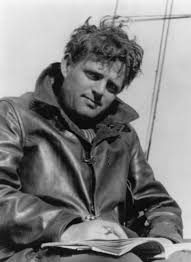
H.L. Mencken
The Smart Set/January, 1923
§1
Vox Populi, Vox Dei—The latest beau of the boob metaphysic is the Honorable M. Emile Coué with his profound bosh about conscious auto-suggestion. M. Coué thus as a mental and philosophical aphrodisiac succeeds to the throne of the boob pill merchant who immediately preceded him: Sir Arthur Conan Doyle of spook fame. Each of these new jay-ticklers lasts for a year or two, and then gives way to another. A few of them, in truth, are men of merit—Freud, for example—but the booboisie does not distinguish between the good and bad. Kneipp, Schlatter, Tingley, Eusapia Palladino, Montessori, Ben Lindsey, Mary Baker Eddy, Augusta Stetson, Freud, Rabindranath Tagore, Bergson, Cocteau, Pelman, Doyle, Coué—they succeed each other in dizzy order, with the yokels indiscriminately swallowing as fast as if in a pie-eating contest. Osteopathy gives way to chiropractic, Fletcherism to Yogi breathing, psychoanalysis to auto-suggestion. Doyle feels the yaps losing interest in ghosts and proceeds to assure them that he has seen fairies. The boobs bite at Futurism, spit it out, swallow Cubism, spit it out, and turn for the time being to a chew of Da-daism. And so it goes. Barnum was only half right. There are two born every minute.
§2
American Journalistic Criticism—The trouble with the majority of American newspaper critics of drama and literature is that, while they know what they like, they don’t know why they like it.
§ 3 Human Progress.—The whole Liberal scheme of things is based upon the theory that it is possible to improve humanity by passing laws. This is quite absurd. The only feasible way to im- prove humanity is to kill men.
§4 Gadding About.—The greatest of all human follies, it may be plausibly (though perhaps not convincingly) argued, is traveling, especially in Europe. Imagine the discomforts that even the richest traveler must put up with on the ocean voyage, and then imagine how little he gets for his money! Say he goes to London. Surely by this time even the children of peasants in Arkansas and Nebraska must be well aware that all save one-tenth of one percent of London looks precisely like the poorer neighborhoods of St. Louis and Providence, R. I., and that the remaining portion, save for half a dozen ancient edifices, is not worth seeing. If a public pleasure-ground one-half so mangey as the Green Park were maintained in Buffalo, N. Y., the populace would burn down the City Hall. Moreover, seeing even such meagre sights as the town boasts is intensely difficult and uncomfortable. There is no adequate street-car service, the buses are primitive and dirty, and the Underground is run so absurdly that not even a born Londoner is ever sure, when he boards a train, where it will land him. No expresses are run; to go five miles takes half an hour. Turn now to the hotels. One of the leading hotels in London, heavily patronized by Americans, is so clumsily designed that one must mount to a mezzanine floor to reach an elevator—and once aboard, one discovers to one’s amazement that it does not run to the top of the hotel at all, but stops a floor short of the top. Such an elevator is simply a swindle. It disgraces the whole race of elevators, as a cornetist with insufficient wind disgraces the whole race of musicians.
I mention London, not because it is the worst city in Europe, but because, in many respects, it is the best. The traveling American can at least understand the language spoken by its inhabitants—at all events, that of the more literate minority—and so he can carry on the transactions of every day without much difficulty. But on the Continent he is usually quite helpless— and the native, quickly discovering the fact, falls upon him with the hearty, jovial air of a cat happening upon a rheumatic rat. I defy any American to say that he has ever made a journey of so much as 100 miles on the Continent without being short-changed. More, I defy him to say that he has ever spent so much as 24 hours in any Continental city without suffering horribly from the lack of some ordinary American comfort or convenience. The windows in Europe do not let in light at the angle to which Americans are accustomed; the faucets in the bathrooms squirt water in a strange and disconcerting manner; the heating arrangements seem more suitable for blast furnaces or golf links than for human habitations; the drinking water tastes of chemicals; the quilts on the beds are too thick and too short; the writing paper blots; the theatre seats sprain the gluteus maximus and produce a crick in the small of the back; even the carpets on the floor incommode the feet.
To enjoy such delights American tourists pour out their gold. And coming home, they denounce the Republic!
§5
No. 3,123.—A man, winning the favor of the gal of his choice, congratulates himself on the success of his technique, the while the gal, who has already made up her mind long before the aforesaid technique ever got into action, sits back and quietly treats herself to a juicy snicker.
§6
Publishers’ English.—Sweet tit-bits from G. P. Putnam’s Sons’ circular offering “Putnam’s Handy Map Book”:
“Do you remember how, when you were a child, you used to lie on your elbows on the floor scanning the family Atlas? You were interested in maps then, and you have the same interest in them now, but like most such people, you don’t use them as much as you would wish.”
“You need no time in which to use it (Putnam’s Handy Map Book). It is almost instantaneous.”
“You would be amazed if you should examine Putnam’s Handy Map Book to find…”
“By the use of a clever device the maps are the same size and on the same scale as would ordinarily be found in a similar book with a page twice as large.”
“… people who realize the value of familiarity with, and frequent consultation of, an up to date set of maps.”
“Constant references in books, magazines and daily and weekly papers to history-making events, dealing with state or national or international affairs make some such book of references ready at hand for instant consultation.”
7
Gay Paree.—Quoting the Special Paris Correspondence to the New York Herald of September 30th:
Americans who have registered at the Paris hotels this week are the following: Mr. and Mrs. Harry Dreyfus, Mrs. G. Augusta Cohen, M. S. Gerald Cohen, Mrs. Morris Meyer, Dr. and Mrs. Alfred Wiener, Miss S. Wiener, N. S. Kupfsky, I. Rosenthal, wife and children, Asher Solomon, Mr. and Mrs. Morris Kohlberg, Samuel Green- blatt, Mr. and Mrs. Sigmund Baer, Mr. and Mrs. Jacob Goldschmidt, Rabbi Louis P. Garfunkel, Henry Goldfarb and wife, Montague Levy, Jascha Blumenthal and party, Herman stein and Joseph Stevens Einstein, Mr. and Mrs. Louis K. Weil, Mr. and Mrs. Sam I. Gelbfleisch, Irving Schulman and party, Mrs. J. Kahn, Mr. and Mrs. Simon Rosenberg, Jay Irwin Rosenberg and Ida Rosenberg, Arthur St. Clair Cohn, Joseph Edelstein, Emil Nussbaum and party, Myer Hochstadter, Abraham Levine, Isidore Greenvogel and Isadore Greenvogel, Jr.. Max P. Feuer- stein, E, Fertig, Sol Bimberg and wife, Harry Arthur Beinhauer, Morris Feinberg and party, Leopold Abrams and Mrs. Leopold Abrams, J. Schornstein, Mr. and Mrs, A. Blaumwitz, S. Rosen, Milton Neugass, wife and children, Irving Ginsberg, Samuel Ra- dowsky, Stanley Feigenbaum, Ben Hirsch and party, Hyman Goldberg, Minna Goldberg and Monroe Goldberg, Emanuel Lieber- mann, Barnet Lichtenstein, Mr. and Mrs. David Mogelefsky, Siegfried Moses, Henry I. Perlman, wife and children, Jacob Rindsfoos, Morris Soltmann, I. Bennett Kahn, Murry Shomstein and party, Ray Samuelsohn, Bernard Lubin, S. Kovitz, Mr. and Mrs. Louis Buxbaum, Harold S. Straus, Sidney Marcus, Mr. and Mrs. Edwin Goldfisch, C. Gerstenhaber, Benjamin Klein and party, Captain and Mrs. Moritz Edelstein, Morti- mer Grimstein, Robert Wendell Seligman, Julius Binzwanger and party, Mrs. Godfrey Rothschild, Godfrey Rothschild, Jr., Bessie and Leah Rothschild, and Mrs. Hy- man O. Rothschild, A. Glickman and party, Aaron Feldman, Mr. and Mrs. Jacob Gundweiler, Pershing Gundweiler and maid, Lionel Wertheimer, Jesse Kalbfleisch and party, B. Cantor, E. Kohn and party, Percy Eichhorn, Irving Schoenberg and Mrs. Schoenberg, the Misses Mae, Sarah and Bella Krauskopf, J. Penryhn Mandelbaum, Barney Siegelman, Mr. and Mrs, Sig. Elias and party, Mr. and Mrs. David Lazarus, David Lazarus, Jr., and Condé Lazarus, Hattie Buchsbinder, Mr. and Mrs. Mort. J. Hechheimer, Werner I. Kohn, Milton Gimbel and party, Mr. and Mrs. Joseph Goldfarb and Master Vincent Astor Goldfarb, Dave Dittenhofer, the Misses Stella, Florrie and Celia Kirschbaum, Edmund J. Arnstine, Mr. and Mrs. I. Berg Davidow, Maurice Lifshitz and party of six, Mr. and Mrs. Arnold Baumberg, Leo Yawo- linsky, J. Rubin, Benedict Katz, Mr. and Mrs. Irving Marowitz, the Misses Reba and Simone Margolies, Marks P. Herzberg, the Misses Selma and Lilyan Ginberg, Abraham Parker Kaplan, Moe Ehrman and party, Mr. and Mrs. Felix Bornschein, Master J. Devereaux Bohnschein, the Misses Nettie and Amanda Bornschein and two maids, Gabriel Rafsky, Albert Stern, Myron C. Dantziger, Mr. and Mrs. Herman A. Tannenbaum, Gilbert Lubin, Victor Lamstein, Saul D. Nudelman, Mr. and Mrs. Ferd Ganz, Daniel Mannheimer and party of four, Mr. and Mrs. Mark A. Oestreicher, Edwin F. Susskind and party, Mr. and Mrs. Wolf Rabitcheff, Harris Sachs, Herb Pincus, Mr. and Mrs. Monte Jonas, Master Harry Jonas, Miss Meta Jonas and maid, Jerome Deutsch, Adolph Hurwitz, Alvin R. Mintz, Meyer Rothstein and party, Emil Schlossberg, Leon Isaacson, Oscar B. Neumann, Mr. and Mrs. Edgar Guggenheimer, Mr. and Mrs. Lou Simon, the Misses Ada and Beatrice Reinheimer, Howard Bernstein, Arnim Nussdorf and party, Mr. and Mrs. A. Epstein, Mr. and Mrs. Max Fishel, Harvey Shapiro, Eli P. Kalisch, Benj. A. Frankel, Shep Frankel, Alex Frankel, Mr. and Mrs. Sidney Mendelsohn, Isidore Moss, and William K. Vanderut, Jr.
§8
Divine Virtuosity.—In no field does God work in a more mysterious and facile way, His wonders to perform, than in that of human plastic, or, as they say, physiognomy. I once knew a man who was, in head and face, the exact duplicate of the late Friedrich Wilhelm Nietzsche. He had precisely the same piercing eyes, the same Niagara of a moustache, the same watermelon brow, the same bellicose glare. He was the superintendent of a Methodist Sunday-school in a_ provincial town. You think I lie? Unquestionably it seems probable. I therefore append his name and address. He was Thomas Gordon Hayes, and the scene of his theological endeavors was a house of worship on Edmonson avenue, Baltimore, opposite Harlem square.
§9
Dodo Note.—I met a girl the other evening who had a habit of following a periodic mood of excitement with a sudden pensive silence. It was very effective.
§10
Gertrude Atherton, Critic.—From an advertisement of Avery Hopwood’s proud opus, “Why Men Leave Home,” in the New York newspapers: Gertrude Atherton says, “If Mr. Hopwood weren’t still young, I’d say he never could write anything better. At all events, if he doesn’t, no one else will.”
§11
Champions.—Champion billiard player of the world . . . Champion bicyclist of the world . . . Champion pie-eater of the world . . . Champion woman typist of the world… World’s champion swimmer under water . . . World’s champion father—32 children . . . Champion indoor gymnast of the world . . . Champion verbena grower of the world . . . World’s champion chess player . . . Champion hog-butcher of the world . . . World’s champion long distance walker . . . Champion memory expert of the world . . . Champion lightning mathematician of the world . . . World’s champion doughnut maker . . . Champion roller skater of the world . . . Champion equilibrist of the world . . . World’s champion fly-weight prizefighter . . . Champion speller of the world . . . World’s champion fat man . . . World’s champion whistler . . . Champion barber of the world . . World’s champion pea-shucker . . . Champion faster of the world . . . World’s champion trick dachshund . . .
§12
Honor. —We Americans, too, have our national code of honor. One of its paragraphs prohibits telling on a woman “who has sensitive and athletic brothers. Another forbids making a moral or patriotic attack upon a man who can strike back.
§13
The Devotee in Politics. —The worst curse of politics, particularly under democracy, is faith, The man who believes in parties, leaders, principles; such a fellow is simply political cannon fodder. What the Republic needs, above all, is cynics . . . Well, let us not despair. Every time another article of faith is put to the test it gets another battalion of them.
§14
Once Again.—A woman, once she is married herself, tries to snare a husband for her sister. A man, once he is snared, takes his brother behind the door and warns him.
§15
Sailing! Sailing!—I contrive and polish these austere lines in the middle of the Atlantic Ocean, four days out from a damp, dull and sordid seaport. My shallop is one of the vast and gaudy craft that now degrade all the oceans of the world to the uses of an aimless restlessness, a hollow and unintelligible curiosity. My fellow voyagers, with a few amiable and charming exceptions, are vegetables. Their notion of conversation is to complain bitterly about their hotel bills in Berlin and Paris, to debate endlessly the freshness of the eggs at table, to drive the stewards frantic with demands as to the exact hour of our arrival next Friday. It is their theory that the ocean voyage is pleasant, that it is doing them good. That theory leaves me in doubt. Is there, in fact, any sense in it whatsoever? If so, what are the evidences?
I search for them in vain. To me, though I am what is called a good sailor, a trip on any ocean craft, however large and luxurious, almost touches the extreme limits of the disagreeable. To live for a week or more in a small and inconvenient room—to walk up and down a narrow runway, confronted eternally by women with green faces and men snoring obscenely—to run short unexpectedly of socks, undershirts, shirts, drawers, with no laundry aboard—to dress up in the evening like the croupiers at Monte Carlo, and dine depressingly upon stale food elaborately cooked—to sit thereafter for hour after hour in a chilly, draughty smoke-room, gradually drugging one’s self to sleep—certainly all this is far from an ideal life for one of God’s creatures, made in His image. How long and dismal the days are at sea—for a passenger! How gray and greasy the water! What varieties of fresh paint, oil, slime, gum, tar, pitch, filth of all sorts exist! What hats the women wear! How many children, dogs, bores! Is it agreeable thus to plow the hostile and sardonic main: a stimulating adventure? Then it is also a stimulating adventure to sit through the seven days of a rural chautauqua in Iowa or Mississippi.
The modern ship architect, like his brother of the land, aims at an elaborate and childish deception, deceiving no one. Portholes, for example, have vanished from the dining-rooms of the big ships: in place of them one observes so-called windows, with panes of glass ostentatious square and fragile. The theory appears to be that the passenger who has paid $300 or $400 to sit in the dining-room is unaware that the same old portholes are concealed behind the curtains of the windows—in brief, that he fully believes, gaping at the walls, that he is not in a ship at sea, but in some cabaret founded upon a rock. Put this theory with the other! Engrave both upon a monument to human folly! Add a note about the flowers growing in pots and troughs in the combination dance-hall, parlor, arena of amour and convalescent home for old ladies getting over mal de mer. And another about the canary-birds in cages. Who is genuinely bamboozled by such puerile hocus-pocus? Why not make a ship look like a ship, and have done?
§16
Reverie Pianissimo.— The double standard of morality will survive in this vale so long as a woman whose husband has been seduced is favored with the sympathetic tears of other women, and a man whose wife has run amok is laughed at by other men.
§17
The Bozart—The doctrine that art is an imitation of nature is more often than not fallacious. Nine-tenths of all the art that one encounters in this world is actually an imitation of other art. Fully a half of it is an imitation twice, thrice or ten times removed. The artist, in fact, is seldom an accurate observer of nature: he leaves that gross and often revolting exploration to geologists, engineers and anatomists. What interests him is not the thing-in-itself, but an ideal that conceals it. The last thing he wants to see is a beautiful woman in the bright, pitiless sunlight.
 The Archive