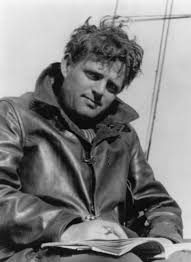
H.L. Mencken
The American Mercury/January, 1924
Russian Music
MY MUSICAL LIFE, by Nikolay Andreyevich Rimsky-Korsakoff, translated by Judah A. Joffe, with an introduction by Carl Van Vechten. New York: Alfred A. Knopf.
THIS is the full story—meticulous, humorless, full of expository passion—of the Immortal Five: Balakireff, Cui, Musorgski, Borodin and Rimsky-Korsakoff himself. The book is enormous, and details are piled on without the slightest regard for the reader’s time and patience. One plows through exhaustive criticisms, often highly waspish, of concerts given fifty and sixty years ago; one attends to minute discussions of forgotten musical politics. Nevertheless, the general effect of the tome is surely not that of boredom. It somehow holds the attention as securely as Thayer’s monumental “Beethoven” or the memoirs of William Hickey. And no wonder, for the world that the good Nikolay Andreyevich describes is a world that must always appear charming and more than half fabulous to western eyes—a world in which unfathomable causes constantly produced unimaginable effects—a world of occult motives, exotic emotions and bizarre personalities—in brief, the old Russia that went down to tragic ruin in 1917. Read about it in the memoirs of the late Count Witte, and one feels oneself magically set down—still with one’s shoes shined, still neatly shaved with a Gillette!—at the court of Charlemagne, William the Conqueror, Genghis Khan. Read about it in Rimsky-Korsakoff’s book, and one gets glimpses of Bagdad, Samarkand and points East.
The whole story of the Five, in fact, belongs to the grotesque and arabesque. Not one of them had more than the most superficial grasp of the complex and highly scientific art that they came so near to revolutionizing. Balakireff, the leader, was a mathematician turned religious mystic and musical iconoclast; he believed until middle age that writing a fugue was, in some incomprehensible manner, as discreditable an act as robbing a blind man. Cui was a military engineer who died a lieutenant general. Borodin was a chemist with a weakness for what is now called Service; he wasted half his life spoiling charming Russian girls by turning them into lady doctors. Musorgski was a Guards officer brought down by drink to a job in a railway freight-station. Rimsky-Korsakoff himself was a naval officer. All of them, he says, were as ignorant of the elements of music as so many union musicians. They didn’t even know the names of the common chords. Of instrumentation they knew only what was in Berlioz’s “Traite d’Instrumentation”— most of it archaic. When Rimsky-Korsakoff, on being appointed professor of composition in the St. Petersburg Conservatory —a typically Russian idea!—bought a Harmonielehre and began to experiment with canons, his fellow revolutionists repudiated him, and to the end of his life Balakireff despised him.
Nevertheless, these astounding ignoramuses actually made very lovely music, and if some of it, such as Musorgski’s “Boris Godunoff”, had to be translated into playable terms afterward, it at least had enough fundamental merit to make the translation feasible. Musorgski, in fact, though he was the most ignorant of them all, probably wrote the best music of them all. Until delirium tremens put an end to him, he believed fondly that successive fourths were just as good as successive thirds, that modulations required no preparation, and that no such thing as a French horn with keys existed. More, he regarded all hints to the contrary as gross insults. Rimsky-Korsakoff, alone among them, was genuinely hospitable to the orthodox enlightenment. He learned instrumentation by the primitive process of buying all the orchestral and band instruments, and blowing into them to find out what sort of sounds they would make. The German Harmonielehre filled him with a suspicion that Bach, after all, must have known something, and after a while it became a certainty. He then sat down and wrote fifty fugues in succession! Later he got tired of polyphony and devoted himself chiefly to instrumentation. He became, next to Richard Strauss, the most skillful master of that inordinately difficult art in Europe. Incidentally, he and his friends taught Debussy and Schoenberg how to get rid of the diatonic scale, and so paved the way for all the cacophony that now delights advanced musical thinkers. A curious tale, unfolded by Rimsky-Korsakoff with the greatest earnestness and even indignation. A clumsy writer, he yet writes brilliantly on occasion—for example, about the low-comedy household of the Borodins, with dinner at 9 P. M. and half a dozen strange guests always snoring on the sofas. Is there a lesson in the chronicle, say for American composers? I half suspect that there is. What ails these worthy men and makes their music, in general, so dreary is not that they are incompetent technicians, as is often alleged, but that they are far too competent. They are, in other words, so magnificently trained in the standard tricks, both orthodox and heterodox, that they can no longer leap and prance as true artists should. The stuff they write is correct, respectable, highly learned—but most of it remains Kapellmeistermusik, nay, only too often mere Augenmusik. Let them give hard study to this history of the five untutored Slavs who wrote full-length symphonies without ever having heard, as Rimsky-Korsakoff says, that the seventh tends to progress downward. Let them throw away their harmony-books, loose their collars, and proceed to write music.
The New Freedom
RECENT CHANGES IN AMERICAN CONSTITUTIONAL THEORY, by John W. Burgess, Ph.D., J.U.D., LL.D. New York, Columbia University Press.
THIS is a very small book, but it is packed with important matter. What it recounts, in brief, is the story of the decay of liberty in the United States since the end of the last century. The old Constitution, despite some alarming strains, held up very bravely until the time of the Spanish War. It survived the Alien and Sedition Acts of 1798, it survived the rise of Homo boobois under Jackson, it survived the rough mauling that the sainted Lincoln gave it during the Civil War, and it even survived the Amendments that followed the Versailles-like peace of 1865. But at the hands of Roosevelt it began to buckle and give way, and at the hands of Wilson it went to pieces. Today the old constitutional guarantees have only an antiquarian interest, and the old scheme of checks and balances functions no more. Bit by bit, the Supreme Court has yielded to pressure, until now its very right to resist at all has begun to be threatened. The American citizen of 1914 who, menaced by bureaucratic tyranny, appealed to that decayed tribunal to save him would be laughed at in open court. For it has already decided against him (often unanimously) on almost all conceivable counts, and to make his chains doubly strong it has even begun to limit his right of mere remonstrance. The Draft Act, the Espionage Act, the Volstead Act, the various State Syndicalist Acts—these outrageous and obviously unconstitutional laws mark the successive stages of the Supreme Court’s degradation. Having failed in its primary duty, it has failed in all its duties. What liberties remain to the citizen today remain by a sort of grace—perhaps, more accurately, a sort of oversight. Another Wilson, set upon the throne tomorrow by another fraud of 1916, might take them away from him with no more danger of challenge from the Supreme Court than from the American Legion or the Union League.
Dr. Burgess rehearses succinctly the fundamental principles of American constitutional theory before 1898, and shows how all of them have been subverted and abandoned. The most important of them was that which set up a sharp distinction between sovereignty and government, and rigidly limited the scope and powers of the latter. The Federal Government was not the United States; it was simply the agent of the United States, employed and authorized to perform certain clearly-defined functions and none other. Beyond the field of those functions it was as impotent as the individual office-holders composing it. That principle remained in force from the election of Thomas Jefferson in 1800 to the dawn of imperialism in 1898—roughly, a century. When it began to be conditioned, then the whole constitutional structure broke up. Today there is no clearly defined boundary between sovereignty and government. The President, in time of war, is indistinguishable from an oriental despot—and he is now quite free to make war whenever he pleases, with or without the consent of Congress. The raid against Russia, in 1918, was apparently, in the view of the Supreme Court, a perfectly legal war, though Congress had never authorized it, for persons who protested against it were sentenced to long terms of imprisonment under the Espionage Act, and the Court upheld the sentences. The invasions of the citizen’s fundamental rights in time of peace are too numerous and notorious to need rehearsing. One will suffice. The Bill of Rights guarantees him an inviolable right to trial by jury; the Volstead Act takes it away from him; the Supreme Court has upheld the Volstead Act.
Dr. Burgess’ exposition of the facts is temperate, learned and incontrovertible. The disease is accurately described. I wish I could add that the remedy he proposes promises a cure. But it actually seems to me to be hopeless. His plan, briefly, is to abandon the method of making constitutional amendments by the votes of the two houses of Congress and the State Legislatures, i.e., by the votes of men professionally venal and dishonorable, and to return to the primary scheme of national constitutional conventions. Such conventions, he argues, would represent the people directly, would be chosen for the specific purpose of framing amendments, and would thus voice true sovereignty. He forgets two things. He forgets that their members would be elected precisely as members of Congress are now elected, and would probably be the same petty demagogues and scoundrels. And he forgets that there is no evidence that the people, given a free opportunity, would actually try to recover the rights that have been taken away from them. In point of fact, only a very small minority of Americans have any genuine respect or desire for liberty. The majority supported Wilson ecstatically, and, with him, Palmer, Burleson and all the rest of the cossacks. And when the majority is heard of today, it is not demanding a restoration of its old rights; it is tarring and feathering some fanatic who believes that they should, will and must be restored.
The Uplift: Export Department
RACE AND NATIONAL SOLIDARITY, by Charles Conant Josey. New York: Charles Scribner’s Sons.
FREDERICK THE GREAT, as everyone knows, had a friendly view of the utility of the learned. When he set out, in 1740, upon his first Silesian campaign, it was suggested to him by certain advisers that his claim to some of the territory he proposed to seize might be dubious in imperial law. “What of it?” he replied. “If I can only take the land the professors can be trusted to find me a title to it.”
The modern Fredericks inhabit luxurious banking-houses in Wall street and thereabout, and their weapons are not the bones of Pomeranian grenadiers, but loans and consortiums. They have Silesias staked out in Santo Domingo, Haiti, Nicaragua and Cuba, and, like Frederick, they have a lost Bohemia in Mexico. Now, in Dr. Josey, of Dartmouth (already a familiar name to all law students), they have their professor foreordained. In his “Race and National Solidarity” Prof. Josey not only proves that the benign economic and political oversight of the darker peoples is the manifest destiny of Nordic man; he also proves, in 227 pages of very eloquent stuff, that it is a highly moral business, and unquestionably pleasing to God. “The way to please God,” he says, “is to do good”— and “God helps those who help themselves.” Ergo, helping one’s self must be good.
Specifically, the professor argues at great length that it is a foolish and evil thing to take the boons of civilization to the backward races without making sure that they pay a good round price for what they get. But how is this payment to be exacted? First, by keeping the financing of the uplift (i.e., the industrialization) of the poor heathen in our own hands, and taking such a share of the proceeds of their labor that they are never able to accumulate enough capital to finance themselves. Second, by keeping the technical management of industry a sort of national or race secret, so that they shall remain forever unable to run their own factories without our help. This will give us all the cream and leave them the skim milk. Even on this milk, of course, they may fatten; that is, they may increase in numbers so greatly as to offer us danger on the military side. To secure ourselves against this, we must keep their numbers down, first by “a general dissemination of knowledge of birth control,” and then by prohibiting child-labor and so preventing “children from becoming profitable.” Thus virtue (but is birth control virtuous?) will go hand in hand with enlightened self-interest, and God will be pleased by good deeds.
Prof. Josey, as you may have guessed, is without much humor, and so his book is rather heavy going. But I have read every word of it attentively, and commend his Message to all who desire to become privy to the most advanced thought of this era of Service. However, it will not be necessary to read his actual book. The great bond houses issue weekly and monthly bulletins, free for the asking. Ask for them, and his ideas will be set before you, backed up by a great moral passion and probably in more lascivious English. H. L. M
 The Archive