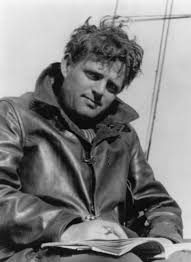
Dorothy Thompson
Buffalo Evening News/February 14, 1928
Even Girls Are Taught Details of Warfare—Shadow of Fear Oppresses Nation.
A shadow lies over Russia. Wherever one goes, with whomsoever one speaks, one becomes conscious of it. It is a fear. Like most fears, private or national, it often expresses itself in braggadocio and belligerency—the overcompensation of weakness. It is the fear of war.
Russia is convinced that sooner or later she is going to be attacked. She is convinced on both theoretical and practical grounds. Theoretically her leaders believe, and have often said, that world capitalism would not, in the long run, permit the growth and extension of a system of government threatening them in their most vulnerable spot; practically, they see in the politics of England, in the support which they believe that England’s policy gets in the United States and in the campaign of England in the league, the forerunner of a new military intervention.
Feverish Preparation.
Whether the responsible leaders of Russia really believe that Great Britain is so recklessly adventurous today as to dream of a military campaign against the Soviets, or whether there is a large degree of conscious demagogism in their constant harping upon the danger, is a question about which one can merely have an opinion.
I asked Litvinov—on the eve of his departure for the disarmament conference in Geneva—whether he really believed, as the newspapers heralded, as the school children are taught, as the Society for Aviation and Chemical Defense agitates, that Soviet Russia is in danger of invasion. He replied:
“We firmly believe that the capitalistic world would like to destroy the Soviets, by any means possible.”
The result is a national psychosis, and a feverish military preparation. The result is also a continuation of the terror beyond the measures which the internal situation would justify as a defense measure against counter-revolution.
Militaristic Nation.
Counter-revolution from the inside is an extremely remote probability in today’s Russia, after ten years of Soviet government. Counter-revolution brought about by foreign intervention is the justification which the Soviets give for maintaining the immense apparatus of the O. G. P. U. —the secret military police, with its courts martial, its agents-provocateurs, its star chamber cross examinations, its midnight raids and arrests, its occasional dramatic and terrifying executions, its sentences of exile and all the extralegal revolutionary activities which so long as they continue make it impossible for the Communists to claim that the citizens of Russia live in a stabilized state.
Russia today is one of the most militaristic countries in the world. Nowhere in Europe, not even in Hungary, where a belligerent spirit has never accepted the peace treaties, not even among the nationalist Vaterlaendische Verbaende of Germany have I remarked the ever-present consciousness of war and preparation for it, which is everywhere observed in Russia— in public demonstrations, first of all; in schools, trade union organizations, in the universities, especially the Communist ones, and even in orphan asylums and horns for the “Besprisazorny”—the homeless waifs and strays, who are one of Russia’s chief social problems.
War Training for Girls.
In a moral orphan asylum, where there was no child more than 16 years old, I saw posters covering half of one wall, explaining by pictures and diagram the right and wrong ways to place a machine gun, handle a rifle organize a squad; how to hide a machine gun in bushes; what position it should occupy on a hill.
And a bright young 13-year-old, formerly from Brooklyn, who was living in the orphan asylum because her father was working as a Soviet official in a village and wanted her to attend a Moscow school, and who was proud to act as interpreter for the others.
“In a few weeks now we’re all going to have military training. We’re going to get real rifles, and practice how to shoot. And the girls will have just the same chance as the boys. Girls and boys are equal in Soviet Russia.”
In a Bespriszorny home, when I asked the boys what they were going to do when they got big, more than one of them said, “Join the Red army and fight the British.”
Russia Doesn’t Want War.
I believe it is just to emphasize that Soviet Russia does not desire a war. That statement is true on the face of it. The progress toward stabilization which has gone on in Russia under the most distressing circumstances and with the expenditure of enormous effort is by no means so far advanced that Russia could face with equanimity even a very little war.
The great masses of the peasantry are terribly weary of the great war, the successive interventions, the revolutionary uprisings, the sporadic attempt at white counter-revolution. War was over much later in Russia than in the rest of the world, although Russia left the great war earlier. A foreign war would probably reduce Russia to complete chaos.
Propaganda for a more efficient army, for volunteer assistance in the organization for defense, is constantly made. Large posters which I saw plastered over peasant villages showed peasants bringing sheafs of grain into a mill, with a fleet of airplanes flying out of the other end.
The almost complete mental isolation of Russia, the fact that every newspaper and publication is controlled, and that only those facts percolate through to the people from the outside world which the Communist party desires to have come through, makes it possible for the authorities to present that picture of outside conditions which they wish to show.
Vision of Red World
These authorities have fostered this war psychosis, probably in the desire to build up as rapidly as possible preparations for defense, and at the same time they seek to build up public morale by minimizing the chances of success of foreign intervention.
On the day of the great parade of the Red Army on the Red Square, I was trying to find my way to the place assigned to me on the grand stand. A man in the crowd came to my assistance with German and offered to act as my interpreter, for the speeches which were being made by members of the government and Communist guests from other countries.
In the course of our conversation he found out that I was not a Communist, not Tovarish, and he set out in true missionary spirit to convert me. Pointing to the reviewing troops, he said, “We know the capitalistic world wants to attack us, but we are prepared.”
My efforts to point out that the capitalistic world would be glad to let Russia pursue any form of government she desired if she would but let other countries alone caused him to shake his head at my ignorance. “We will only be safe when the world is Communist,” he said.
He believed that the possibility of the world going Communist was great. “In your country, America” he said, “the workers are enslaved. They must be dreadfully discontented, in spite of their high wages. There is no enthusiasm in America for anything. If it came to war your workers would not fight to defend your civilization. They have nothing to defend. But here we would shed our last drop of blood for the revolution.”
This is more or less typical of the general attitude. The hope is advanced that should a war come between Soviet Russia and other countries, the workers of the other countries would turn against their governments.
 The Archive