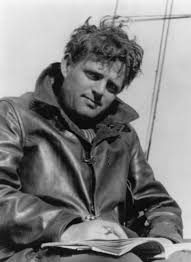
H.L. Mencken
American Mercury/January, 1924
Critical Note.—Of a piece with the absurd pedagogical demand for so-called constructive criticism is the doctrine that an iconoclast is a hollow and evil fellow unless he can prove his case. Why, indeed, should he prove it? Is he judge, jury, prosecuting officer, hangman? He proves enough, indeed, when he proves by his blasphemy that this or that idol is defectively convincing—that at least one visitor to the shrine is left full of doubts. The fact is enormously significant; it indicates that instinct has somehow risen superior to the shallowness of logic, the refuge of fools. The pedant and the priest have always been the most expert of logicians—and the most diligent disseminators of nonsense and worse. The liberation of the human mind has never been furthered by such learned dunderheads; it has been furthered by gay fellows who heaved dead cats into sanctuaries and then went roistering down the highways of the world, proving to all men that doubt, after all, was safe—that the god in the sanctuary was finite in his power, and hence a fraud. One horse-laugh is worth ten thousand syllogisms. It is not only more effective; it is also vastly more intelligent.
Confessional.—The older I grow, the more I am persuaded that hedonism is the only sound and practical doctrine of faith for the intelligent man. I doubt, indeed, if there ever has lived an intelligent man whose end in life was not the achievement of a large and selfish pleasure. This latter is often shrewdly swathed in the deceptive silks of altruism or whatnot, but brush the silks aside and the truth of self-gratification is visible in all its nudity. Mahomet’s altruism was as completely hedonistic as Napoleon’s frank hedonism. The greater the idealist, the greater the hedonist behind the whiskers.
Note En Passant.—The armies of England and America may fight shoulder to shoulder; the diplomats of England and America may stand side by side in their uplifting of the world; the two navies may salute each other with constant salvos of cannon; the two governments may be as Siamese twins—but it all does not and will not amount to a damn unless the average Englishman can soon train himself to be less patronizing to the average American when he shows him to his restaurant table or sells him a shirt.
Hint to Theologians.—The argument by design, once the bulwark of Christian apologetics, is so full of holes that it is no wonder that it has been abandoned. The more, indeed, the theologian seeks to prove the acumen and omnipotence of God by His works, the more he is dashed by evidences of divine incompetence and irresolution. The world is not actually well run; it is very badly run, and no Huxley was needed to point out the obvious fact. The human body, magnificently designed in some details, is a frightful botch in other details; every first-year student of anatomy sees a hundred ways to improve it. How are we to reconcile this mixture of infinite finesse and clumsy blundering with the concept of a single omnipotent Designer, to whom all problems are equally easy? If He could contrive so efficient and durable a machine as the human hand, then how did He come to make such dreadful botches as the tonsils, the gall-bladder, the uterus and the prostate gland? If He could perfect the hip joint and the ear, then why did He boggle the teeth?
Having never encountered a satisfactory —or even a remotely plausible—answer to such questions, I have had to go to the labor of devising one myself. It is, at all events, quite simple, and in strict accord with all the known facts. In brief, it is this: that the theory that the universe is run by a single God must be abandoned, and that in place of it we must set up the theory that it is actually run by a board of gods, all of equal puissance and authority. Once this concept is grasped all the difficulties that have vexed theologians vanish. Human experience instantly lights up the whole dark scene. We observe in everyday life what happens when authority is divided, and great decisions are reached by consultation and compromise. We know that the effects, at times, particularly when one of the consultants runs away with the others, are very good, but we also know that they are usually extremely bad. Such a mixture of good and bad is on display in the cosmos. It presents a series of brilliant successes in the midst of an infinity of bungling failures.
I contend that my theory is the only one ever put forward that completely accounts for the clinical picture. Every other theory, facing such facts as sin, disease and disaster, is forced to admit the supposition that Omnipotence, after all, may not be omnipotent—a plain absurdity. I need toy with no such nonsense. I may assume that every god belonging to the council which rules the universe is infinitely wise and infinitely powerful, and yet not evade the plain fact that most of the acts of that council are ignorant and foolish. In truth, my assumption that a council exists is tantamount to an a priori assumption that its joint acts are ignorant and foolish, for no act of any conceivable council can be otherwise. Is the human hand perfect, or, at all events, practicable and praiseworthy? Then I account for it on the ground that it was designed by some single member of the council—that the business was handed over to him by inadvertence or as a result of an irreconcilable difference of opinion. Had more than one member participated actively in its design it would have been measurably less meritorious than it is, for the sketch offered by the original designer would have been forced to run a gauntlet of criticisms and suggestions from all the other councillors, and human experience teaches us that most of these criticisms and suggestions would have been inferior to the original idea—that many of them, in fact, would have had nothing in them save a petty desire to maul and spoil the original idea.
But do I here accuse the high gods of harboring discreditable human weaknesses? If I do, then my excuse is that it is impossible to imagine them doing the work universally ascribed to them without admitting their possession of such weaknesses. One cannot imagine a god spending weeks and months, and maybe whole geological epochs, laboring over the design of the human kidney without assuming him to be moved by a powerful impulse to express himself vividly, to marshal and publish his ideas, to win public credit among his fellows—in brief, without assuming him to be egoistic. And one cannot assume him to be egoistic without assuming him to prefer the adoption of his own ideas to the adoption of any other god’s. I defy anyone to make the contrary assumption without plunging instantly into clouds of mysticism. Ruling it out, one comes inevitably to the conclusion that the inept management of the universe must be ascribed to clashes of egos, i.e., petty revenges and back-bitings among the gods, for any one of them alone, since we must assume him to be infinitely wise and infinitely powerful, could run it perfectly. We suffer from bad stomachs simply because the god who first proposed making a stomach aroused thereby the ill-nature of those who had not thought of it, and because they proceeded instantly to wreck that ill-nature upon him by improving, i.e., botching, his work. Every right-thinking man admires his own heart, at least until it begins to break down; it seems an admirable machine. But think how much better it would be if the original design had not been butchered by a board of rival designers!
Outline of the History of a Man’s Philosophical Knowledge From Early Youth to Old Age.— 1. I am wrong, 2. I am right. 3. I am wrong.
Idle Paradox.—If the combined aim and object of art lies in the stirring of the emotions, and is praiseworthy, why should the similar aim and object of the vices be regarded as meretricious? If the Madonnas of Raphael, Holbein, Murillo and Da Vinci are commendable in that they stir the imagination, why are not the whiskeys of Dewar, Macdonald, Haig and Macdougal commendable for the same reason? If a Bach fugue is praised for stimulating the mind, why not a Corona Corona? If the senses are commendably excited by Balzac and Zola, why shouldn’t they be excited, and equally commendably, by means that may be described as being somewhat less literary?
Metaphysics of the Movies.—
I
From a signed story by Mary Miles Minter, published in the Los Angeles Times:
Over my mother’s protest I went to William Desmond Taylor’s apartments, but his body had been removed to an undertaker’s establishment. I went to the undertaker’s rooms, and the undertaker let me in all alone with him. I pulled back the sheet and looked at him. But he was not the same. His skin was waxen. I leaned down and put my arms about him, my cheek to his. His face was cold, so cold, but not as cold like ice.
“Do you love me, Desmond?” I asked.
He answered me; I could hear his voice.
“I love you, Mary, I shall love you always,” he whispered.
II
From an interview with Ruby Miller, published recently in the same journal:
How do I get reality into an impassioned love scene? Well, that is easy enough on the stage when one has three or four weeks of rehearsal and gets to know the actor. But, on the screen! Oh boy!
I must have time to know my hero and always insist that my love scenes come last of all. Then I have time to study the actor. I talk to him of music, literature, art, etc., etc., and find out his hobbies and let him talk to me. I’m always a sympathetic listener.
He then begins to like me mentally and thinks me brilliant when I permit him to explain, by the hour, how he would have “holed” in two if only that d—- caddie had kept his eye on the ball. This is but one step to the physical attraction. Despite this “intimate” conversation, my very lack of familiarity in every way breathes a mysticism about me that is always certain to vanquish the male specie.
So the days pass. Then dawns the day of the big love scenes. I appear in a beautiful gown. By this time the hero is so crazy to kiss me that it requires no effort upon my part. His natural fervor awakening my own—and hence the perfect love scene.
I am told that my method is very dangerous and liable to wreck the homes of my heroes. My reply is, “I am first, last and all the time an artist—and if my love scenes are destined to thrill millions, why worry about wrecking a few thousand homes?”
Text for a Wall-Card.—It is lucky for a young woman to be just a bit homely. The fact helps her to get a good husband, and, what is harder, to keep him after she has got him. The flawless beauty has no durable joy in this life save looking in the glass, and even this departs as she oxidizes. Men, knowing her intolerable vanity, are afraid of her, and, if snared into marriage with her, always look for the worst.
From the Book of a Bachelor of Forty.—1. Toward men, ever an aristocrat; toward women, ever a commoner—that way lies success.
2. Among men, women admire most those who have all the attributes and qualities of the actor and yet are not actors by profession.
3. Love is always a tragedy for the woman. That tragedy she never succeeds entirely in escaping. It is sometimes the tragedy of a broken heart, sometimes the greater tragedy of fulfilment. A broken heart is a monument to a love that will never die; fulfilment is a monument to a love that is already on its deathbed.
On Critics.—There are critics whose taste is sound, but whose judgment is unsound: who like the right things, but for the wrong reasons. There are other critics whose judgment is sound, but whose taste is defective: these like the right things and for the correct reasons, but the absence of background of taste and depth of taste alienates their followers. There are still other critics who are forthright apostles of emotional reaction, who have but a small measure of taste and utterly no judgment: these are ever the most popular critics, since they deal in the only form of criticism that the majority of persons can quickly and most easily grasp.
Veritas Odium Parit.—Another old delusion is the one to the effect that truth has a mysterious medicinal power—that it makes the world better and man happier. The fact is that truth, in general, is extremely uncomfortable, and that the masses of men are thus wise to hold it in suspicion. The most rational religious ideas held in modern times are probably those of the Unitarians; the most nonsensical are those of the Christian Scientists. Yet it must be obvious to every observer that the average Unitarian, even when he is quite healthy, is a sour and discontented fellow, whereas the average Christian Scientist, even when he is down with gallstones, is full of an enviable peace. I have known, in my time, several eminent philosophers. The happiest of them, in his moments of greatest joy, used to entertain himself by drawing up wills leaving his body to a medical college.
Story Without a Moral.—A number of years ago, in my newspaper days, I received from what would now be called the Ku Klux Klan a circular violently denouncing the Catholic Church. This circular stated that the Church was engaged in a hellish conspiracy to seize the government of the United States and put an agent of the Pope into the White House, and that the leaders of the plot were certain Jesuits, all of them foreigners and violent enemies of the American Constitution. Only one such Jesuit was actually named: a certain Walter Drum, S.J. He was denounced with great bitterness, and every true American was besought to be on the watch for him. Something inspired me to turn to “Who’s Who in America” it lists all the principal emissaries of Rome in the Republic, even when they are not Americans. This is what I found:
Drum, Walter, S.J.; b. at Louisville, Ky., Sept. 2.1, 1870; s. Capt. John Drum, U.S.A., killed before Santiago.
I printed the circular of the Ur-Klansmen—and that eloquent sentence from “Who’s Who.” No more was heard against the foreigner Drum in that diocese. . . .
Eight or ten years later, having retired from journalism with a competence, I was the co-editor of a popular magazine. One day there reached me the manuscript of a short story by a young Princeton man, by name F. Scott Fitzgerald. It was a harmless and charming story about a young scholastic in a Jesuit seminary. A few months later it was printed in the magazine. Four days after the number was on the stands I received a letter from a Catholic priest, denouncing me as an enemy to the Church, belaboring the story as blasphemous and worse, and stating that the writer proposed to make a tour of all the Catholic women’s clubs in the East, urging their members to blacklist and boycott the magazine. The name signed to the letter was “Walter Drum, S.J.”
I offer the story, but append no moral. Perhaps its only use is to show how Christians of both wings have improved upon John XV, ix.
 The Archive